Why does the restaurant business sustain so many immigrant families? Just look at all our ethnic options in dining today, even in small cities. Not just Greek-American, like the one in my novel What’s Left.
What’s your favorite food stop? Is it run by a single family? Does it have an ethnic identity?
Having Cassia cast a Buddhist chant as a spell in my novel What’s Left, is a bit of an inside joke. She may be trying to intimidate her middle school classmates, but what she utters, Su To Ka Yo Me Bha Wa, translates as “Grant me complete satisfaction” or “Grant me complete satisfaction within me.” Not that they have a clue.
Besides, I feel a shade of Harry Potter here, without an ominous wand. These words can simply feel magical.
By the way, Cassia’s chant is one letter off from Su Po Ka Yo Me Wa, “Grow within me” or “Increase the positive within me,” which also fits.
Just in case you’re wondering.
~*~
Think of some word or phrases you repeat often.
Do you have your own “mantra,” a word or phrase to raise your spirits?
(My favorite 9-year-old introduced me to “Yay!” So yours doesn’t have to be the least bit exotic.)
~*~
Cassia’s aunt Pia came from a family that owned places like this. Not far from Lowell, Massachusetts, where she grew up, for that matter.
In my novel What’s Left the family-owned restaurant is a local institution, one set at the edge of campus even before her grandparents and their siblings took over and made it distinctly their own. Everybody in town seems to know them.
Have you ever been recognized because of something your parents or grandparents did?
~*~
My novel’s available at the Apple Store, Barnes & Noble’s Nook, Scribd, Smashwords, Sony’s Kobo, and other fine ebook distributors and at Amazon in both Kindle and paperback.
There was no Nita for me during college or immediately after. Had she existed, my route would have been much less conflicted. Somehow, though, I managed to figure out enough on my own, often through seemingly chance introductions, to survive in an alien milieu.
After college I landed in a place where I knew nobody except a few people from my previous summer as a newspaper copy desk intern. I was a Midwesterner trying to comprehend the East Coast, a hippie working in a low-paid newsroom. Single and lonely.
The locale I create in Pit-a-Pat High Jinks is situated vaguely somewhere north of New York City. It could be in the Berkshires of Massachusetts or in southern Vermont or places like Oneonta or Cortland, New York, perhaps even Utica.
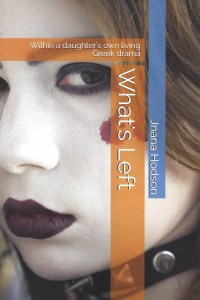
The paperback cover …
I paint it as smaller than Binghamton, the strange place where I was living and working. The Tri-Cities, as it was referred to locally, was flailing to recover from collapsing industry, especially its shoe-manufacturing ruins, as well as a deteriorating but expensive housing supply. The new state university attracted socially awkward straight-A geeks and nerds. My first year I resided in a neighborhood that was Italian by day and Black, as in ghetto, by night. And then there was the summer and autumn on the farm we shared up in the hills. My work schedule was crazy like Kenzie’s, except for the three-day weekend once a month, which I really wish had been in place – I took that from a newspaper where I worked a dozen years later.
Strangely, I also soon came to love the region. There’s something distinctive about Upstate New York, with its hills and forests and lakes, and almost all of my friends were from The City, meaning the Big Apple aka Gotham. Few of them confined their definition to Manhattan, I should note. Through them I got to know Brooklyn, the Queens, Staten Island, Long Island, and northern suburbs as much as the sliver between the Hudson and East rivers.
I initially addressed this fertile period in my life as two parallel novels – one where the hippie boy largely fails to connect with free love; the other, X rated, where his fantasies come to fruition. Either way, the plots arrived at the same finale. Later, in light of Cassia’s perspectives in What’s Left as well as a few of the early reviews, I returned to these two versions and blended them into a much more cohesive, and I hope more engaging tale, “Pit-a-Pat High Jinks.” Well, that is one of the advantages of ebook editions – you can always update them.
There’s still so much that baffles me about the time and place. How one housemate would come home with a different lover each night, all of them gorgeous to my famished gaze. What was his trick, other than that twinkle in his eye?
In the revised rendering, Kenzie encounters a sequence of hippie chicks, goddesses, lovers, each of them leading him to fresh understandings. Still, I’m left wondering how each of these interludes would sound from the woman’s point of view. I suspect Kenzie wouldn’t fare so well.
Also, for me, it was yoga rather than Buddhism as a new spiritual practice, but that’s told in Yoga Bootcamp.
More lingering are the questions of what’s happened to so many I’ve met in the broader Bohemian spectrum. I can’t even remember many of their names, but I have learned that some went on to become OBGYN physicians, United Way executives, federal attorneys, United Nations officials, photocopier technicians. Hardly what you’d expect of hippies, right?
Well, I’ve tried to record and reflect on what happened, seen mostly on the run. Can you experience something – live it – and still step back enough to record it? In my novels, that’s what the photographer tries to do, similar in its own way to my own struggle. And now you can see how much that role’s changed, too, in the shift from film and darkrooms to the digital ease of today.
Her aunt Nita in my novel What’s Left, has an interesting insight on showing up for work before all the others. It doesn’t fit every job, but it did hers. And then I cut this from the final version of the book:
If you’re the first one in and the last one out, you can disappear in the middle of the day and your coworkers and bosses are none the wiser. They just assume you’re out on assignment.
~*~
Not all jobs require you to punch-in or punch-out on some kind of clock. I’ve never had to work one of those, fortunately, although I’ve often had to fill out weekly time cards before being paid.
What I did find, though, was that even when I was putting in a lot of unpaid overtime (the joys of being low-tier management!), I could still feel the judgmental eyes behind my back.
Are you ever considered a slacker on your job? How does it feel? How do you respond?
~*~
In the family, Cassia would have had food like this. Greek olives! Best of all, packed in olive oil!
Cassia’s future father marries into a family that owns a popular restaurant. So that’s one additional connection for the members.
Considering his wife’s sister and three brothers, all with potential partners of their own, he’s not the only spouse thrown into the mix. And that’s before getting to those who want careers elsewhere.
What holds your extended family together? Or are you widely scattered?
~*~
The family also buys an old church, something like this, and turns it into a community center that features wild rock concerts.
Among the fascinating voices who show up regularly in my WordPress Reader is Willow Croft, “Bringer of Nightmares and Storms,” a writer included in an anthology of “ladies of horror fiction.”
Not to worry, her blog is gentle and warm as her she surveys the alt-indie world of literature and related arts, and from her shelf at Goodreads, it’s hard to imagine a more adventurous or prodigious reader. Better yet, she generously shares her discoveries with the wider world, often through their own voices.
One of her ongoing features is “Five Things Friday,” a handful of deep questions posed to the day’s selected writer. I was so honored yesterday, and I’d love for you to hop over to Willow’s blog to see the results.
There’s nothing generic in her five inquiries. They’re tailored to the day’s guest, and she does her research. Somehow, she homed in on the essence of what I do while also making me think about it in a fresh light. One of her points indulges in special interest of hers – food – but even there, she makes it personal to her guest, as you’ll see.
I’ll apologize for the length of my answers, but the questions were multifaceted and stirred up much more than I could possibly include. She was free to cut or condense, of course, but didn’t.
~*~
Willow herself is also a fellow poet, and that feeds into her compassionate curiosity.
Still, she’s surprisingly elusive in a digital age, even while being a comforting presence. Her blog, for instance, has no About page.
From the bits I’ve gathered, she grew up somewhere in the South, where she quickly resisted the enforced conformity, and recently relocated from New Mexico to Kansas, even though she dreams of someday settling in Scotland. Oh, yes, she also favors British spellings over American, as in “colour.”
I’m supposing she’s a water sign – Cancer, Pisces, or Scorpio. She claims to be middle-age, though I would have guessed a very wise late twenties to mid-thirties, based on her uninhibited tastes, and a cat lover.
A croft, by the way, is a small enclosed pasture, often with a cottage – and a resident known as a crofter. As for willows? How evocative – there’s water, after all, and resiliency.
A clue to her name and outlook may be this, from a piece she wrote for MookyChick: “Transform your backyard from a one-note turf lawn to a meadow-like garden that has a little something for every visitor; be it birds or flying insects and bugs. Avoid the use of leaf blowers, weed whackers, and pesticides in order to give nature the chance to tend to itself.”
Actually, that’s not a bad description for what you’ll see in her own work and life as well.




 Jnana's Red Barn