Seeking to capture the local land and culture in my own writing

As for poetry? “Wonder if my work adds up to summa, if it has a point” …

The night before (so where were we?): “the aging aesthete dismissing Pfingston’s piece, ‘This isn’t a poem,’ as though he knew, this uptight, pretentious high-school teacher whose 30 friends kept clinging to him, whispering comments about ‘classical forms’ and the ‘need for discipline’ and keeping a guard against ‘imitators’ and how Joan Stone can’t STAND Duane Niatum, ‘He borrows everything.’”

“That’s what happens when you get a PhD,” I almost said.

How many tall tumblers did that guy down — a dozen? How can any drunk evaluate a poem, appreciated its silence?

I’m tired of veneer, tired of poetry tasters — everything but the purely original, primitive, religious incantation …

[I had not yet delved into Jackson Cope’s “incantatory language” perspective on early Friends …]

When a batch of submissions go out, the first back are quick rejection slips — usually overstocked — then the mixed bag of acceptances and misses — and finally the slow anguish of almost-takens and those returned unread …

It’s almost a pattern

~*~

Wollah Wollah = whistling water = Walla Walla

~*~

When Coyote desired Beaver’s beautiful daughter, Rain sent his own beautiful daughter to plead with Coyote, who instead tried to rape her and make her his other wife. And thus, enraged, Rain punished the east — Coyote’s land — by raising the Cascades mountains so that Coyote and Wind could not steal all the clouds.

I’m left wondering about Beaver and his child.

~*~

Meanwhile, these local poets and artists who don’t study, don’t know what’s been done before, wouldn’t recognize ancient excellence, don’t know what’s being done now, don’t experience the nature out there or the scary, untapped energy fields within themselves … who don’t try to make each piece unique but merely a repetition of their static non-discovery closed-in closed-off non-lives …

[How’s that for non-judgmental?]

~*~

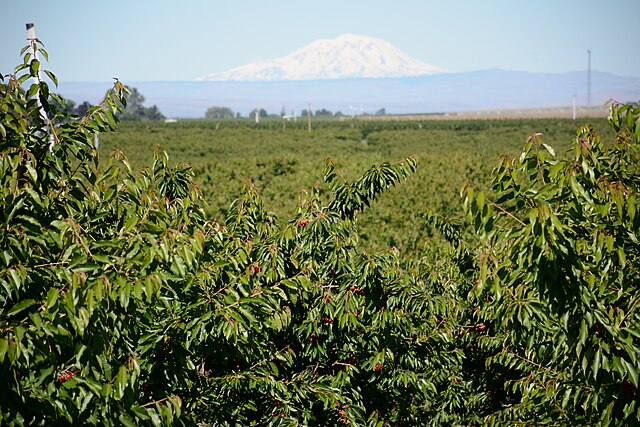
Hops, which are used to favor and stabilize beer in its brewing, were another famed agricultural product from Yakima. The vines would climb the ropes to the top, with the whole vines being cut down at harvest. Note Mount Adams in the background. (Photo by William Borg via Wikimedia Commons.)

~*~

 I used to write poems about the weather. But what can you say about a place where the weather’s always good? Only that the wind’s blowing?

[Think of a comment I recently heard, about a poetry editor who scorned Weather Report pieces. Gave them an instantaneous rejection.]

~*~

Watching clouds 50 miles away.

~*~

From Spiralbound Cascadia with commentary.
 

Beyond the canyon, mostly

When it came to the great outdoors for us, the year 1977 early on presented us with a trip that settled in E’burg rather than a few more hours on to Seattle. We found refuge in the Outrageous Taco, a freak center in an old beer hall turned pizza/taco/deli quiet with live music and free poetry journals to circulate … a sense of pleasant decay (a $2 movie nearby) … incense in the air, too. We would return frequently … a good selection of new and used books, too.

Homeward by the Canyon Road, walked over the swinging bridge at Umtanum Creek, Kitty screaming, scared, delighted, a future point for a hike …

~*~

The Yakima River Canyon stretches 27 miles through three major ridges between Yakima and Ellensburg, with summits that rise more than 2,000 feet in places. A railroad and two-lane highway cling to the base beside the river.

In late February, we made our Umtanum ascent, including the bald eagle observation, the first in the valley in 25 years. It was the middle ridge, as I recall, and forms a pivotal chapter in my novel Nearly Canaan.

Thinking of my nature poems … man, the legions of demigods, takes something away, reduces the richness of the land … Nancy Trueblood’s “in the mountains I feel closer to God” … limits the diversity of the species, the expansive quiet, the wonderful circling weaves … in Indiana, my nature poems were often at the edge of the woods — the interface of man, land, and seasons … historical depth where farms sometimes expressed a harmony … a deep cold springhouse, a summer porch … the mountains here, ever green or, like our desert ridge, light brown, are something else … and man adds nothing …

~*~

10 July, Sunday

Drove along Sauk Creek to Stevens Pass … [north of Ellensburg]

Gold-mining remains … introduction to Leavenworth and then the North Cascades …

Leavenworth, with its Swiss Alps festive mood … shame that something similar cannot be created/sustained in “American” or Native authentic theme … maybe something to do with America’s lack of holy rivers and mountains or maybe our flat “Christian” approach to life … (Swiss Calvin not withstanding)

~*~

18 July … apricots gone

~*~

31 July/First-day evening

No entries in a week —

Last Sunday, left early for Seattle (after a midnight Saturday shift) to meet Bill and Mig Dietz and Curtis and Jacquie. The whole port city bit: winos, sailors, loggers, porno shops (me, buying newspapers!), Blacks and students, crowded Sunday parks, jazz. Got to know Curtis better, though their planned North Cascades backpacking got jettisoned by Jacquie’s emergency retinal surgery. His gentleness and humor, plus his Seattle friend Bob Green. Our disappointment with the Seattle art museum, then learning it was cut in half, with anything modern at City Center. The aging freaks and the strangest cats.

Met the Dietzes for dinner at Ivar’s, pier 54. How beautiful these people are. Bill’s ability to melt Kitty’s sharp questioning from Jacquie …

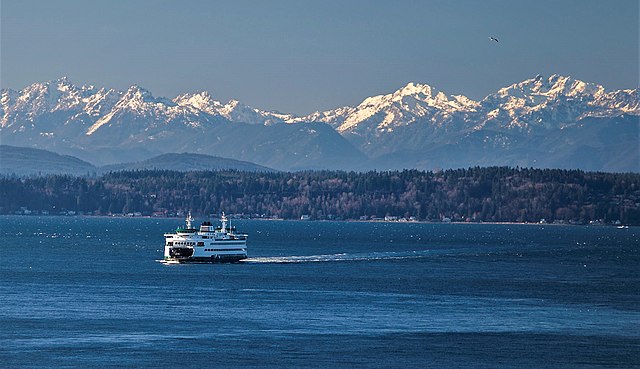
Had salmon, scallops. [Not crab?] The Yakima, a sleek new ferry, in the next pier. Seagulls and seafoam.

Heard of one Friend’s decision to go to Australia, though she didn’t have enough cash to get a visa. Hitched to SF, her first ride was with a trucker who CB’d ahead, starting a chain that got her safely, quickly down the pike — always the next ride waiting. Got to the SF consulate office, sat outside till she got a “hardship” visa. Got her case heard. And went on her way, after staying at Friends House.

The uncommonly filling spirit at our parting. So high, elated from this visit, happy to be together, laughing aloud on our long drive home with a new moon.

~*~

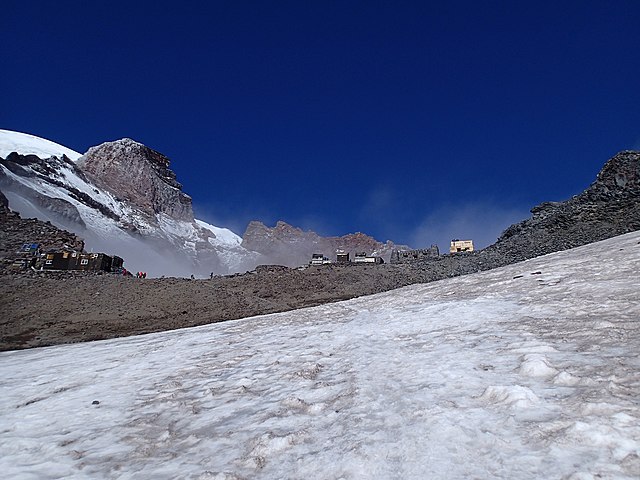
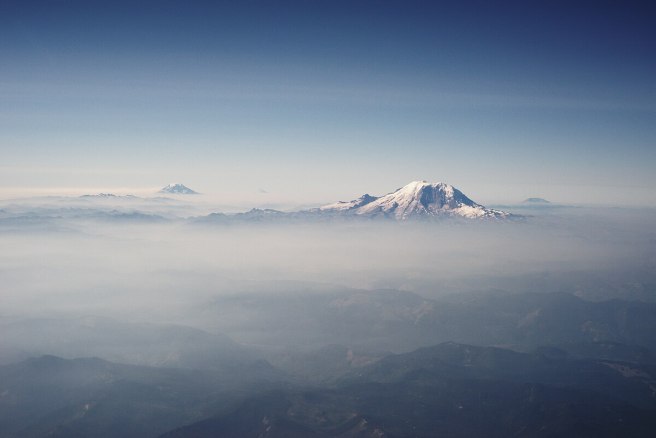
Mount Rainier, photo by William B. Jacobs via Pexels.

Fremont lookout

Rainier National Park

7,200 feet sea level

Kitty joined me in the ascent from Sunrise; thought she’d stop at Frozen Lake but seeing children’s tracks felt shamed into continuing. Amazing Alpine natural gardens …

Clearest day one could hope for: Adams, Goat Rocks sharp view from the trailhead, yet a violet haze layer over Puget Sound from Olympia to Mount Vernon.

Next page a sketched panorama map showing Mount Baker, Glacier peak, and the Stuarts … plus notation, “Olympics a blue ragged line riding above the haze.”

Sitting up here’s just like riding a cloud.

And thus we are cloud-riders being ambushed by ’monks,

the fearless chipmunks attempting to ride our lunch …

~*~

From Spiralbound Cascadia with commentary.
 

How a new Quaker worship group came together

On the 12th, received two pieces of mail. The first, a list of local Friends and their addresses from University Meeting in Seattle.

The second, a letter from Swami urging me to stop procrastinating and return to the ashram.

A perplexing, even symbolic, clash but neither to be taken lightly. Especially a message from one’s guru stated directly and forcibly. Yet my guru-of-gurus, my heart, is not there. I am not ready to answer beck-and-call, to go back to a single trunk, to do no personal writing (or submissions). I have taken on responsibilities and opportunities here and perceive a need for Yoga/Quaker alternative to fundamentalist jangling, even before considering possibilities Native poets and others offer to my outlook.

Then yesterday received a challenging, derogatory rejection from Loon, as if to say, “Why are you bothering to write?”

24:X:76

Cold, damp, in a Binghamton mood / my aura dark gray, the one who has known God and is now out-of-light yet sitting in the morning, lifting me away …

And then a strange call from Tacoma Friends … me sounding phony yet happy to hear from another …

The 2nd Yakima Quaker gathering, my first, came after 17:XI … the phone number and directions for Tom and Carol’s …

Out Summitview to 74th, turn right up a grade with orchard on right, straight to end and take a left, West Lincoln going west a half-mile, starts to up over irrigation canal, a T go left, PRIVATE DRIVE DO NOT ENTER, around crush rock, past house under construction, the only house on left, go up to 2nd driveway, park on (?)

The Meeting here started worshipping in September, as if by my prayer … once a month, initially, with potluck and children …

21:XI:76 … got a letter from Tacoma Meeting and a call from Seattle Sunday night (arranging to be there).

Continuing 21:XI:76, first mention of Zenny and Bloom, who stayed over at our place … she was happy to have a shower, since they have neither a shower nor electricity yet on their blackberry farm … the house was uninhabited 11 years, in the woods with a wood-stove …

Kitty realized, from talking to them, how middle-class we’ve become — she’d been wondering (from her coworkers) if we were really strange

Extended talks with Zenny, and his Buddhist background, explored fronts of reconciliation between Yoga/Zen and Quaker traditions, “Eastern paths Quaker stumbled onto by fits and starts but without full knowledge of what it had discovered”

Also, how much wasted time in becoming convinced! How much unnecessary agony! How many fall away who could be helped by clearer direction?

So much bad information / misinformation is floating around out there!

Also raises matters of theatrics or colors rather than heart-essence. All around. (For Friends, the thees and thous or Quaker Oats figure.)

Already, I was glimpsing how the “Christ trap,” as I saw it, as Lord and Savior leads into “salvation” and “sinners” and the shallowness of “I’ve found it!” In this line of thinking, Friends were left vulnerable to the Methodist/Baptist pickings, depleting Quaker ranks.

Many seekers in Christian veins have been turned away by verbose non-answers (Fox: how they turn upon themselves), shallowness, lack of compassion, exploitation of man and nature (including persecution of others), and self-righteousness.

Yes, Jesus was divine. But what about others, too? “If I understand Friends correctly, all men are divine,” including women and children. (Today I would add that many turn their backs on it and despise it.)

Quaker faith is Christian and more. Sitting in silence returns us to our own hearts, our truest guru.

I do not mean book learning but rather the practice between a teacher and student, leading to an awareness within the student of his own God-nature, regardless of whether the term “God” enters into it (in many ways, the Quaker term “Light” is far better — no images of the Sunday School

[Today I’m surprised how closely these early observations develop into LightSeedTruth.]

29 nov, note another letter from Swami Lakshmy, for money (again) and questioning increasingly deeply …

Need for sacrifices, even though we are not making it financially — in fact, most of my pay steps from Fostoria have gone into rent (from $50 a month to $135 ti $275) and then into art supplies, food, and clothing … the car still the same …

4:XII:76 still bummed out by Swami’s (increasingly) harsh/strident letters, because I was already in the midst of a what-am-I-doing-here contemplation in the weeks before and been suffering root rot regarding writing — a dry, dryest of hearts: loss of laughter) …

~*~

From Spiralbound Cascadia with commentary.
 

While regaining momentum in the literary world

As I noted in October, ’76: Good two weeks of poetry acceptance — 12-14 pieces taken.

That confusion some have, mistaking Jimm for Swami Jnana. Though they live together, they are distinct. One is the patron, who pays the bills by laboring on newspapers, complains about things, tries to live in some style, occasionally smokes, sometimes eats meat, likes to dine out (despite his income), listens to classical music, reads Newsweek, snuggles with his wife. Swami Jnana is his guru, appreciates silence, honest laughter, high country hiking, hardline poetry, animals, and fully human circles. Although they share the same household and many of the same interests, they are distinct. They met in early 1972 and things progressed from there. They have lived together in Pennsylvania, Ohio, Indiana, and now Washington state. Since joining, Jimm has been calmer and happier while Jnana spreads Dharma seeds. Jimm’s childhood and historical roots have become less urgent; he may disappear altogether. There’s nothing more to say at this point. I’m not certain whose journal this is. It doesn’t matter. They each enter lines on these pages.

Rexroth amazing in the number of unknown poets he admires and the candidness with which he demolishes others. The Paris expatriates were, he says, drawn there by booze (Prohibition in the U.S,) and cheap dollars. Frost wasn’t modern at all but old-guard and compares poorly with similar English poets of a century earlier.

Duane Niatum an often bad poet who comes up with some fine lines, “pine cone city in rain.”

My introduction to Marnie Walsh of the Dakotas, sounding as if created by the people and place.

Her flattest possible diction with all of its crudeness almost a parody of pig-Indian English (“Um! You white!”) almost imitation Black and yet, how utterly devasting.

Yet with a freshness that cannot be ignored, especially in its directness.

~*~

Liz Sohappy, given her Palouse name, Om-na-ma, in 1969: “My Indian name has made great difference in my life. I really felt like a floating body until I received my name. My grandmother said that was how it was to be — no one else is here on earth until he has an Indian name”

I resonate with that, having been given the name Jnana in 1972.

As for the Native poet Dave Etter?

~*~

How strange, the Ginsberg’s The Fall of America is filled with place names and realizing he has no sense of place, but exactly the opposite — that is, a loss of place and roots and thus center, as in perspective, turning the Hari Krishna and Buddha to stop the movement, to cease the spinning …

~*~

Reviewing some of my work, wishing there were something more personal, intimate and yet more forceful there …

In W’s novel, it’s haunting freshness. No feeling of the veneer of (& chilling) revisions, editing …

If the book satisfied us, why would we want to read another piece by him or in the same voice, when there is no other

Photo of Goat Rocks and Mount Adams by David Toth at Pexels.

Andy Wyeth confession of losing himself in the character of what he’s creating but his lack of interest in the finished work; also, the difficulty of being watched while working: his need for secrecy, the self-consciousness intruding in the event of observation-in-creation, “Don’t talk out,” don’t analyze, don’t smooth out or you’ll lose the spark. The feeling of a compulsion forcing him to do a piece, submerge himself when there’s that sweeping instant of perception (a certain touch of light, for instance). The need for solitude and for tactile feeling to get beyond the eye’s flat view.

As for Christina, she is the essence of New England — even its witchcraft. (This, before I had ever been to New England.) Sprung something in me, a recognition of America and truths we do not allow ourselves to admit. A strand I kept denying in Binghamton and Bloomington, the Poconos and Fostoria. Some lack, too, in the Anglo culture, despite exorcism-slaying.

~*~

Wed. 17 Nov. 76, see I was reading Robert Bly “Looking for Dragon Smoke” … I would come back to its impact much later, somewhere in New England …

Snyder is to me what Thoreau was to generations of Americans.

But if Henry is the amateur, Gary is the professional.

Ginsberg, meanwhile, runs with old Walt Whitman.

Snyder works from the inside-out, where others try from the outside-in.

The difference is clear meditation.

~*~

From Spiralbound Cascadia with commentary.
 

Not all of my exploration of our new world was on foot or on wheels

My encounters with the unfamiliar terrain of the Western mountains and desert had me reading everything I could find. The public library was a good start.

As I noted:

Rainier, honeycomb mountain, radiating heat under all that ice and snow — so fragile a good explosion could level it all … a new appreciation for “the temple tops” …

Regarding petroglyphs at the Dalles, to the south of us on the Columbia River:

“It seems impossible to decipher these inscriptions satisfactorily as it is not likely anyone except the makers and those living at the time the work was done could tell what was meant by them” — Newcombe, 1907

Also in Beth and Ray Hill’s Indian Petroglyphs of the Pacific Northwest, 1974, University of Washington Press:

“To make my name good” as a Northwest Native’s goal in life …

~*~

Petroglyph from the Columbia River at Rocky Reach Dam Museum, Chelan County Washington. Rock was rescued from the shores of the Columbia River before the dam flooded it, but many more were not saved. Photo by Thayne Tuason.


Indigenous petroglyphs in Columbia River Gorge near the Dalles Dam by U.S. Army Corps of Engineers, photographer unknown.

~*~

My explorations fill a number of poems and much of my novel Nearly Canaan and of Kokopelli in the Secret Side of Jaya. In fact, I’ve considered the place to be a central character in itself.

~*~

One book I found most useful in understanding the social differences in the Far West was Anti-California. Many of the points its author raised regarding the Golden State fit what I was seeing in the Pacific Northwest. For instance, few children grew up within a day’s drive of their grandparents or aunts and uncles. He saw that as extending into social life in general, which tended to be more polarized, using the Roman Catholic church as an example in having both one of the most conservative cardinals in the world as well as an entire order of nuns that broke away. (I could add that Quakers there came in two opposite camps, liberal “unprogrammed” meetings and pastor-led evangelical churches.) You get the idea. The author had been a correspondent for Newsweek magazine and other respectable periodicals. I didn’t recall the 1971 book’s subtitle, “Report from our first parafascist state,” or know anything about the author, Kenneth Lamott, father of novelist Anne Lamott. As I’m now hearing, he was quite a flamboyant character, to put it mildly. I do wonder how I’d see that book now.

~*~

From Spiralbound Cascadia with commentary.
 

My initial explorations in the Cascades

The primary attraction had been the mountains. We were in the foothills on the eastern flank of the Cascade Range. I was getting out into the wild probably every week from summer to the start of winter. Here are a few excerpts.

Darling Mountain

One of my first exploration, maybe the first, was on a Tuesday I had off work, when I drove up the Middle Fork from Tampico and then logging roads to Darling Mountain crest. Sheep scats and tracks around the snow and awesome meadows. Old site of forest fire lookout, since torn down. Climbed a dead tree to enhance the view. Mount Hood, above clouds. Adams, thrusting into them, closer. Goat Rocks across the way, and St. Helens’ perfect cone beyond. Straight ahead, following the road, Rainier thicker into the clouds somehow superior to the others. Then, a golden eagle sailing straight toward me, turning off perhaps 30 yards away, soaring off, circling briefly, and disappearing. With my guest status, I gave gratitude.

Deep forests were extraordinary.

I had no idea that this was on the second-highest logging road in the state.

Cowlitz Chimneys (center) with the Goat Rocks (background) from Sunrise point on Mount Rainer, photo by Steve Redman at Wikimedia Commons. 

Rainier route

On another trip, on my way to Mount Rainier, saw my first petroglyphs (rock inscriptions) and petrographs (rock paintings) outside of Naches. The paintings looked a little faked — red and white, perhaps with a little blue or red.

They were found near where the Naches and Tieton rivers veered off westward toward the Cascade Range. Photo by William Borg.


Photographs by Robert Niles via Wikimedia Commons.

Our routes to Rainier were progressions through ecosystems that became familiar over repeated exposure as we drove from sagebrush desert into ponderosa pines and reservoirs of future irrigation waters on our way to the high country of the Cascade Crest and the rainforests beyond.

Rainier hikes inspired many poems as well as scenes in my novel Nearly Canaan.

Each day trip was intoxicating.

To the south

John Day Dam in Columbia River: fish ladder and 80-foot drop of locks: air in stomach, at man’s mass of cement: aluminum company by the RR tracks.

Steam locomotive at Maryhill State Park, reflecting Sam Hill’s source of wealth: Maryhill Museum of Fine Arts, his castle above the palisades, green lawn dropping off into clouds. The sculpture studies by Rodin the claim to fame. During the trip, pondering Mount Adams vs Rainier …

Sam Hill Memorial Bridge and Columbia River, seen from Maryhill Museum of Art, Maryhill, Washington. Oregon at top/right. Photo by Joe Mabel at Wikimedia Commons.

~*~

Along the way

Sweet vinegar smell of hay [up to 5 mowings a year in the interior Far West; the hay was grown in the sunny lands east of the Cascades, and much of it was trucked to dairy farms and other livestock operations on the rainy western side of the mountains].

~*~

From Spiralbound Cascadia with commentary.
 

Regarding my Endless Prairie project

Prairie as a symbol of America [make that U.S. and Canada], the middle or bread basket or heartland. I kept trying to envision the openness, wonder, even terror when white pioneers found her, back before she was ripped apart for farming. Even the Interstate highways coast-to-coast. The middle land of Protestants without heritage, too blind to see clearly the potential of balance and healing before them.

Somehow, that poetry project never found root.


So I wasn’t losing my eyesight or my mind, after all

Back when I had an hour commute home after working an evening shift at the paper, there were a few nights when I was mesmerized by what I saw in my headlights while driving the country highways in heavy rain. As the drops splashed from the shiny black pavement, they seemed to turn into frogs that were hopping wildly. That part was freaky enough, but all of the ones I saw were leaping in the same direction, say from right to left. Hundreds of them. Thousands of them. There was no way to avoid them, either. Naturally, it was difficult to see at 60 miles an hour, and I was always anxious to get home, have a martini, and hit the sack promptly.

Why one direction? Something to do with the wind? Maybe just the angle of my headlights, so I didn’t pick up on just as many hopping in the other direction?

A few miles later, I would encounter another flock (officially, a group of frogs is called a knot, a colony, or an army, go figure) all flying in the other direction, left to right.

The phenomenon didn’t appear every time I had a heavy-rain midnight, but it did happen enough times over the decade to repeat the show, something I didn’t connect to springtime.

Turns out, as a recent Sunday Afternoon presentation at the Eastport Arts Center prompted, I wasn’t hallucinating. Didn’t need my eyes checked or a pair of glasses for driving. And wasn’t losing my mind. Frogs, toads, and salamanders have a Big Night (or two) in early spring when heavy rain, an inch or more, combines with thawing ice and snow to signal the amphibians to leave their winter shelter and return to emerging ephemeral vernal pools for breading. The high, shrill chirping chorus of peepers soon fills the night air for a few weeks after.

The temporary shallow ponds are fishless, and thus free of predators in the amphibian-breeding forest wetlands. With their job done around the time summer rolls in, the pools dry up for another year.

The bluest sky

The intense depth of color in a frigid winter sky stirs up memories of living in the interior Far West, where its usual lack of humidity produced similar firmaments through the hottest seasons. Consider this, then, from coastal Maine, a preview of some journal entries ahead.


Clear wonder

In my moves across the northern U.S., I’ve always lived in places that would get icicles in winter – some places more impressively than others. I never planned it that way, but in some locales they could grow down past floor-length windows, creating a threat to anything below. When those fell, their crash would shake the house, sometimes waking us from deep sleep. These, on the second floor at the Cobscook Quaker meetinghouse in Whiting, Maine, are modest in comparison.