MY LIFE AS A ROGUE, AS IT WERE

Being born in Aquarius, maybe it’s all too natural:

  1. Rogue scout troop (with all of our hiking, backpacking, and primitive camping – plus all the scoutmaster’s strictness).
  2. Rogue education, a patchwork of political science, literature, economics, sides of philosophy while aiming for the field of daily journalism.
  3. Rogue hippie.
  4. Rogue lover.
  5. Rogue ashram, with its decision to quit the world I’d known up till then.
  6. Rogue worship (this alternative Christianity).
  7. Rogue Quaker, too?
  8. Rogue career, mostly in out-of-the-way settings before abandoning the executive ladder to return to the ranks and a real life.
  9. Rogue poet, rogue novelist.
  10. Rogue blogger.

Maybe it makes sense.

~*~

Just how don’t you fit into expectations?

In open water on the Piscataqua River, Newington, New Hampshire.

Not that this fits into the theme, it’s just one more thing on my mind.

ALL IN THE SALES PITCH

A crucial moment in my new novel, What’s Left, occurs when her uncle Dimitri tries to convince her father-to-be to quit his career and move in with them, without actually offering him an income or much else.

As I noted in an earlier draft:
Manoula remembers all of this clearly. Says her brother’s chuckle perplexed Baba. Here’s her ensemble extending some kind of ambiguous invitation, on the one hand, and simultaneously affronting his professional portfolio, on the other.

~*~

Unlike Cassia’s Baba, I’ve tended to make big moves like this more deliberately. Even so, some of my moves, in retrospect, still amaze me. Relocating with all of our goods in a U-Haul without an apartment awaiting us halfway across the continent was one of them.

But throw the promise of hot love into the mix? Now it gets interesting!

Tell us some decision you’ve made that might seem irrational to those around you. How did it turn out? Would you do it again, given the chance?

~*~

Moussaka with Greek potatoes at Psaropoulo, Hydra, via Wikimedia Commons

In the family, Cassia may have had food like this.


TEN DIFFERENCES BETWEEN KIDS NOW AND BACK IN MY DAY

  1. We could ride in the open-air bed of a pickup. And stand up looking out over the top of the cab, the wind in our face.
  2. Nobody made us wear helmets when riding our bicycles. None of us had helmets, for that matter. We were lucky enough to have bikes. Helmets were for football players or soldiers.
  3. We didn’t spend half of the day on a school bus.
  4. We didn’t have armed guards at school or even a palsy-walsy policeman.
  5. Dental braces weren’t cool.
  6. Boys owned a suit or sports coat and neckties, which some of us could actually knot properly.
  7. Girls had to wear skirts that covered their knees.
  8. Older kids might have a manual typewriter. Or even electric. Forget smart phones or laptops or social media. Thumbs were for sucking during particularly tough tests.
  9. There were three television networks – plus an educational station in some cities. And network news wasn’t rightwing propaganda.
  10. We all went to Sunday School. And said our bedtime prayers faithfully.

~*~

What other differences do you see?

~*~

Open up the latest release at THISTLE/FLINCH.

BETTER THAN ANY SOCIAL MEDIA

In my new novel, What’s Left, her aunt Nita embodies a rare quality I’ve come to appreciate. She’s someone who seems to know everyone. She takes an interest in their lives and families. Remembers details. Asks questions. Suggests social connections, job opportunities, resources.

She’s also someone people trust. You can confide in her, find consolation, comfort, compassion.

In the bigger picture, she’s a kind of person who makes community function. I can make a list of people I’ve known who do that.

Continue reading “BETTER THAN ANY SOCIAL MEDIA”

POOLING THEIR FAMILY RESOURCES

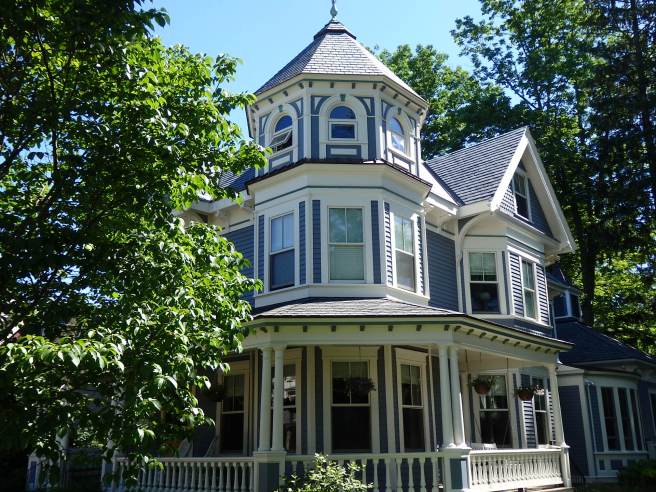
A large Queen Anne-style house with a distinctive witch’s hat tower something like this is the headquarters for Cassia’s extended family in my new novel, What’s Left. If only this one were pink, like hers.

In my new novel, What’s Left, the family’s nest egg was built by living on one income – in a single household – while everyone worked at the restaurant. The surplus went into savings and investments. Once the kids come along, their earnings also go in the pooled income, to be drawn out for college or marriage. Over time, as the family grows, the house has parents, grandparents, kids, aunts, uncles, and cousins. What a circus!

As for pocket money? Take it from the till? Some places, yes. And some places, no.

They’re about to start over, in a way, when Cassia’s father-to-be shows up.

Continue reading “POOLING THEIR FAMILY RESOURCES”

TEN THINGS I LIKE ABOUT MARCH

  1. Grow lights over shelves of seedling trays in our bay window. The 24-hour lights themselves, even before all the green shoots appear and flourish.
  2. The dramatic possibility of the biggest snows (though I could do without the digging out that follows).
  3. Arts & Letters afternoon in the Quaker meetinghouse. We have some fine painters and writers and quilters and weavers and sculptors and even musicians. Think of it as a salon without a piano.
  4. As I’ve already mentioned, a salon of Friends.
  5. Cutting pussy willows. A first harbinger of spring. Many of our friends welcome the gift.
  6. The realization we just might make it through another winter.
  7. First bulbs in bloom. Sometimes surrounded by melting snow.
  8. Bird migration. Especially the geese overhead.
  9. Flying kites at the beach.
  10. Those new wool socks from Christmas, now that they’re in regular rotation.

~*~

What do you find personally meaningful in the month of March?

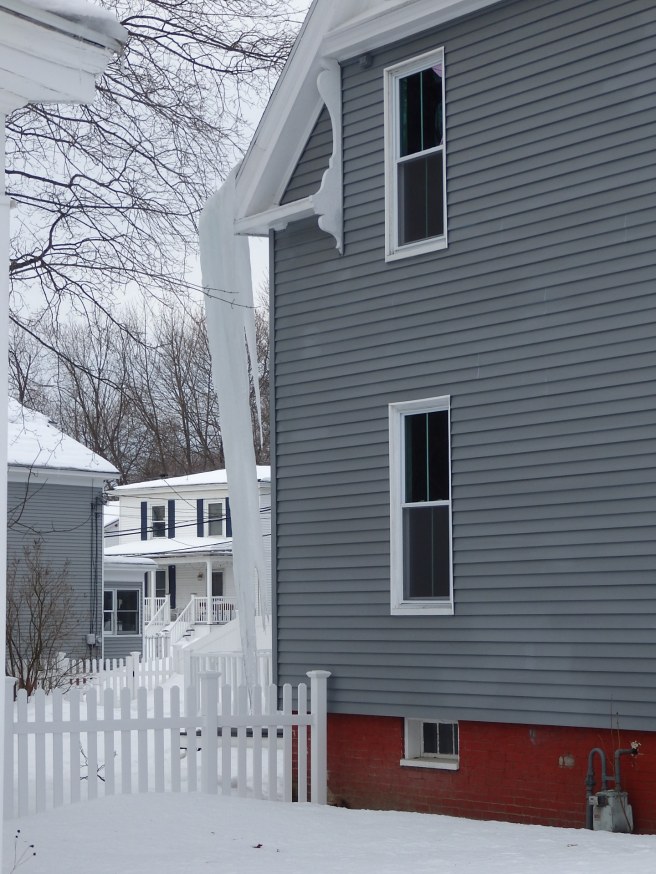
Yes, an icicle. Our neighborhood can be full of these long daggers.


BRACING FOR WILD CHANGE

In my new novel, What’s Left, her parents’ generation recognizes their family business will need to make big changes for survival. For her uncle Dimitri, that includes corporate planning and big investment, once the dust settles.

But first, he has to see exactly what they’ve inherited.

~*~

No matter how much I like the details that shape the events, some just had to be cut from the final story:

Continue reading “BRACING FOR WILD CHANGE”

DO THEY HAVE TO BE SYMPATHETIC CHARACTERS?

Carmichael’s, the restaurant her family owns in my new novel, has me looking more closely at others.

One of the conundrums I’m left with in my new novel, What’s Left: What if you don’t like her father, her deceased Baba, as she recovers him? (Or recovers from him.) Is it essential to your enjoyment of the story?

Or worse yet, what if you don’t like her?

Continue reading “DO THEY HAVE TO BE SYMPATHETIC CHARACTERS?”

TEN YUMMY SOUPS

It’s prime time for hot soup. We’re not talking about anything out of a can or a package dropped into boiling water. These are the ones made with fresh ingredients – or things you froze in season for use later. Probably with a good homemade stock, too.

  1. Tomato. Seriously, my wife’s is always a hit – and the glutten-free, lactose-intolerant, or vegans aren’t left out of the pleasure. Our secret ingredient is the tomatoes we cook down and stick in the big freezer in high summer in anticipation of this.
  2. Potato-leek. Simply comforting. Again, with our own leeks. Storing them through winter is a special challenge – so far, we find peat moss works best in buckets placed at the back of the cellar.
  3. Split pea and/or lentils. I imagine there are whole cookbooks devoted to the possibilities.
  4. Ramen. Remember, Japan created restaurants purely for this. Forget that cheap stuff in the plastic bag – though if you do, add tofu, the way we do.
  5. Pho. A hearty Vietnamese dinner in a wondrously big bowl.
  6. Seafood, meaning clam chowder or lobster bisque. (OK, that’s two. I just love both.)
  7. Hot and sour. Fresh Chinese bamboo shoots can make a world of difference.
  8. White bean. Last one I had was an Iranian version with lamb’s neck and another eight or nine ingredients. It was heavenly. Or you can stick to a hambone. Just don’t disparage good beans, OK? (Well, let’s add a footnote for turtle black beans, especially as a great Cuban bowl.)
  9. Ravioli. Yes, as a soup. Slurp ’em up!
  10. Asparagus. We put those stems we cut off to work later.

Well, India’s Mulligatawany belongs on the list, too. I doubt we’re done here yet.

~*~

What would you add to the list?

They’re a threat.


COPING WITH TRADITION AND CHANGE

The big break with the status quo that occurs in my new novel, What’s Left, still demands a respect for all that’s led up to the transformation.

As she perceives, from a customer’s point of view:

They miss the reliable owners’ familiar faces behind the stools and salt and pepper shakers, along with their comforting banter. Could we ever fill their sturdy shoes? Can we live up to their dependable standards or their reasonable prices? Can we even serve a decent cup of coffee or will we lose our shirts and have to quit the place?

The challenge and opportunity go way beyond that.

It’s a sharp break to a new generation, in more ways than one.

Cassia never has to consider this with her own brothers:

From everything I see, there’s an uncommon bond between the brothers, despite their sexual differences. Yes, they’ve both been promiscuous – and then settled in.

Or does she?

~*~

In writing a novel that’s told by a single character like Cassia, I have to remember that she knows far more about her family than I ever will. Maybe I can’t answer everything, but suppose you had an opportunity?

What would you ask Cassia over dinner? Or somebody in your own family, one on one? (Present or past?)

~*~

Greek salad (horiatiki salata) at Psaropoulo restaurant, Hydra, via Wikimedia Commons

In the family, Cassia may have had food like this.