Carmichael’s, the restaurant her family owns in my new novel, has me looking more closely at others.
Long before I ever anticipated what’s evolved into my newest novel, What’s Left, I ended my first published novel with a young woman named Diana, in part because I liked the two puns it allowed. Her husband-to-be, a student of Tibetan Buddhism, had returned to Indiana – and now he could boast of a love that allowed him to be in Diana as well as in Dhyana, or deep meditation.
Not that you have to understand Sanskrit to read it. Shouldn’t the mere hint of something exotic should suffice?
How many items are supposed to be on a bucket list, anyway? Twenty is what I’d heard, but now I come across 101. Since this is a Tendril, we start out with 1o.
The Grand Canyon. A mile down? Like an upside-down mountain? How incredible!
Greece and Istanbul. Well, it would fit right in with the roots of my latest novel.
Holguin, Cuba. I love the Quakers I know there. I think January would be perfecto.
Alaska, taking the ferry from Seattle or Vancouver. We’re talking summer, remember.
For the other nine months? Hawaii. I hear it’s about much more than colorful shirts.
Nantucket. So close to home.
The Adirondack mountains, from the top. Again, so close to home.
Tanglewood, summer home of the Boston Symphony. Is there no excuse I haven’t done it?
Carnegie Hall, from the inside. I used to know somebody who lived in the tower at the back.
The Metropolitan Opera. Standing outside doesn’t count.
In my new novel, What’s Left, her uncle Dimitri holds a Master’s of Business Administration degree from Stanford University but acknowledges the value of hands-on learning. As he argues with her father-to-be in a passage I cut from the final version:
Maybe you haven’t recognized you already received a Master’s Degree, in part, from your experience in that old rambling apartment across town, back before you even graduated. Your Ph.D. came on the rails under the big city. Most universities teach speculation, which is completely different from knowledge. What they teach often changes from day to day and hour to hour.
~*~
You know the expression, “Garbage in, garbage out,” and I want to use it as a nickname for a young adult who shows up around here all too often. When his head’s not stuck up his arse, it’s on the Internet.
A large Queen Anne-style house with a distinctive witch’s hat tower something like this is the headquarters for Cassia’s extended family in my new novel, What’s Left. If only this one were pink, like hers.
In my personal genealogy research, I’ve found that brothers in one family wedding sisters in another was a common occurrence in earlier times, especially when marriage fell within a shared religion or ethnic tradition. I’ve been intrigued with the actually functioning within those households, especially when they moved off together to resettle on the frontier. I’ve assumed that each member brought some specialty to the wider relationship.
Thus, in my new novel, What’s Left, having her great-grandparents be one-half of the quartet that founds her family in the New World makes perfect sense. I like being referring to them as brothers/brothers-in-law and sisters/sisters-in-law. It does make for an especially close family.
Having them break so completely with the Old World is another matter altogether, though I’ve heard their argument told by descendants of other immigrant families.
Easter this year was April 1 — except for the Eastern Orthodox, who will observe it on April 8.
White chocolate and malt balls. The Easter Bunny or somebody brings them.
Ferns and flowers. Daffodils and irises, especially when they come indoors as cut flowers.
The quality of daylight changes.
Hot dandelion greens with fried eggs.
The last of the snow melts despite a few spring snowstorms.
Goldfinches discard their gray “duster jackets” and turn brilliantly yellow again.
Bagging seaweed at the end of the road and filling the car trunk gives me an excuse to hit the beach early. Remember, the stuff makes a perfect mulch in the garden.
Sitting in the loft of the barn again, catching up on some reading, now that the weather’s warmed.
So many birds are actually singing in the morning. Quite rowdy, actually, at times.
~*~
What do you like about April?
Two antique forks and two paperweights on a shelf in my studio,
Of course, this is totally unrelated to the theme. Just another thing on my mind.
I can’t imagine What’s Left, my new novel, without her aunt Pia – short for Olympia. She’s one of the characters created especially for this book, unlike the ones we inherited from the end of my first published novel, and she emerges as a parallel to Cassia’s father. At key points, they work together as a sharp creative team in the transformation of the family restaurant and its holdings.
If anyone could pose a romantic rival to Cassia’s mother-to-be, wouldn’t it be Pia?
She’s the flower child, the hippie chick, and then the earth mother – the height of femininity, from one of his perspectives. She also reintroduces Cassia’s family to its ethnic culture, especially the concept of kefi, or living with gusto (and much more). She’s the one the children naturally turn to for comfort or playful. And she has style to spare.
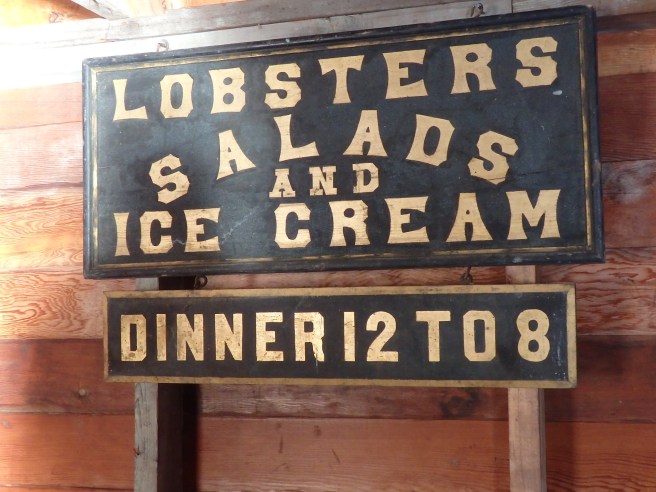
Carmichael’s, the restaurant her family owns in my new novel, has me looking more closely at others.
There’s no escaping food itself or American culinary trends in my new novel, What’s Left – not when the family’s livelihood and fortune are built around their landmark restaurant. What I did, however, escape is a story relating the day-to-day cartoon sequences of a kitchen demimonde of cooks, dishwashers, and wait staff, out of sight in the back, and the quirky demands of customers beyond the swinging service door and long countertop, out in front. My daughter, a pro in the hospitality industry, already has a fine draft of a novel addressing those, thank you. Besides, I touched on some of those incidents in the opening chapters of my novel, Promise.
Since my new work grows out of a template established at the ending of my first published novel, where her parents’ generation is already immersed in change, it seemed natural to have them look toward innovation and evolution rather than remain tradition-bound in hamburgers and fried chicken. For one thing, they were toying with Buddhism, with its vegetarian traditions.
Let me say simply that the possibilities have led to many heated discussions in our household, married as I am to a well-informed foodie and genius cook in her own right. And that’s before we get to the aforesaid daughter.
In the time since Cassia’s parents’ marriage, the awareness of food options and availability of ingredients in America has advanced by light years.
I’ve never been a clothes horse, in part because I could rarely get anything that really fit. Let’s say the awareness has come long after childhood. Here are some of my favorites:
Wool socks.
My big green terrycloth robe.
My stack of sweaters.
Hawaiian shirts.
Banded collar shirts.
My three custom-cut Jos. Banks suits, back when I was with the newspaper syndicate. Not that they would fit me anymore.
Bell bottoms, back in the day.
And Levi’s, which actually came in my size. Though now I’ve moved on into slacks having more pockets.
Converse sneakers, at least until the fascia plantar kicked in.
Turtlenecks, now that I’ve retired.
~*~
So what’s your own favorite attire?
Pussy willows … harbingers of spring.
Of course, this is totally unrelated to the theme. Just another thing on my mind.
When her uncle Dimitri turns to an astrological chart as support for his sales pitch to her father-to-be, this passage was included in an early version of my new novel, What’s Left.
Come on now, Dimitri! You don’t expect me to believe any of that mumbo jumbo!
I seem to recall you said the same thing about meditation, back when your lover wanted you to sample it, Nita says, entering the kitchen.
Suppose I was trying to tell you about the subways for the first time, right now? If you hadn’t already tried it, you wouldn’t believe a word I told you.
~*~
I eliminated it from the final version for several reasons. One, I felt that by now her future father was far enough along in his spiritual practice to be ready to listen to arcane thought systems, even if he might challenge their validity. Also, I felt this relied too much on a backstory that was no longer relevant to the work at hand.
But Cassia’s family, from her great-grandmothers on down in the New World, likely felt otherwise.
Have you studied or practiced astrology? Palmistry? Tarot? The coins of I Ching? Some other arcane pathway, like the tea leaves or coffee grounds Cassia’s great-grandmothers might have consulted? Or do you know someone who undertakes any of these? What’s your perspective? Any personal insights?
~*~
Greek goddess, 4th century BCE, part of a statue in Musee Royal de Mariemont. Photo by Ad Meskens via Wikimedia Commons.)
A large Queen Anne-style house with a distinctive tower something like this is the headquarters for Cassia’s extended family in my new novel. If only this one were pink, like hers.
In my new novel, What’s Left, her maternal grandparents are both dead before her birth – they’re victims of a late-night collision on a rural highway. But they cast a big influence over her life, all the same.
Stavros and Bella are second-generation Americans, bridging hard work and success to establish the family restaurant, Carmichael’s, as the campus landmark it becomes.