No, the settlers don’t own the land – they can merely hold it and pay rents

It’s hard for modern Americans to understand a basic reality of European colonies in the New World.

None of the players in the story own the land they’re dealing with.

Not the settlers, even though they’re clearing it and building on it.

Nor the proprietors or investors, either. They’re more like developers who offer leasing opportunities. Think of rental agents.

Nor the Indigenous tribes, surprisingly, even though many of the settlers also negotiate a payment to them for their land. The use of their land, more accurately. Admittedly, the payments are largely symbolic – a bushel of corn a year, for example.

No, quite simply, all land “belongs” to the king, and he allocates the privilege of using it as a means of leveraging his own prestige and power.

Under the feudal system, that would mean grants to barons and other lords in return for their fealty.

They, in turn, could dole some out to knights, who then become wealthy, as well.

Add to that the gentlemen farmers, living off the rents to their estates.

And then yeomen, who are still free on their own tenants, as their small holdings were called.

And husbandmen.

And, somewhere below that, the serfs who are bound to the land and its holder. Well, by this point in time, they’d been freed but were still at the bottom of the ladder.

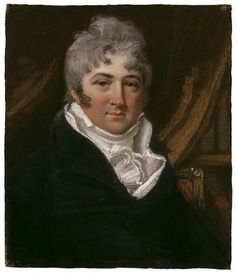
King James I

~*~

THIS IS THE MODEL OF LANDHOLDING – not landownership – up through the American Revolution.

Its assumptions are quite different from those of modern Americans. What do you mean? I don’t own the ground under my house and barn?

No, you don’t. And you still have to pay rent on it.

~*~

AS A FURTHER COMPLICATION, charters could be revoked or rewritten.

Falling out of the king’s favor would have costly and dire consequences.

As my upcoming book describes, this land arrangement affected Dover and the rest of New England through a series of realignments and controversies and attempted evictions.

In fact, it almost leads to a rebellion in Boston Harbor against the king a century-and-a-half before Paul Revere’s midnight ride. Well, that’s one aside I don’t develop. There’s too much else going on along the Piscataqua.


Microclimates? Dress accordingly

My awareness of microclimates – ways weather conditions in small spots differed from the wider scene – came early one spring when I was dwelling in an orchard in Washington state. There were critical hours once the trees began blossoming when a frost could devastate a year’s crop. Cherries were particularly susceptible, but the apricots, peaches, pears, plums, and apples were also at risk. Remember, a whole year’s income could be wiped out in a few hours.

Frost-fighting measures, such as smogging pots, propane heating lines, airplane propellers pulling the slightly warmer air aloft down into the groves, or spraying the trees with water to form a protective ice coating around the blooms, were all costly. Essentially, it was a gamble. The orcharists relied on alarms sent out on special radio frequencies, usually in the wee hours, before taking action. Sometimes three feet of elevation made the difference in whether to act or simply ride it out – or, in the other direction, whether any action would be futile.

Years later, in New Hampshire, I encountered something similar, where a band somewhere between Manchester and the seacoast could vary by ten degrees within a mile or five. It could mean setting out in shorts and being uncomfortably cold on arrival. Or setting out in long pants and sleeves only to be sweating.

Once, in Dover, I saw an 11-degree drop – plus a cloud bank – between one side of the bridge into Newington and the other. Another time, I left for work in 39-degree favorable conditions only to encounter freezing rain and a hill that took a half-hour to go down midway to the office.

Now that I’m living on an island in Maine, I hear a common saying that our temperature is typically ten degrees cooler in summer and ten warmer in winter than it is even at U.S. 1 on the other side of the causeway, just seven miles away.

The differences were even more dramatic one morning when I checked last month. Our reading was plus 4, but inland had minus 8, on one ridge an hour’s drive away, or minus 14 at a lake a few miles away. Close by us but inland only 15 to 20 miles away were readings of minus 12 and minus 15.

A few days later, we had a minus 3, but Calais, 25 miles north and on a tidal river, was minus 25!

Do you experience anything similar where you live?

Add or subtract 22 degrees from 70 to get an idea of how much the impact can be. I mean, the 90s are usually miserable while the 50s mean keep the furnace running and maybe the car windows rolled up. Unless you’re a native New Englander. (I’m not.)

Well, it is Groundhog Day, which is really the end of Solar Winter, by one calendar, or the halfway point of Calendar Winter, another. Either way, we’re entering a stage when things warm up a tad but can produce some horrendous snowfall in my part of the universe.

Once again, I’m ever so glad I’m no longer having to commute to an office, day or night.

Just from one storm

We had generally cleaned up from earlier snowfalls, with only a light covering left in town, before last weekend’s blizzard blew in. And, oh, my, did it!

Officially, we had 19 inches, though stiff wind and wicked gusts left some patches surprisingly bare, along with most roofs, but then piled the offset precipitation in the lee.

We were also hit with a widespread electrical outage, which fortunately was repaired in about only an hour or a bit more. I was braced for two or three before getting worried. Oh, I do miss having a wood-fired stove, though one is in our plans. And we do have a generator on order, one that would have been in by now if only we weren’t trying to relocate its proposed placement to allow for a tiny future full-sunlight garden, which is, in fact, now buried by the snow plow driver. Life gets complicated.

Shoveling out the front entry allowed for lighthearted conversations with passers-by, not all of them walking dogs. One woman even showed me a phone picture of her son or son-in-law’s back door, which was floor-to-ceiling snow when they opened it. Yes, I was deeply grateful ours wasn’t anything like that theirs.

So far, according to the weather service, we’ve had about 48 inches so far this season, but this last storm was the doozy, as you can see from our digging out. But, wait, there’s more, as the cliche goes. Tomorrow and the day after are expected to deliver another foot or so, the figures are still bouncing around. Dial up, scale back. Yeah, folks around here are skeptical of the forecasts, for good reason, but not stupid, either.

Reminds me of the guy behind me at the IGA checkout before the last blast. He had baby spinach and some related healthy ingredients followed by an impressive selection of wine. And you thought it was always milk, bread, and canned soup that got cleaned out?

Now, the big question is this:

If we get hit by this much snow in the days ahead, where we will put it?


Note the raised porch.

Traditionally, February and March can bring the big whammies in New England and neighboring Upstate New York. This could get interesting. Or even tedious.

No, it’s not all flat, either

In my novel Nearly Canaan, Joshua and Jaya meet in a railroad crossing known as Prairie Depot. And in my newest release, The Secret Side of Jaya, she returns there in a magical sort of vein.

Yes, Prairie Depot is somewhere in the Midwest. But the region itself is hardly as homogeneous as many portray it.

~*~

  1. Defined: The region is generally comprised of 12 states – Illinois, Indiana, Iowa, Kansas, Michigan, Minnesota, Missouri, Nebraska, North Dakota, Ohio, South Dakota, and Wisconsin. I question the inclusion of Missouri, which was a slave-holding state and thus Southern, but others try to add Oklahoma. Population 65 million.
  2. Breadbasket of the world: Wheat, corn, and oats are major crops, along with soybeans and sugar beets. Beef, dairy, and hog production are also huge. The fields run on for miles. And Wisconsin is the nation’s leading producer of cranberries.
  3. Major cities: Chicago, Detroit, Cleveland, St. Louis, Minneapolis, Cincinnati, Milwaukee, Kansas City, Des Moines, Omaha, Columbus, and Indianapolis head the list.
  4. Mall of America: The 400 stores, waterpark, and aquarium in Bloomington, Minnesota, are deemed one of the most popular tourist magnets in the country, drawing 35 million visitors a year.
  5. Heartland: The geographic center of North America is in Ruby, North Dakota.
  6. A taste for the oddball: Cawker City, Kansas, is home to the world’s biggest ball of twine. Ten feet in diameter.
  7. Linked by rail: The Union Pacific’s Bailey Yard in North Platte, Nebraska, is the world’s largest railroad yard. It’s eight miles long and up to two miles wide, with 301 sets of rails.
  8. Horses and buggies: More Amish live in Ohio than in any other state. In 2015, there were 69,255. And Iowa has a significant number, too – about 7,000.
  9. Cowboy country: Much of what we consider cowboy-and-Indian out west actually took place in Kansas, Nebraska, and the Dakotas. And sharpshooter Annie Oakley was raised by a Quaker family in Ohio.
  10. It’s not really homogenous: Each state is different, starting with the economy, religious mix, ethnic origins and culture, and amount of annual precipitation. Even the parts of a state can vary widely along these lines. Much of the eastern half of the region is heavily industrial, with steel and auto making at the fore, while other parts are intensively agricultural. There are further breakouts like the Great Lakes region or the Great Plains. And it’s not all flat, either.       

~*~

What are your impressions of this part of the country?

Restoring a one-of-a-kind Civil War mural

Now owned by the Tides Institute and Museum of Art, the post is being renovated to include a significant Civil War-era collection and display.

Eastport’s Civil War veterans had good reason for naming their Grand Army of the Republic post after Major General George G. Meade. Not only had he commanded the successful Union troops at the Battle of Gettysburg, he was stationed in Eastport after war to curb the Fenian Rebellion, an Irish liberation attempt that had organized in the United States and conducted raids in neighboring Canada.

During his time in Eastport, he caught pneumonia and nearly died, and some residents got to know him first-hand. One – the wife of the owner of the house where he was staying – complained bitterly for years afterward about his poor aim in spitting tobacco juice all over her home. Let’s hope he was better with a firearm.

The local post wasn’t the only one named in his honor, by the way, and the organization itself became a powerful force within the Republican Party, helping to elect at least four its members to the White House and pressing for progressive legislation.

In 1881, the local post took over a two-story frame structure at 6 Green Street as its meeting hall. As its membership – limited to Union veterans of the Civil War – died off, the building passed to the local Veterans of Foreign Wars for its post. The building next door included a bowling alley, roller skating rink, and dance hall all fondly recalled by youths of the time.

Nobody knew these were overhead.

The murals and ceiling were long hidden by a dropped ceiling and rediscovered only shortly before 2014, when the building was gifted to the Tides Institute and Museum of Art.

The mural runs the length of the roughly 40-by-25-foot room and includes images of eight Army corps badges.

Tony Castro of New Gloucester, Maine, has been renovating the murals. Despite severe water damage, they may be the only surviving interior of their kind in the state.

The patch at upper right shows how this section looked before its restoration.

The Tides Institute has also been gifted with important Civil War artifacts and documents, which may be displayed as the museum adds gallery space.

A sign from the hall’s later use as a Veterans of Foreign Wars post.

Something new I’ve been seeing in the weather alerts

Living along the ocean, I’ve seen gale warnings become a regular part of the forecast. You’ve heard of gales of course. But freezing spray?

I hadn’t given it much thought till now. Remember that magical “sea smoke” I’ve been observing? It no doubt condenses on vessels. As does moisture whipped up from the surface by those gale-force winds. Either way, here’s what the weather service says:

Freezing spray may render mechanical and electronic components inoperative. Ice accretion on decks and superstructures may result in some loss of stability. Very strong winds will cause hazardous seas which could capsize or damage vessels and reduce visibility.

During freezing spray conditions the U.S. Coast Guard advises that you ensure all lifesaving equipment remains free of ice.

Mariners should prepare for accumulation of ice on their vessel and consider altering plans to avoid or mitigate these hazardous navigating conditions.

Mariners should prepare to remain in port, alter course, and/or secure the vessel for severe conditions before conditions deteriorate.

And that’s for today’s steel-hulled ships. Imagine what it was like back in the days of sails and no warnings. As for trying to walk on decks or man the rigging?

And you thought freezing rain was bad? Seems it has a nastier brother.


Come on down to where the town really connects

Locally, it’s known as the Breakwater, rather than the town pier or wharf or dock or safe harbor. And it’s the heart of Eastport, the centerpiece and focal point, as well as the home of the commercial fishing fleet and U.S. Coast Guard station.

It’s snuggled up right next to our small, struggling, and potentially quaint downtown. Here’s how it looks from the walkway this time of year.

It even broke down and collapsed in the winter of 2014, taking a few fishing boats with it.

Rebuilding was another matter. Officially, it reopened in September 2017, though details may have been completed later. The versions differ, up to “two winters before last.”

Eastport has the deepest natural harbor in the continental United States and is said to have rivaled New York’s in shipping at one point. I’ve seen photos of a cruise ship tied up here, and it truly overwhelmed the dock and town in its size.

The waterfront has – and had – other piers, with pilings that can still be seen – the old vaudevillian appearing steamship dock, for one, or the more recently gone Northeast Marina and Fuel Depot, as prominent examples. And, yes, definitely, what was once the world’s largest sardine cannery, as well as a solitary brick shell from the era still standing over the water with some folks hoping for a redevelopment before it caves in.

Significantly, there is the Cargo Terminal, our industrial shipping complex at Estes Head just around the bend. It has both high security and tractor-trailer traffic, so you don’t stroll around there.

Still, the breakwater at the end of Sullivan Street beckons us, even with its seemingly perilous heights above the water at low tide.

And here’s how downtown looks from the Breakwater.

Another twist on everyday personal unease

Everybody is searching for something. So I’ve heard.

That, rather than mere “anxiety”?

As if I ever had an answer, short of some piety.

Still, I am the son of a born worrier.

So just what, exactly, is that “something” in your life?

What, exactly, is your life (or mine) missing?

And just how much will it cost?

Some observers will argue it’s really an enemy, villain, or opponent in our life that we require.

Maybe even the devil in the details.