Sharpening the lineup

Removing Hippie Love from my shelf of available ebook offerings was a difficult decision.

From a writer’s point of view, having an alternative telling of Hippie Drum remained a fascinating experiment. Yes, it turned the story into erotica. But, with the release of What’s Left, I also realized it’s not something any daughter would want to know about her dad. And so, the two hippie books are gone, replaced by Pit-a-Pat High Jinks.

Quite simply, I believe Cassia’s story holds greater interest, at least for younger generations. After all, it’s really about today.

Reasons to like Watertown, Mass.

Greater Boston is comprised of many suburbs that were originally Colonial towns out in the country. As a result, much of the metropolitan area today retains a village feel in addition to its cosmopolitan chic.

Each town – or, in many cases, now city – is different, however subtly.

Let me illustrate with Watertown, where my choir rehearses.

  1. It’s on the Charles River, which once powered its paper mills and other factories. Today the river has lovely parks and pathways, as well as crewing teams practicing out on the water in season.
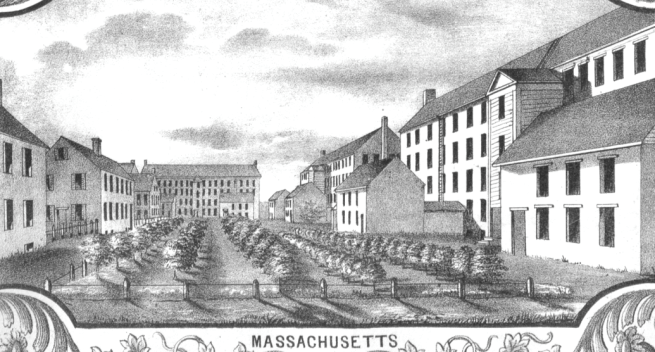
  2. The impressive Arsenal produced military armaments from 1816 through World War II. Today it’s a shopping district, and its restored antebellum commander’s mansion is a kind of museum.
  3. Settled in 1630, Watertown soon became the seat of the Whitney family of invention, investment, and horse-breeding fame.
  4. It’s largely overshadowed by neighboring Cambridge and the Harvard crowd. The famed Mount Vernon Cemetery, the first garden style burying ground in America, 1831, is usually thought of as being in Cambridge, when it fact it lies mostly in Watertown, with a who’s who of famous Americans buried in its rolling grounds.
  5. Watertown has a wide ethnic range of residents, mostly working class or professionals.
  6. The Armenian Library and Museum of America is well worth visiting for exhibits that acknowledge many genocides beyond their own. Watertown is the third largest center of the Armenian diaspora in the United States, surpassed by only two cities in California.
  7. When it comes to cheap eats, I think it definitely beats hipper Cambridge. Some of the best Chinese I’ve ever had was in a modest storefront in Watertown Square, and I’m really sold on the Iranian takeout just up the street. But we also like Wild Willy’s.
  8. The Perkins School for the Blind, founded in 1829, is the oldest such institution in the U.S. and is world famous. It manufactures its own machine to record text in braille. It moved to Watertown in 1912.
  9. I really like the public library, which even has its own coffee shop.
  10. The Gore Place is an opulent summer home built by a man who a fortune in speculating in Revolutionary War debt.


Sometimes a character dictates the story

For a writer, nothing is more magical than when a character begins dictating the story. Sometimes, you can’t type fast enough to keep up with her.

As I was saying about the “zipper” that sometimes appears while revising a work? This one, I’d say, is the most satisfying.

~*~

Now that I’ve confessed, it’s your turn.

Do you ever hear “voices” while doing something? Do they help or hinder your action?

~*~

My novel’s available at the Apple Store, Barnes & Noble’s Nook, Scribd, Smashwords, Sony’s Kobo, and other fine ebook distributors and at Amazon in both Kindle and paperback.

The paperback cover …

Come explore the Olympic Peninsula

When Jaya and Joshua set of for the Pacific Northwest in my novel Nearly Canaan, what they expect to find is something very much like the Olympic Peninsula rather than the fertile desert where they land.

Here’s some of the alternative.

  1. Set on the far western end of Washington state, the Olympic Peninsula is an anvil of land comprising nearly 3,600 square miles – more than Rhode Island and Delaware combined. It has rare temperate rainforests, glacier-clad mountains, hot springs, timber-tangled shorelines, tall seastacks in the surf, hot springs, waterfalls, large lakes, and eight Native tribes and their reservations.
  2. Olympic National Park at the heart of the peninsula covers nearly a million acres and includes the state’s second-largest mountain range, crowned by 7,980-feet-tall Mount Olympus. Glacier-climbing skills are essential for ascent and descent. The park is the system’s sixth most popular, attracting more than 30 million visitors a year.
  3. The restoration of elk was so essential to the park’s mission that it was nearly named Elk National Park.
  4. The town of Forks gets 119.7 inches of precipitation a year – making it the wettest municipality in the continental U.S. And the nearby Hoh rainforest receives 140 to 170 inches a year.
  5. The peninsula abuts the Pacific Ocean on the west, the Strait of San Juan de Fuco on the north, and Puget Sound on the east. Its rugged interior shunts auto traffic toward the coastlines.
  6. The 300-mile, two-lane Route 101 loop around the peninsula is considered a three-day drive. More, for those who investigate scenic offshoots. There are no alternatives for traversing the peninsula.
  7. Hot springs access is available to the public at Sol Duc. Other sites are local secrets.
  8. Following the biggest dam removal in U.S. history, completed in 2014, the Elwah River once again runs wild for fish migration.
  9. There are more than 60 named glaciers.
  10. While the Olympics Range is seen prominently from Seattle on a clear day, its tallest point, Mount Olympus, is visible from no city.

~*~

Hope that serves as an introduction. We haven’t even touched on Port Townsend.