Among the reasons for Quaker decline, let me suggest

Relocation to the West, especially, wasn’t the only reason Dover Friends Meeting in New Hampshire declined in the 1800s. Here are a few other factors.

  1. Being Quaker can be hard work. Not just a Sunday thing. Things like honesty.
  2. Tightening of personal discipline in the mid-1700s. The marriage restrictions definitely cut into membership.
  3. Plainness in clothing, design, and possessions. That is, personal expression.
  4. Employment and other business ethics. Refusal to take oaths kept Friends out of some professions, such as the law, and bankruptcy was a disownable offense.
  5. No “vain entertainments.” And thus, no music, dancing, fiction, theater, paintings, card playing, horse racing, or gambling.
  6. Pacifism during the Revolutionary and Civil wars, plus withdrawal from political offices in the 1760s.
  7. The separations that split the Society of Friends into factions from the 1820s on.
  8. Aversion to emotion, starting with anger.
  9. Emerging restrictions on alcohol and tobacco. Being “disguised by hard liquor” was a big problem on the frontier.
  10. Even the appearance of wrongdoing could be an offense. And all that led to deadly quaintness.

Not that these quite apply today. Still, they could prompt a book in themselves. For now, you’ll have to consider Quaking Dover for the story. Order your copy at your favorite bookstore. Or request it at your public library.

Black flies, little black flies

Spring in Maine can be a very short season, marked first by mud season and then the black flies that descend from late April into July.

My introduction came one year in a brief stop to investigate a stunning waterfall, interrupted by a large swarm of what I thought were mosquitos. The second enlightenment came at a stop along the Airline Highway en route to Eastport. A wall of flying insects would be a diluted version.

Also known as buffalo gnats, turkey gnats, or white socks (not of the Chicago baseball kind), black flies are more than the defenders of wilderness. Take a look.

  1. They don’t seem to be a problem on windy days or along the ocean.
  2. There are actually more than 2,200 species of them, not that the ones I’ve seen ever look black.
  3. Their bites are particularly nasty or, at the least, a nuisance. Some even spread the disease river blindness.
  4. They’re found far beyond Maine. Scotland, northern Ontario, and Minnesota weigh in heavily, though Pennsylvania has been active in the battle against them.
  5. The eggs are laid in running water and are extremely sensitive to pollution.
  6. Bites are most often found on the face, hairline, neck, and back, though the pests are attracted to breathing and, thus, can enter the nose or mouth. Don’t overlook the ankles, either.
  7. They’re attracted to dark colors.
  8. They stretch the skin and then make shallow cuts with blade-like sections of their mouth before sucking blood.
  9. They’re most active for a few hours after sunrise and a few hours before sunset but totally inactive through the night.
  10. Folksinger Bill Staines made a hit of the logging camp song written by Canadian Wade Hesmworth. The line, “I’ll die with a blackfly pickin’ my bones,” rings especially true.

As for some major ‘rabbit holes’

It’s what we call “falling down the rabbit hole.” You know, you look up from your computer screen and are startled to realize it’s hours later than you thought. Maybe even with a pang of guilt.

You might even call these mind traps or time wasters.

Here’s our top ten. I’m inviting you to provide additional commentary or to nominate others.

  1. Facebook. Yeah, major, even before sifting through the suffocating ads.
  2. Twitter. Well, back when it had credibility or the lights were still on. But now? Has all that twittering gone over to Mastodon?
  3. Pinterest. What, you can’t find professional photos anywhere else?
  4. Instagram. Well, just imagine how many photos are being taken on cell phones nowadays.
  5. Tik toc. Ah, the mysteries of youth, all around the world.
  6. Fantasy sports. You bet.
  7. Online puzzles. Think Wordle for starters.
  8. Food sites. How many ways can you cook a turnip, anyway?
  9. Advice columns. Oh, my, how do some of these people even get out of bed? Or do they really crawl out from under a rock?
  10. Solitaire, online or with real cards. I do prefer to shuffle my own, thank you.

Those music videos I’ve warned you about earlier can be considered “research.”


A few lives I almost had … but I’ve wound up here instead

Being of an age where I have more to look back on than what lies ahead, pondering forks in the road I followed, I find myself concluding they ultimately turned out for the best.

Still, there are moments when I wonder how my life would have gone if, say, things had turned out better with certain lovers or I hadn’t narrowly missed out in a desired career move – things that would have opened other avenues. In fact, a big goal all along had been to become financially independent so I could hunker down with my more literary writing, the thing I’ve been able to do in retirement.

Here’s a handful.

  1. Been hired by a really big daily newspaper. The Wall Street Journal, especially, had been interested until laying off a ton of editors and reporters just before my graduation. And there had been a brief flirtation from the Washington Post and, later, Detroit Free Press.. My dreams of living in a major city, with all of its fine arts cultural opportunities, vanished with that.
  2. Returned to my hometown after college. Well, it would have left me deeply rooted. Or, in one scenario, wedded into a wealthy family on the other side of town, with all of the opportunities that would have afforded. But would I have found that too confining? (Said girlfriend ultimately did.) Instead, I was off into hippie communion and poverty-line journalist existence in foothills a few hours from New York City.
  3. Stayed in the ashram or at least the Asian spiritual stream. Yoga had saved my life and was a hot field, if I had been more entrepreneurial. But I wouldn’t have encountered Quakers and my family roots. Instead, leap ahead a few steps.
  4. Not persuaded my fiancée to overcome her jitters. That is, freed me to move on without her. She may have even closed off a few upward moves for us toward the end.
  5. Stayed with the Workshop in Political Theory and Policy Analysis, had its major grant not been slashed shortly after being renewed. I would have had another four years in a big university setting, and my first wife could have earned her degree there rather than being uprooted. It might even have led me to graduate school and an academic career after all. But I did have dreams of mountains and wilderness, or else recognition as a poet, and those all led to the next fork.
  6. Remained in the Pacific Northwest. Despite the grueling demands of the office, my professional career was also exciting and on an upward swing. I was making inroads as a poet, too, and with the mountains and forests, I was living a dream. But there were dark clouds as well, any of which could have erupted even had I been able to relocate to the western side of the Cascades. Instead, I was soon in an eastward ricochet.
  7. Not faced marital difficulties. That is, had she been faithful rather than leading to divorce. Add to that my near miss with a big management job at America’s eighth biggest newspaper and its sterling ownership. Well, I probably would have had that big heart attack, too. Instead, I rebounded into a whirlwind romance with a sprite who seemed to be everything I ever desired. Leading to the next set of painful forks.
  8. Moved to Baltimore or managed to remain, including marriage to the dream of my life. First, that engagement went up in smoke and left me, well, a pile of emotional ashes. My hot job on the road covering 14 states turned into a dead end. And I failed to find a shared mission with a devoted lover who would have desired to have children together. From the start, I could have moved to, say, Boston, instead. At least I was able to give myself a sabbatical and hunker down writing for a year amid the debris.
  9. Had a book manuscript click with an agent or, more vitally, a commercial publisher. Or even a few critics. My goal of becoming financially independent kept slipping away, though my later friendship with one celebrated author has shown me how precarious that bestseller life can be. As for having a book take off? A writer can get trapped by success.
  10. Married the Georgian. She swept me off my feet, and how, maybe because she seemed to embody everything I thought I desired, as well as what she said she desired, as her mother reminded her. Yes, it was exciting, but after just a month, she panicked. Frankly, I soon saw it would have been a disaster. In addition, she never would have fit in as an editor’s wife, much less in any of the roles that might have opened later.

When I look at the forks I chose to follow, I have to admit the one of going back into the ranks of the newsroom rather than management was crucial. The reasons I stayed there could easily fill another Tendril.

Does any of this sound fishy?

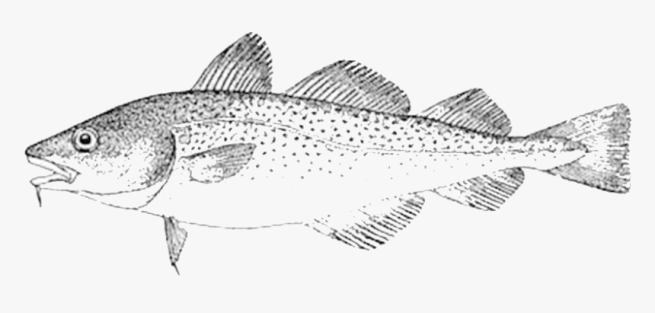
I’ve come a long way from the frozen fish sticks of my Midwestern youth, OK. Seafood’s a favorite part of my cuisine, which is one more reason I love living in coastal Maine. But I still have trouble telling one species from another.

So here are some starting points.

  1. Most fish fall under the taxonomic group Osteichthyes, or bony fish, meaning they have skeletons composed of bone tissue. With a diverse range of 20,000 or so species, it’s the largest group of vertebrates today and is comprised of both freshwater and saltwater members.
  2. That contrasts with the Chondrichthyes, which have skeletons composed primarily of cartilage. This group includes sharks, rays, skates, and sawfish – saltwater species of saltwater vertebrates with jaws, paired fins, and other distinctions.
  3. Jaws on fishes, by the way, are not connected to their skulls. Instead, they can shoot their mouths forward to capture prey, like a kind of spring.
  4. Fish breathe oxygen, not air. The fine blood vessels of their gills diffuse the oxygen to the fish’s membranes. In contrast, mammals rely on lungs.
  5. Since fish don’t have eyelids, except for sharks, you can’t say they sleep, but most of them do rest, either floating motionless, wedging themselves into a safe place, or even building a nest. But they do remain alert to danger.
  6. Tunas, billfish, and certain sharks are the speed champions, reaching 50 miles an hour in short bursts. In contrast, some strong swimmers maintain five to ten mph in cruising.
  7. Fish would suffocate if they tried to chew their food. So some, like sharks, have sharp teeth to hold their prey until they can swallow bits or parts whole. Bottom dwellers have large flat teeth to grind the shellfish they consume. And the herbivorous grazers lack jaw teeth but have tooth-like grinding mills in their throats.
  8. The organs of some fish are poisonous to man, while others become toxic because of compounds in their diets. Most of what fishermen catch, however, can be considered edible. I suspect that doesn’t always translate, though, as tasty.
  9. Truly fresh fish is odorless. The “fishy” smell comes from deterioration, typically when they’re not stored or preserved correctly.
  10. To hold their place in a school, fish use their eyes and a row of pores along their sides running from head to tail, called a lateral line. Special hairs in the pores sense changes in water pressure from other fish or predators. And some schools contain millions of individuals. So far, I’ve heard of no teacher at the head of the class. Do fish even have leaders?

For the record, neither starfish nor jellyfish are fishes.


A shoutout to vocal warmups

If you like to sing, even if only in the shower, let me encourage you to check out some of these online.

One of my biggest surprises after getting involved in serious chorus participation after I retired from the newsroom was the importance of the warmups at our rehearsals. I had come to four-part, a cappella singing through Mennonites in my mid-30s, and I had never cottoned up to practicing scales and similar exercises back when I was learning violin as a preteen.

What George Emlen and then Megan Henderson presented in our first 15 minutes or so of rehearsal each week with Boston Revels totally changed my attitude. A good warmup not only added a few notes to my range but also tuned to the entire ensemble into a more, pardon the pun, finely tuned and more responsive instrument. Some of the exercises were definitely fun, laughter filled, as well as challenging. Try singing “Many mumbling mice singing by the moonlight my how nice” repeatedly as the pitch rises and the tempo speeds up, for instance, and soon the sopranos sound like they’re the Chipmunks on laughing gas. Or any of the numbers games.

And then, when Covid interrupted in-person interaction, some online offerings stepped into the void. I’m still finding them very helpful during the week between the rehearsal warmups with my new group, Quoddy Voices, and conductor John Newell.

Here’s a sampling:

  1. Cheryl Porter Vocal Coach. One of my favorites. With her big boxing gloves (seriously) and irresistible if corny enthusiasm, she could as easily be leading a housewives’ weight-control calisthenics round. But her exercises are heavy-hitting, well-grounded, and even dance inducing. Suitable for group singers and those looking to solo alike. Diss her at your own risk.
  2. Nathan Dame. Great perspectives from an outstanding Wylie East (Texas) public high school music educator. This is an example of why music can be a crucial part of a well-rounded curriculum. Dame pours so much energy into his adolescent choruses, I’m left wondering how he recovers at the end of the day. The kids clearly rise to his challenges and respect them. Many of his insightful techniques, meanwhile, seem to arise somewhere within him rather than from a textbook or standing tradition. And you can practice alongside them.
  3. Roger Hale. Solid college-level sessions for both actors and singers, grounded in classical perspectives with his Dixie State University students.
  4. Madeleine Harvey. Her video series relies on the fundamentals of traditional vocal training, things like breathing, breath control, tone, range top and bottom, pitch, agility, and avoiding strain. These are the kind of sessions a singer encounters with a personal professional vocal coach.
  5. Eric Arceneaux, Professional Vocal Warmup. His technical understanding of the voice extends to many popular music styles. Makes snobby me appreciate the abilities of some top-selling singers, too.
  6. Matthew Gawronski Just follow the notes on the screen. Some versions include a full choir to sing along with.
  7. Church Music Dublin with Mark Duley. Practical, everyday stuff. He’s one leader who finds physical movement with the hands and arms or more can improve the sound. I was skeptical at first. Not so now.
  8. Tony Leach with the Collaborative Music Education series from Pennsylvania State University. Professor Leach adds rote training in the African and African-American traditions to his excellent classical discipline. You’ll definitely get a sense of what makes Gospel such a focused genre to perform. I just wish the videos included his student choruses so that you’d get a feel of singing with others.
  9. Paul McKay One Voice. Not all of the warmups are for folks who read musical scores. McKay’s especially fine for explaining the inner working of things like riffs and runs and other techniques that greatly extend today’s vocal expression.
  10. Cincinnati Youth Choir. Don’t scoff at some of the children’s choirs. Their energy, clarity, and precision can be contagious. Just listen to the CYC’s video of “One voice” for proof. Besides, they can humble some of the rest of us.

Of course, if you start with these, you’ll quickly discover a host of great concerts and conductors as well. Beware.


Some related history books I’d like to see

Assuming they’re well written.

  1. A biography of Sir Ferdinando Gorges. He was the godfather of New England, after all, but failed to fulfill his dream.
  2. Ditto for father and son Alexander and Nicholas Shapleigh (especially the trials of being royalists as the Puritans and their commonwealth emerged).
  3. Especially a bio of Major Richard Waldron in all of his shenanigans. He made much of Dover a personal fiefdom and ignited decades of warfare that followed his death.
  4. How early colonial economics really worked. Start with the charter holders who “owned” the province but not the land.
  5. A clearer understanding of Puritans, Unitarians, and Baptists, especially as they evolved within New England.
  6. A closer examination of the Dover Meeting minutes, especially the Revolutionary War disciplinary actions as well as more on the recorded ministers and elders.
  7. Hampton Meeting and Salem Meeting … and a comprehensive history of New England Yearly Meeting and its Friends.
  8. Devonshire folkways and ways its Puritans may have deviated from those …
  9. How the four towns differed, then and now.
  10. Dover in its textile mill glory days.

For my own contributions to the field, see Quaking Dover. Order your copy at your favorite bookstore. Or request it at your public library.

Much more than a spring tonic

It was fairly common in the wild when I was growing up in the Midwest, and its red roots and polymorphic leaves of one, two, and three lobes all on one tree made it distinctive. But the tree is rather rare where I’m now living.

It does, however, play into my Quaking Dover story, as I’ll explain.

Here are ten things of note about sassafras.

  1. Found in the eastern North America and East Asia, the tree can grow to somewhere between 60 to 100 feet in height (the maximum keeps growing in the versions I’m encountering), though I associate it mostly with shrubs in the forest undergrowth. For others, it was seen as an aggressive plant quickly cluttering old fields.
  2. Traditionally, it was famed as spring tonic in the form of tea boiled from its dark red, aromatic roots, although the leaves and bark can also be used. More recent research cautions not taking it for more than a week, and it was pulled from commercial markets after experiments in 1960 found that safrole, a compound prominent in its volatile oils, caused liver cancer in rats and mice.
  3. Commercial oils used today in foods, cosmetics, and soaps are safrole-free and safe for consumption.
  4. Root beer, a popular soft drink, was traditionally made from sassafras roots, often cooked with molasses. Charles Elmer Hires, the first to successfully market the brew, was a teetotaler who wanted to call his extract “root tea” but found it sold better among Pennsylvania miners as “root beer.” And, for the record, it was long used to brew a backwoods beer.
  5. French Acadians relocating to Louisiana discovered its spice qualities from the Native Choctaws. Its dried lemony-scent leaves are ground to create filé powder, a green aromatic dust that thickens Cajun gumbos or is later sprinkled atop the dish.
  6. Its blue berries on red stems, forming early in the fall foliage season, provide a high-energy food for migratory birds on their long southward flight. The birds are attracted to the color.
  7. The tree’s leaves turn a spectacular variety of purple, orange, yellow, and red. That alone earns it consideration in landscape design.
  8. The straight-grained, durable wood was commonly used to make horse-drawn sleighs, though the runners were usually hickory, a harder substance. Sassafras has also been popular in making buckets, cabinets, cradles and other furnature, woodwork, and even utensils such as spoons.
  9. Native Americans valued sassafras in a range of medicinal uses, including a poultice for open wounds. Fascinated by the applications, Europeans soon attributed the exotic plant with supernatural qualities, including the retardation of age, making sassafras a rival to tobacco in importance as an export from America.
  10. How medicinal? It was the reason 23-year-old Captain Martin Pring, in 1603, became the first European to lead an exploration of the Piscataqua River. Sassafras was valued as a cure for the French pox, which you may recognize as the name the English and others called what we refer to as syphilis. (If only it had actually worked.) Failing to find many of the trees in today’s Dover and vicinity, he sailed on to encamp at Truro on Cape Cod, where he indeed harvested sassafras but was interrupted when his rude behavior greatly upset the Natives, making for one of the first sour episodes in English relations with the New World locals.

A few islands in comparison

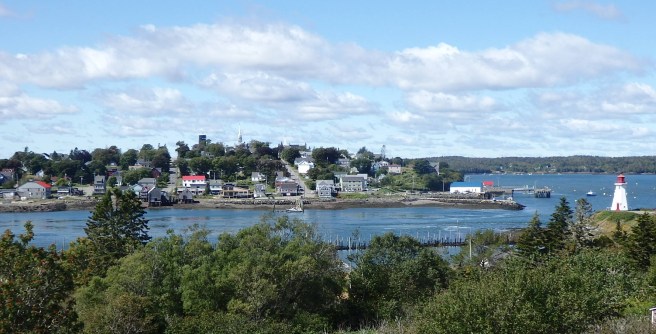
Islands come in all shapes and sizes, and even that can change dramatically with the tides. Now that I’m living on one, I’m really beginning to appreciate their variety. Some you can drive to or from, while others require a ferry or even an airplane. The better-known ones seem to be vacation or travel destinations.

Here’s a sampling, starting with home.

  1. Eastport, Maine, including Moose, Treat, Carlow, Matthews, and a few more: 3.6 square miles (12.3 with water)
  2. Manhattan: 22.7 square miles
  3. Staten: 58.5 square miles
  4. Martha’s Vineyard: 96 square miles
  5. Nantucket: 48 square miles
  6. Grand Manan, New Brunswick: 55 square miles (198.4 with water), but one side is a 20-mile wall of tall bluffs – the same length as Martha’s Vineyard.
  7. Sanibel, Florida: 16.1 square miles
  8. Mount Desert, Maine (home of Acadia National Park): 108 square miles
  9. Santa Catalina, California: 75 square miles
  10. San Juan, Washington: 55 square miles

Care to tell us about others?


Not all firewood provides the proper heat

Living in places where firewood is readily available – unlike, say, Manhattan or the Arctic Circle – has made it relatively affordable to heat by a wood-burning stove, at least when we’ve had one. (Let me repeat, it’s high on our renovations and home improvement list.)

OK, my Eagle Scout training left me quite aware that green wood – that is, freshly cut – burns inefficiently, unlike wood that’s had time for the sap and related moisture to dry out. That said, here are some other points.

  1. Seasoning can take as little as six months, though old-timers prefer at least a full year. Or more, if stacked in a way that allows sufficient circulation to avoid rot and fungus.
  2. Softwoods – generally conifers like pine, juniper, spruce, and cedar but also including poplars – ignite easily and burn hot, but they don’t blaze long. They also have a lot of creosote, which will need to be cleaned from the chimney as a housefire hazard.
  3. Hardwoods – maple, oak, hickory, ash, and birch – are denser and burn slower and longer, and while they release less immediate heat, there’s also less smoke and they add up as a layer of radiantly hot coals.
  4. All firewood has creosote, so annual chimney cleaning is recommended. Some sources say every two cords. Chimney fires are especially vicious.
  5. In colonial New England, a house typically required 40 cords or more of firewood a year. Imagine cutting, splitting, and stacking all that – even before bringing it indoors.
  6. Salvaged wood – such as lumber, poles, and fencing – often contain preservatives that release hazardous vapors as they burn.
  7. Destructive insects and plant diseases can be spread when transporting firewood more than a few miles from its source. That’s why it’s illegal to import firewood into Maine. Now I’m wondering about the guys from Maine who delivered to our house in New Hampshire.
  8. A cord is a stack 4-by-4-by-8 feet of standard 16-inch wood. Many stoves, though, require a shorter log.
  9. Do you really get a full cord when it’s delivered? I’ll spare you some old jokes.
  10. Favorite woods include apple and tamarack/larch, both for their aroma and a clean burn that leaves little ash.

As for air pollution? I really don’t want to go there. It could be a Tendril all its own, once we find the right tech geek to sift through the varied reports.