2 what?
You never know what we'll churn up in cleaning a stall
Fellow blogger Mark Bialczak’s recent posts about his romantic getaway from his home in Upstate New York to the Cape (as we New Englanders refer to Cape Cod) kinda guilted me into giving myself a day off and taking a few hours at a beach a bit over a half-hour’s drive from my little city farm.
Yeah, I know I’m retired (or was, before signing on as a Census enumerator … yesterday was a day off for me). Still, somehow, I get tied down at home. Haven’t swum in the ocean in the past three years, for that matter, not since getting the city pool pass. I always think there’s too much other stuff to tend to.
So yesterday, telling myself the season’s running out, I hopped in the car a tad before noon and simply took off. I thought about heading north to the mountains, but I’d already done a work-related drive in the direction earlier in the day, so I veered east into Maine and settled on Fort Foster, a Kittery town park situated at the mouth of the Piscataqua River.
Regular visitors here at the Red Barn have seen many images from this tranquil alternative to the more popular beaches just up the coast from it. For us, it’s closer than the beaches in New Hampshire, and always less crowded. During the summer, there’s an admission fee, which limits traffic, and for several seasons I opted for a season pass, sometimes spending an afternoon in the water before heading an hour inland for an evening shift in the newsroom. Even so, as I said, for the past several years, I’ve just been more of a homebody, with writing and revising as a top priority.
After Labor Day, the park gate is open only on weekends through September, but it is possible to park outside and walk in, which was the case yesterday. Despite the number of cars lined up along the road, I encountered few people in the park itself, most older couples or individuals walking a dog.
En route, I stopped at the Chauncey Creek Lobster Pier for raw oysters on the half shell, which is always a rare treat for me. It’s a lovely setting, a deck over the water in a narrow tidal passage off Pepperell Cove, and typically crowded. Some diners even arrive by boat. After Labor Day, though, the tourists thin out, making for a perfect time to enjoy our local attractions. Maybe it has to do with Covid somehow, but the oysters yesterday were smaller than usual, especially for this time of year, when they’ve fattened up for winter. No complaints, though, they were still tasty. If only I could learn to shuck them myself. It’s a skill, one that can lead to emergency-room stitches for an amateur.
‘Nuff background. Here’s a sampling of what I enjoyed a mile or two later.


A few more years ago than I’d like to admit, we were enjoying a special dinner in Portland, Maine, where our waitperson recommended a bottle of wine to accompany our dishes. We trusted her enthusiasm and agreed to go a few dollars higher than our usual ceiling.
It was well worth it and, as we learned later, the restaurant was pricing the bottle at retail rather than the usual three- or four-times any store tag. More points.
We took one sip and knew this was like no other white wine we’d had before – or, for that matter, since, not even from the same winery. It must have been a superfine vintage. It had an edge we could only describe as stony – something crisp, clear, sharp. And it did, indeed, enhance our five-star experience.
Trying to find that edge again has become something of an ongoing challenge. We’ve had some fine sauvignon blanc bottles since, but the holy grail remains a quest.


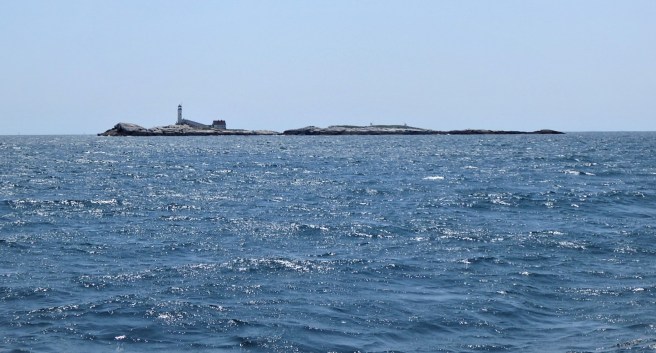
It’s hard to think that such a small cluster of islands and rock ledges could hold so much attraction, but just look. It’s not just historic Appledore and Star islands that fascinate. Here are some more shots from our day trip.
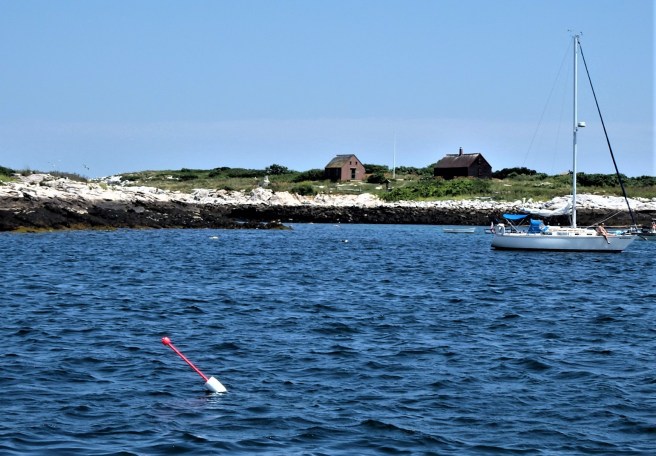
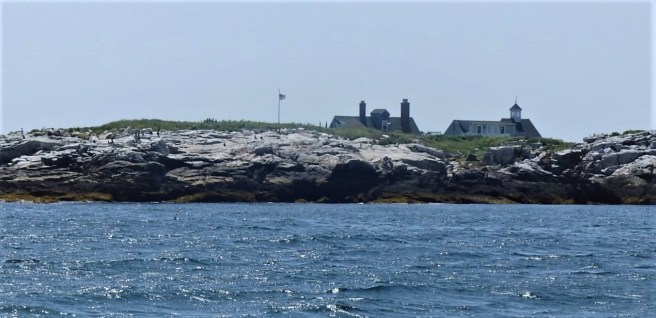


The second largest island in the Isles of Shoals, Star is the only one with commercial boat service to the mainland. The state line between New Hampshire and Maine runs through the small harbor.
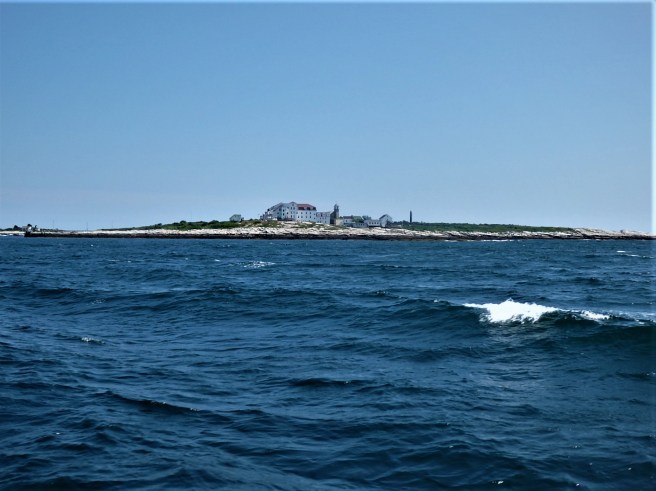
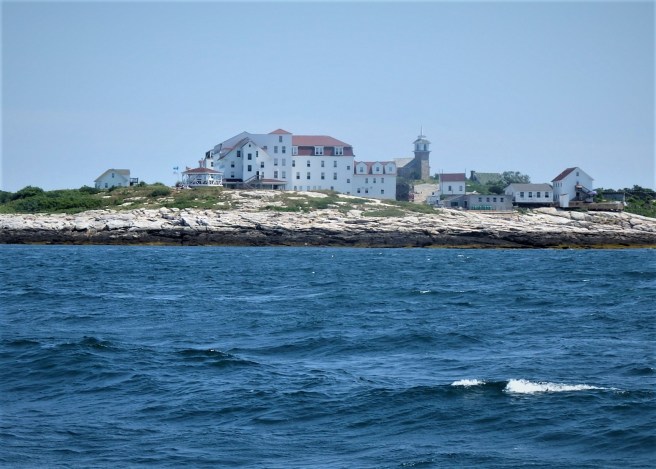
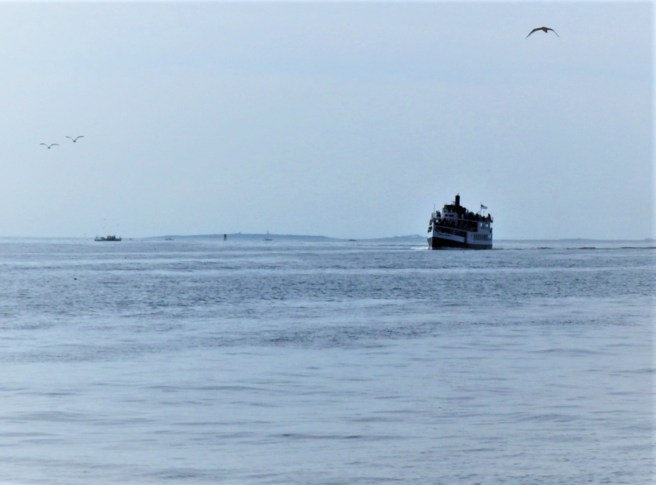
Guests and supplies get to the island on the Thomas Leighton ferry, which plies the waters from Portsmouth, New Hampshire. It can be a jolly experience, if the ocean’s on the calm side.