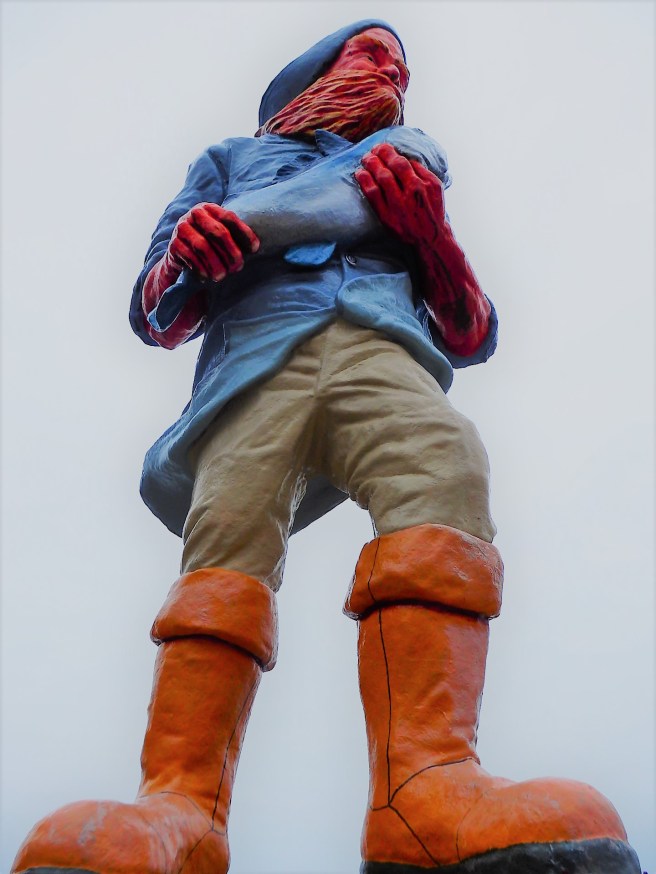

Fortunately, the fisherman got a new coat this summer, a bright yellow one. Seeing the old one now comes as a shock.
You never know what we'll churn up in cleaning a stall
Fortunately, the fisherman got a new coat this summer, a bright yellow one. Seeing the old one now comes as a shock.
Vermont may be renowned for maple syrup and skiing, but Maine lays claim to a very dry humor as well as lobsters. Maybe they’re somehow connected.
When I first moved in New Hampshire, I learned much about the region through the Humble Farmer, Robert Skogland’s weekly hour on Maine Public Radio. But his comedy act wasn’t the only one in the Pine Tree State.
Tim Sample remains the epitome, even though his time was cut unfortunately short.
Another now classic run was “Men from Maine,” a one- to two-minute comedy segment that opened with soap opera organ music and something varying along the lines of, “And now for another thrilling episode of the exciting adventures of Men from Maine. As today’s action-packed drama begins,” which aired on a morning radio show in Boston.
The episodes typically revolved around Lem and Ephus and others in backwoods Maine. While the humor was essentially redneck, it was opposed to that of the American South. Episodes ran all the way from industrial accidents handled in incompetent ways (many residents, including Lem and Ephus, worked in the local sawmill, though the canneries could be equally hazardous), to bestiality, but, as observers noted, the humor always came from the stupidity of the characters and their obliviousness.
After I’d been introduced to the men via Clackity Jane’s show on Eastport’s little FM station, I discovered how much they’re stilled treasured in these parts, maybe because they struck something true.
Laugh on, dude … and dudette.
Singing in front of an audience is a relatively new experience for me, one arising in my retirement years, mostly through Boston Revels’ top-caliber community chorus and related events.
What I can say is that from the stage, each performance has been thrilling and transcendental, even when not necessarily perfect. Most remarkable is the oneness we sense as a company making melody and harmony.
Before the Covid restrictions and my relocating to Downeast Maine, I was commuting from New Hampshire to Boston as a baritone in the Revels Singers, first under George Emlen and then Megan Henderson. The ensemble ranged from 40 or so to maybe 80 members, depending on the season. Its classical and world folk repertoire was drawn largely from the shows the organization had produced in its more than a half century, with music in nearly 30 languages and spanning a good millennium of history. Many of the arrangements, editions, and original compositions were by our conductors or others affiliated with Revels.
~*~
These days I’m with a much smaller group, Quoddy Voices, which is also led by a fine conductor, pianist, and composer, John Newell, and I’ll proclaim that its standards and abilities are just as high.
We just concluded the second pair of programs with me as a member, and once again I must admit moments of listening to the others in amazement and then wondering how on earth I ever managed to be included. Yes, it’s humbling and challenging.
Technically, we’re a chamber choir – for the concert, 20 singers. Among other things, it means any slipups are more exposed.
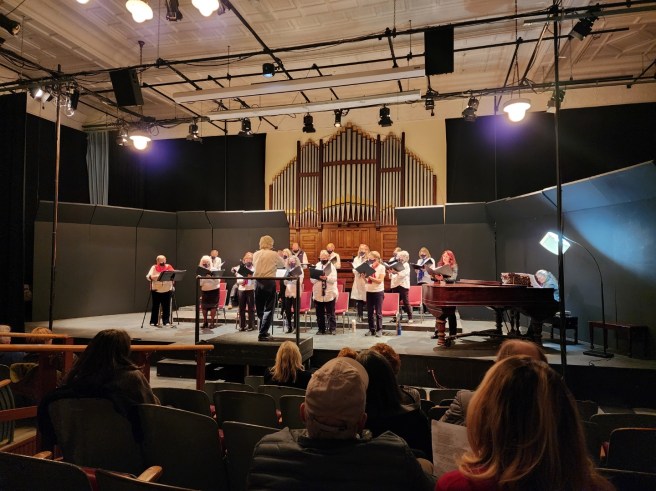
Our program, a Harvest of Song, put us ahead of Thanksgiving and the crowded holiday schedule at the arts center. That meant a shortened rehearsal schedule, but online practice scores of our parts definitely made a difference.
Compared to Revels Singers, our repertoire engages more in works other choirs are also exploring, which led us to three pieces by Florence Price, the first Black American woman to have a symphony performed by a major orchestra. She’s finally being widely discovered, nearly 70 years after her death. From our point of view, her writing is deft, with touches of jazz and flashes of difficulty. The bass line in one score movingly upheld the axiom of less is more.
From living composers we had two widely performed works by Englishman John Rutter, who is admired for pieces that fit the voice like a latex body suit; Californian Frank Ticheli’s masterpiece, “Earth Song”; a lively Calypso in 5-4 time by the now 95-year-old Harry Belafonte; and a haunting 35-year-old Dan Forrest’s setting of a Ralph Waldo Emerson poem.
From old masters we had a deeply reverential motet from Romantic-era Anton Bruckner and sections of Baroque brilliance from Henry Purcell’s 1692 “Ode to Saint Cecilia’s Day,” which foreshadows Handel and his Messiah but with sides of pagan homage, as English poets of the time were wont to do.
We concluded with Randall Thompson’s classic 1940 “Alleluia,” drenched in sadness, as the composer admitted, but becoming quite polyphonic and agitated before introducing a single second word at the end, a seven-part, two-note amen.
While all of these works are widely known in choral circles, all but the Thompson were new to me. I had heard the Thompson only in a broadcast just a year ago and earlier from an old buddy who raved about singing it with his chorus.
Our audiences, as usual, were attentive and enthusiastic.
~*~
So now some of us are scheduled to do some informal caroling before Christmas.
And then, come February, we get to see what our director has in store for us next.


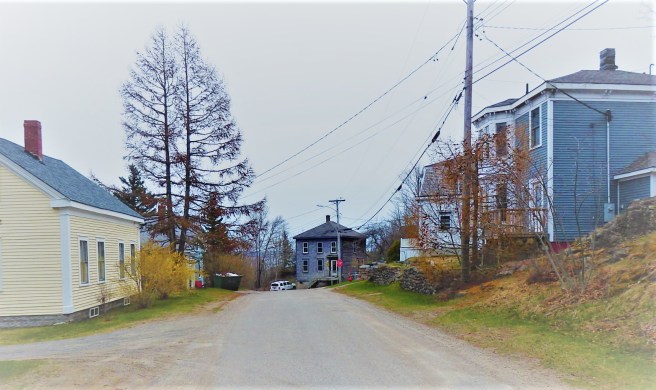


We’re quickly approaching the longest nights of the year, which are truly long here in Eastport. Accompanied by the most truncated days of the year, when the sun barely clears the horizon. We’re just a hair shy of the 45th Parallel, the halfway point between the equator and the North Pole. These days, it can feel even further north than the map shows.
The experience can be especially harsh here, now that the Summer People are long gone and most of the stores and galleries are shut for the season while those that remain open do so largely on limited hours. You might see a stranger or two in town around sunset, looking for a place to eat, and the best you can do is tell them to go to the IGA and get there before the 7 o’clock closing. Pizza slices or deli cuts plus a six-pack lead the list.
Even more, we know big snow, escalating ice, and profound cold are still ahead, as well as a blustery nor’easter or three.
We don’t even have a retail scene to crank up the holiday hoopla. Nor do we have anything resembling a nightlife, apart from a few cultural performances. Bless ‘em, especially after the Covid shutdowns.
Needless to say, social connections are especially important. For me, that includes singing in Quoddy Voices and worshiping with Cobscook Friends Meeting.
Also anticipated is a big stack of reading, both books and magazines, and concerts streamed from the Pine Tree State and beyond.
I’m already looking forward to the invasion of family for the holidays.
How do you adjust to such seasonal change?
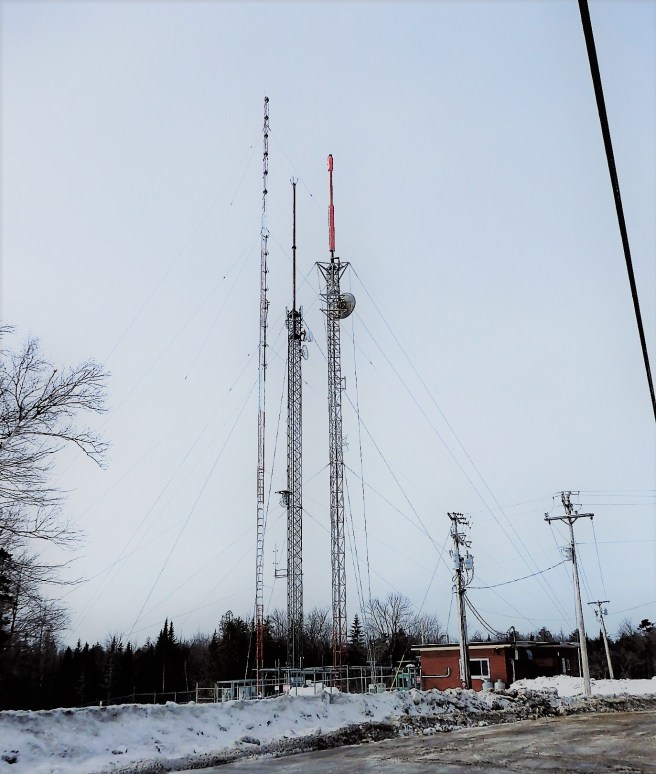
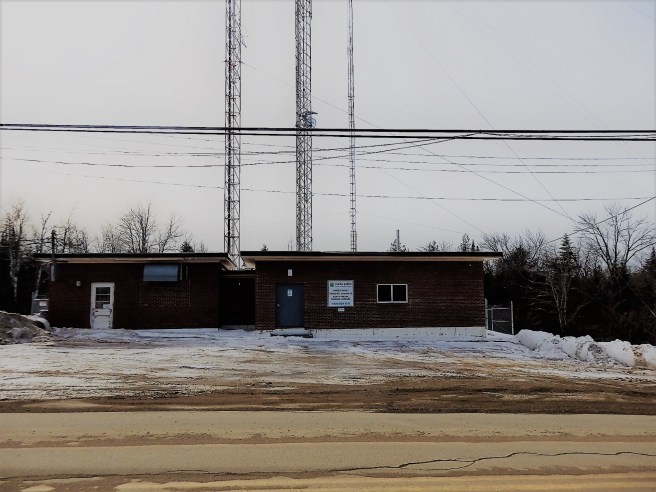
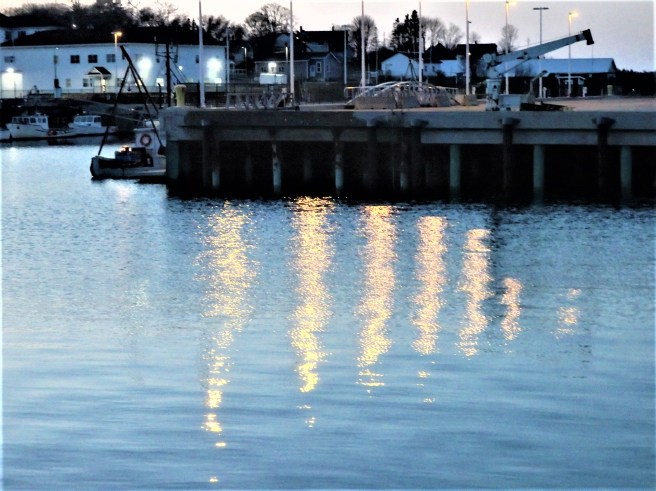
For someone raised like me far from the ocean, trying to pin down places along the coastline can be confounding.
Eastport, for instance, lies within famed Fundy Bay yet also has Cobscook Bay lapping its west banks and Passamaquoddy Bay on its east.
What gives?
Well, let’s say the bays are like Matreshka Dolls, one fitting inside another one that fits within yet another one and so on.
Cobscook Bay, for instance, includes the smaller East, South, Sipp, Dennys, and Whiting bays.
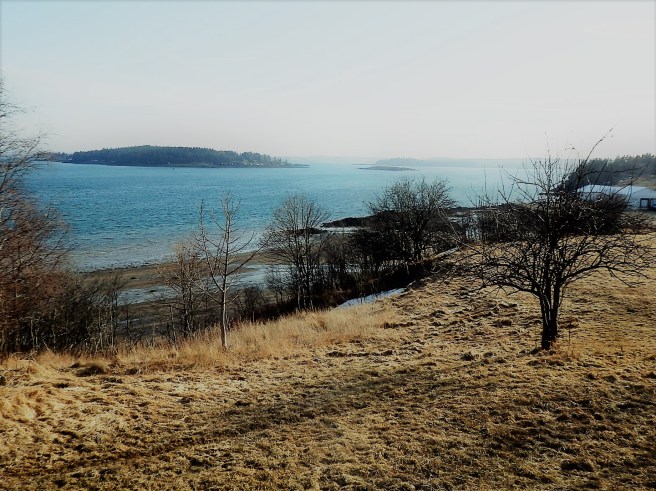

I guess it’s like a New Yorker saying she’s from Flatbush, meaning a part of Brooklyn within New York City, which does – contrary to the knowledge of many Manhattanites – sprawl far beyond their little island.
So Eastport can justly claim to be the City in the Bay. Or several.

