
Something savory
You never know what we'll churn up in cleaning a stall
I had already made this point elsewhere in my novel What’s Left, so this sentence was trimmed out of the final version:
Theos Graham joins Theos Barney and Thea Pia in feeding the homeless at Carmichael’s back door or the soup kitchen at the Lutheran church or even letting them sleep in our bus, once we have one.
I do miss the mention of the Lutheran church or the bus, by the way, but they just didn’t fit what was left.
~*~
Yes, we all have found ourselves proclaiming, “I’m starving!” Not that many of us have suffered so much as starvation itself.
Have you ever gone truly hungry? Have you ever wound up accepting handouts from strangers? Have you ever fasted? What’s the longest you’ve gone without food?
~*~

In early drafts of my novel What’s Left, I considered going into detail on her uncle Dimitri’s practice of micro-lending and startup investing. Here at home we discussed including a whole list of failures and successes — or reasons applications were approved or rejected. Just think of all the once bright options that soon failed, as well as the ones that have since gone mainstream.
One proposal that didn’t survive my second-thoughts was this:
Thus, when friends decide to launch a local winery, we support them.
At the time I first noted this, 45 or so years ago, a local winery would have been cutting edge. Now there seem to be wineries everywhere, and their output can be widely uneven and often overpriced.
~*~
My experience as a home brewer, making more than 2,500 bottles of beer, was fascinating. We relied on kits from a local aficionado and never had a bum batch. But we still haven’t tried making our own wine.
Gardening, of course, is another matter. As is composting.
Do you raise any of your own food? Make your own bread or yogurt? How about jams or jellies or artisanal vinegars? Any other hands-on touches?
~*~
Think of the names of bands and singers having a food tag. (Will Red Hot Chili Peppers or Smashing Pumpkins get your thoughts bubbling?)
Throughout my novel What’s Left, her uncle Barney has rock playing prominently in the restaurant kitchen. Does this provide a good counterpoint to his thoughts and actions? Do you find it amusing? Annoying? Confusing?
Who would you like to add to the food-themed playlist?
~*~

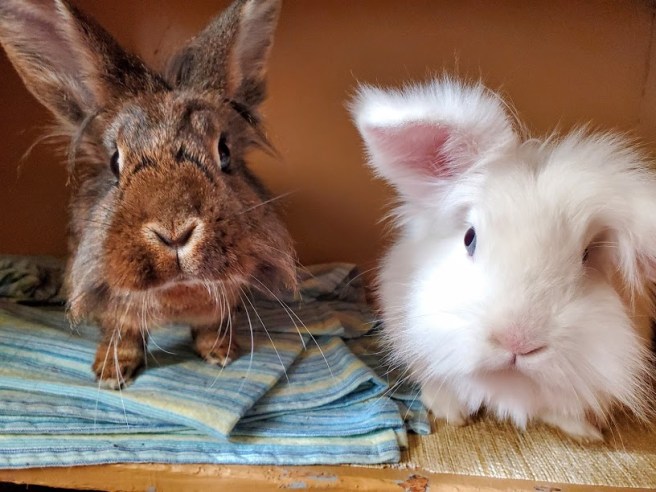


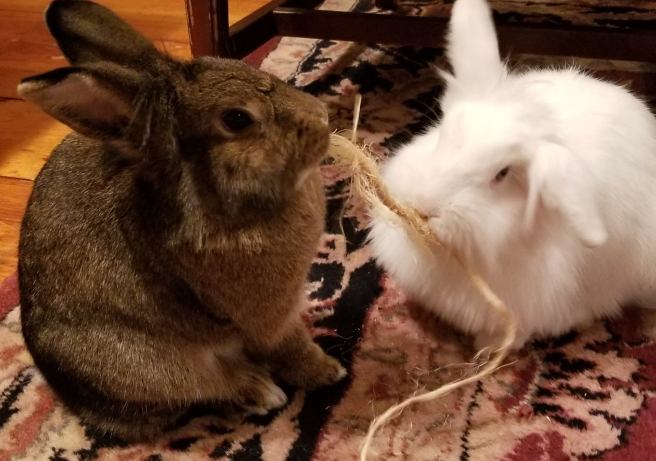
Rabbits
 Jnana's Red Barn