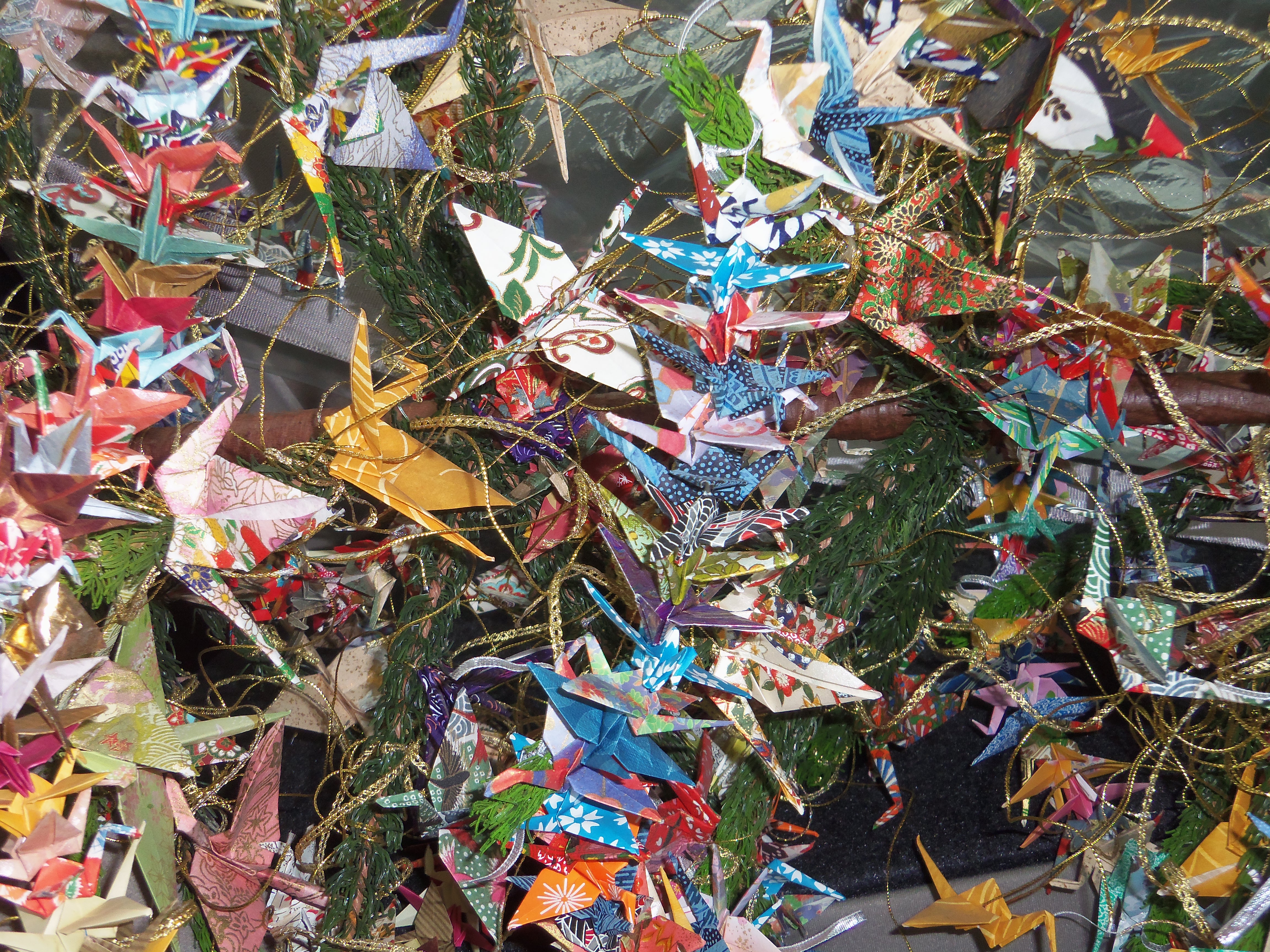
ORIGAMI PEACE TREE
You never know what we'll churn up in cleaning a stall


While I’ve never gotten wrapped up in my wife’s fascination with gingerbread houses, my contrarian nature has embraced the idea of making an annual gingerbread LIGHT house, and here’s one result .
For the recipe and the templates, especially if you want to go for fancier results, check out this story, recipe, and assembly directions. (It’s not the only gingerbread lighthouse at Coastal Living, by the way, in case you’re really adventurous.)
The model was based on the Whaleback Light just downriver from us, so I feel it’s an extra special touch. And the gummy lobsters and gummy sharks, along with the candy rocks for the lighthouse wall, were purchased from Yummies just beyond the Kittery Outlet stores. That can be a destination for Maine visitors all in its own.


Although we don’t bring the Yule tree indoors until Christmas Eve, baking and decorating the gingerbread cookies that will adorn its branches can be done days ahead.


As much as I keep the outdoors Christmas lighting around our place to a minimum — usually strands around the bay window and entryway — we also keep ours going through most of January, as does a much more elaborate neighbor two doors down the street.
But that doesn’t keep us from appreciating those who go all out on this front, especially folks with an artistic flair.
This year, though, we’ve learned of a teenager who’s been doing something remarkable at his home for the past five years — something so remarkable he’s also done City Hall this year, which we’re anticipating viewing this week as soon as the glitches are ironed out and it’s back running. The bit I saw Thursday night was jaw-dropping.
But we did drive on to see what he’s up to. Trust me, there’s no way to describe what this kid does with a computer and 8,000 LED lights. He’s set it all to music and a seemingly infinite number of variations on motion, coloring, and timing. It’s quite mesmerizing, although I think I’m getting a headache from the afterglow in my head. Still, to get a faint idea of what he’s up to, you’ll just have to click here.
You just might find it worth a trip to Dover.

From the pews in the sanctuary, the five stained-glass windows over the altar appear curiously bland in contrast to the two vast arrays to the left or the rear. Only if you cross into the chancel and catch a glint of sunlight might you sense something quite different is at hand before you.
That’s how I first noticed that unlike traditional stained glass, none of this set had been enhanced by paint. All of the color was in the glass itself, yet there were no muddy patches where colors overlapped, as might be expected while mixing pigments. Some of these resembled Impressionist painting or bookmaker marbling. Moreover, when direct sunlight hit some of the pieces, the color blazed with gold or copper or fine jewels.
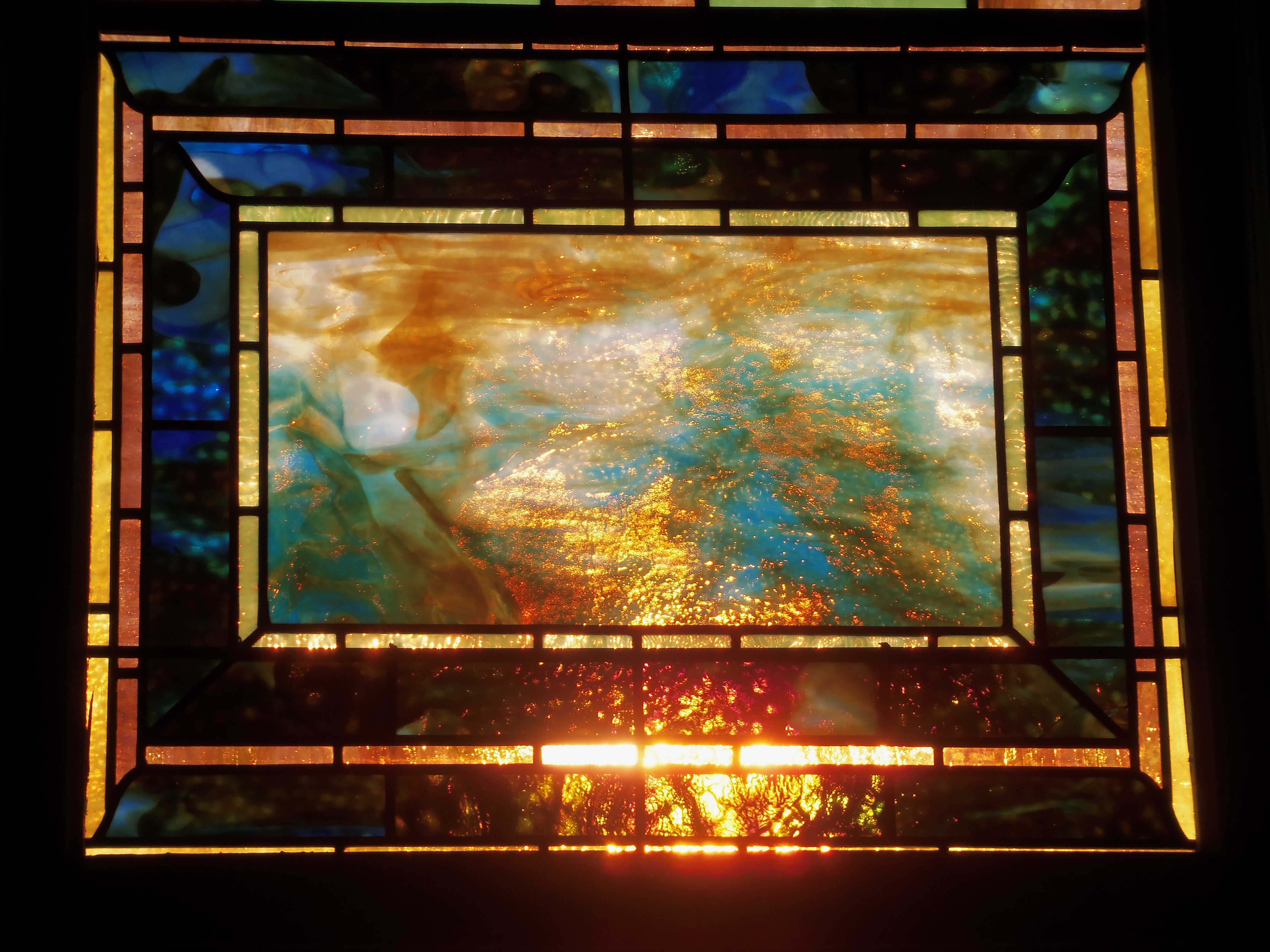
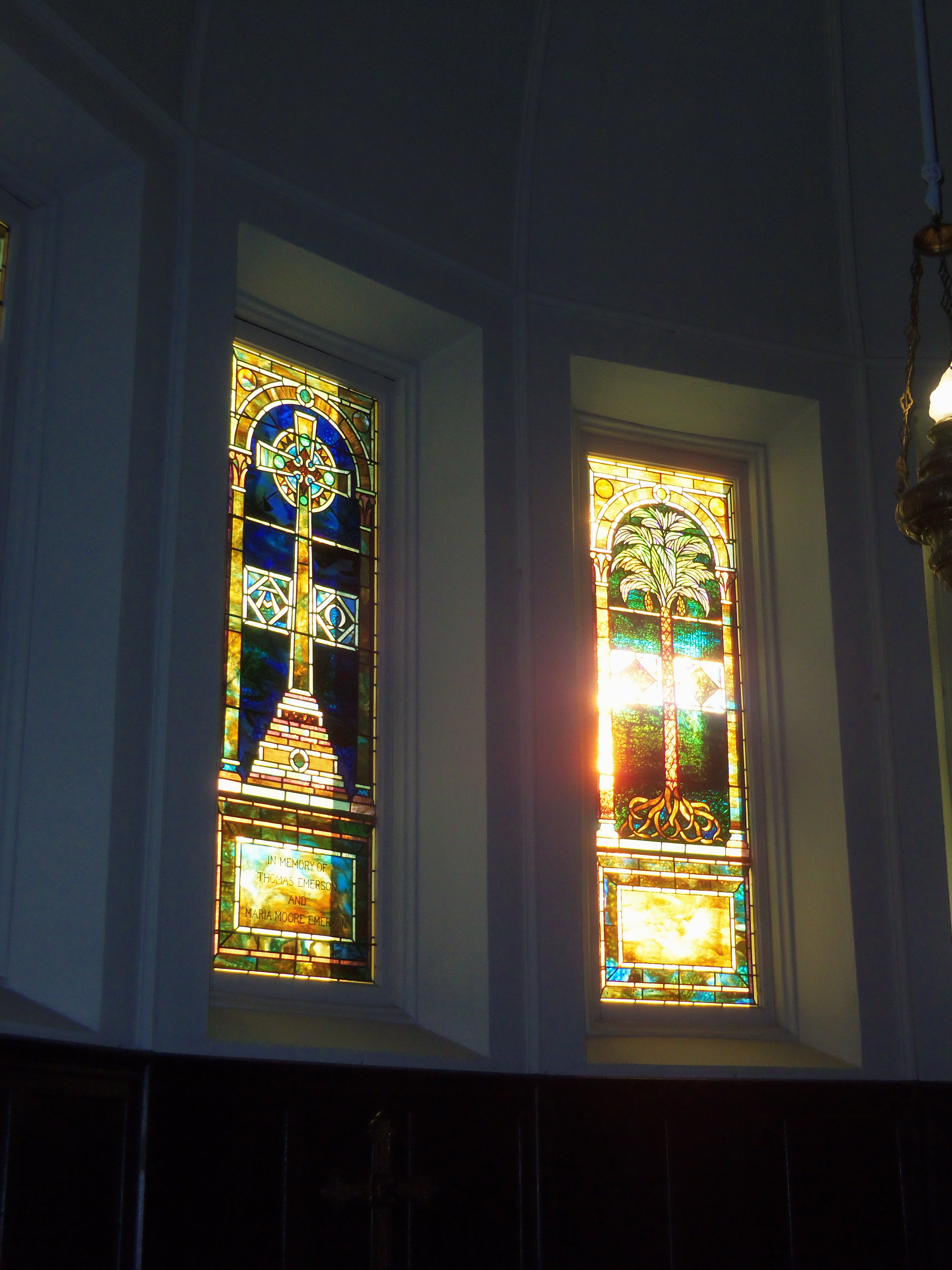
Could it be? I’d heard that one reason Louis Comfort Tiffany obtained such incredible effects in his work was that he used such materials in his glass. For starters, the only way to get a gold color is to use gold.
As I started to seek documentation, some fascinating connections appear.
As it turns out, the Tiffany Glass Company and its successor, Tiffany Glass and Decorating Company, created thousands of ecclesiastical church windows. Many of these were designed and executed by his studio, rather than Tiffany himself, but they would nonetheless bear his stamp and influence.
Tiffany’s 1890 Hay Memorial at Emmanuel Episcopal in Pittsburgh presents some striking similarity to the set at the 1895 St. John’s Methodist in Watertown, Massachusetts.


Both are narrow arched windows with greenish bottom panels ringed in copper tones. The central cross resembles the crosses at Watertown. And the mention of Tiffany’s love of exotic Oriental painting and his travels in northern Africa might explain the two Watertown windows dominated by palm trees.
The Watertown congregation originated in 1836 in the Whitney family home, and they remained active supporters at the time the 1895 stone building was erected. Their David Whitney Jr. relocated to Detroit as a young man, quickly became that city’s wealthiest resident, and built an 1894 mansion that still features its elaborate Tiffany windows.
Finally, I run into the pastor as he’s leaving his office. I pose the question, “Tiffany?”
“Technically, no.”
“His studio, then?”
“Yes.”
Regardless of the creator’s name, these five windows are marvelous, especially when struck by sunlight. Unfortunately, their placement on the west side of the building means the Sunday morning worshipers would not get to view them at their best.
Vespers, anyone?

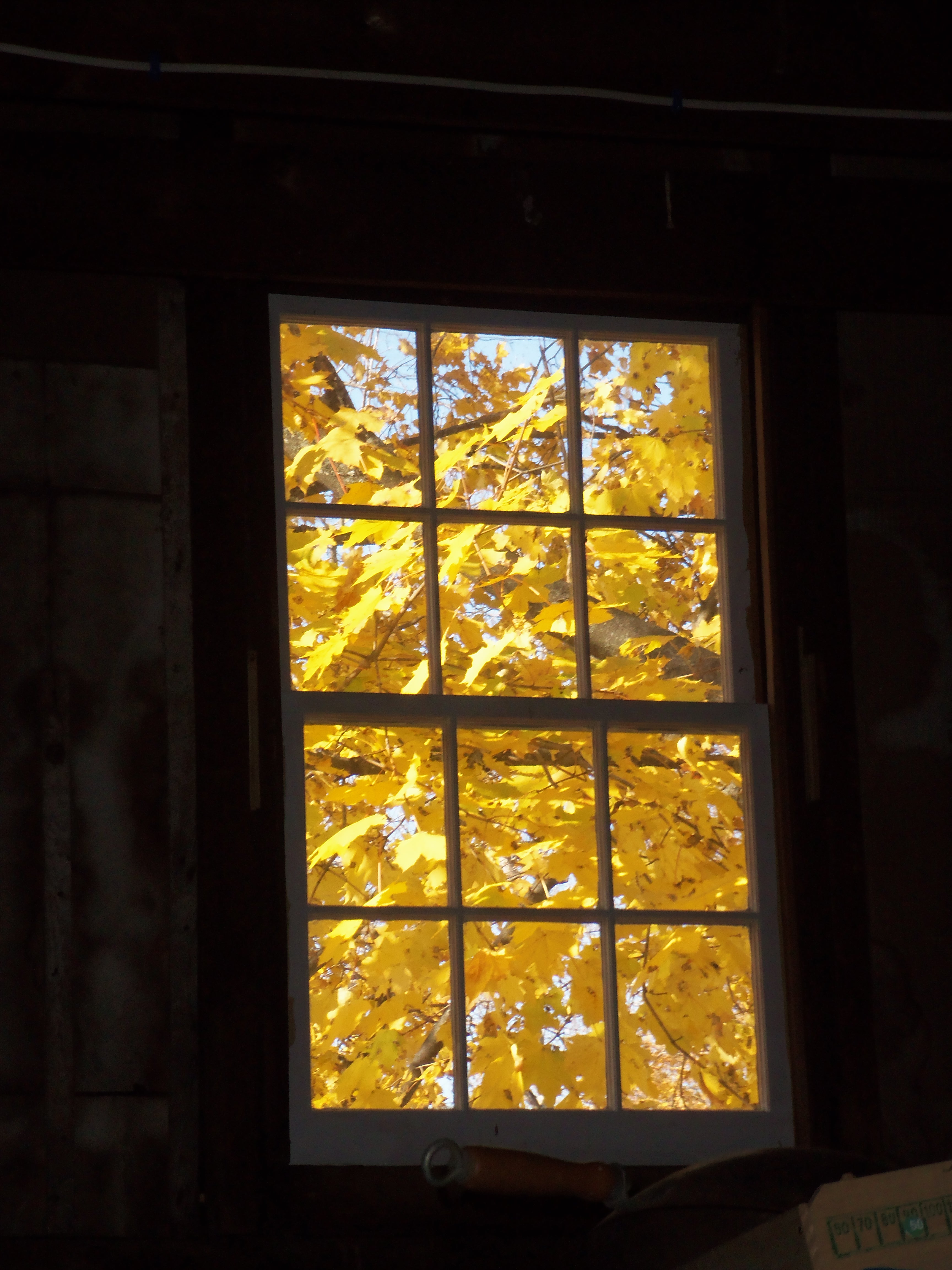
I’ve long joked that our Quaker meetinghouse has the prettiest stained-glass windows in town. That’s because they’re clear, looking out to the hardwood trees surrounding the grounds and all of the seasonal changes. The colors are those of snow and ice, spring greening, fog, mist, rainfall, autumn foliage. Admittedly, the new synagogue, with its view over a hillside to forest beyond, and the Methodists, at the edge of a millpond, can make rival cases. I’ll plead to being partial.
Crucially, though, transparent windows remind us of the world beyond the house where we sit in worship, a reflection of our awareness that our faith is a constant part of our various daily life activities. They remind us as well of the powerful rhythms of nature and God’s creation.
On the other hand, most congregations – including the Evangelical United Brethren of my childhood – gather within rooms of filtered light cast by stained-glass designs. I was puzzled by it then, and remain so today. Yes, I know the colored windows of the great medieval cathedrals were illustrated storybooks for the illiterate populace, but what I encountered always felt second-rate and often mildewed. Few individuals, I suspect, could say much of anything about the event being depicted or express any understanding of the decorative filling. Pointedly, the translucent windows cut off any view beyond the room. Perhaps the intention is to create a holy space – one set apart from normal life; perhaps, too, this hints at eternity as a departure from the landscape we know. But a shady or even creepy quality always seemed to lurk in the shadows. This is, I will note, quite different from the icon-based frescoes of Eastern Orthodox custom.
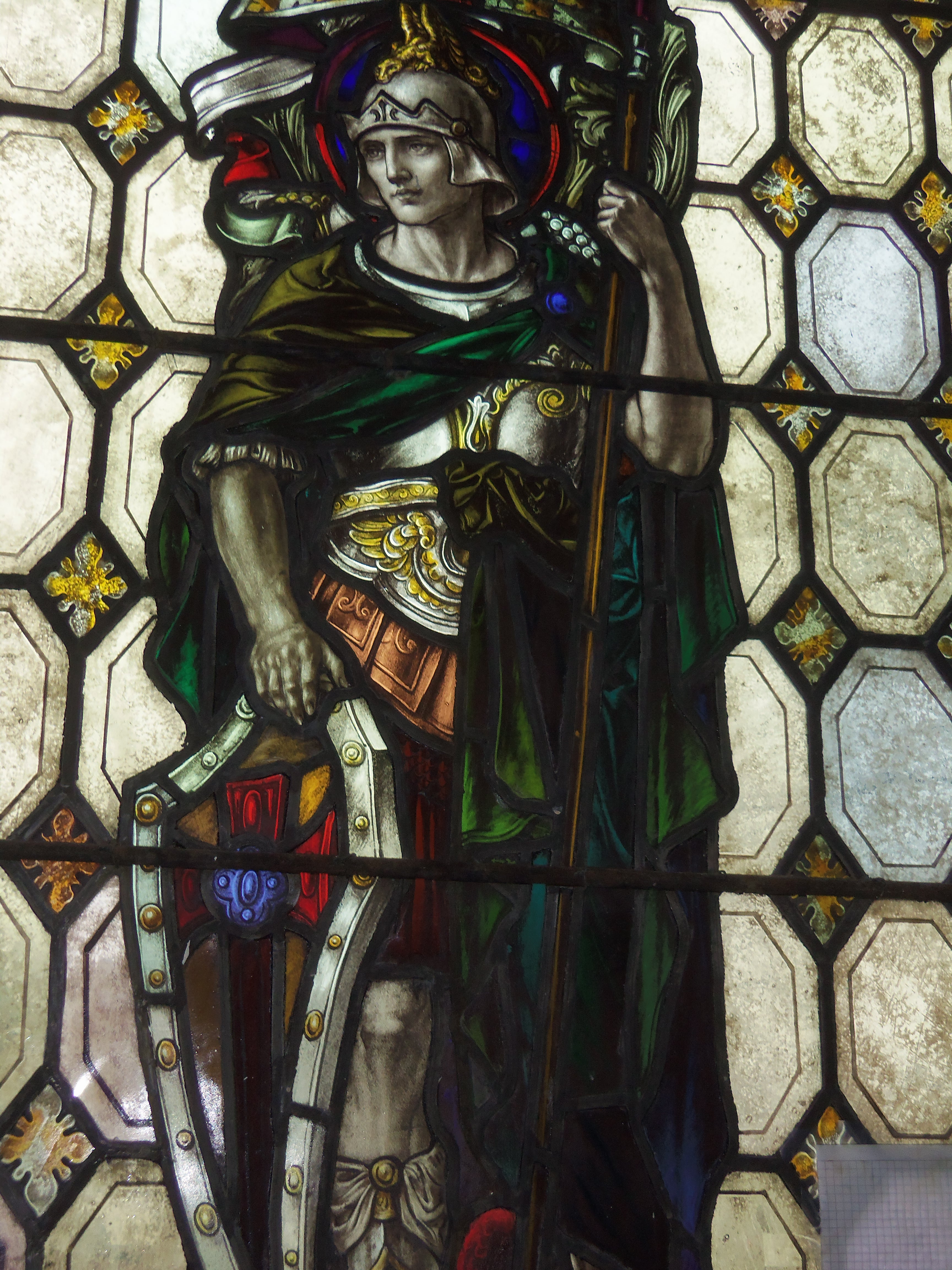
Apart from a few December afternoons at the National Cathedral in Washington, when I finally experienced the dazzling sunlight through the windows and recognized how Rose windows earned their esteem, my encounters with stained glass were few and fleeting. That is, until late one afternoon last year when I arrived early for our weekly chorus session and stepped from the room where we rehearse, crossing into the sanctuary on the other side of the sliding shutters. The square vaulted room is dominated by two imposing displays in traditional style – painting, essentially on pieces of colored glass that are then leaded together. Something about these, though, suggests quality sustained by wealthy donors. The impressive room has demanded closer investigation.
If the late 19th century brought about a flowering of stained glass in America, it was also a time before the spread of public art museums. Windows like these, then, would have been art made available to all for their wonderment.



When it comes to art museums, I head straight for the paintings. The other displays, including art glass, come later.
Actually, glassworks as art rather than craft came to my attention largely through the glass-blowing compatriots of my now ex-wife (we’d save clear bottles for her circle to melt down and reform as fine-art creations) and her grandmother, a knowledgeable antiques dealer who specialized in glass collecting, which was quite appropriate considering our location in a former glassmaking mecca that included Toledo, Tiffin, and Fostoria, Ohio. (At the end of the 19th century, an oil boom meant plenty of cheap natural gas, allowing affordable conversion of sand into glass.)
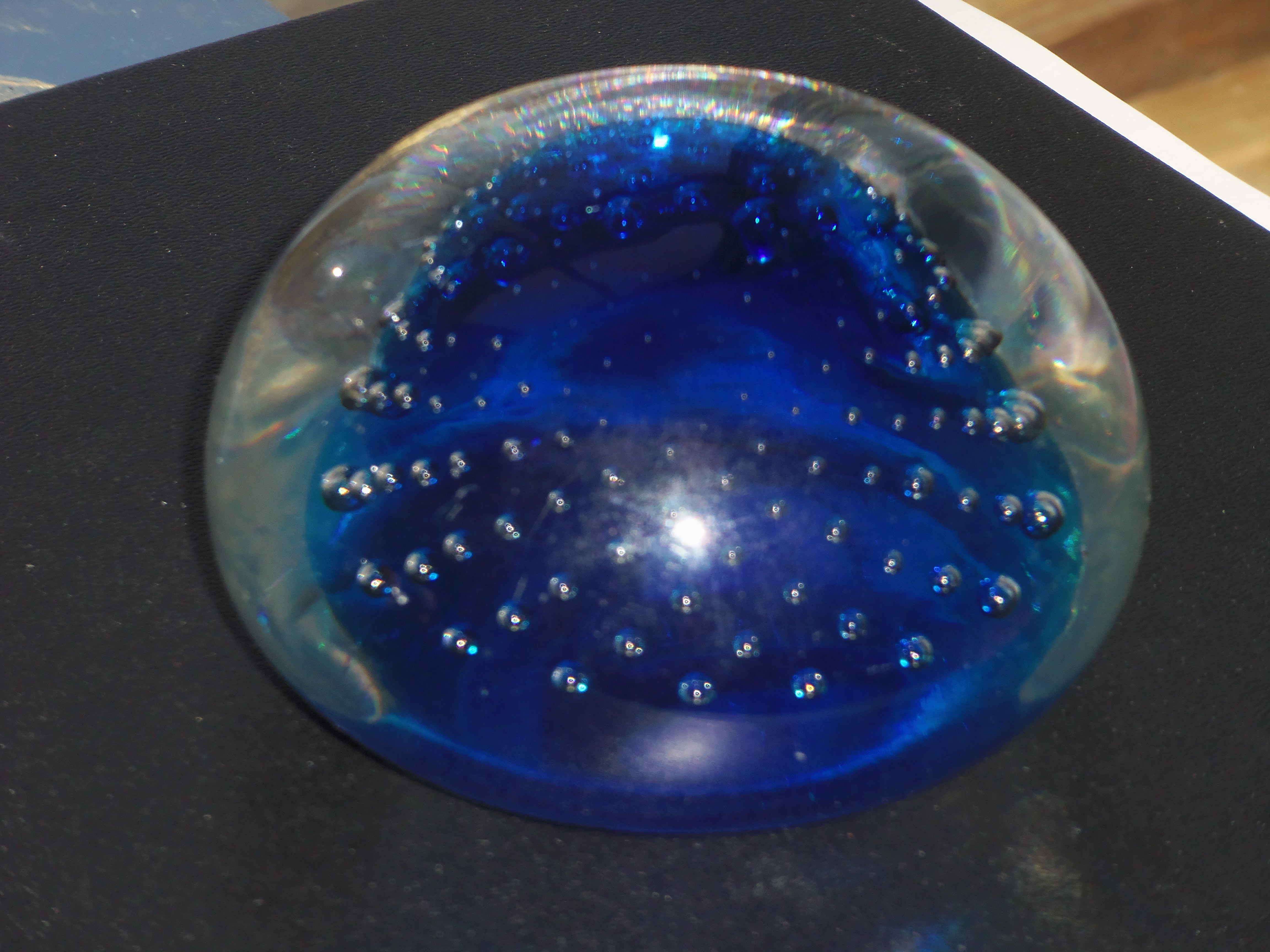
These days the Henry Melville Fuller Paperweight Collection at the Currier Art Museum in Manchester has expanding my regard for glass artifacts, even if I do head first to the paintings.
 Jnana's Red Barn