
WHITE BLAZE MARKING THE APPALACHIAN TRAIL
You never know what we'll churn up in cleaning a stall
This time of year, it’s off for mums. This is, especially, New England. It’s all part of the look.
My wife has her favorite nursery, Bluebell, in Lee. They really know the quality of what they carry. The way a good bookstore does.
So where are you headed? And why?
over the kitchen, one black walnut is bare
the other’s just beginning to turn yellow
10 pumpkins wait beside the driveway
even before I collect squashes and gourds
from the garden
autumn touches, make my Lady of Spices happy
chrysanthemums and a few poppies
reset to barrels and pots around the barn and kitchen entry
the mums in the barrels so gorgeous
next to the pumpkin-filled wheelbarrow
the harvest in a wheelbarrow – eggplants, too
or vines in the compost
our blooming cardinal flower
makes me wish more had survived, even just one, to remind us
poem copyright 2016 by Jnana Hodson
~*~

For more of my home and garden poems, click here.
Your two cents’ worth is the only way to foil the big-money campaign contributors. Vote against their corrupting influence. Enough of us together can save democracy. It really is us versus them.
Don’t be bullied.
In his classic Democracy in America, published in 1835, Alexis de Tocqueville makes much of Americans’ propensity for affiliating in multiple organizations in the common good. The French historian and diplomat was astonished by our proclivity to establish and join in all kinds of formal groups, not all of them political parties or civic commissions. We enlisted in fraternal lodges, cultural and educational institutions, ethnic-immigrant centers, charities, trade associations, labor unions (still in their infancy), business ventures, and, especially, churches. Well, it meant electing leaders and boards and building organizational skills we could apply elsewhere.
His observations on the American character still make for provocative reading, no matter where you stand on a political spectrum. For me, his insights on religion appear to be more problematic, a situation I attribute to his difficulty in understanding the strands of our pluralistic Protestant thinking through his Roman Catholic precepts. Still, some of his conclusions fit better than others. One, though, keeps resonating for me in this current election season:
“I sought for the greatness and genius of America in her commodious harbors and her ample rivers – and it was not there . . . in her fertile fields and boundless forests and it was not there . . . in her rich mines and her vast world commerce – and it was not there . . . in her democratic Congress and her matchless Constitution – and it was not there. Not until I went into the churches of America and heard her pulpits aflame with righteousness did I understand the secret of her genius and power. America is great because she is good, and if America ever ceases to be good, she will cease to be great.”
~*~
Here I was, trying to take a break from my almost morbid fascination with the daily developments in this unrivaled American election season, but, wham! I chanced upon this quotation, which came right after reading an analysis of the difficult plight the Republican Party will confront in looking to its future. Quite simply, as the argument goes, the GOP can’t continue to identify with conservative Christians if it wants to survive. It’s a shrinking constituency in the American population. Put another way, survey after survey finds religious identity and practice in America dropping sharply, especially among millennials. Like it or not, we’re entering a post-Christian society.
And what do I hear in this passage: “Make America great.” But it doesn’t end there. The “righteousness” and “good” elements, to me, stand in sharp contrast to what I’m hearing in Donald J. Trump’s posturing and deceitful exhortations. Righteousness, after all, is a matter of living right in upholding the teachings and standards of one’s religious faith. It proves downright humbling, if not humiliating, in practice. Read Anne Lamott and Dietrich Bonhoeffer for details, if you will, or even the New Testament.
Here, the fruits of the Spirit, including mercy, justice, peace-making, charity, self-restraint, and much more, are markers of faithfulness. End of sermon.
~*~
Well, I could veer off in many directions at this point. For now, I’ll focus on the millennials, who are a distinct minority in most of our congregations. I can share their distrust of much “organized religion.” And that’s even before the self-inflicted wounds imposed by the sexual-abuse scandals in the Roman Catholic church or the monetary improprieties among evangelicals and fundamentalists or any general hypocrisy that comes to light. We can argue against many of the distortions and outright lies preached from some pulpits, but that hardly fits all of the religious spectrum. Remember, I come at this from the radical Christianity of the Anabaptist strain – Friends, or Quakers, who are grouped among the Mennonites and Amish and an “underground church” stream dating to the Waldensians before the Inquisition. Look it up, if you must.
The bigger point has me repeatedly wondering just where young adults are finding fellowship. Tocqueville saw Americans joining networks of kindred spirits, but I just don’t see that happening now. A church – literally, in my understanding, the believers themselves rather than a building or an institution or any hierarchy – is the essence of community for many of us. Ask us for our best friends, and you know where to find them. Where are the alternatives?
The workplace? Unlikely, unless you’re ready for serious disillusionment in the rounds of pink slips.
College classmates? You’ll soon be scattered.
Neighbors? Do you even know their names? Unless you have children, that’s unlikely.
A corner coffee house or bar? Well, maybe for introductions. As well as the gym or, in my case, indoor swimming pool. Maybe sports teams are another category.
Put another way, just where are we meeting others nowadays? And how are we building community?
Tocqueville looks at our affiliations, but even the Masonic orders are having trouble filling their ranks. (Who’s going to drive funny clown-filled cars in parades in the future? Oh, that’s their Shriners’ wing, but still, you have to know one.) I rather like the Kiwanis and Rotarians in our town, but I’m not quite in their social or economic circles.
In all of this, I’m going to point to a bigger problem. In the globalized economy, everybody but the top five percent is in trouble. The current employment scene is not sustaining a single-parent household income for most Americans, and the Republicans have no response for this reality, even if it fits their ’50s mindset, other than attack the trade agreements that vastly enrich their elite financial supporters. Who do you think they’ll vote with? Not the medium-income and single-parent households, believe me.
Don’t be fooled. There’s more to “making America great” than we’re hearing: Bernie’s been right all along about where the productivity gains have been going, and it’s not to those who are working all those hours while their benefits, if any, are being decimated.
Put all of this together, and the post-Christian society is looking more and more to me like re-enslavement. How can democracy function when the people are so divided?
For that matter, we need true Elijahs and Elishas more than their pandering pseudo-prophetic foes. American greatness demands much more than we’ve been hearing or seeing, for certain.
And here, I thought I was taking a break …
When I see this …
… I think of this.
 For the free ebook novel and more, click here.
No matter where your candidates are standing in the polls, you’re probably feeling like me. Just looking ahead to November is getting exhausting.
If this were major-league sports, there would be a trading deadline to add some excitement to the proceedings. Hopeless teams would release a few good players to franchises hoping to make a run for the championship, while perhaps positioning themselves for a better tomorrow.
In politics, that just might move folks closer to a center. Or others ever deeper into the hole.
For now, though, we’re all stuck with the players we have or the hand we’re dealt. Even when they’re all aces, we expect to do better, don’t we?
Hearing the allegations flung at Hillary Clinton, I keep wanting Donald Trump and his camp to look in the mirror. So much sounds like psychological projection, where you cast your faults on others.
Remember, for instance, New York magazine has declared Donald J. Trump the most corrupt presidential nominee ever – worse than Ulysses S. Grant, Warren G. Harding, Richard Nixon, George W. “Halliburton” Bush, Ronald Reagan (who has the most indictments and convictions, by the way), James Garfield … what a list of Republicans! And yet they complain about Mrs. Clinton? Gimme a break!
Of course, when it comes to worst president ever, the trumpeting elephants blithely blare another name or two, ignoring the harsher reality. Eight years ago we were mired down in two wars, one of them launched with no justification, and were moments away from global financial collapse into another Great Depression … and despite unparalleled obstructionism from the GOP, we’ve had a president who has restored the economy and reduced the military burden.
Maybe that mud’s turning into quicksand. Just where are they standing, anyway?
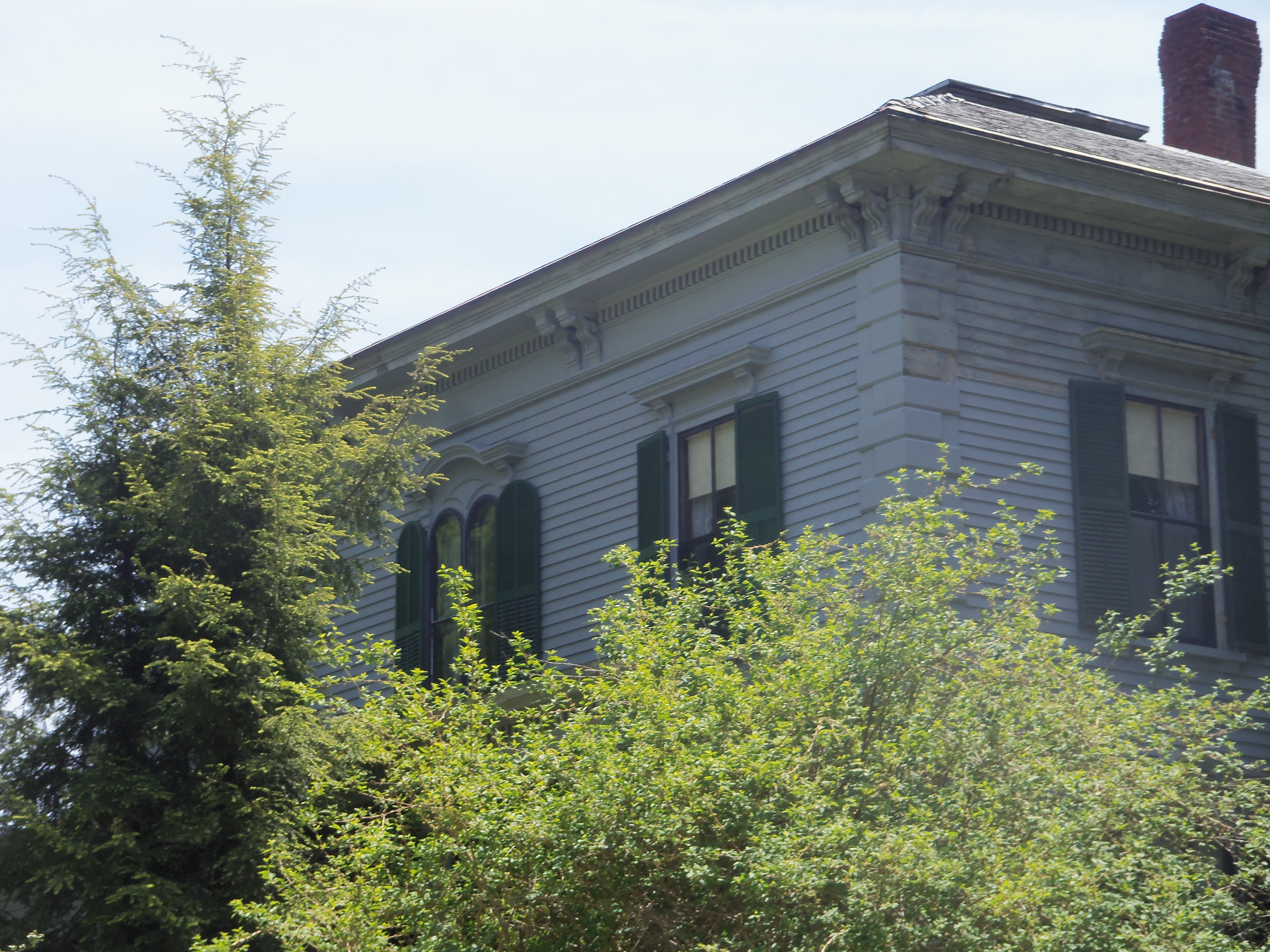 Strolling Dover: for more, click here.
As I said at the time …
Notes from cleaning up after a big race at (what was then called) New Hampshire International Speedway in Loudon:
 Jnana's Red Barn