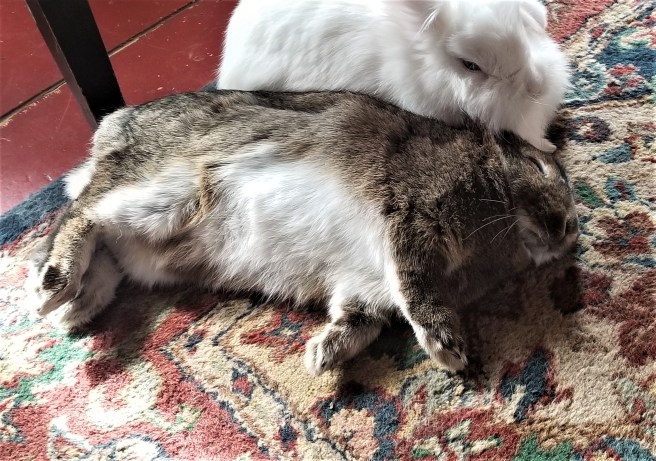
Heart-stopping moment
You never know what we'll churn up in cleaning a stall
To put the U.S. coronavirus crisis in perspective, consider that its toll has surpassed the 58,220 deaths of American servicemen in the Vietnam war. And to think, it would have been much worse if we hadn’t hunkered down, even as the virus continues to multiply.
Yes, I know it’s premature to expect our social lives to be returning to “normal” anytime soon, but let’s keep the hope alive.
Here are ten things I’ll say we’re missing.
Schools I’ll set aside as a whole special category.
What are you especially missing these days?

Jack Shafer of Politico magazine recently aired his argument against including newspapers in stimulus aid for companies hurt by what he calls the coronavirus apocalypse. As his title says, “Don’t waste stimulus money on newspapers. You wouldn’t put a dead man on a ventilator, would you?”
It’s a harsh assessment, coming not from a right-wing fanatic but someone who values the experience of reading the news on paper. He knows all too well the precarious state of the news industry even before the Covid-19 devastation, and I hate to admit I have to agree with him.
If you want to see my take on some of the deep systemic financial problems, just turn to my novel Hometown News, available as an ebook.
For a little perspective, you have to realize you can’t even purchase blank newsprint for the cost of your local paper, and that’s without anything on it or delivery to your doorstep or favorite store or the box on the corner.
Shafer is not talking about the handful of national papers that are thriving, thanks to a surge of online subscribers during the Trump nightmare. He’s talking about the local papers across the country, many of them now owned by hedge funds and similar short-view gaming investors. The kind of enterprise that has gone from family ownership with roots in the community to a global conglomerate that sees money in liquidation, as in who-are-you-all-anyway and why-do-you-matter when it comes to the locals.
Well, with oil companies lining up for relief aid, newspapers definitely should be higher on the list. But I digress.
In some ways, the papers are a canary in the mine shaft, or a dinosaur looking into the eyes of an approaching train, if you care to mix metaphors. Remember what happened to the railroads, after all, when the Interstates were built … with public money. Again, I digress.
The biggest question for me is what happens to local communities if and/or when the local papers expire.
First, of course, is that the public loses an essential watchdog on grassroots level politics. Believe me, local officials act differently when they know they’re under scrutiny. It will cost you dearly when they’re not.
Covering their meetings and the impact takes time, knowledge, ability, and courage. If you’re simply blogging in your spare time, you can be bullied or miss the follow-up phone calls. ‘Nuff said there. We’re facing a threat to ground-level democracy, OK? How many of us can really afford a lawyer?
Second, though, is the loss of local identity. I think most newspapers have fallen down here, failing to raise distinct columnists you just have to read first thing in the morning, but that’s not the only problem. How important is your neighborhood and the general area to you, anyway? Do you even know your neighbors?
A third problem involves the local economy. For one thing, there’s been a huge shift in local retailing, from mom-and-pop stores to the big-box intruders at the mall or Miracle Mile and then online, as in Amazon. The mom-and-pops are the lifeblood of newspaper revenue. Those glossy inserts pay next to diddly. And when’s the last time you saw anything from that monster Amazon or even Craig’s list, which is killing the classifieds?
The obvious shift would be from on-paper publication altogether to online presence only, but no newspapers have figured out how to manage this. It requires subscriber-paid content. Web users are way too used to getting everything for free.
By the way, I hope television and radio are not included in the assistance packages. Yes, they, too, are suffering loss of ad revenue and audience. Rotsaluck. Their news coverage, meanwhile, often rips off a lot of newspaper stories and then act as if they actually had reporters there. Who will take up the slack? Again, rotsaluck.
Which leads me to one more thought. Sports radio. That once hot-in-the-ratings screaming format that pushed broadcasting from music to talk and then to professional, mostly, athletics – with regional loyalties and identity. What’s happening there, now that nobody’s playing?
Where are you getting your community news?

As an author of ebooks, I’ve been lately engaged in an orgy of reading works by my fellow Smashwords writers. Admittedly, many of my selections have veered toward writings that reflect topics in my own novels – hippies, yogis, subway riders, millennials, Buddhists, Greek-Americans, and the struggles of new adults, especially. Still, it feels good to get a sense of what others are up to, and their formatting does give me a better sense of my digital options.
As I do so, I often leave brief reviews as a guide for other readers with similar interests. You have no idea how much these mean to a writer, so let me urge you to do the same whenever possible. As one responded, just knowing that she was heard was warm and welcome affirmation.
Just because many of these books are what the big imprints would deem “not viable for commercial publication” does not mean they lack value.
One of my favorites is a two-part memoir by the daughter of Lebanese immigrants who wound up in Nebraska somewhere around the turn of the 20th century. Her candor and details, however simply told, strengthen my understanding of what I present as Cassia’s ancestry in What’s Left. I dread to imagine what would have happened to the memoir in an attempt to jazz it up for wider sales. We should feel honored being allowed in behind the doors of a particular family history so honestly revealed.
It’s something like visiting artists’ studios or art galleries rather than going to the big museums. The scale’s definitely different.
One thing I’m finding is that I apply a more laid-back standard in reviewing these volumes. Yes, they are cheaper, for one thing, but I also read these more like manuscripts than finally processed books. I’m looking especially for freshness and energy, the edge often absent in the book industry. Remember, the big houses no longer nurture talent in the hopes of reaping a hit five books later. Everyone has to start somewhere, and this is where the action is now. Besides, even commercially published works these days aren’t particularly well edited. Alas.
Still, I’m having some common complaints, the pet peeves of an aging copy editor.
“Grey” instead of the American “gray.”
“Towards” rather than the American “toward.”
“That” instead of “who.”
Punctuation errors, especially with single and double quote marks.
Short stories posing as novels. Admittedly, I’m frugal, but these short entries are rarely worth the same as a fully fleshed out book.
To see what I’ve been reading, go to the book reviews at my Jnana Hodson at Smashwords page.
Got any favorite ebooks to recommend?
First, it’s chicken, as we discovered trying to reserve thighs for the local soup kitchen. Our usual supermarket can’t guarantee us it can have them for Thursday.
(Let’s not start a run on the stores, though. They should be smart enough to be limiting purchases to one per customer or so by now.)
Next will be pork, apparently, followed by beef.
Blame the Covid-19 outbreaks out in the big-producer lands. Workers too sick too work.
I’m wondering about eggs, though many of those are grown locally. I hope.
What do you suppose those protesters out in Michigan are going to do about this?
A local beekeeper group reports that 47 percent of its members’ hives died off over the winter, something largely blamed on a virus I’m dubbing Cobeed-18.
Alas, ours was one of the ones that didn’t make.
Uncertainties over the human Covid-19 outbreak, meanwhile, puts repopulating the hives in question. New colonies are trucked north from the Deep South, and who knows how long before things in that regard are back to normal.
Everything’s up in the air, except that some things aren’t.

