Spiritual but not religious?

I know, it’s something I would have claimed for myself, too, way back when.

And it is a common identity for many today.

But after five decades in a disciplined tradition, here’s how I’ve come to see it:

It’s like the difference between a one-night stand and marriage.

Or between lust and love.

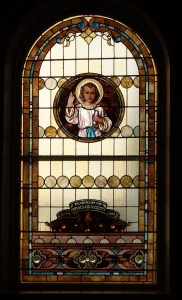
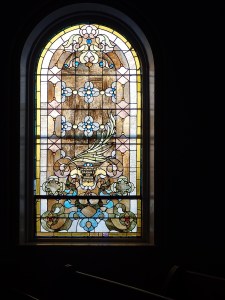
Quakers preferred clear glass windows. These are from another tradition embodied at the Lubec Congregational Church.

On a less flip note, I’ll admit that a problem with a lot of religion arises when it comes second-hand, even as speculation or shallow platitude, rather than from a personal experience of the mysterious divine. And also when it’s approached as law, with its thou-shalt-nots and rewards or punishments, rather than a relationship with the Wondrous Other. (I’ll leave the particular definitions open, for now.) I’ve called the latter approach “thinking in metaphor,” for good reason.

You can see how the theoretical or law-and-order approaches can mess up a romantic relationship. Ditto with the practice of faith.

By the way, I cherish religion that addresses daily life, in the here and now, more than in an abstract hereafter, though I’ll also agree with Freud’s disciple Otto Rank that religion is the one means we humans have with dealing with our ingrained fear of death.

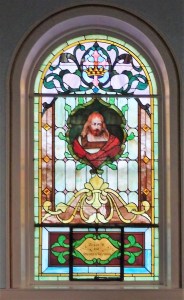
To my eyes, this one is surprisingly secular for a church sanctuary. It’s unabashedly intended to be merely pretty.

As the saying goes, God is in the details, and I can be quite critical of various traditions and teachings, including my own. Missing the mark, in a Jewish translation, is one definition of sin. At those points, turning – the basis of the word “repentance” – is required. But I’ve also come to cherish what one old Quaker called “mutual irradiation,” those places where humble practitioners of different disciplines cross paths and inspire each other.

Admittedly, I do come at this from an essentially mystical community that requires individual awareness, one that’s sometimes referred to as an Alternative Christianity. For a better feel of it, visit my As Light Is Sown blog.

In that stream, William Penn, an unapologetic Christian minister, boldly wrote in the late 1600s:

“The humble, meek, merciful, just, pious and devout souls everywhere are of one religion and when death has taken off the mask, they will know one another, though the diverse liveries they wore here make them strangers.”

As for religion, he noted:

“There is a zeal without knowledge, that is superstition. There is a zeal against knowledge, that is interest or faction; there is a zeal with knowledge, that is religion; and if you will view the countries of cruelty, you will find them superstitious rather than religious. Religion is gentle, it makes men better, more friendly, loving and patient than before.”

What do these windows say about the people who filled the pews?

Put another way, spirituality and religion are two sides of the coin. One without the other would be counterfeit.


Ten great loves in my life

What, you were expecting sexy lovers? That’s a whole different story, maybe best left for my fiction.

  1. Symphonic music. Well, quickly extending to chamber music and opera and then even jazz.
  2. Quaker practice and culture.
  3. The great outdoors. Wilderness, especially.
  4. The Cascades range as I explored it, most of all.
  5. Seafood, fresh asparagus, real tomatoes.
  6. The sea. Surf. Lighthouses.
  7. Holy wonder. The natural high, if you will.
  8. Autumn foliage.
  9. The soul mate who turned out to be false. She still haunts me, all the same. I think it was all the shared aspirations that really got me.
  10. The color blue.

~*~

What do you really love? Make that who, if you desire.


Dealing with the off-season in a tourist town

Come the first touch of chill here, and three-quarters of the population begins to vanish. Those folks quietly pack up and return to their primary residence, as have the many tourists. It rather reminds me of living in a college town, but in reverse.

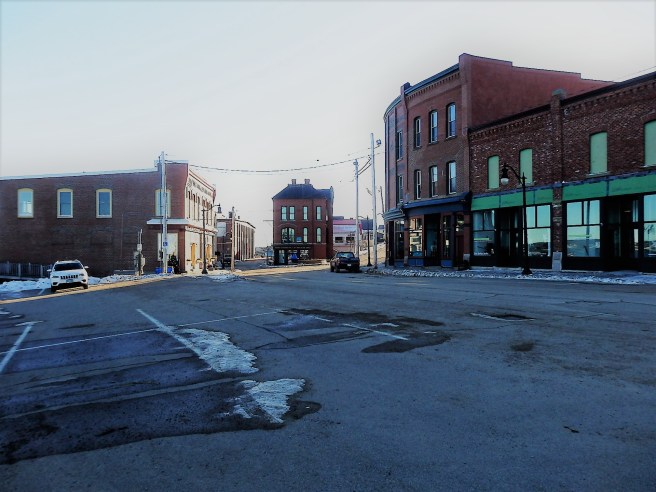
Downtown Eastport in the off-season. The Tides Institute and Museum sits in the old bank building in the center of the scene.

The waterfront and downtown are no longer crowded and festive. Many of the stores, galleries, and eateries are closed up, as are the whale watch, water taxi, and passenger ferry to Lubec. By Halloween, roughly two stores, a diner and a restaurant plus a gallery or two remain open downtown, plus the IGA, two banks, and Family Dollar over on Washington Street.

It makes for a challenging business model, trying to pay the rent and all on a four-month retail prime time. Here the highly watched Black Friday, the make-it-or-break-it financial hurdle of American retailing, doesn’t wait till the day after Thanksgiving but probably hits sometime around the beginning of August.

I have to admire the entrepreneurs who manage it anyway, especially those who stay open through the slim volume of the two-thirds of the year when Eastport’s remote fishing village nature is most prominent.

It also means a lot of do-it-yourself involvement. If you want to see movies, you join the film society. Music? Pitch in with the choir or orchestra. Theater? You guessed it. Dining out? One of the neighboring towns must be having a church supper. Seriously.

And you turn out for others.

Yes, it means more work than just sitting on the sidelines, and with a small population, keeping things going can be a struggle.

But one thing I’ve noticed. It doesn’t take long to be appreciated when you take part.


Tides wait for no one

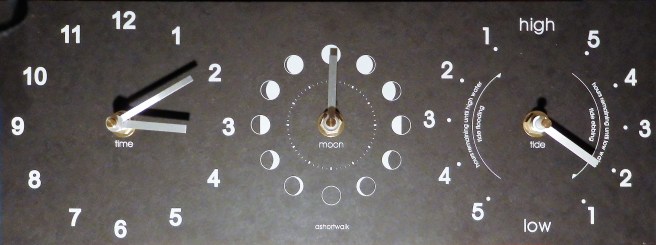
This three-ring clock made for a really appreciated Christmas gift. Its dials (not digital!) track the phases of the moon as well as the rhythm of the tides, which are truly impressive where I’m now living and change every 6 hours and 13 minutes or so. I can know before setting forth what to expect along the waters, especially if I’m thinking of tide pooling or looking for sea glass.

For their part, moon cycles are supposed to be related to mood swings and creativity and, as I’ve heard, even artificial insemination of cattle, whether the calf is going to be male or female. (I got that from some very scientific farmers, by the way.)

Since the night sky around here is often clouded, I do like not being ignorant of what lunar phase we’re in, even if I might scoff at its significance. It’s kinda like having X-ray vision.

All in all, these revolutions make me feel more connected to my place in the universe. Wherever that is.

If you’d clean up

forget it’s a voluntary parade what the window discloses or opens depends on the wind from the economy to extramarital animation collapsing into finicky provocation some ascribe to deranged exactitude erupting as interlocking torches in the hallway night yet they all blame Washington insisting everything’s a mess let me tell you indeed yessiree

What happens when a journalist attempts a novel

It used to be said that every newspaperman had a novel inside him, waiting for release. (Yes, male. Women reporters and editors were a definite minority. My, how times have changed!)

Frankly, I rarely saw any literary ambition around me. Few in the business read fiction of a serious sort, much less poetry. There were, though, a couple of playwrights. More recently, however, I know of two colleagues who have self-published – one a mystery, the other a political intrigue.

Yes, we’ve had notable exceptions, with Edna Buchanan, Ernest Hebert, Carl Hiassen, and Tony Hillerman topping my list. (Hemingway wasn’t considered much of a reporter in his six-month stint in Kansas City, and earlier giants often cited reflect a much different kind of journalism than what’s been practiced from the rise of the last century.) The crush of daily deadlines is exhausting, and fiction requires an entirely different approach and sensibility to the telling of a story. Journalists are conditioned to put facts first, usually without any concern for feeling, and to be professionally neutral, reflecting the quest of objectivity. These stances place the reporter at a distance from the subject, no matter how fascinating. Journalists also tend to put action ahead of the actors. Most of the resulting novels leaned toward the crusading reformer slant of the Front Page tradition – Down with corruption! – or maybe sports, either way, with the emphasis on the game more than the inner mindset of the players.

Well, there was also one editor-in-chief who took a popular genre novel and did a paint-by-numbers kind of rewrite over it. I think it was a Western, but I’m no longer sure. His connections got it published, and his success led to a half-dozen more. He was sheepish about the whole thing, though. It was more like a game, I suppose.

I wasn’t typical. My first love was the fine arts beat, for one thing. Since jobs there were scarce, I wound up on the copy desk. No matter how much I love politics, I find meetings boring. Press conferences, even more so. My most satisfying post was heading up lifestyles sections. Long story, as you’ll see in Hometown News. Maybe I was mostly a misfit who happened to do some things extremely well.

News writing, for the most part, is supposed to sound anonymous. Short sentences, limited vocabulary, a structure with the most important details at the top and the rest in descending order. As a writer or editor, your craft can soon become dulled. As an editor, one of my skills went to headlines, trying to relate a story in as few as four or five words. I’ve written hundreds of thousands of them, and I can see the distillation as an element of poetry. In my personal writing, I often reacted against the broader restrictions – I wanted a richer range of diction, more accurate language, more varied sentence structure (yes, I love long threads that work), and often more background on the story itself.

Turning to fiction, I’ve learned the importance of withholding details until later in the tale, things like not including first name, middle initial, and last name when introducing a character, much less his or her age and address. As for my poetry, I’ve preferred experimental and edgy, where the image or fractured expression might open into its own ambiguity and potential.

I do remember the first time a poetry publisher reacted to my submission by saying how delighted he was that my work wasn’t what he expected from a journalist. He had received enough to develop a negative opinion, one I fortunately didn’t fit.

My novel “Hometown News” was drafted during my third break from the news biz, when I was approaching 40 and gave myself a sabbatical after two years calling on editors in 14 Northeastern states as field salesman for a major newspaper syndicate. Driving between my calls on the local papers and seeing their newsrooms from the other side of the desk, so to speak, gave me plenty of time to reflect on the industry and then augment what I had collected in my own career. At many papers, as I saw, the managing editor or his equivalent was gone in a year, and with each one, I’d have to start grooming a new connection all over again. Many of them had telling histories of their own. Many of their towns looked like bombed out shells after World War II, their industrial might boarded up or rusting. I kept notes. Many of their skirmishes reflected my own.

Later, developing my novel in a series of routine days set months apart, “Hometown News” gave me an opportunity to see what I could do with creating a computer-generated novel. I set a framework for the day and randomly inserted 80 to 120 markers I could hit with search-and-replace items for each round. There were many other places that had to be manipulated manually, but it the attempt was fascinating, the way working a thousand-piece jigsaw puzzle is.

The result was something like a Jackson Pollock painting, a theme-and-variations curiosity but not compelling reading. Through a series of revisions, I kept the bones but layer by layer added flesh and muscle to bring certain characters to the fore while the dystopian theme deepened.

Thirty-four years after starting out on the work, and seven years after its publication, I am struck by the story’s prescient warning of the collapse of a once very profitable business for the dominant voices, not that our salaries reflected that. What I saw was entire communities under attack, and they still are – not just their daily mirror.

The newsroom I present is a blend of five I’ve worked in over the years – another one was much smaller, and the remaining one was simply different. When you get a group of news folk together and we start talking what one spouse called Bodoni-Bodoni, after the typeface used for many headlines, we all have insider war stories. I hope “Hometown News” gives you an idea how ours translate.