Chorro Ferdy

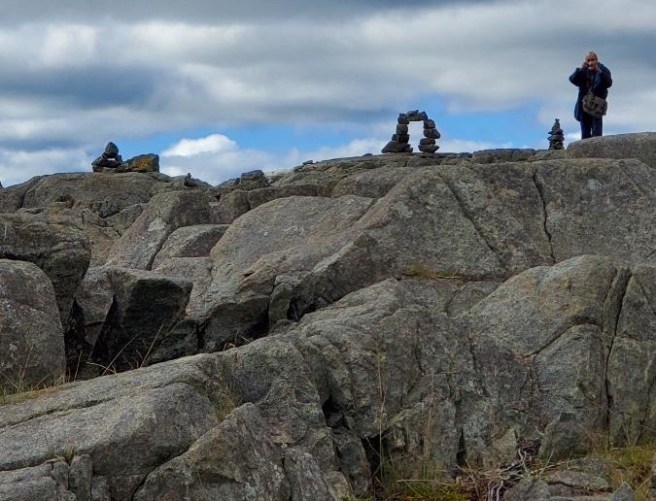
with neglected stretches afoot this past so jammed with rocks juts up between ferns and trees tensing into some ongoing anxiety of unseen opportunities in the day and a traipse around the Quaker burial ground in Ellicott City perceives the stone meetinghouse now a private residence : suspect it was called Elk Ridge Meeting but no proof yet : even boulders where elk roamed or buffalo now a stone enclosure under fieldstone forest before a floating worship the midweek turn here tomorrow night’s a blessing while my suburban exile draws to some close : humbly all we still share

Ahoy, oh boy, what a surprise

Popped into the Chamber of Commerce the other afternoon, thanks to the Public Restroom Inside board set up out on the street, and immediately found myself awash in pirates.

They were assembled for some kind of banquet, which I later learned was one of the fundraising murder mystery dinners in advance of our pirate festival.

I can report it was well attended.

The very important network of Friends

Early histories of Friends in New England generally overlook Dover, Hampton, and Salem, apart from fleeting references. The focus is instead on Rhode Island, Buzzard Bays, and Cape Cod, in part because of their relative wealth and influence and in part because of their cache of surviving records.

My investigation, prompted by the 400th anniversary of the British settling of Dover, has convinced me that the three northernmost Quaker Meetings of the late 17th and early 18th centuries were equally as important, and their stories need to be told.

One thing I’ve found is that these Friends were not ignored by traveling Quaker ministers. Some of them, especially from England, essentially “set up camp” on the Piscataqua, and their journals offer candid insights into the community and its struggles.

Friends were also connected through New England Yearly Meeting and, closer to home, through Salem Quarterly Meeting, before the creation of Dover Quarterly Meeting in 1815.

We see that in the assistance industrial pioneer Moses Brown of Providence, Rhode Island, provided Dover Friends in the manumission of their slaves in the years leading up to the American Revolution.

Today the Moses Brown School in Providence, Rhode Island, is a highly respected prep academy. Dover Friends who could afford to sent their children there.

The Friends Boarding School in Providence, later renamed in his honor, became another way for Quakers to become integrated into the wider Society of Friends – especially when it led to marriages with other Quakers. Much later came the prestigious Quaker colleges at Haverford, Swarthmore, Guilford, Earlham, and more.

Facilitated by the traveling ministers, who likely also conveyed business information and perhaps even money, along with the counsel of financially savvy elders, some Friends prospered in the industrial revolution. Some Dover Friends did find success in Philadelphia or Massachusetts, and others spread up the Cochecho River and across Maine.

Today, we also connect through alliances like the American Friends Service Committee, the Friends Committee on National Legislation, Friends General Conference, Friends United Meeting, the Friends Historical Association, the Quaker Theological Group, and much more.

Well, as Jesus said, wherever two or three more are gathered …

But it’s also how we stay recharged and focused in the work we’re called to do. Heaven knows, we can’t do it alone.

~*~

Check out my new book, Quaking Dover, available in your choice of ebook platforms at Smashwords.com.

Welcome to Dover’s upcoming 400th anniversary.


Just listen to some powerful lines from the bared heart

The best poem I’ve ever read in nearly six decades of the New Yorker is one that wasn’t even presented as one of its two weekly poetry selections.

Instead, it appeared recently within a theater review, where the play under consideration reminded the critic “of the late poet Essex Hemphill, a master of frank desire whose smart, life-hungry speakers toss of lines like these:

I am lonely for past kisses,
for wild lips certain streets
breed for pleasure.
Romance is a foxhole.
This kind of love frightens me.
I don’t want to die sleeping with soldiers
I don’t love.”

A bit later comes a couplet from a different Hemphill poem:

I am beautiful.
I will endure.

~*~

My, how I admire the directness of those lines, their acerbic observations unencumbered by literary aspirations.

Yes, he skirts the imagist realm of so much of my own verse but somehow, to my eyes, averts any preachiness that can come from the subjects he’s examining.

What hits me the most is the clarity and intensity of his self-examination.

Yes, each time I return to these.

Reflecting on the character of New Hampshire

When I arrived in the Granite State 35 years ago, I expected to be spending a lot of my time in the mountains to the north, but that never really materialized. I’ll blame my quest for love, usually found down in Boston, in the opposite direction, back before I met the woman I adore.

Contradancing soon claimed a lot of my social attention, with regular events across the state, across the border in Maine, and especially in Concord and Cambridge, Massachusetts. Add to that all of my time hunkered down in my literary endeavors or Quaker activities, even before I started singing in an incredible choir weekly in Watertown, just outside Boston, or swimming laps daily once I’d retired from the newsroom.

Whatever the character ultimately is, I found sufficient nurture and inspiration to do some good work. Gee, that’s starting to sound like Garrison Keillor.

Each of the six states, by the way, has its own character despite the overall New England identity. In general, those New Englanders are friendlier than their reputation for aloofness contends. It’s just that they’re more reserved – respectful of your privacy – but open up with a sparkle, for the most part, given a hint.

So here’s what I learned while residing in Manchester and then Dover.

  1. New Hampshire isn’t as archconservative as I had expected. Not that it doesn’t have a lot of blockheads, but the place was definitely shifting, especially along the border with Massachusetts.
  2. A large portion of New Hampshire residents have roots in Quebec, and others in Ireland, providing a significant Roman Catholic presence. Both reflect the textile-mills workforce in the 1800s. But other ethnic minorities have thrived, too.
  3. At heart, the population is largely blue-collar in outlook, generally practical, but these days, half of them come from other states, especially Massachusetts.
  4. Some of us used to joke that the stereotypical New Hampshire male had a Harley and his wife or girlfriend had big hair. That wasn’t far off the mark. Add a snowmobile, more than downhill skis or hockey skates.
  5. Agriculture isn’t a major economic factor. There aren’t many large commercial farms these days. And what farming exists is typically diversified.
  6. There are relatively few large employers. The commute to Greater Boston and back each day is huge – that’s where the paying jobs are.
  7. That also means few deep pockets for the arts and charitable action.
  8. It’s the most perfect test market for presidential candidates we have. Forget trying to find the ideal demographics, this delivers.
  9. Avid Red Sox and Patriots fans abound, with Celtics and Bruins supporters close behind. Keeping up with the teams’ developments is socially important. College sports, on the other hand, hardly matter.
  10. It might not have a sales or income tax, but you still have to pay for public services somehow. And so your property tax or apartment rental rate will be a whopper.

How about a good dose of humility instead?

On one hand, they’re proud of having voted for the candidate and want you to know they did, but on the other hand, they want to distance themselves from any culpability for his actions.

Will somebody tell them, “You can’t have it both ways,” as a citizen?

Grow up and take responsibility for your choice, which includes the possibility of repenting in the light of reflection or otherwise being party to the vulgarity, insults, lies, and the general mess he’s left the nation and world to endure. (Reflection? We’ve never heard him admit he’s ever done anything wrong, which means he’s never even said he’s sorry for anything he’s done. Mistakes are always someone else’s fault. That would put him a bit higher than Jesus.)

There’s no denying the loser’s the king of blame, casting censure on everyone but the one-and-only he faces admiring himself alone in a mirror. I, for one, am exhausted by the gush of blame that’s been poured on what we’ve treasured and join.

So, yes, be prepared to be blamed or praised.

Voting is a serious responsibility, folks. Embracing what your candidate has done, in and out of office, ultimately reflects on your own values and character – and we’ve all had to face the ugly consequences.

Before blaming Biden for things like higher fuel prices, see instead how they stem from the Donald’s encouragement of his Russian pal, Putin. As for inflation, how about those fat checks the fed government handed out with Donald J. Trump as the signature?

Running deeper in this is the denial that the American political system is based on a multi-party dynamic, with the minority serving as a loyal opposition. There’s been nothing loyal about this GOP, not since it turned obstructionist back before Obama. Instead, it’s been trying to wreck the machinery of a just republic. That identity is anything but conservative.

If you’re proud of his true record, stand up. But face it all, not just the cherry-picked Fox version.

And don’t think you’re above blame or shame.

A good dose of humility is a virtue.

Shame on you, if you’re trying to shirk off the consequences of your vote.

Gee, has it seemed I’ve been a bit AWOL lately?

Have to confess the Red Barn posts have been moving along on schedule, but just not as many or as varied as usual.

Seems I’m not alone that way, here on WordPress or other social media, for that matter.

On this end, I’m knee-deep in trying to get a big project in gear – the part that follows the publication of a new book, which is just around the corner. These next steps are time-consuming and emotionally a roller-coaster. I’m always feeling I’m way behind there, as well as uncertain of the way.

As a complication, about a month ago I suffered a physical fall in the middle of the night and was reminded once more how fragile the body gets in older folks, aka the elderly, and how risky that can be when living alone. I’m still feeling some of the aches after the bruises and what else and won’t be resuming the twice-a-week fitness classes till after Labor Day.

Quite simply, that’s slowed me way down.

And then there was my week at the annual sessions of New England Yearly Meeting of Friends (Quaker) off in Castleton, Vermont, now that we’re gathering face-to-face again. Getting across northern New England, however, is a remarkably drawn-out trip, no matter how stunning some of the scenery can be. I did see parts of Maine, New Hampshire, and Vermont for the first time.

Weighing on me especially has been the surreal political and social nightmare unfolding here in America. It’s not just Trump, either, but closer to home the threatened return of Paul LePage to the governorship of Maine. Trying to write about that has been paralyzing, and the news developments keep mounting at a dizzying pace.

So here we are and summer’s almost over. It hasn’t exactly felt lazy.