TEN YUMMY SOUPS

It’s prime time for hot soup. We’re not talking about anything out of a can or a package dropped into boiling water. These are the ones made with fresh ingredients – or things you froze in season for use later. Probably with a good homemade stock, too.

  1. Tomato. Seriously, my wife’s is always a hit – and the glutten-free, lactose-intolerant, or vegans aren’t left out of the pleasure. Our secret ingredient is the tomatoes we cook down and stick in the big freezer in high summer in anticipation of this.
  2. Potato-leek. Simply comforting. Again, with our own leeks. Storing them through winter is a special challenge – so far, we find peat moss works best in buckets placed at the back of the cellar.
  3. Split pea and/or lentils. I imagine there are whole cookbooks devoted to the possibilities.
  4. Ramen. Remember, Japan created restaurants purely for this. Forget that cheap stuff in the plastic bag – though if you do, add tofu, the way we do.
  5. Pho. A hearty Vietnamese dinner in a wondrously big bowl.
  6. Seafood, meaning clam chowder or lobster bisque. (OK, that’s two. I just love both.)
  7. Hot and sour. Fresh Chinese bamboo shoots can make a world of difference.
  8. White bean. Last one I had was an Iranian version with lamb’s neck and another eight or nine ingredients. It was heavenly. Or you can stick to a hambone. Just don’t disparage good beans, OK? (Well, let’s add a footnote for turtle black beans, especially as a great Cuban bowl.)
  9. Ravioli. Yes, as a soup. Slurp ’em up!
  10. Asparagus. We put those stems we cut off to work later.

Well, India’s Mulligatawany belongs on the list, too. I doubt we’re done here yet.

~*~

What would you add to the list?

They’re a threat.


COPING WITH TRADITION AND CHANGE

The big break with the status quo that occurs in my new novel, What’s Left, still demands a respect for all that’s led up to the transformation.

As she perceives, from a customer’s point of view:

They miss the reliable owners’ familiar faces behind the stools and salt and pepper shakers, along with their comforting banter. Could we ever fill their sturdy shoes? Can we live up to their dependable standards or their reasonable prices? Can we even serve a decent cup of coffee or will we lose our shirts and have to quit the place?

The challenge and opportunity go way beyond that.

It’s a sharp break to a new generation, in more ways than one.

Cassia never has to consider this with her own brothers:

From everything I see, there’s an uncommon bond between the brothers, despite their sexual differences. Yes, they’ve both been promiscuous – and then settled in.

Or does she?

~*~

In writing a novel that’s told by a single character like Cassia, I have to remember that she knows far more about her family than I ever will. Maybe I can’t answer everything, but suppose you had an opportunity?

What would you ask Cassia over dinner? Or somebody in your own family, one on one? (Present or past?)

~*~

Greek salad (horiatiki salata) at Psaropoulo restaurant, Hydra, via Wikimedia Commons

In the family, Cassia may have had food like this.

JUST IMAGINE WHAT YOU’D DO

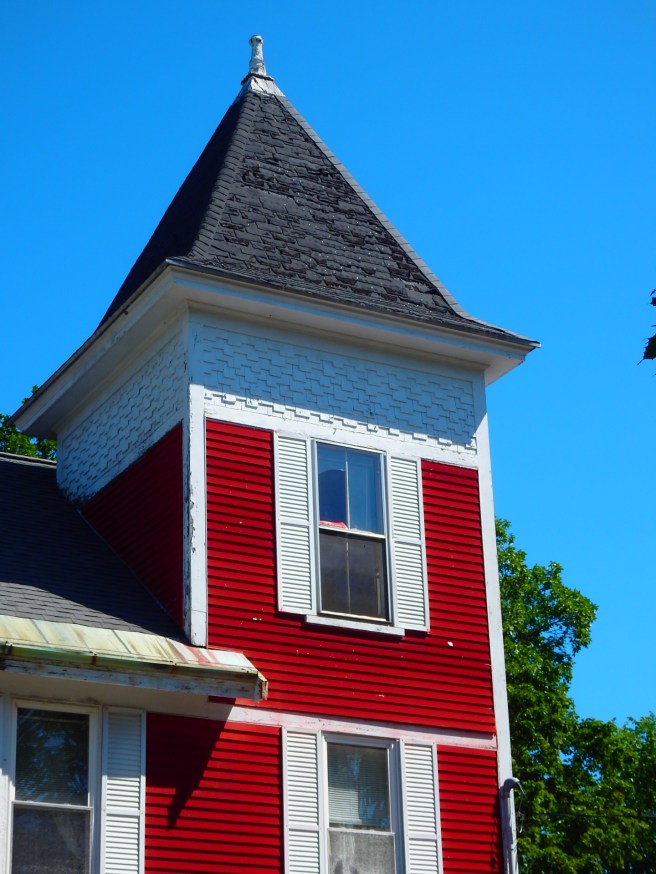
A large Queen Anne-style house with a distinctive witch’s hat tower something like this is the headquarters for Cassia’s extended family in my new novel, What’s Left. If only this one were pink, like hers.

Imagine that your father or mother had started a successful business and you’re in line to inherit it.

What would you want it to be? What would you enjoy doing?

In my new novel, What’s Left, the family business is built around a restaurant and related rental properties nearby.

But there are all kinds of other options. What do you suggest?

TEN THINGS I DON’T LIKE ABOUT TURNING 70

  1. Aches and pains.
  2. Memory recall.
  3. Slowing down.
  4. Ditto, the lovey-dovey.
  5. And the surviving strands are getting narrower and narrower, almost like spider-weave now.
  6. Realizing how often I have – and still do – misread social cues, unintentionally hurt others, blown opportunities. I’ll even admit to some serious regrets now.
  7. All the friendships I’ve lost along the way, moving from job to job and town to town.
  8. Too much sensitivity to hot and cold.
  9. Won’t ever hike the Appalachian Trail at this point. Or other similar heights.
  10. Realize what a gap exists between me and those 50 years younger. It’s not just the technology stuff, either.

~*~

What don’t you like about being the age you are?

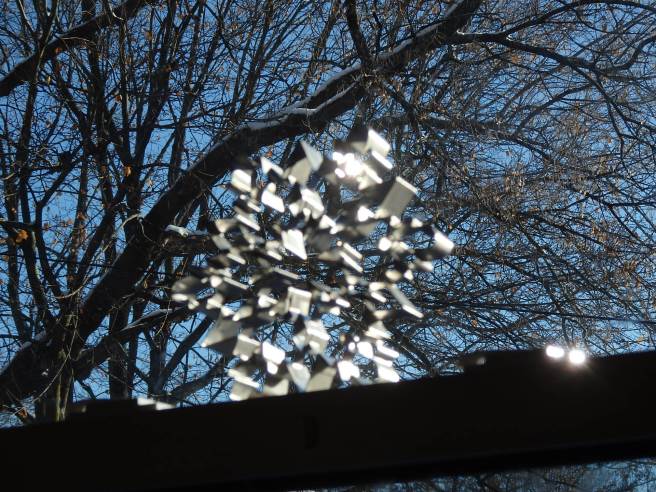
Snowflake cookie cutter in a kitchen window catches the sunlight.


GETTING IT ALL DOWN ON PAPER

In some family businesses, the accounting can be rather slipshod. Many of the figures might be stored in someone’s head, rather than on paper. Or on random slips stuffed in a cigar box. Or even scattered around an office. Maybe it’s just one of the hazards of being your own boss.

In my new novel, What’s Left, her grandfather, Stavros, continued some of that custom, but not nearly as much as his parents and their business partners, who happened to be siblings.

When her uncle Dimitri returns to town with a Masters of Business Administration in hand, he needs to get those numbers in order quickly if there’s to be anything of the restaurant and its investments for his brothers and sisters and himself to inherit. It’s a race with time, even before his parents die in their prime, victims of a late-night car crash.

~*~

From what Nita’s said, I’m sure Dimitri was putting in much less – formally, at least. My guess is that he was always thinking about our venture, and many of the social events he attended were primarily for schmoozing. I’d ask Barney, if he’d only answer his phone. And these days, whenever I run into him somewhere, I feel the brush-off. As for knocking on his door? Not as things stand now. Oh, well, maybe someday.

~*~

Maybe we’ll always have things we’re supposed to do but shrug off all the same. Put them aside, unfinished. Simply ignored them. And then there are the emotional blowups. (I’ve been accused of being stuck at age 14 or 17 on that front. What’s wrong with that?)

Have you ever wanted the adults in your life to be, well, more grown up? Like even answering your questions?

~*~


In my novel, the family restaurant could have been like this.

Miss Mendon diner, Worcester, Massachusetts, by Liz West, Boxborough, Massachusetts, via Wikimedia Commons.

THAT OLD EAST-MEETS-WEST CONUNDRUM

Carmichael’s, the restaurant her family owns in my new novel, has me looking more closely at others. The logo of the new Gyro Spot in downtown Dover takes the traditional Greek blue-and-white border and twists it into a G. Or is that Gee!

Decades ago, in selecting a Greek-American family as the closing destination of my first published novel, I imagined its circle of siblings as an embodiment of Western civilization – a bohemian counterbalance to the Tibetan Buddhism my hippie-dippy Dharma bum was carrying back to the American heartland. I intended the fusion of two non-mainstream cultures to suggest the rainbow of alternative lifestyles emerging in the late ’60s and early ’70s and the optimistic possibilities before us.

Frankly, some of what I wrote was semi-autobiographical. After an immersion in yoga practice on a small farm in the Pocono mountains of eastern Pennsylvania, I had returned to a rural corner of Ohio – a small town I call Prairie Depot in some later novels. While our yoga was Hindu-based, the teachings allowed me to explore an earlier interest in both Zen and Tibetan Buddhism – enough similarities exist for me to feel comfortable in that part of my story.

What still astonishes me, though, is my intuitive flash to make the family Greek. I vaguely sense my decision may have been based on a local family-owned restaurant that had undergone a similar tragedy, though I would have known little more than what I’ve just related. Only in the past half-dozen years have I begun to perceive how prevalent Greek immigrants and their descendants have been in the American experience, yet even when they’re as numerous as they are where I now live, their presence is nearly invisible to the general public.

I hope my newest novel, What’s Left, will change that perception.

Continue reading “THAT OLD EAST-MEETS-WEST CONUNDRUM”

TEN THINGS I LIKE ABOUT TURNING 70

  1. I’m married to a most attractive and fascinating woman – even if she’s smarter than me.
  2. We’ve settled in a good place, with good friends. Survived to get here.
  3. Our two kids are way, way above average – and we’ve never had to post bail for either of them.
  4. I’m not trailing an oxygen tank or using a walker.
  5. I have a prodigious amount of literary writing to my credit. I’m actually proud of most of – I’ve written what I want.
  6. After a remarkable life journey, I have perspectives that sometimes feel like wisdom.
  7. My spiritual practice keeps deepening.
  8. I haven’t run out of great things to read.
  9. I’ve never sung better, and maybe the same can be said for my dancing – New England contras and traditional Greek. Never knew about either of them as a young man.
  10. Somehow, we’re able to pay our bills. Most of the time.

~*~

What do you like about being the age you are?

~*~

Uncover what’s new at THISTLE/FLINCH for yourself.

FAMILY IS MUCH MORE THAN BLOOD AND FLESH ALONE

One thing her great-grandparents Ilias and Maria introduce to my new novel, What’s Left, is the acknowledgement of how much of the family’s business success results from the members who’ve joined in freely, rather than been born into its tree.

Their daughter, Bella, certainly reinforces the triumph, as do Graham, Pia, Yin, and Cassia’s father a generation later.

So where will it go from there? Is there even really room for more? What if the new members don’t get along?

~*~

In recent years I learned that my own family history would have been much different if two of the wives had not conflicted with each other. Do you know of similar discord?

At one point, Cassia admits being a bit jealous of her brothers’ girlfriends. Have you ever felt the same?

~*~

Veiled head for insertion in a female statue. The nose, the back of the head, and a section near the right ear were affixed. Marble. 2nd century BCE. Archaeological Museum of Rhodes. (Photo by Jebulon via Wikimedia Commons.)

Cassia’s roots included inspiration like this.

HOW DO YOU DEFINE A FAMILY?

A large Queen Anne-style house with a distinctive witch’s hat tower something like this is the headquarters for Cassia’s extended family in my new novel, What’s Left. If only this one were pink, like hers.

Up to age 11, when her father vanishes in an avalanche halfway around the globe, Cassia takes her close-knit extended family for granted. It’s the way life’s supposed to be, right?

And then? It’s not.

Central to my newest novel, What’s Left, is the question of just what makes a family. Is it Mommy, Daddy, and the kids? Or something much more vital?

Continue reading “HOW DO YOU DEFINE A FAMILY?”

TEN THINGS I LIKE ABOUT FEBRUARY

  1. Sitting in the dark in front of the lighted Christmas tree. And convincing my wife we don’t have to take it out at least until Presidents Day.
  2. Hard cider at the tasting room at the Rollinsford mill.
  3. Cross-country skiing. Assuming we get enough snow.
  4. My wife makes a big prime rib dinner, usually just before Great Lent begins.
  5. Oh, yes, that last martini before Lent.
  6. Crisp sunlight – and days as long as they were in October.
  7. Chuck’s sauna. Out by the farm pond.
  8. Maple syrup.
  9. Watching the birds at the feeder.
  10. Wondering about bob houses and how thick the ice is.

~*~

What do you find personally meaningful in the month of February?

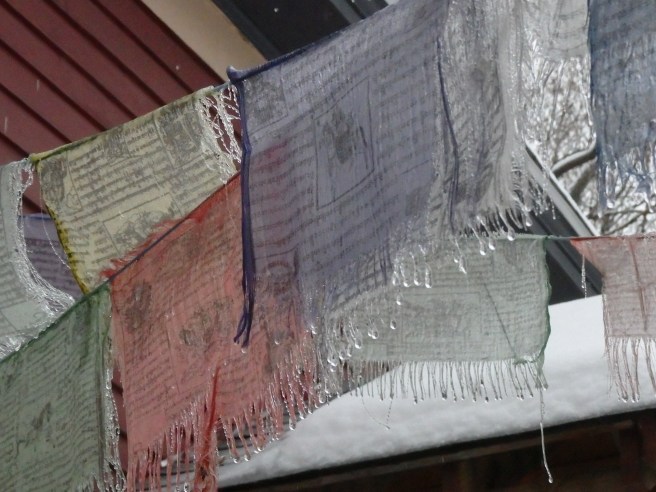
Tibetan Buddhist prayer flags in the icy air.