One of the dilemmas in shaping my novel What’s Left, involves the naming of children. I felt a repetition of first names in successive generations, such a common Greek custom, would have simply become too confusing for readers to follow. Am I right?
~*~
In a passage I cut from the final edition, the unifying influence of tradition or spiritual practice is considered:
Let’s face it, our worst disagreements are insignificant compared to the conflicts that could be erupting within our circle.
~*~
Not all families get along, after all. Even Cassia’s will face some difficult trials.
For the moment, let’s look at names. Cassia, in the novel, is short for Acacia, a tough wood mentioned in the Bible. (In the King James version, though, it’s called shittam. Ugh.)
Do you know what your name means? Were you named in honor of anyone? Do you like them? Would you prefer something else?
Somehow, in starting from the finale of an earlier novel, my novel What’s Left would have to resolve a gap between the five siblings’ Greek ancestry and their interest in Tibetan Buddhism, along with the challenges of running a restaurant shortly after the loss of their parents. Their view of business is more radical and community-focused, for one thing.
Yes, they were young and idealistic, but would that be enough to get them through?
What would you hope to see change in your surrounding society? Or even your own life?
When it comes to her cohort of close cousins in my novel What’s Left, I don’t want to give away too much. Let’s just say there are a lot of them, and they come to prominence in the last half of the story. You just might have reason to be envious.
As an author, this presents a challenge. How can I narrow the focus for the reader yet maintain an awareness of the scope involved by the time we get to a fourth generation of this family in the New World?
In this case, I chose to concentrate on a handful of Cassia’s cousins, at most, and deal with the rest of them in quick glances, often as part of the pack, sometimes simply a cluster of names in a single brushstroke. I hope it’s sufficient.
Perhaps it also helps that apart from Cassia’s best friend forever, Sandra, the cousins don’t step into the spotlight until we’re well into the story and some of the other earlier characters have already stepped offstage.
~*~
As a passage I deleted from the final version suggests, her upbringing was quite different from her father’s.
He must have been very lonely, always on best behavior, without any of the competitive mischief that runs through my family.
~*~
One of the things that amazed me about my college girlfriend’s family was the number of cousins she had and how often they visited each other — second- and third-cousins included. They seemed to know where everyone lived and what they were up to. Mine was nothing like that.
Do you have any close cousins? Do you find any of them to be special? Annoying?
Or if you’re from a big family, how close are you to your brothers and sisters? Which ones more than others?
Who would you turn to if you were in trouble?
~*~
Coming across a family photo like this one online fills me with admiration. They seem so close and happy together. The one I found is captioned Three Greek Sisters. I’m assuming they’re Greek-American, but who cares? By the way, those look like some lucky guys, too.
Writing has been a means for me to investigate the question, “Who am I,” and of recollecting fragments, especially those that might eventually coalesce into a larger perspective. Unlike many adults, I have few vivid childhood memories, but what I am piecing together is often troubling. I grew up in Ohio in a mainstream Protestant tradition, became an Eagle scout, loved chemistry, hiked and camped, that sort of thing. I can blame becoming a hippie on my first lover, and thank her, too, for pointing my life in an unanticipated direction even after she flew ever so far away.
In the years since, I’ve followed a zigzag journey that’s been rich in many ways excepting money. Let’s just say it’s been off-beat.
Now retired from a career in daily newspaper journalism, I’ve married for the second time, live in a historic mill town in the seacoast region of New Hampshire, and am an active Quaker. It’s a full plate. What I didn’t expect was how much of my own “contemporary” fiction is now history – so much has changed so quickly in my own lifetime.
It’s hardly the end of the story, though. Not if we can help it.
My novel What’s Left deals largely with a new generation as it attempts to make sense of its legacy. Yes, the story centers on Cassia, the daughter of a professional photographer and practicing Tibetan Buddhist in Indiana. She’s trying to make sense of how they got where they are now – and what’s always made her extended family unique.
Do you feel you fit in easily with the world around you? Or is there usually some sense of alienation?
Unless you’re a hermit or a successful recluse, you’re bound to come across a host of humanity in your daily life. Just think of the spaces you inhabit — home, neighborhood, buses or subway cars, classroom, workplace and markets, church, a gym or swimming pool, dances, sports teams or choirs, coffee stop, and on and on — all filled with other people who cross your path.
Just mapping all the places you touch in a week can be a big challenge.
If it were only pink, like the one in my novel What’s Left!
So faithfully following a character in a story presents an impossible task: how many of these intersecting individuals can an author include? Think, too, of the level of importance — whether you’re presenting a central figure whose influence runs through many of the pages; a major character who may be important at some point, even a single chapter; someone who provides peripheral color; an episodic figure, who flits in and out. And how many of these require names versus those who can be quickly sketched by a simple title or description?
I’d still love to do a tale having only two characters. Even holding it to six would be fun. But obviously, that wouldn’t do when the story touches up to five generations, as my novel What’s Left, does. Now you can share my perspective.
Consider, too, that we typically know others in one circle of activity or another. Sometimes they fit in several, but encountering a person out of context can be confusing. There are people I know at the indoor swimming pool, for instance, but we’re always startled when we run into each other on the street or at the supermarket, where our joke usually goes, “I didn’t recognize you with your clothes on!” (Yes, we do wear swimsuits — and often swim caps.)
How many people do you know by name? What’s your most important social space when it comes to being with your cohorts?
If you’re a writer, you no doubt know the dictum, “Write about what you know.” It remains sound advice. Another side, though, is equally valid — write about what you don’t know. It’s a means of exploration and discovery.
What’s Left takes that approach more than any of my earlier works. As an 11-year old, Cassia’s living in a financially secure extended family quite unlike any I’ve known intimately. She suffers a tragedy that prompts the action of the novel, again quite different from my own experience. Cassia tells most of the story in her teen years as she investigates the central questions in her life.
For me, this also required constructing a back story beginning with her great-grandparents and moving to the present. What do I know about running a restaurant, managing a family business, being Greek-American or Greek Orthodox, for that matter?
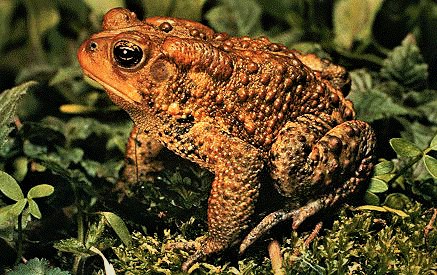
Well, as she advised me (and you readers) at one point, “You better be good to toads.”
I simply recorded what she dictated to me.
Read the book and you’ll see why.
~*~
I thought about “correcting” that to “You better be kind to toads,” but my sense is that it’s closer to what an 11- or 12-year-old may say under the circumstances.
To be honest, I don’t remember much from when I was that age. There may be good reasons I keep blotting it out.



 Jnana's Red Barn