
You never know what we'll churn up in cleaning a stall
When we have foreign guests staying with us, I have to watch is the need to speak slower and more distinctly. (Well, that’s obviously on hold during the Covid outbreak, though we have heard from one back in China assuring us she’s fine.) The exchanges can start to sound comical, even before I face the difficult challenge of using smaller words. Me? Smaller words? Look, we have more than 200,000 in the English language for a reason!
You can imagine our situation when they’re Chinese students here for a month or so as they volunteer at ono-profits internships. Somehow, shorter visits just don’t seem to rise to the more complex communications.
~*~
My daily Spanish lessons raise the translation issues from an opposite direction, but I think I’ve crossed an important threshold there, one that goes beyond vocabulary.
Have you noticed how a spoken language becomes a musical line rather than individual words? My wife remembers her shock learning that “come on” was two words, not one, as in “cumon.”
When the Duolingo voice tells me, “Type what you hear,” I know to write what I’m supposed to hear rather than what I actually encounter at fast speed.
You could say that in common usage our sentences lose all of the spaces between words. In Spanish I sometimes notice this more as a rhythm across where a word should be between two other words rather than hearing that word or even a letter itself.
Somethinglikethispoorexample.
Rather. Than. Some. Thing. Like. This.
I’m also noticing that the endings of some words are vanishing, as they do in so much French, especially a final “s.”
Must happen in English, too, ‘cept we just take it for granted and naturally fill in the meaning.
Now, as for all of those hearing-aid solicitations I keep getting in the mail? I doubt they’d help my Spanish any.
What do you have to say here? (Please type slowly and distinctly.)
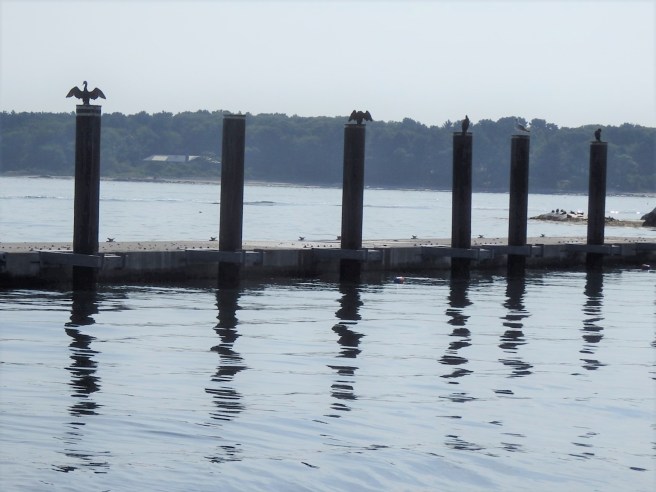
Everyone in Cambridge looks straight from Central Casting, no matter how frumpy they’re dressed.
(And you overhear a world of languages, too.)
Or, the memories …
To put the U.S. coronavirus crisis in perspective, consider that its toll has surpassed the 58,220 deaths of American servicemen in the Vietnam war. And to think, it would have been much worse if we hadn’t hunkered down, even as the virus continues to multiply.
Yes, I know it’s premature to expect our social lives to be returning to “normal” anytime soon, but let’s keep the hope alive.
Here are ten things I’ll say we’re missing.
Schools I’ll set aside as a whole special category.
What are you especially missing these days?
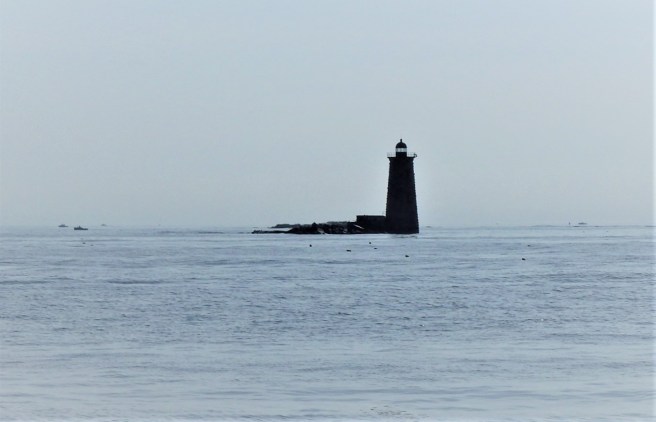
My wife mentioned that she’s seeing a lot of deals from Amtrak, and that had me thinking how overdue I am for a trip on the Downeaster to Boston or the other way up to Portland, Maine, or beyond. As a senior, I even get to ride at half-price.
Of course, Covid-19 came into the picture, and I started flashing through the factors.
If the train’s not crowded, I’d have plenty of social distance. I could also carry hand sanitizer and even wear my colorful homemade mask to reduce risk of exposure.
I’ve been wanting to go to a Boston Symphony concert, finally see their new music director in action, but then I paused, realizing all of those concerts have been cancelled.
My considerations moved on to a visit at Harvard’s famed Fogg art museum, which had reopened after extensive renovations. Well, reopened is the wrong word. For the time being, it’s closed again. Hope the renovations hold.
Ditto, too, for a fine meal, maybe even in the North End’s Little Italy a few blocks from North Station. Forget that during the coronavirus shutdowns.
So it looks like that getaway is off, maybe till autumn? Or sometime next year?
This is getting boring. Or something like that.
Few Americans know much, if anything, about the Ozarks, where Jaya and Joshua resettle in my novel Nearly Canaan.
Here are some driving times to points from Fayetteville, Arkansas, to major cities.
~*~
~*~
Frankly, the Ozarks is more isolated than I’d thought. I’m surprised that its center is almost as far from New Orleans as it is from Chicago or that it’s halfway between St. Louis and Dallas. Looks like a long way to anywhere, actually.
How long does it take you to get to a major destination?
Each one has a story:
In my novel Nearly Canaan, Joshua and Jaya leave Prairie Depot and settle into a place unlike anything they would have imagined. It’s not where they promised themselves that they’d relocate, but it would have to do. At least it was hilly and wooded.
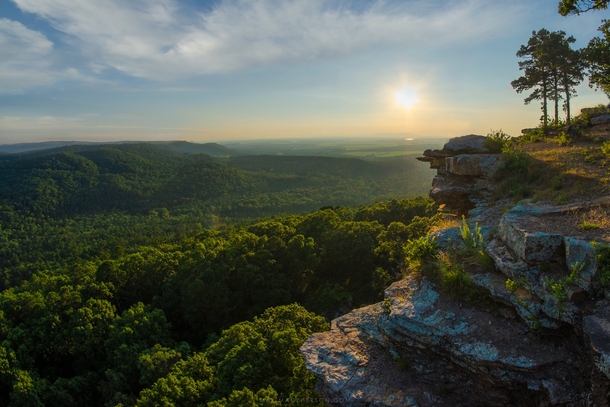
Here are a few of the things they discovered.
~*~
~*~
What can you add to the list?
 Jnana's Red Barn