Just to get Saint Nicholas clear

He’s not a synonym for the fat man who comes down the chimney at Christmas, especially in Eastern Orthodox Christianity, where he’s especially revered. Let’s set the record straight.

  1. He was born in 270 CE to wealthy parents of Greek descent in Patara, now southeastern Turkey.
  2. After they died of an epidemic, he went to live with an uncle, also named Nicolas, who was bishop of Patara and guided him into the priesthood. After ordination, he gave away his large inheritance to those in need, establishing his reputation for generosity.
  3. During the first half of his life, it was illegal to be a Christian in the Roman Empire. Even so, he was ordained bishop of Myra, also in southeastern Turkey, before being imprisoned for refusing to worship idols.
  4. After his release from prison in 305, he zealously made the rounds of local pagan temples and shrines, smashing their idols and turning their temples to dust, as the account goes.
  5. In 325, Nicholas was sufficiently esteemed to be summoned by Emperor Constantine to a gathering to discuss issues Christians were facing. There, at the First Ecumenical Council, he became so outraged at hearing views voiced by Arius (“the first heretic”) that he either punched or slapped the offender. He was then stripped of his bishop’s robes and thrown into prison because it was illegal to strike someone in the presence of the emperor, to say nothing of his own violation of his bishop’s code of non-violence or self-restraint. While in shackles, Nicholas repented of his actions but not his views, and then received a nighttime visitation by Christ and the Theotokos (Virgin Mary). Constantine freed him the next morning. (Nicholas is somehow not mentioned in the writings of any of the people who were actually at the sessions. Ahem. It’s still a hot story.)
  6. In another report, a formerly wealthy man had three daughters of marriageable age but not the money for a dowry or prika for them to be married to good men. He feared they might become slaves. When Nicolas heard of the man’s plight, he came by the house secretly at night and tossed a sack of gold through the window, where it bounced into a sock or a shoe. This happened each time before a daughter’s wedding. The third time, the father saw who the secret donor was. Nicolas pleaded with him to keep the secret. In another, more salacious version, the father had planned to sell off his daughters, into either slavery or prostitution, and Nicholas arranged to save them all from a host of sins.
  7. He is attributed with many miracles, including saving drowning people at sea, rescuing three innocent soldiers from execution, and restoring at least one mortally injured sailor.
  8. He’s widely known as Nicholas the Wonderworker and one of the highly regarded Eastern Orthodox saints.
  9. He died peacefully in his sleep in 343 in his old age, that is, 73.
  10.  In 1087, Italian sailors from Bari seized at least part of the saint’s remains from the church where he was buried in Myra, over the objections of Greek Orthodox monks. Two years later, Pope Urban II personally placed those relics under the altar at the new Basilica di San Nicola in Bari. For the Eastern Orthodox and Turks alike, it remains theft.

~*~

So much for Santa Claus, eh?

Ten reasons I write

I’m talking about the poetry, fiction, even letters and blogging. My “personal” stuff, much more than anything I usually did at the office.

  1. To remember.
  2. To explore.
  3. To play with language.
  4. To connect.
  5. To dialog with myself.
  6. To read/share in public. To be part of a community.
  7. To become visible, earn recognition in the now fading dream of fame.
  8. As a form of prayer.
  9. To better understand and appreciate other writers. See what makes their work tick from the inside.
  10. To make money?

Some breathtakingly beautiful places I’ve been

  1. Mount Rainier, Washington: Not just its high country and flanks (I’ve been as high as Camp Muir, 10,188 feet elevation), but also the valleys and surrounding ridges. Living four years to its east allowed me many opportunities to see aspects many of its more urban neighbors rarely encountered. (I’ll let this one stand as a representative of what could easily become a Tendril of other Cascades Range experiences.)
  2. West Quoddy State Park, Maine, after a big storm: Like a smaller scale Acadia, but far less crowded and more intimate.
  3. Outer Cape Cod, Massachusetts, on the Atlantic side: Especially pleasant in the shoulder season, when we were staying at Grandpa’s Jim’s place. The beach and dune just run on forever.
  4. Mount Cochura, New Hampshire: Not one of the state’s higher peaks, but a strenuous and varied ascent all the same, with fantastic views from the peak. Noted in Native lore even before the celebrated lovers’ leap.
  5. Stillwater Quaker meetinghouse, Barnesville, Ohio: Built in 1877 along timeless classical proportions and designed to house yearly meeting sessions as well as weekly Meeting for Worship, the site always felt much older and more hallowed to me, even after living in New England.
  6. Music Hall, Cincinnati: Some of my greatest concerts in my memory were in this large, horseshoe-shaped Italianate auditorium. The acoustics in the second balcony were razor-sharp. (Gilded Severance Hall in Cleveland deserves an honorable mention.)
  7. Hancock Tower observation deck, Boston: The panoramic view from the top of the city’s tallest building was amazing. Alas, it has been closed for security reasons since the 9/11 flights took off from Logan International Airport across Boston Harbor, a very prominent feature in the view.
  8. Butchart Gardens, Vancouver Island, British Columbia: This flower-lover’s 55-acre paradise attracts more a million visitors a year for good reason. The blooming beds are perfection of horticulture and color, but there’s no preparation for the stunning sunken garden in the former limestone quarry just beyond.
  9. Roan High Knob, North Carolina-Tennessee: I was a 12-year-old Boy Scout nearing the end of a week’s backpacking on the Appalachian Trail when we came upon this 6,286-foot-high mountain crowning a nearly tree-barren highland punctuated by rhododendron in full bloom. I’d never before seen a rhododendron, as far as I know, but have always associated the shrub since with that unanticipated, perfectly timed encounter.
  10. Ohio Caverns, West Liberty: You just don’t expect the crystalline underground wonder to exist under an otherwise pedestrian Ohio landscape. (Mammoth Cave, Kentucky, is grander and more spectacular, but sometimes, as the saying goes, Small Is Beautiful.)

~*~

Your turn to pipe up!  

A few more of my favorite art museums

Let me say the big Metropolitan in Manhattan is not on this list for a reason. It’s too big and too crowded, OK? I’ve never felt so claustrophobic as I did the last time I visited.

Also, I see I did a rundown on New England museums and college galleries back in 2015, so you can go to the Red Barn archive for those.

With that, let’s turn the spotlight.

  1. Cleveland: The city was once the home of some powerful industrialists, including the Rockefellers, and this collection reflects that. It has some stellar old masters and a leading Asian collection. Plus, admission is free.
  2. Chicago: Masterpieces by the mile. A muscular feast for the eyeballs.
  3. National Gallery: The third of the truly encyclopedic collections on my list, I always feel it should have been built in Pittsburgh, where Andrew Mellon amassed his fortune. Still, it feels more leisurely to me than many others, and the Rothko court is my favorite. But don’t overlook the two rare Vermeers.
  4. Phillips Collection: Also in Washington, D.C., this assembly of old houses in the Dupont Circle neighborhood has an intimate feel and some stunning Impressionists and modern works, including major Americans.
  5. Dayton: I grew up with this then-free collection at hand. What makes it remarkable was the astute decision to go after masterworks by lesser known painters rather than third-rate works by the big names, a strategy the New York Times hailed.
  6. The Taft: This modest collection in the family homestead just off downtown Cincinnati is a disarming salute to personal collecting, one strong on period French like Corot.
  7. Baltimore: The famed Cone sisters’ collection of Impressionists and early modern masters is featured at the Baltimore Museum of Art on the edge of the Johns Hopkins campus. Don’t confuse it with the Walters, down by the Washington Monument in Mount Vernon Place, which goes more for antiquity and doodads. My bedroom in Bolton Hill looked out toward the apartment building where the sisters once crowded their assembly into a few rooms.
  8. Brooklyn: Way too overlooked, even with its major Asian galleries, among the best in America. Check the schedule before you go, since its budgeting closes halls on a rotating basis.  
  9. Victoria, British Columbia: The Royal BC Museum, situated downtown by the ferry landing, focuses on natural history, but its presentation of indigenous culture is stunning. Pacific Northwest Native totem poles, lodges, clothing and costuming are reverently displayed, gallery after gallery. Tell me this isn’t a visual masterpieces experience. It really is a vast art installation.
  10. MOMA: Don’t know what it’s like now, but I did get to view the panoramic Monet, back before the fire, as well as Picasso’s Guernica, now returned to Spain. All this was before the Museum of Modern Art expanded its home.


Greatly appreciated gifts in my life

  1. A squirrel-proof bird feeder. So this one becomes a gift for the birds, too, while greatly amusing us as we watch the furry tales in their frustration.
  2. Electronics support, including an external speaker for my laptop and a smartphone.
  3. Recordings and books. Even two exquisite journals from Venice! One year I got a big collection of CDs spanning the New York Philharmonic’s history, while another was CD copies of some of the earliest wax recordings. One gift was even Max Rudolf’s book, The Grammar of Conducting, along with a real baton.
  4. Wool socks and other clothing. Yes, they are appreciated.
  5. Lenses. My camera and fine binoculars. Plus a microscope, back when. Think it came from the Sears catalog.
  6. Martini glasses. It’s a joke in our household. Oh, yes, the hand-carved olive skewer.
  7. Indoor pool swim pass. Something I used almost daily.
  8. Revels workshop, where I learned I could sing with the pros. Led me to become a charter member of the Revels Singers chorus in Boston.
  9. Ceramic vase with a “frog” to hold a flower stem. It’s a great way to admire a single bloom close-up.
  10. A mummy sleeping bag, still in use 45 years later. Yes, I know they make them lighter today, but this one has memories.

~*~

What gifts do you treasure?

Also worthy of note

School teachers in the classroom aren’t the only instructors I’ve had in life. Some have definitely been mentors, others more guides, even in passing, and then there were crucial colleagues.

Here’s a sampling:

  1. Scoutmaster Bob: He loved nature with a childlike awe while insisting on the Old Way when it came to camping and hiking. The lessons made me far more independent in the coming years.
  2. Joel: An ambitious youth pastor who made room for a lost adolescent. I learned a lot about politics from him.
  3. Gene and Doris: A girlfriend’s parents who raised my vision beyond my side of town and its status in life.
  4. Marcy: Ace photojournalist who heightened my appreciation of masterful image and its graphic arts presentation. Her photos had a distinct style. And eventually she won a Pulitzer.
  5. Kurt: Two Buckeyes discovering the wonders of the Cascades at the same time. He had his own way with a camera, too, as well as an editor.
  6. Howard and Myrtle: Opened the Bible to me in a personal way.
  7. Bill and Fran: They helped me bridge my intellectual world with the Wilburite Quaker tradition.
  8. Bob and Ruby: The central Mennonites in my theological and choral music expansion in my Baltimore years.
  9. Jack and Sarah: Originals in more ways than one, in their leap from tenured university positions to Old Order dairy farmers. Her gentle touch as an elder touch was a blessing in a difficult personal time.
  10. Paul: The other Quaker in my mostly Mennonite circle and a fine musician, to boot. We were two bachelors trying to navigate a social scene safely.

Ten kinds of prayers

It is how striking the impulse to prayer arises across cultures and eras. I’ve even noted that one set of Zen Buddhist prayers in print is something even an atheist could endorse.

In her book, Help, Thanks, Wow: The Three Essential Prayers, Anne Lamott lays out a basic approach to the universal practice of turning to the Holy One, regardless of name. Her three types seem to cover it all.

Still, there other types, even before we touch on wildly different faiths and theologies. Here are a few, even as I search for some formal Greek theological terms I’ve filed away somewhere.

  1. Supplication or petition: Humble, kneeling, raising a request or concern for God’s action.
  2. Intercession: Pleading on behalf of the needs of others.
  3. Confession: Openly admitting one’s sin and desire for pardon.
  4. Consecration, benediction, or blessing: Joyfully approving a person or situation, with the speaker as an active co-participant.
  5. Agreement: Corporate prayer encouraging each other in our shared faith when gathered together.
  6. Surrender: In times when one feels the weakest, a yielding to God’s strength and leading.
  7. Prophetic: Speaking as an oracle of the Holy One or the Holy Spirit.
  8. Listening or waiting: Sitting silently, raising one’s heart to the Presence, open to answer.
  9. Contemplative: Eliminating outward distractions by focusing on a repeated word or phrase, drawing the one closer to God in calm stillness.
  10. Fasting: Think about this one, especially if you’ve never tried it.

~*~

And we haven’t even touched on postures or breathing, much less chanting or dancing …


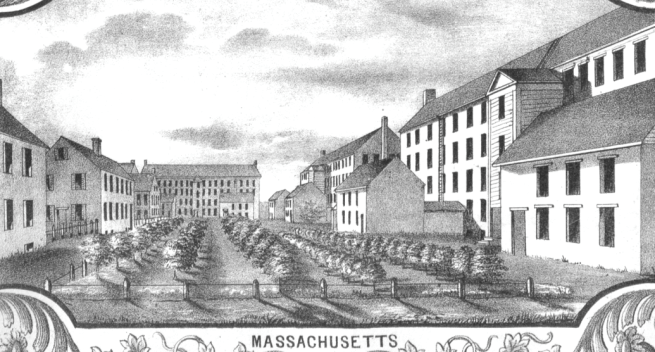
Reasons to like Watertown, Mass.

Greater Boston is comprised of many suburbs that were originally Colonial towns out in the country. As a result, much of the metropolitan area today retains a village feel in addition to its cosmopolitan chic.

Each town – or, in many cases, now city – is different, however subtly.

Let me illustrate with Watertown, where my choir rehearses.

  1. It’s on the Charles River, which once powered its paper mills and other factories. Today the river has lovely parks and pathways, as well as crewing teams practicing out on the water in season.
  2. The impressive Arsenal produced military armaments from 1816 through World War II. Today it’s a shopping district, and its restored antebellum commander’s mansion is a kind of museum.
  3. Settled in 1630, Watertown soon became the seat of the Whitney family of invention, investment, and horse-breeding fame.
  4. It’s largely overshadowed by neighboring Cambridge and the Harvard crowd. The famed Mount Vernon Cemetery, the first garden style burying ground in America, 1831, is usually thought of as being in Cambridge, when it fact it lies mostly in Watertown, with a who’s who of famous Americans buried in its rolling grounds.
  5. Watertown has a wide ethnic range of residents, mostly working class or professionals.
  6. The Armenian Library and Museum of America is well worth visiting for exhibits that acknowledge many genocides beyond their own. Watertown is the third largest center of the Armenian diaspora in the United States, surpassed by only two cities in California.
  7. When it comes to cheap eats, I think it definitely beats hipper Cambridge. Some of the best Chinese I’ve ever had was in a modest storefront in Watertown Square, and I’m really sold on the Iranian takeout just up the street. But we also like Wild Willy’s.
  8. The Perkins School for the Blind, founded in 1829, is the oldest such institution in the U.S. and is world famous. It manufactures its own machine to record text in braille. It moved to Watertown in 1912.
  9. I really like the public library, which even has its own coffee shop.
  10. The Gore Place is an opulent summer home built by a man who a fortune in speculating in Revolutionary War debt.


Come explore the Olympic Peninsula

When Jaya and Joshua set of for the Pacific Northwest in my novel Nearly Canaan, what they expect to find is something very much like the Olympic Peninsula rather than the fertile desert where they land.

Here’s some of the alternative.

  1. Set on the far western end of Washington state, the Olympic Peninsula is an anvil of land comprising nearly 3,600 square miles – more than Rhode Island and Delaware combined. It has rare temperate rainforests, glacier-clad mountains, hot springs, timber-tangled shorelines, tall seastacks in the surf, hot springs, waterfalls, large lakes, and eight Native tribes and their reservations.
  2. Olympic National Park at the heart of the peninsula covers nearly a million acres and includes the state’s second-largest mountain range, crowned by 7,980-feet-tall Mount Olympus. Glacier-climbing skills are essential for ascent and descent. The park is the system’s sixth most popular, attracting more than 30 million visitors a year.
  3. The restoration of elk was so essential to the park’s mission that it was nearly named Elk National Park.
  4. The town of Forks gets 119.7 inches of precipitation a year – making it the wettest municipality in the continental U.S. And the nearby Hoh rainforest receives 140 to 170 inches a year.
  5. The peninsula abuts the Pacific Ocean on the west, the Strait of San Juan de Fuco on the north, and Puget Sound on the east. Its rugged interior shunts auto traffic toward the coastlines.
  6. The 300-mile, two-lane Route 101 loop around the peninsula is considered a three-day drive. More, for those who investigate scenic offshoots. There are no alternatives for traversing the peninsula.
  7. Hot springs access is available to the public at Sol Duc. Other sites are local secrets.
  8. Following the biggest dam removal in U.S. history, completed in 2014, the Elwah River once again runs wild for fish migration.
  9. There are more than 60 named glaciers.
  10. While the Olympics Range is seen prominently from Seattle on a clear day, its tallest point, Mount Olympus, is visible from no city.

~*~

Hope that serves as an introduction. We haven’t even touched on Port Townsend.