Ways this move was easier than others in my life

I’m not counting the few times I relocated across town. I mean the big moves, from one state to another, even from one part of the country to another.

You already know my fondness for Dover – and I have been intensely loyal to some of the locales I’ve made home but not others – yet this transfer of fidelity has been rather startling in its speed.

Dover? That was the address I had longest anywhere, edging out my native Dayton. Yet the 300-mile leap from Dover to Eastport was a breeze in comparison to the others I’d done. It’s rather perplexed both my wife and me.

Here are a few factors.

  1. We needed to downsize, and our house and garden and stuffed barn were more than we could keep up with. Quite simply, they were weighing on us, not just emotionally but especially when we looked at our bank balance.
  2. I had been to Eastport. Apart from Dover, where I had been worshiping as a Quaker, the previous moves had dropped me in as a total stranger. I hadn’t even visited Indiana University until showing up as a student in the middle of my sophomore year. Well, there was my return as a research associate, this time with a wife and a duplex rental on the other side of town. I hadn’t even been to Binghamton, New York, for a job interview.
  3. Eastport had a few things I was anticipating. Quoddy Head State Park had rekindled a sense of wilderness I’d left behind in the Pacific Northwest 40 years earlier. And the local choir had a repertoire much like our Revelsingers in Boston. Plus, I had been to the small Quaker Meeting and worked in projects with one of its outstanding members.
  4. I wasn’t alone. Eastport started out as my elder daughter’s wild dream, soon supported by my wife. Where else could we afford to live so close to the ocean? Back to downsizing, but as a whole-family venture. No more Lone Ranger sans Tonto, even if I was coming up as the vanguard. Their visits were festive occasions.
  5. We weren’t doing it all in one fell swoop but rather in stages. For the first four months, I was commuting back to New Hampshire almost weekly as we prepared our old house to market – meaning largely decluttering and cleaning. On this end, we still need to make renovations before filling this place with goods now in storage. Frankly, I’m enjoying doing more with less.
  6. Emotionally, Covid had already distanced me from many connections. I wasn’t swimming daily, for one thing, so that part of my routine wasn’t severed. I hadn’t even seen my pool buddies or the lifeguards for the better part of a year. We Quakers were worshiping and conducting business by Zoom, and I could keep that connection going a while longer. I was even getting together monthly online with Dover’s religious leaders and a Seacoast writers’ schmooze.
  7. Being in the middle of a big writing project gave me a crucial focus and meant the solitude on this end was welcome. Normally, access to libraries would be essential to what I was investigating, but I found rare resources in my computer searches and downloads. Yes, times have changed.
  8. There was no accompanying sense of failure or betrayal. My job hadn’t been terminated or taken an unacceptable turn – gee, that could lead to another Tendrils! (You know, the modern American workplace – see my novel Hometown News for examples.) I didn’t even have a new job to confront – what a relief! My lover hadn’t just dumped me or failed to reconnect when I arrived, and I wouldn’t be searching for love, either. Nor had I left paradise for an industrial or suburban wasteland.
  9. I’ve enjoyed exploring with an eye for what I’d introduce to the others on their visits. And meeting some fascinating new folks, likewise. I still feel I’m living in a real-life Northern Exposure.
  10. Well, there were moments of feeling exiled, like “What have I done wrong,” but they were soon countered by reclaiming some of my independence. I’d gotten spoiled, as far as food goes, and not really cooked anything for two decades, other than lighting the grill or popping something in the microwave. (Well, there was a fried rice that impressed one of our Chinese guests.) But now our morning phone calls have included cooking advice and insights. That sort of thing. I’ve been pleased with my dinners, even the ones I wouldn’t serve anyone else, should I have to. As for exile? Nah, I’ve never felt more comfortable anywhere.

Ten things about the leading lady in my life

Quite simply, she’s the coolest woman I’ve ever known. Warts and all. Now for some details.

  1. She’s an idealist while having no tolerance for b.s.
  2. Witty, even caustic, but never cruel. The truth, however, can sting.
  3. Much smarter than me, and better read, though knowing everything can be a problem. In other words, she remembers everything, especially what I’ve done wrong.
  4. I love watching her, the way she moves, the twinkle in her eye, the perplexed twist of her lips while solving a problem. Oh, yes, and her long, long hair.
  5. Has an artsy, natural style that leans toward earth-tones, folk sources, and simplicity.
  6. She’s frugal but generous.
  7. Has never been remunerated in just compensation to her societal contributions. If she were, we’d be living in high style.
  8. Is one of the world’s great cooks. And that extends to the garden, though she rarely has time for the weeding. The problem is, neither do I.
  9. Is gifted in spades with empathy. Only she can’t understand why the rest of us can be so lacking in it.
  10. Should have been an astronaut.

National parks I’ve truly enjoyed

I have to confess to how many of America’s national parks remain on my to-visit list. But I still have some favorites among the ones I’ve explored. They don’t have to be massive to still be impressive.

  1. Rainier, Washington: Most of all. It’s top of the list for reasons I’ve described elsewhere on this blog. Living a few hours away, I had four years of exposure to this glacier-clad beauty and its forests below.
  2. North Cascades, Washington: Geologically some of the most incredible mountains in the continental U.S., along with rewarding hiking and camping. Some of our best beat-era poets were forest fire lookouts on its remote summits in the ’50s and ’60s.
  3. Smokey Mountains, Tennessee-North Carolina: I was nine or ten or so when we ventured down from Ohio. We weren’t yet doing family-camping, but there were some wild experiences with cheap motels. But then, when we got to the park, how could I not be blown away? So this is what mountains were!
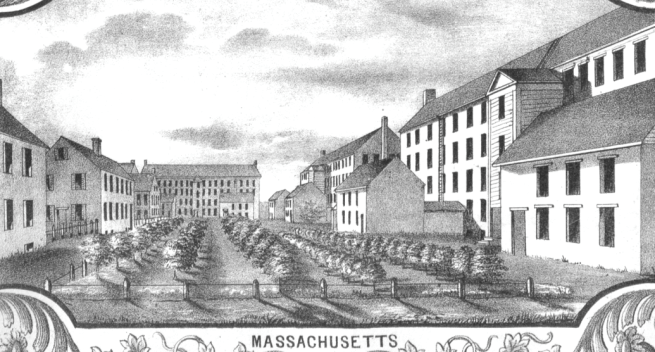
  4. Lowell, Massachusetts: I’ve blogged about our daytrip to this pioneering industrial community and its water-powered textile mills. Try to time it so you can also take a ride down the canals through the mills and out to the Merrimack River.
  5. Cuyahoga Valley, Ohio: This meandering swath of greenery along the Cuyahoga River in the former Connecticut Western Reserve corner of the Buckeye State is a touch of sanity within a populous region. It even includes some decent waterfalls. The Cleveland Orchestra’s summer home is nearby.
  6. Acadia, Maine: The rugged Downeast coastline starts here, more or less, and there’s nowhere else so much of it is available to the public.
  7. Olympic, Washington: It’s the heart of a unique realm worthy of a Tendril of its own, as well as a longpoem you can get at my Thistle Finch blog.
  8. Mammoth Cave, Kentucky: The world’s longest known cave system, only part of it is open to public tours, but what is shown includes spectacular geologic formations and chambers.
  9. Crater Lake, Oregon: It’s impressive but usually seen as an auto circuit around the volcanic crater of what was once mighty Mount Mazama. The lake sits at 6,178 feet above sea level.
  10. Everglades, Florida: To appreciate this ecological system, you need to take a guided boat tour into its vegetation and zoological wonders. This is the real Florida, almost surreal. Well, compared to much of the commercial development throughout the state, maybe a better adjective is needed.

~*~

There are many more, awaiting personal discovery. So what are your favorites?

Lowell, 1850

Ten great loves in my life

What, you were expecting sexy lovers? That’s a whole different story, maybe best left for my fiction.

  1. Symphonic music. Well, quickly extending to chamber music and opera and then even jazz.
  2. Quaker practice and culture.
  3. The great outdoors. Wilderness, especially.
  4. The Cascades range as I explored it, most of all.
  5. Seafood, fresh asparagus, real tomatoes.
  6. The sea. Surf. Lighthouses.
  7. Holy wonder. The natural high, if you will.
  8. Autumn foliage.
  9. The soul mate who turned out to be false. She still haunts me, all the same. I think it was all the shared aspirations that really got me.
  10. The color blue.

~*~

What do you really love? Make that who, if you desire.


About my current state of mind

  1. Distracted. Just where did I put that thing-a-ma-jig?
  2. Stuffed to the brim.
  3. Amazed by so many actions that are normally taken for granted.
  4. Grateful for so much in my everyday life, even amid the inevitable irritations.
  5. Looking for additional sources of income to make ends meet.
  6. Worried about the future of mankind.
  7. Less demanding of others than I once was.
  8. Resigned to growing limitations.
  9. Angry about the injustices of the nutcase Right.
  10. Glad I’m not 21 and facing the future.

~*~

Now, to inhale deeply … and hold it.


No, it’s not all flat, either

In my novel Nearly Canaan, Joshua and Jaya meet in a railroad crossing known as Prairie Depot. And in my newest release, The Secret Side of Jaya, she returns there in a magical sort of vein.

Yes, Prairie Depot is somewhere in the Midwest. But the region itself is hardly as homogeneous as many portray it.

~*~

  1. Defined: The region is generally comprised of 12 states – Illinois, Indiana, Iowa, Kansas, Michigan, Minnesota, Missouri, Nebraska, North Dakota, Ohio, South Dakota, and Wisconsin. I question the inclusion of Missouri, which was a slave-holding state and thus Southern, but others try to add Oklahoma. Population 65 million.
  2. Breadbasket of the world: Wheat, corn, and oats are major crops, along with soybeans and sugar beets. Beef, dairy, and hog production are also huge. The fields run on for miles. And Wisconsin is the nation’s leading producer of cranberries.
  3. Major cities: Chicago, Detroit, Cleveland, St. Louis, Minneapolis, Cincinnati, Milwaukee, Kansas City, Des Moines, Omaha, Columbus, and Indianapolis head the list.
  4. Mall of America: The 400 stores, waterpark, and aquarium in Bloomington, Minnesota, are deemed one of the most popular tourist magnets in the country, drawing 35 million visitors a year.
  5. Heartland: The geographic center of North America is in Ruby, North Dakota.
  6. A taste for the oddball: Cawker City, Kansas, is home to the world’s biggest ball of twine. Ten feet in diameter.
  7. Linked by rail: The Union Pacific’s Bailey Yard in North Platte, Nebraska, is the world’s largest railroad yard. It’s eight miles long and up to two miles wide, with 301 sets of rails.
  8. Horses and buggies: More Amish live in Ohio than in any other state. In 2015, there were 69,255. And Iowa has a significant number, too – about 7,000.
  9. Cowboy country: Much of what we consider cowboy-and-Indian out west actually took place in Kansas, Nebraska, and the Dakotas. And sharpshooter Annie Oakley was raised by a Quaker family in Ohio.
  10. It’s not really homogenous: Each state is different, starting with the economy, religious mix, ethnic origins and culture, and amount of annual precipitation. Even the parts of a state can vary widely along these lines. Much of the eastern half of the region is heavily industrial, with steel and auto making at the fore, while other parts are intensively agricultural. There are further breakouts like the Great Lakes region or the Great Plains. And it’s not all flat, either.       

~*~

What are your impressions of this part of the country?

My favorite big cities

I always wanted to live in a big city, the kind where big things were happening, and even when I was in high school, people were telling me that’s where I should be. But, oh my, my life’s gone in quite another direction!

So here are ten I’ve experienced, all in North America.

  1. Boston: For more than three decades, I lived an hour to the north and came to know it well. The fact it’s so pedestrian friendly makes it unique, in my mind. Much of it has a small-town feel, especially when you add in all of the suburbs that retain their original, Colonial-era, village roots. Besides, even I have come to appreciate that Red Sox, Patriots, Celtics, Bruins regional identity.
  2. San Francisco: One visit, and it’s still love, though way out of my budget these days. We had a cheap place where we slept in sleeping bags. I now think of it as being somewhat like Boston, in a hip West Coast incarnation.
  3. Baltimore: I lived there for three years and know it can be Charm City, with a character all its own. It took me a while to readjust later to Boston.
  4. Cincinnati: A great place for classical music. Still is, from everything I see. Other than that, not quite so big as I remember, though Procter & Gamble, Macy’s, and Kroger are all headquartered there. I grew up an hour to the north, where everybody was a Reds’ fan.
  5. Chicago: Let’s start with the art museum, with all of its muscular heft, matching the city. Or the two years I worked for the Tribune, out on the road, and came in for conferences at the paper. Yes, I have stories!
  6. Seattle: For four years, it was my closest metropolis, back when everybody was worried it was going to go the way of San Francisco and lose its intimate charm. These days, I doubt I would know it all.
  7. Cleveland: For three years in my life, this was two hours away in one direction. Despite being the butt of a lot of bad jokes, the city was once the home to some of the nation’s leading industrialists, John D. Rockefeller among them. The art museum is definitely one of the nation’s top five, and admission is free. For genealogists, the Western Reserve Historical Society’s library is a mecca. The town as a whole has made quite a turnaround, though the Browns are another matter.
  8. Pittsburgh: And this was two hours away in the other direction. We usually headed for the university district.
  9. New York: I lived Upstate for a few years, plus a few more out in the Poconos, and during that time most of my friends were from The City. I’ve even spent the night in all five of the city’s boroughs, often in a sleeping bag, something few of the natives can claim. I know there’s a lot more than Manhattan.
  10. Washington, D.C.: Living up the road in Baltimore gave me repeated opportunities to zip down for a few hours, especially since one of my best friends lived there. There are still tons of the big attractions I never quite visited, though. I can tell you about the genealogical files at the National Archive, however, or the greenhouses at the National Cathedral, that sort of thing, and I still admire the subway system.

~*~

I still recall Montreal with wonder, from a trip back in the early ’60s. Someday, I hope, I’ll get back. And there are the repeated tastes of Philadelphia, enough to know I’ve missed much.

~*~

OK, your turn to tout a big city. What’s your favorite? Or one I’ve missed?

Ten things about water-powered grist mills

In my book The Secret Side of Jaya, her sojourn in the Ozarks introduces her to a magical vale in the woods just beyond their house. It’s also the site of a water-powered grist mill she begins to frequent in her free time.

Here are ten facts about the historic industry.

  1. The technology of arranging grinding stones goes way back in antiquity and across cultures. It could make for a Tendril in its own right.
  2. While the image of a big water wheel remains popular, driven either by current pouring from an aqueduct above or running in a millstream below, turbines ultimately proved more efficient, often placed in the cellar of the building.
  3. Mills have been powered both by water and wind, and more recently electricity, steam, and petroleum fuels.
  4. Grist refers to the grain that’s been separated from its chaff. Flour from wheat, rye, and barley, as well as cornmeal are major milled products, though far from the only ones. Chicken feed, anyone?
  5. Traditional milling, with slower grinding than today’s industrial “roller” output, produces what’s considered a coarser, nuttier, even “softer” flour.
  6. There were 5,624 grist mills in England in 1086, or about one for every 300 people. The proportion seems to hold across other times and places, including the experiences in Jaya’s story, until the late 1800s.
  7. Granite and sandstone millstones from Pennsylvania, Rhode Island, and France were especially valued in American water-powered mills.
  8. The stones required frequent “dressing,” meaning removal for sharpening. It was laborious and time-consuming, demanding a deft touch.
  9. The miller was usually paid in a “toll” set by authorities – one-eighth for corn, one-sixth for wheat, typically – otherwise known as “the miller’s take.”
  10. Quakers were the leading millers and flour merchants in early America, despite British restrictions on innovations or improvements. It was hard, labor-intensive work. I do wonder if these Friends cursed, and how.

Some notable New England pipe organs

The region is rife with some stunning instruments and their makers. Start nosing around, and you find them nearly everywhere. For starters, let me mention …

  1. Symphony Hall, Boston: Wish they’d showcase it more in performances but it really looks great.
  2. Busch-Reisinger, Harvard University, Cambridge, Massachusetts: Used by E. Power Biggs to advocate a then-revolutionary awareness of the classic and baroque sounds Bach was grounded in. Many new organs were commissioned with this ideal, while others were “slimmed down,” often ill advisedly.
  3. St. John Methodist/Grace Vision church, Watertown, Massachusetts: A four-manual Aeolian-Skinner instrument that escaped the Biggs’ touch, retaining what’s described as a sweet sound but in need of some serious, costly restoration.
  4. Methuen Memorial Music Hall, Methuen, Massachusetts: Built in 1909 to house the first concert organ in the United States after the instrument had been placed in storage. More than 6,000 pipes in what’s probably the largest hall built solely for an organ.
  5. Memorial Chapel, Harvard University, Cambridge, Massachusetts: Only the best for the best, and they do their best to maintain it. Or them, since the church has several in its space. Used daily, and visitors welcome.
  6. St. John Episcopal, Portsmouth, New Hampshire: An impressive instrument for services, but the tiny Brattle Organ up at the front right of the balcony is believed to be the oldest playable instrument in America. It was rescued from Boston and is said to have a bell-like sound.
  7. Merrill Auditorium, City Hall, Portland, Maine: The Kotschmar Organ built in 1911 by the Austin Organ company was the second largest organ in the world at the time, and it’s still a musical monster, as the ongoing series of concerts demonstrates. Organs were, after all, a mainstay of live entertainment as well as church services.
  8. St. John Methodist, Dover, New Hampshire: The 1875 Hutchings’ instrument was rescued from the old church in 1970 by two Boy Scouts when the congregation moved to a new site and then stored in a barn for 17 years until it was installed in the new sanctuary. The builder also created the first organ for Boston’s Symphony Hall.
  9. Durham Community Church (UCC), Durham, New Hampshire: A lovely two-manual baroque-style instrument, as the local guild of organists proved for a Bach birthday celebration a few years back.
  10. First Parish (UCC), Dover, New Hampshire: A hybrid machine with a classic New England core that’s been augmented several times and now includes electronics. Big sound, as the likes of Cameron Carpenter and Hector Olivera have proved in their appearances as part of an ongoing concert series. The bass notes can really make the whole house shake … notes you feel in your feet and then your ears.

~*~

Not to leave Roman Catholic churches out, let me mention the Casavant instruments built in Quebec and found throughout New England. As an example, when the Shaker Village in Enfield, New Hampshire, was purchased by a monastic order, a Romanesque chapel was inserted into the site and a marvelous Casavant was installed, as I heard on a visit to what’s now mostly a museum.

I also want to mention Houghton Chapel at Wellesley College, Massachusetts, as another fine period instrument, one with hand-powered bellows rather than electrical fan. The bellows fellows sometimes get a bow of their own at the end.

Things I want to do in the year ahead

Or at least tell you I want to do. Here goes.

  1. See my newest book through to publication, followed by learning that everybody’s reading and talking about it.
  2. Get the renovation of the house under way. And that includes no outrages regarding the supply chain.
  3. Worship with Friends face-to-face again, both here and at Yearly Meeting. You know, normal after Covid.
  4. And that normal includes singing in a great chorus and other settings.
  5. And New England contra- and Greek dancing.
  6. Visit neighboring New Brunswick and maybe even Quebec City or Nova Scotia without having to get tested and wait 72 hours.
  7. Spot minke, humpback, and fin whales from the Breakwater downtown.
  8. Eat a lot of fresh, locally harvested, scallops.
  9. See the elusive white deer on the island.
  10. Spend more time with the people I love.

As for your list?