Looking for a natural high

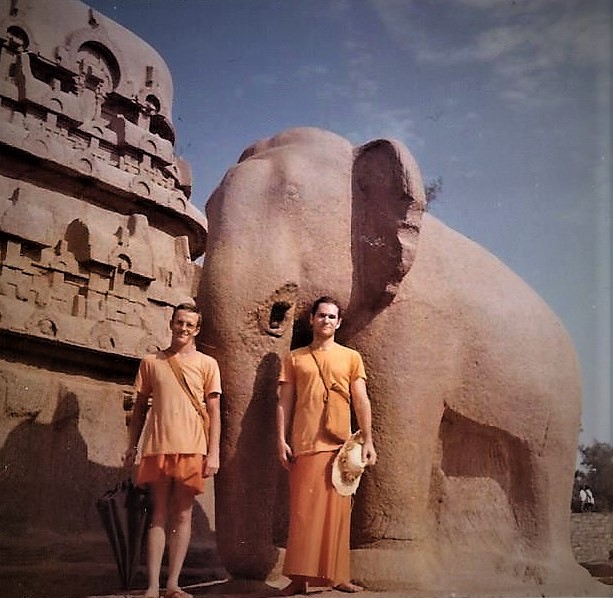
Just what so intensely motivated her father-to-be to quit everything so he could retreat into monastic Buddhist practice for three years? It’s a question that’s impossible to answer fully. (My parallel experience of living on a yoga farm is the basis of my newest novel, Yoga Bootcamp.)

Still, I’m required to try. In a passage from an earlier draft of my novel What’s Left, the explanation went this way:

Thea Nita suggested another take. Your Baba yearned for the highs, she says.

What about drugs?

You don’t think that was a problem, she counters. Don’t you think I wasn’t worried, at least until Rinpoche came into the picture?

Well, I’d wondered about that with my uncles, too – that whole hippie thing?

Oh, that? Nita chuckles and admits it posed a danger, especially before she returned to town. Barney, especially, enjoyed being stoned when he could. As she says, that could present problems in a commercial kitchen.

And then? They learned they could get a natural high through meditation – if they steered clear of drugs, as they did when Baba, by then a militant practicing Buddhist, entered the scene. Besides, there was no escaping the reality we all had work to do – and it better be done right.

~*~

As Rinpoche told Cassia about her father:

He needed the lightness and even playfulness he encountered in the Tibetan Buddhism – the high, in fact – that he hadn’t found in his Christian past. To be fair, I am finding indications he was discovering that in the Judeo-Christian side, too, during his final years. What a loss, then.

Oh, I’m so glad she stopped talking like this! In the final version, she’s pretty snippy.

~*~

And then there was her mother’s presence, as Rinpoche explained:

Your Baba found his missing half in Manoula and through her, his place in this world. But he always sensed there was more to life. The rabbi here tells me that when Moses came down from the mountain, he carried two tablets. The first one was about man’s relationship to God, and the second one was about relating to each other. So your Baba was working on something like that. He sometimes referred to it as finding the right balance.

And that mountain?

It was about all that would hold him down. For now. Maybe they were well matched.

~*~

Here we are talking about religion, and I see the question turning to something unexpectedly related:

What makes you smile?

Ten special diets

These days it seems everyone’s on a restricted diet.

Here are ten of them.

  1. Kosher. This means the historic Jewish restrictions. You know, no ham. But that’s just for starters. And even the plates must be blessed.
  2. Halal. The Muslim equivalent of dietary laws. By the way, Ramadan still sounds like cheating. I mean, what’s the hardship of refraining during the day if you can eat like a pig, uh, beast all night?
  3. Eastern Orthodox fasting.  Food’s allowed, but the options are highly limited. No olive oil, for instance, and no meat. It can be tricky.
  4. Caffeine-free. The Mormon church recently lifted this restriction from carbonated drinks, though it still holds for hot coffee or tea. Some other disciplines, including yogis, also ban it.
  5. Vegan. Or its less restrictive vegetarian alternatives.
  6. Gluten-free or lactose-free or peanut-free. Based on a medical diagnosis, OK?
  7. Healthy Heart. A little broader, largely to reduce cholesterol levels.
  8. Weight-loss. Oh, my, these are endless and ever so trendy.
  9. Alcohol-free. Sometimes as a religious tenet, sometimes as a consequence of addiction.
  10. Hindu. No beef. Those cows are sacred … and sources of milk.

Are you observing any dietary restrictions?

Blessed bliss

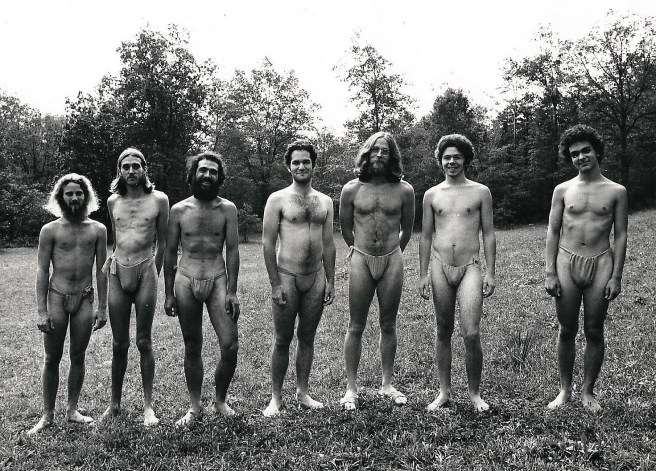
My novel YOGA BOOTCAMP describes group meditation as a central discipline in the daily life at Big Pumpkin’s ashram. As a real-life example, here’s a photo taken at the Poconos Ashram in mid-1972. I’m struck by how young we all look and the fact that most of us could sit in a full lotus position. Makes my knees hurt just thinking of it now!

Yes, I really lived this.

Ten major yoga brands today

In the decades since I took up yoga in the early 1970s, the movement has had its ups and downs. For a while, it looked like it was about to peter out altogether, especially as scandals hit many of the teachers or their organizations.

And then came the boom in popularity, far outrunning the earlier flowering.

Today, it’s hard to keep up with many of the trends, especially as they take on commercially branded identities. Back in the day, we knew it essentially as hatha, raja, karma, and so on … but not anymore. When you’re looking for a class, it can be rather confusing.

Here are ten on my radar. Many of the details come from Kristin McGee’s fine overview at the MBGmovement website.

  1. Iyengar: Founded by B.K.S. Iyengar after his arrival in Ann Arbor, Michigan, in 1973, this system relies heavily on props to help students to perfect their form. The positions are held for longer periods while focusing on details of the pose. Photos of the props still disturb me. Guess I’m just old school.
  2. Restorative yoga: Focused on winding down and relaxing after a long day. As an outgrowth of Iyengar yoga, includes props like bolsters and blankets.
  3. Astanga: (Also spelled ashtanga.) Popularized by K. Pattabhi Jois in the ’70s. Very physically demanding sequence of postures with an emphasis on continuous movement. No props, no music – I wholeheartedly approve, but I am from a line that had long rests in the corpse pose between asanas. Aah. Our goal was meditation, more than physical fitness.
  4. Vinyasa flow:  Adapted from astanga in the 1980s, it is more varied, depending on the teacher and students and the intent of the day. It may include props and music. Vinyasa is considered the most athletic of the popular styles, more suitable for students with previous yoga experience.
  5. Jivamukti: Founded in 1984 by Sharon Gannon and David Life as an outgrowth of vinyasa flow, this includes teachings from Hindu philosophy with an Earth-conscious connection. Many of its followers are also vegetarian.
  6. Hot: Supposedly intended to simulate the steamy jungles of India where yoga was practiced, this covers a range of styles as long as the room’s hot and humid. It’s intended to produce a lot of sweating. I’ll assume that’s to sweat out impurities in the body. One of its earliest strands is Forrest yoga, developed by Ana T. Forrest.
  7. Bikram: Founded by Bikram Choudhury in the late 20th century, it’s the best-known form of hot yoga. Its 90-minute class format has postures each performed twice in a 105-degree room with 40 percent humidity, great for producing sweat. The certified teachers have a standard patter to accompany the workout. He seems to be very proprietary.
  8. Yin: Slow paced and meditative. This system dates from the late ’70s with the work of Paulie Zink, a Taoist and martial arts expert, and developed by Paul Grilley and Sarah Powers.
  9. Anusara: A more traditional hatha yoga with a focus on heart-opening and spirals to align each part of the body. Founded by John Friend in 1997 and now continued by a nonprofit school that certifies its teachers.
  10. Acroyoga: The most gymnastic of the systems, this features partners exercising in acrobatic poses. It requires three people – a base, a flyer who will be elevated off the ground, and a spotter to break the fall, if needed. The couple on the cover of my upcoming novel Nearly Canaan are shown in one of its poses.

Note that they’re all focused on physical fitness of one sort or another, rather than the meditative or ethical dimensions of the underlying religious foundation. Where are the swamis nowadays, anyway?

Ten ways the Eastern Orthodox differ from other Christians

The world’s second-largest Christian body, with 250 million members, is officially known as the Orthodox Catholic Church. It shared communion with Roman Catholics until the schism of 1054.

Here are ten ways it varies from its Western counterparts.

  1. Unlike the Roman Catholic denomination, the Orthodox operate as a communion of autocephalous churches, each governed by a bishop (often known as a metropolitan). In practice, these often have a national or regional identity, such as Greek Orthodox or Russian Orthodox.
  2. Metropolitans, rather than the pope, are the head of each of the self-governing churches, and together they form the Holy Synod. The Ecumenical Patriarch of Constantinople is recognized as the first among equals.
  3. Advent and Christmas. Advent is longer and Christmas isn’t celebrated until January 7.
  4. Lent and Pascha. The liturgical calendar differs from those used in Western Christianity, with Easter (Pascha, the Greek preferred term) typically being aligned to Passover. Great Lent is longer, too. The Feast of the Assumption and Pentecost are holy days nearly equal to Pascha.
  5. The Theotokos. The Virgin Mary, Mother of God, is venerated and central in the liturgical worship. More nuanced, too, than in Roman Catholicism.
  6. Greek, rather than Latin, as the basis of its Scriptures and theological discourse. It’s a language more suited to nuance and philosophy, so I’m told.
  7. The priests may marry (unlike Roman Catholicism) but the bishops cannot (unlike Protestants).
  8. Sensuous richness. Incense, bells, chanting appeal to the nose and ears. An abundance of iconography, especially, surrounds the eyes.
  9. The iconostasis. An elaborately decorated wall stands between the altar and the congregation. It has three doors – the angel doors, to either side, and the blessed door in the center. The priest passes repeatedly through the central door, which is left open during the service, while the deacon or others may use the side doors, as required.
  10. You show up for the Sunday service – the Divine Liturgy – you’re likely to think you’re late. The priest, deacon, and psalmists have already been celebrating the Orthos for an hour, sometimes alone, in preparation.

~*~

AS AN ASIDE: In 978, Vladimir the Great sent emissaries to study four religions in neighboring regions – Judaism, Islam, Latin Rite (Catholic), and Eastern Rite (Orthodox). Reputedly, he rejected Judaism as lacking power, since it had lost Jerusalem. Islam, because it banned alcohol. Latin Rite because of the political power of its pope. But Eastern Rite, with the sumptuousness of its liturgy in Hagia Sophia in Constantinople, won him over. As they wrote, “We no longer knew whether we were in heaven or on earth.” And thus, the Russian Orthodox church was born.

~*~

Admittedly, this is a superficial overview. I’m hoping for a lot of clarification from more knowledgeable readers.


Ten pioneering leaders in American yoga

When I took up yoga in the early 1970s, it was still pretty exotic. In fact, a fair question would ask if yoga was mostly happening in New York. That was my impression from the ads in the weekly Village Voice newspaper, which listed many visiting teachers from Asia, especially.

Not all of the teachers were exactly kosher, either.

The model of the maverick guru was Robert Crumb’s Mr. Natural cartoon, inspired by the Sufi and Zen Buddhist Samuel Lewis, but my own teacher, Swami Lakshmy Devi in the Pocono mountains of Pennsylvania, and Swami Rudrananda at Big Indian in New York’s Catskills, would also fit much of what I describe in my novel Yoga Bootcamp. All three were born in America.

Here are ten more teachers who advanced yoga’s popularity in that era:

  1. Richard Hittleman, New York, beginning in the 1950s. Hatha exercises.
  2. Walt and Magana Baptiste in San Francisco, early ’50s. Hatha exercises.
  3. Swami Vishnudevananda, arriving in 1958, San Francisco, a student of Swami Sivananda in the Himalayas. While emphasizing hatha, he also advanced other aspects of yoga, including meditation. My teacher was trained at Visnu’s Manhattan center. The network now headquartered in Montreal.
  4. Maharishi Mahesh Yogi and Transcendental Meditation in the early ’60s. With the Beatles and others as celebrity followers, his emphasis on teaching meditation rather than the physical exercises became trendy.
  5. Swami Satchidananda, arriving 1966, New York, also a student of Swami Sivananda. His invocation at the Woodstock festival made him celebrity material. With his big beard and smile, he looked the part.
  6. Swami Prabhupada, founder of what were best known as the Hare Krishnas, or the International Society for Krishna Consciousness. Arrived 1966, New York. Brought kirtan, or chanting, and the Bhagavad Gita scriptures to public awareness.
  7. Amrit Desai, arriving in 1968 in the Philadelphia area. His influential organization continues as the Kirpalu Center in the Berkshires in Massachusetts and is known for training and certifying yoga instructors.
  8. Yogi Bhajan presented his Kundalini yoga as hatha and chanting with a Sikh infusion. He founded his Happy, Healthy, Holy Organization in 1968.
  9. Ram Dass, formerly a prominent Harvard psychologist and psychedelic pioneer, published the seminal book Be Here Now in 1971 at the Lama Foundation in Taos, New Mexico. We all wanted to go there, wherever or whatever it was. Its focus was on the philosophy, rather than the exercises – a huge breakthrough, from my point of view.
  10. B.K.S. Iyengar, arrived in 1973 in Ann Arbor, Michigan. His focus on technical precision in the hatha exercises influenced many teachers.

Ten basic yoga terms

As yoga spread as a form of physical fitness across America, some of its terms have become widely used by the general population. These arise in Sanskrit, one of three recorded languages that are believed to be close to a proto-Indo-European root of many of today’s languages that stretch across much of Asia and Europe.

Here are ten you may hear.

  1. Namaste. Often translated as “that of God in me greets that of God in you.”
  2. Karma. Action or doing, leading each individual to reap the consequences of his own actions, good and bad.
  3. Mantra. A word or phrase that is sounded repeatedly to aid concentration in meditation.
  4. Om. Also spelled Aum. The greatest of the mantras. Repeated properly, it produces great harmony in the body and the mind.
  5. Ahimsa. Non-injury.
  6. Chakra. One of seven points of subtle energy threaded along the spine, each one opening like a lotus and unleashing related awareness.
  7. Asana. Sitting or posture. Each of the physical exercises is known as an asana.
  8. Shanti. Peace.
  9. Ashram. A hermitage or dwelling place of a teacher and students.
  10. Jnana. Discernment or spiritual knowing.

Ten perspectives on Tibet

It’s not just Cassia in What’s Left who wants to know about her father’s fascination with Tibetan Buddhism. It plays a big role in his movements in Pit-a-Pat-High Jinks and Subway Visions, too.

  1. Number of Tibetans in U.S.: Estimated at 9,000.
  2. Buddhists in U.S.: 3,860,000 (Pew Research Center, 2010). Other estimates range from 1.2 million to 8 million.
  3. Number of converts: 800,000.
  4. Buddhism in Indiana (scene of What’s Left): Includes the Tibetan Mongolian Buddhist Cultural Center and Kumbum Chamtse Ling Temple, both in Bloomington and founded by Thubten Norbu, brother of the Dalai Lama.
  5. Other major Tibetan Buddhist centers in U.S.: Barnet, Vermont; Berkeley, California; Boulder, Colorado; Chino Valley, Arizona; Red Feather Lakes, Colorado; Poolesville, Maryland; Portland, Oregon Seattle, Washington; Sedona, Arizona; Woodstock, New York.
  6. Population of Tibet: 6 million Tibetans, 7.5 million Chinese settlers.
  7. Estimated number of Tibetans killed by Chinese since 1949: 1.2 million.
  8. Number of monasteries destroyed: 6,000.
  9. The Dalai Lama: Its spiritual leader has more than 13 million Twitter followers.
  10. Most Tibetans fear the spirit world and its demons: They’re blamed for illness, bad luck, and misfortune.

Ten Buddhist basics

Thanks to Cassia’s father in my novel What’s Left, she’s familiar with Buddhist teaching and practice.

Here are ten basics.

  1. Siddhartha Gautama: Historical figure who established the teachings in northern India sometime between the 6th and 4th centuries BCE. Often referred to as the Buddha.
  2. Buddhas: Transcendent figures found throughout the universe. Gautama embodies one of them.
  3. Dharma: The law or the way taught by Gautama to overcome suffering or dukka (perhaps better rendered as stress or dissatisfaction). One translation has Dharma as the process itself.
  4. Reincarnation: The state of one’s next rebirth is determined by the fruits of an individual’s karma (actions) in the present life.
  5. Nirvana: An eternal state of perfect peace, bliss, and enlightenment, usually achieved through meditation and breaking the chain of further rebirth.
  6. Boddhisattvas: Figures who have attained nirvana but instead of going their immediately, compassionately reincarnate to assist others.
  7. Sutras: The scriptures (literally “stitchings”).
  8. Three major branches of Buddhism: Theravada, prominent in Indochina; Mahayana, the largest and most liberal branch; and Vajrayana, which emphasizes the magical and the occult.
  9. Tantra: Sacred texts in the Vajrayana branch describing secret methodologies and practices.
  10. Mandalas and tankas: Vajrayana visual images to aid meditation.

Gee, I didn’t even get to koans, those mind-boggling puzzles presented to Zen aspirants.

Ten notable American religious communes

While monasteries with wider church support are a longstanding institution in Christian history, independent, self-sustaining faith-based communes have made their mark in America. Unlike a monastery, not all of them were celibate.

Here are ten.

  1. Ephrata Cloister. Pennsylvania, 1732-2008. Founded by Johann Conrad Beissel, the pietist group broke off from the German Baptist Brethren (or Dunker) denomination, which largely continues as today’s Church of the Brethren. It had the second printing press in the American colonies. Its celibate emphasis was gradually eliminated.
  2. Moravians. Bethlehem, Pennsylvania (1741), and Salem, North Carolina (1753). The denomination dates to Jan Hus (1369-1415), a Czech reformer years before Luther and Calvin led the Protestant Reformation. The American communities initially had common ownership of all property by the church, supervised housing for single men and single women, and likely other communal aspects.
  3. The Shakers. Founded by Mother Ann Lee, it settled in Watervliet, New York, 1774, and spread from Maine to Indiana and Kentucky. Best known of the communal movements, in part for its beautiful furniture and architecture. One village remains.
  4. Hebus Valley. Pennsylvania. Founded by George Rapp, 1824-1906. Christian theosophists and pietists.
  5. Hopedale Community. Massachusetts, Adin Ballou, 1842-1856. “Practical Christianity” with a Universalist base. Utopian ideals included temperance, abolitionism, women’s rights, and spiritualism. Attempted to be part of the surrounding community.
  6. Amana Colonies. Originated in Germany in 1714 and arrived in Iowa, 1855. Communal system ended in 1932.
  7. Bruderhof. An Anabaptist denomination arising from the Hutterites in Germany in 1920, it has communities in Paraguay, Europe, Australia, and the United States (from 1954). Its beliefs are similar to Mennonites – peace, simplicity, adult baptism, and so on. There are currently 17 communities in the U.S.
  8. Hare Krishnas. The best known of the ISKON (Krishna Consciousness) communities is New Vrindaban, West Virginia, settled in 1968.
  9. Friends Southwest House. McNeal, Arizona, opened in 1976. I didn’t even know of this Quaker community, much less of its long life.
  10. Eighteenth Avenue Peace House. Portland, Oregon, opened in 1986. Ecumenical Christian.

Any you’d add to the list?


Top Ten, Religion, Spirituality, History, Inspiration,