Through the waves of warfare between the English settlers and the French and their Native allies to the north and the east, Dover Friends were caught in a bind.
Quakers espoused a pacifist Peace Testimony as part of their Christian faith, but in New England all fit adult males were compelled to participate in the militia. In some cases, accommodations may have been made, such as allowing the Friends to not carry arms or to serve as watchmen or in other non-combatant service. But some no doubt refused to do even that because it still supported the fighting.
Quaker testimony of non-violence was anything but an idealistic, abstract statement. It meant placing their lives – and their children’s – in jeopardy. The final fatal forays in Dover were on a Quaker family.
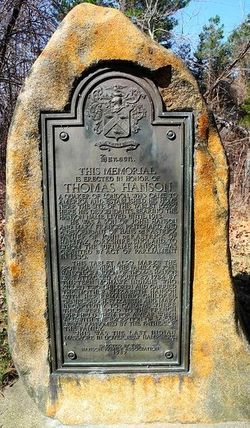
John Hanson’s house at Nock’s Marsh (more commonly known as Knox Marsh) was in an exposed position. Because of the renewed troubles, he was advised by neighbors to move into the more compact area of Cochecho village. Instead, as a “stiff Quaker” upholding the Friends’ witness of good relations with the Natives, he stayed put.
Life looked good to him. On August 9, 1725, his eldest daughter, Hannah, and Israel Hodgdon junior wed in a Quaker service. Four days later, Hanson’s wife gave birth to daughter Mary (also known as Mercy).
Only two weeks after those celebrations, though, 13 Natives, including French Mohawks, lay in wait for several days, looking for an opportunity to attack. On August 27, while Hanson and daughter Hannah attended midweek Quaker worship and his two oldest sons were work at some distance, the Natives swept in and “all naked with their guns and tomahawks” entered the house.
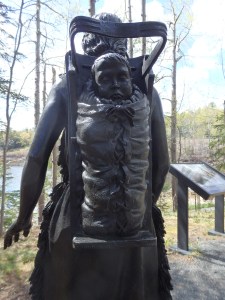
Elizabeth Meader Hanson was at home, along with a servant and three children. Two young sons, playing in the orchard, would have escaped but just as the Indians had finished rifling the house, the boys – Ebenezer, age five, and Caleb, four – came in sight and made such noise that the invaders immediately killed them by bashing out their brains and scalping them – in front of their mother – to stop the alarm. Daughter Sarah entered the house and was also taken. The raiders promptly started for Canada, with their captives in tow – Elizabeth Hanson, who had given birth to daughter Mary just two weeks before, plus seven-year-old son Daniel, daughters Sarah, 16, and Elizabeth, 14, and the servant girl.
The attack and departure came swiftly and quietly. Newly-wed Hannah discovered the carnage on her return from worship.
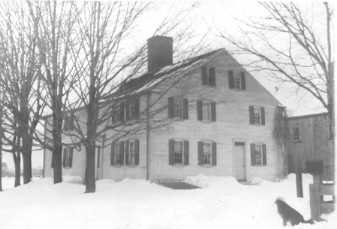
Not knowing the Natives were resolved to strike again, her father stayed briefly with a brother who, though Quaker, had three lusty sons with firearms loaded for big game. Still, John moved back to the farm. When three men came by on September 25, 1725, the raiders hid in the barn before promptly shooting and killing either 37-year-old Benjamin Evans or his likely nephew William. Slightly wounded but profusely bleeding was John Evans, whom the Natives thought was dead. They scalped him, turned him over, pounded him with their guns, and moved on. Making their escape, they took 12- or 13-year-old Benjamin Evans as a captive. He was later ransomed. John Evans, meanwhile, was taken to a nearby garrison where he recovered to live another 50 years. He was the last Dover man to lose his scalp.
The large Evans family was no stranger to Native attacks. Among the victims were patriarch John Evans, chained to Major Waldron’s barn and burned in the 1689 carnage at Cochecho village, and his son John, who died in captivity in 1692.
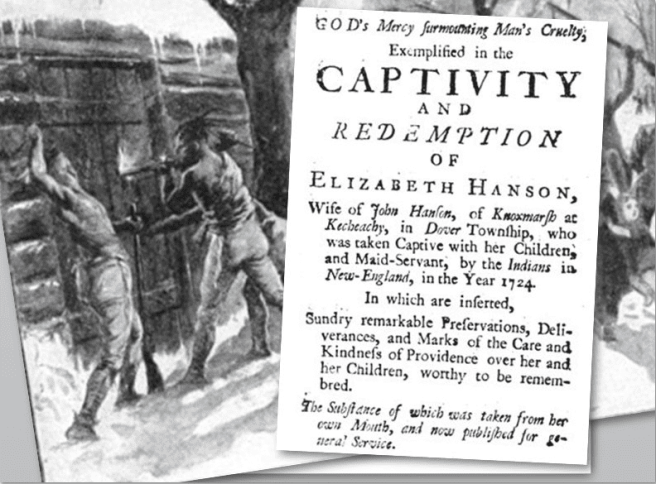
Elizabeth Hanson’s arduous ordeal, though, turned into five months of captivity, which she later related in detail. The trek to Canada was merciless, leaving the captives wet, cold, bruised, and hungry. At one stretch, they had nothing to eat but tree bark, and Elizabeth feared for her infant as her milk began to dry up. Once in Quebec, all her children except the baby were separated from her, and in one instance, she was informed that her captor was very displeased with her and was planning to murder her the next night.
Funds for the family’s ransom included a large sum collected by Philadelphia Yearly Meeting, and her husband quickly went to Canada to redeem them. The price for Elizabeth and baby Mary was around 700 pounds. He also obtained the release of son Daniel and daughter Elizabeth, but the Natives would not release Sarah on any terms, though they did allow the father and daughter several hours together.
The chief’s wife had plans of having the girl become their son’s bride, even though the name they gave her translated as “the woman of the burning of the cooking.”
Back in Dover, John and Elizabeth had yet another child, Abigail, but he could not be content until rescuing Sarah, too. On April 19, 1727, he set out with a kinsman for Canada but fell ill at Crown Point, New York, on the west bank of Lake Champlain, and died.
The kinsman, Ebenezer Downs, and his wife continued on in hopes of redeeming their own children as well.
In Quebec, Frenchman Jean-Baptise Sabourin had interposed with the Natives and persuaded Sarah to obtain her freedom by marrying him, which she did on June 27, 1727. The record names her as Sara Ennson, daughter of Jean Ennson, deceased, and Elizabeth Midor, English of the village of Touba in the government of Boston.
Apparently, Downs had managed to meet with her and inform her of the death of her father. But she had been baptized at age 17 and renamed Catherine, perhaps as a step in gaining her release from the Natives.
With Jean-Baptiste, she had at least eight children, two of whom married children of Deerfield, Massachusetts, captives, two who died in infancy, and one who became a nun.
On March 24, 1730, her sister Elizabeth married Ebenezer Varney, the son of Ebenezer Varney, whose garrison had survived the 1689 attack on Cochecho village, and Mary Otis, who had been captured and returned.
Two first-person accounts of Elizabeth Hanson’s experience became widely known. The first, God’s Mercy Surmounting Man’s Cruelty, Exemplified in the Captivity and Redemption of Elizabeth Hanson, appeared in 1728 in Philadelphia.
A second, more detailed version was by English Quaker minister Samuel Bownas, who knew the Hansons from his travels to America. It was first published in London in 1760: An Account of the Captivity of Elizabeth Hanson, Now or Late of Kachecky, in New-England: Who, With Four of Her Children and Servant-maid, Was Taken Captive by the Indians, and Carried into Canada. This volume, especially, gives insights into life within a tribal culture. Both narratives lean heavily on a Quaker religious framework.
Kachecky, of course, was another variant of Cochecho, while Touba was a French attempt at Dover.
Widow Hanson, as Bownas repeatedly referred to her, never remarried and died in 1737.
~*~
Check out my new book, Quaking Dover, available in your choice of ebook platforms at Smashwords.com.
Welcome to Dover’s upcoming 400th anniversary.
 In doing so, she also portrays Richard Waldron and Nicholas Shapleigh as fully fleshed characters, even though they both have much more ahead in their lives after the three troublesome Quakers venture off-stage, the part she follows as the women venture south. (Yes, we need a full bio for each of the guys, please.)