It is how striking the impulse to prayer arises across cultures and eras. I’ve even noted that one set of Zen Buddhist prayers in print is something even an atheist could endorse.
In her book, Help, Thanks, Wow: The Three Essential Prayers, Anne Lamott lays out a basic approach to the universal practice of turning to the Holy One, regardless of name. Her three types seem to cover it all.
Still, there other types, even before we touch on wildly different faiths and theologies. Here are a few, even as I search for some formal Greek theological terms I’ve filed away somewhere.
Supplication or petition: Humble, kneeling, raising a request or concern for God’s action.
Intercession: Pleading on behalf of the needs of others.
Confession: Openly admitting one’s sin and desire for pardon.
Consecration, benediction, or blessing: Joyfully approving a person or situation, with the speaker as an active co-participant.
Agreement: Corporate prayer encouraging each other in our shared faith when gathered together.
Surrender: In times when one feels the weakest, a yielding to God’s strength and leading.
Prophetic: Speaking as an oracle of the Holy One or the Holy Spirit.
Listening or waiting: Sitting silently, raising one’s heart to the Presence, open to answer.
Contemplative: Eliminating outward distractions by focusing on a repeated word or phrase, drawing the one closer to God in calm stillness.
Fasting: Think about this one, especially if you’ve never tried it.
~*~
And we haven’t even touched on postures or breathing, much less chanting or dancing …
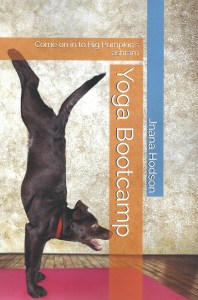
Answers to some of the questions about Cassia’s father’s reasons for intensely pursuing Tibetan Buddhism, first encountered in my Freakin’ Free Spirits novels, can be found in Yoga Bootcamp, my story about eight young American yogis living on a former farm in the mountains. While each student is at a different stage of discovery, their widely divergent motivations still lead to common struggles and victories. Nothing is easy, but the lessons are priceless.
Do you practice meditation? How about yoga exercises, chanting, or Zen? Any other spiritual exercises you care to discuss?
Said the writer: Implicit in the Four Noble Truths is the lack of a self or a soul. There is only this process. … The wheel of the Dharma is like a benevolent monarch’s chariot that can go anywhere …
The mystery of the big bang, something out of nothing, a scientific paradox, all leading to human consciousness. A honeybee cannot be an accident, nor can a human.
Cassia’s conversations with Rinpoche lead her to crucial new understandings of her father.
In earlier drafts of my novel What’s Left, I considered these possibilities, but rejected them as, well, too wordy, esoteric, or preachy:
Your Baba was on the cusp of some original thinking about Christ as Light, Rinpoche tells me. He was connecting that with an ancient line of Greek philosophy about a term known as Logos. It was all very, very exciting. He was seeing Christ as much more than the historic person of Jesus, much as we see Buddha as something much more than a historic person — you know, Gautama — too.
Well, that happens to be a hobbyhorse I ride. Let’s give her father a break!
Rimpoche continues. Your Baba had scorn for those who claim a personal spirituality without any disciplined tradition. He wanted to encourage people to delve into a practice — not that they’re all equal, but they have their own unique wisdom to impart — and that led to his organizing some fascinating ecumenical dialogues, ones that included your Orthodox priest, plus a rabbi, a Sufi or yogi, an evangelical, and so on.
Maybe we’d better leave all that for a later discussion? Cassia has more pressing questions, many of them regarding his photographs and family.
Throughout his monastic studies and labors, he’s pressed to concentrate totally on what’s happening in the moment. Even while sleeping. Looking through a lens would, according to Manoula, place a filter between full experience of that timeless breath and himself. It would place a mask across his face when he most needs to be fully naked, as it were. Who knows what he wears in the monastery, for that matter. We can guess from the photos he took later, on his return visits — and his portraits of his teacher and fellow practitioners. For now, he needs to see not just with his eyes — and his Third Eye — but also with his nose, tongue, lips, ears, and especially his fingers and extended skin. And from there, to embrace the eternal realities rather than the ephemeral illusions flickering and dashing around him. Through this stretch, he heeds fellow monks who create beautiful colored-sand mandalas and then scatter them to the wind rather than preserve their work. This emphasis on the present while pursuing eternal truth may seem to be a paradox, but he submits to the instruction and its flowing current.
So that, too, was filtered out of the final revisions. As was this:
Baba and Rinpoche had grown close when they were both residents in the monastery. Rinpoche was then just another of the aspirants, albeit a Tibetan refuge with a lineage. Their teacher blessed their venturing into the Heartland to establish the institute here, and Rinpoche, with his mastery of Himalayan languages, took up an offer to teach academic courses at the university while leading a spiritual community from the house.
~*~
Like Rinpoche, Cassia’s father was in many ways a teacher. In their case, they were dealing with ancient Buddhist lore. Good teachers, as you know, are rare.
Tell us about your favorite teacher.
~*~
Orthodox Christian iconography can be out of this world. Just look at this church ceiling!
In one of the early drafts of my novel What’s Left, I tried this perspective — which I removed from the final version of the book, feeling it was too preachy:
If our workroom was where we could act honorably under the eye of God, it was still no substitute for times of celebration and worship! No, we need to take time every day for prayer and the study of scripture. Just remember: work spent in activities that help our neighbors and enable us to come together for periods of common delight is quite different from anything I see in the realm of time cards or the Harvard Business School.
~*~
Whew! Let’s try to bring this back to everyday experience.
Is there somebody you encounter someplace during the day who makes you feel special? A coworker, cafe wait person, bus driver, teacher, friend? Do tell us!
Karma yoga, by the way, is explained in my novel Yoga Bootcamp. Work itself gets complicated, no?
~*~
The old church Cassia’s family buys in my novel might have looked like this … before the wild rock concerts begin.
A major influence on my work has been an awareness of the variables of place. When I lived in the ashram, my yoga teacher returned from her first trip to India and described with wonder her sensation that each locale there felt different – to the extent that each village or region had its own god or gods to embody its distinct character or, as she put it, vibration.
Fifty years later, having lived and worked in eight states, I can say that’s true in America, too, even though we’ve muddied much of the indigenous awareness. I’m especially convinced that people in deeply prayerful states do somehow leave an imprint on a place.
That sensation has unexpectedly led me to Quaker meetinghouses and burial grounds or arisen in the midst of conversation in old houses of worship.


 Jnana's Red Barn