Tag: Smiles
Some notable New England pipe organs
The region is rife with some stunning instruments and their makers. Start nosing around, and you find them nearly everywhere. For starters, let me mention …
- Symphony Hall, Boston: Wish they’d showcase it more in performances but it really looks great.
- Busch-Reisinger, Harvard University, Cambridge, Massachusetts: Used by E. Power Biggs to advocate a then-revolutionary awareness of the classic and baroque sounds Bach was grounded in. Many new organs were commissioned with this ideal, while others were “slimmed down,” often ill advisedly.
- St. John Methodist/Grace Vision church, Watertown, Massachusetts: A four-manual Aeolian-Skinner instrument that escaped the Biggs’ touch, retaining what’s described as a sweet sound but in need of some serious, costly restoration.
- Methuen Memorial Music Hall, Methuen, Massachusetts: Built in 1909 to house the first concert organ in the United States after the instrument had been placed in storage. More than 6,000 pipes in what’s probably the largest hall built solely for an organ.
- Memorial Chapel, Harvard University, Cambridge, Massachusetts: Only the best for the best, and they do their best to maintain it. Or them, since the church has several in its space. Used daily, and visitors welcome.
- St. John Episcopal, Portsmouth, New Hampshire: An impressive instrument for services, but the tiny Brattle Organ up at the front right of the balcony is believed to be the oldest playable instrument in America. It was rescued from Boston and is said to have a bell-like sound.
- Merrill Auditorium, City Hall, Portland, Maine: The Kotschmar Organ built in 1911 by the Austin Organ company was the second largest organ in the world at the time, and it’s still a musical monster, as the ongoing series of concerts demonstrates. Organs were, after all, a mainstay of live entertainment as well as church services.
- St. John Methodist, Dover, New Hampshire: The 1875 Hutchings’ instrument was rescued from the old church in 1970 by two Boy Scouts when the congregation moved to a new site and then stored in a barn for 17 years until it was installed in the new sanctuary. The builder also created the first organ for Boston’s Symphony Hall.
- Durham Community Church (UCC), Durham, New Hampshire: A lovely two-manual baroque-style instrument, as the local guild of organists proved for a Bach birthday celebration a few years back.
- First Parish (UCC), Dover, New Hampshire: A hybrid machine with a classic New England core that’s been augmented several times and now includes electronics. Big sound, as the likes of Cameron Carpenter and Hector Olivera have proved in their appearances as part of an ongoing concert series. The bass notes can really make the whole house shake … notes you feel in your feet and then your ears.
~*~
Not to leave Roman Catholic churches out, let me mention the Casavant instruments built in Quebec and found throughout New England. As an example, when the Shaker Village in Enfield, New Hampshire, was purchased by a monastic order, a Romanesque chapel was inserted into the site and a marvelous Casavant was installed, as I heard on a visit to what’s now mostly a museum.
I also want to mention Houghton Chapel at Wellesley College, Massachusetts, as another fine period instrument, one with hand-powered bellows rather than electrical fan. The bellows fellows sometimes get a bow of their own at the end.
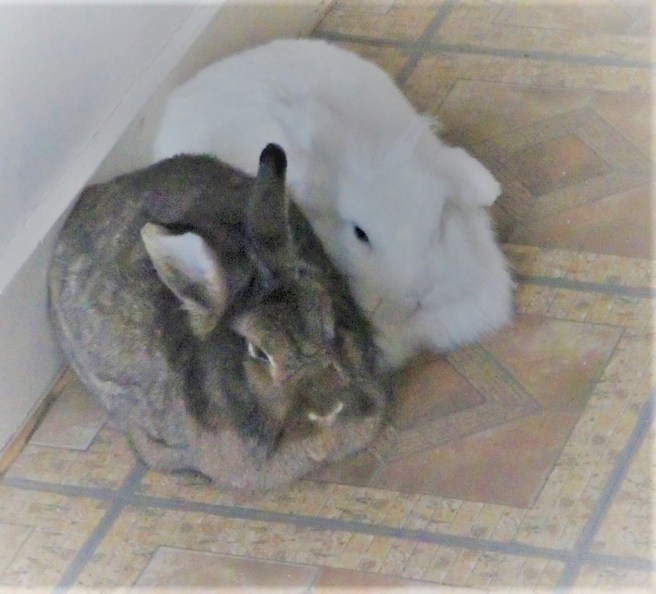
Kinisi 88
a natural wilderness
rarely still
within me
Even they’re looking ahead
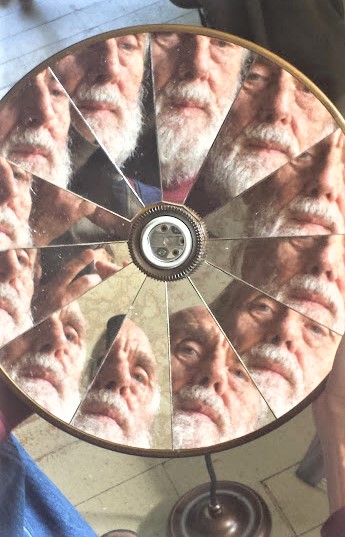
Multiple me
Things I want to do in the year ahead
Or at least tell you I want to do. Here goes.
- See my newest book through to publication, followed by learning that everybody’s reading and talking about it.
- Get the renovation of the house under way. And that includes no outrages regarding the supply chain.
- Worship with Friends face-to-face again, both here and at Yearly Meeting. You know, normal after Covid.
- And that normal includes singing in a great chorus and other settings.
- And New England contra- and Greek dancing.
- Visit neighboring New Brunswick and maybe even Quebec City or Nova Scotia without having to get tested and wait 72 hours.
- Spot minke, humpback, and fin whales from the Breakwater downtown.
- Eat a lot of fresh, locally harvested, scallops.
- See the elusive white deer on the island.
- Spend more time with the people I love.
As for your list?
Prayer for a new year
with a monk’s prayer for good bread
daily needing and kneading
after manna or
a rice bowl
should I be begging, Zenlike,
hand me pasta and potatoes
followed by cake
all praise to whatever
I’ll blissfully polish away
with a portion for Buddha or a stray squirrel
When you wish upon a fish
Back before Covid, folks in Eastport would kiss the giant sardine sculpture that descends on New Year’s Eve from the Tides Institute’s headquarters as a gesture for good luck. This year, however, the act turned into placing a sticker on a surrogate fish, fun all the same.
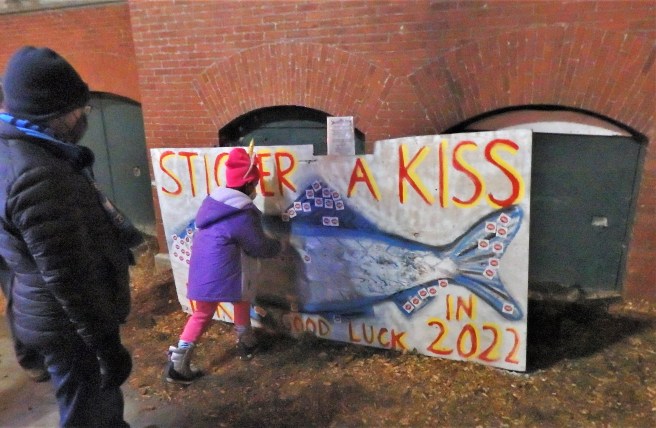
To learn about the giant sardine and its companion maple leaf, you’ll just have to stay tuned till next year here. By then, I’ll be anxious to hear how many of your wishes came true.
Here’s wishing you and yours all the best in 2022.
How to know when a work’s done
I’m talking about a poem or a novel here as a point of reference, but you can add some of your own perspectives, say as a painter or carpenter or gardener or cook.
- You have nothing more to say.
- You’re tired of the subject. So you close the cover, in effect.
- The previous revision was better. So you stop while you’re still ahead or don’t further overcook it.
- You’ve run out of time, like coming to the end of a vacation. Or something’s more pressing.
- You’re on deadline and it’s due. (Remember, I worked in newsrooms.)
- You perform it in public and there’s no squirming or coughing in the audience.
- It gets published. A literary quarterly is nice but a book’s even better.
- The critics are kind. Though that can make you question their standards.
- You arrive at your destination. You know how the story ends, for one thing.
- The kids grow up and move away. Or maybe you do.
Whew! What a year!
Let’s clink to putting Covid behind us, more or less. Even if drinking the toast requires us to take off our masks. And clink again for better things ahead.

On my end, the year included downsizing earlier than anticipated when I uprooted from ducky Dover to diehard Downeast as a vanguard for the rest of the family. It was their idea, for the record. Not that I’m complaining while some old, long-buried dreams finally come to fruition. And in all of this, I’m still in their good hands.
Along the way, I drafted a juicy, unorthodox history of early Dover in time for the 400th anniversary of its settling. Forget what you thought about Colonial New England, this take challenges a lot of the prevailing view. (You’ll be reading more about that here at the Barn in the months ahead.)
I definitely wasn’t planning on researching and writing another book, but here it is, finished.
Clink once more.
It adds up to a lot of change to digest.
So clink again. Remember, in moderation, it’s supposed to help the digestion. Cheers!
 Jnana's Red Barn