Officially, Eastport sits on Moose Island, though I have yet to see one here.
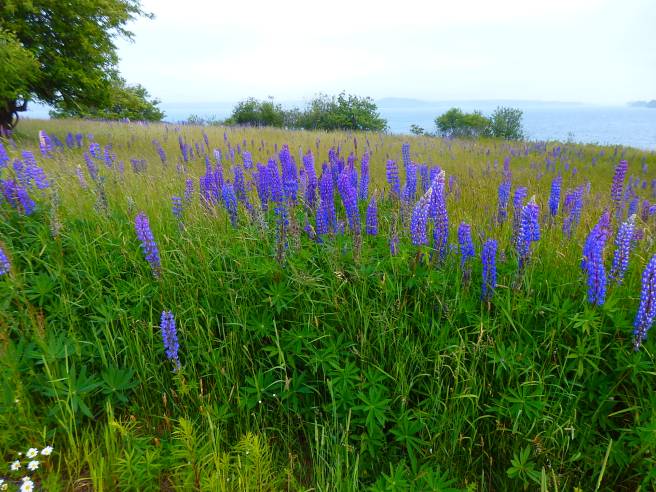
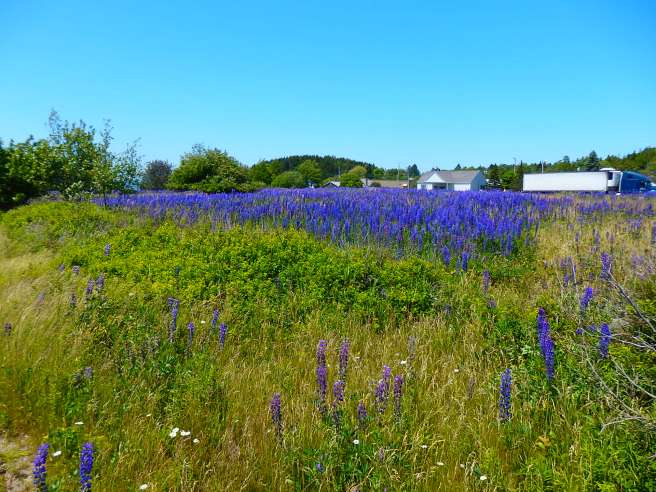
This time of year, though, it’s covered with flowering lupine, gloriously so. You’d never imagine the kind of winter we’d had.

You never know what we'll churn up in cleaning a stall
Officially, Eastport sits on Moose Island, though I have yet to see one here.
This time of year, though, it’s covered with flowering lupine, gloriously so. You’d never imagine the kind of winter we’d had.
There are reasons it’s also known as Charm City. Or, as they say of neighboring D.C., it has Northern charm combined with Southern inefficiency. By the way, don’t blame me for that perspective.

Though Eastport was settled relatively late – that is, toward the end of the Revolutionary War – it was instilled with a Colonial flavor by prominent early residents who were resolute veterans.
A continuing spirit of Tea Party and Minutemen makes Independence Day in New England feel different than those elsewhere. It’s not just the place of the Shot Heard ‘Round the World. It’s the region where thickheaded Yankees have always doodled.
Quite simply, history is palpably alive everywhere across New England.
Boston, of course, is the epicenter, but across the six most northeasterly states, local observations uphold distinctive traditions. Think of musketeers firing a round ever so often along the town parade route, along with fifes and drums.
As an independently enterprising oceanside village, Eastport soon had a reputation as a hive of privateering – that is, legalized piracy – and not-so-legal smuggling. That independent streak gets its own attention in the city’s annual Pirate Festival a week after Labor Day.
Unlike much of America, the city had frontline experience of the War of 1812. Fort Sullivan atop the bluffs surrendered to the British Navy in 1814, and Eastport then remained under the royal thumb until 1818.
Two years after its reunification with the United States, Maine became liberated from Massachusetts for the first time since 1653 and began to breathe into its own unique character.
For its part, Eastport rocketed as a center of shipping, shipbuilding, fishing, and sardine canning before the big decline of the 1900s set in.
Today, the tiny city’s locals remember a vibrant past and close-knit community, one that spanned the shorelines on both the American and Canadian sides of the watery border.
Is a renaissance on the horizon? There are signs for hope.
All of these strands infuse the holiday here.
The national holiday also marks the opening of New England’s short summer season. After a cold, dark, long winter, Eastport’s small year-’round populace can actually come out into the open air for long times together. The ocean and lakes are finally warming, to the extent that they do, and that attracts vacationers to join in.
After months when only a stray New Hampshire or Massachusetts auto plate is seen around here, I’ve now seen those of every state but Alabama, Hawaii, and North Dakota (not all at the same time), some seeming rather exotic.
And the Fourth includes the city’s Old Home Week, with high school reunions and the return of many summer residents.
A lot happens over a four-day span. There’s a doll carriage and wagon parade. A torchlight parade. Car shows, bike races, water games, pet show, rubber ducky race, festive all-you-can-eat blueberry pancake breakfast, free outdoor movie, contests, live music, and a street dance, all with a small-town flavor.
A traditional visit by a large U.S. Navy vessel failed to materialize, a consequence of being on Ukraine-related alert. Three different ships had expressed interest in landing at the Breakwater before the turn in world events.
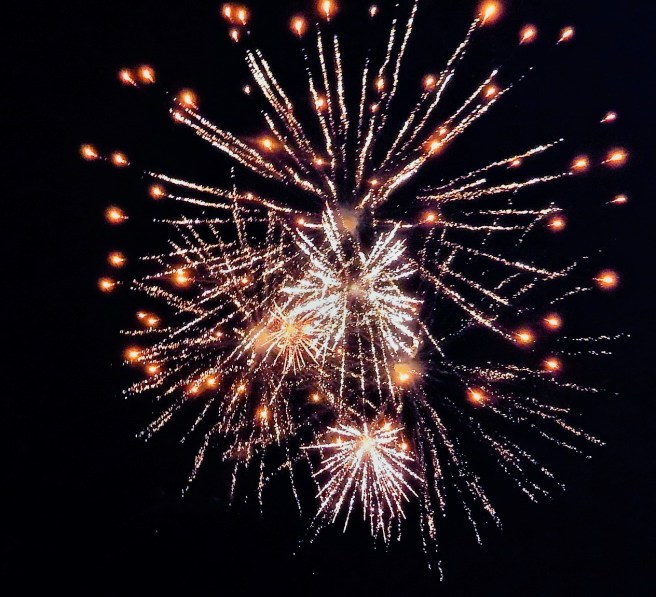
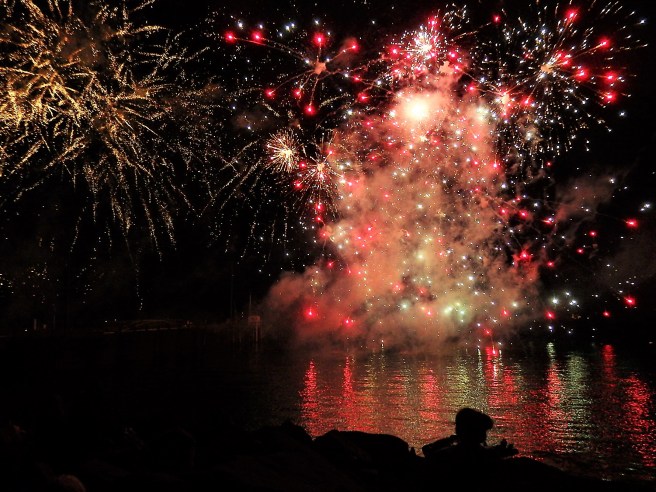
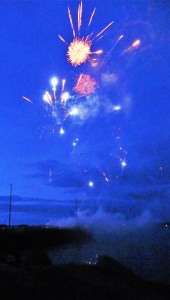
While fireworks were displayed off over the harbor on the Fourth, America’s Independence Day (the beautifully designed and executed big show fired from the town’s Fish Pier was followed by a joyously rowdy encore from a diner’s smaller private pier), the companion July 1 presentation for Canada Day, in honor of our neighbors in New Brunswick, was still a victim of Covid cutbacks. Some residents, though, could view shows happening on Deer Island across the water.
Seems ever so fitting to shoot the works twice, considering Eastport’s dual connections.
it really does feel like a party’s come to town.
How do you celebrate the Fourth?

Yeah, yeah, I know the concerns about holding animals in captivity. But where else are kids going to learn about exotic fellow creatures? TV? They can’t smell them there. The circus? Few of us even live on farms anymore, and those dogs I see walked up and down the street are hardly exemplary of the animal kingdom. Frankly, they’re more spoiled than most children.
But I digress. Out of view, the best zoos are also places of serious research and attempts to keep gene pools alive.
Here are some of the best in North America:
Honorable mentions to Miami, Fort Worth, Seattle, Brookfield and Lincoln Park in Chicago, Disney’s Animal Kingdom in Florida, Houston, and Denver.
a place of walking sticks or canes
more than UFOs
Or even:
One of the blessings and saving graces of my youth was being a member of a rogue Boy Scout troop that included a big hike one weekend of each month and primitive camping on another. The two together introduced me to many essentials of the natural world and real life.
One consequence is that hiking has been a big delight in my life ever since, despite a 20-year gap at one point and the reality that my days of being able to hike a 25-mile stretch are long gone.
Here are a few memories I treasure.
Oh, gee, how can I not mention that crazy hike up the desert slope of the Yakima Canyon, Washington state, where I was among those to first to see the return of the bald eagle to the valley after a quarter century or more? I was looking down on an incredible wingspan and didn’t even know its species until later. It was still winter, ’77, and, because of the rattlesnakes, I wouldn’t have ventured into the landscape otherwise. It shows up in my novel Nearly Canaan.

