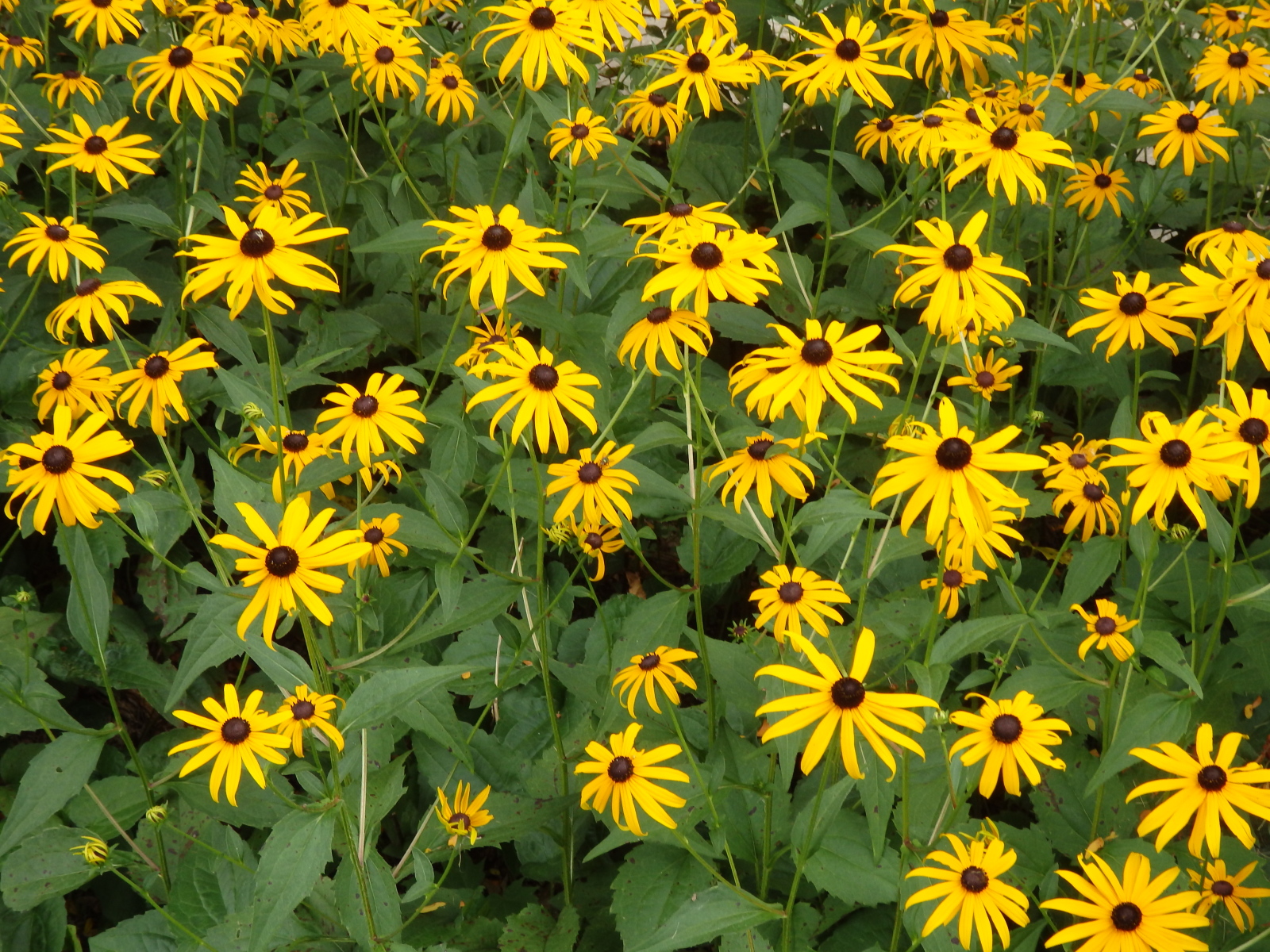
So much yellow, this time of summer! Sunflowers, finches, goldenrod, corn drenched in butter. Banks of black-eyed susans, too.
~*~
For my collected garden poems and more, click here.

You never know what we'll churn up in cleaning a stall
So much yellow, this time of summer! Sunflowers, finches, goldenrod, corn drenched in butter. Banks of black-eyed susans, too.
~*~
For my collected garden poems and more, click here.
I’m not sure any lover could have accompanied me all the way in the repeated moves from the orchards of Washington state to the seacoast of New Hampshire. The Rust Belt relocation came in part because my now ex-wife’s only aunt and uncle lived there, and we needed to be near family; as it turned out, what I really got from that stopover was an experience of Old-Order Quakerism and the swirl with another, in the aftermath, who I later followed to Baltimore.
Curiously, without her, I could have relocated anywhere in the Northeast while working as a field representative, but I wouldn’t have developed any of the Mennonite sides that continue. Events often are a mixed bag, aren’t they?
All of that got stirred up returning to the recorded files years later, well into my remarriage. You know, that part about applying to schools.
Just about the time you think the academic institutions know every intimate detail of your life and history, they want yet another detail. At least our younger one was accepted at her only early choice, which also came through with a huge scholarship.
Such a relief, after the tony prep school she’d applied to a few years earlier.
As said, all the details. I was beginning to think they knew more about me than I did. Ever feel humiliated? Or simply groveling?
With the 50th anniversary of my high school class graduation coming up next month, I’ve found myself debating whether to attend.
Some of the conflict is spurred by tight personal finances these days – the event’s 900 miles from where I now live, a 15-hour drive each way in an auto that already has 270,000 miles on its odometer. Flying and then renting a car would be more practical but also more expensive. And that’s before we get to the event admission and related costs. Frankly, I’d rather spend the money on a couple of weekend escapes with my wife.
Scheduling adds its own complication. The reunion’s set for shortly after the annual session of New England Yearly Meeting of Friends, where I’ll spend an intense week in Vermont attending to Quaker business. Add to that that my local Friends Meeting is planning its own retreat right the same time as the reunion. That’s a lot of time away from home just about the time the ocean here is finally warm enough for some brisk swimming. Why would I want to be in hot, humid Ohio when I could be at a refreshing seaside in nearby Maine?
When I broached the subject with a fellow choir member, he turned the focus slightly by asking if there was anyone I particularly wanted to see and talk with and then told of his own experience at his 10th anniversary class reunion where he found himself brushed off by those he wanted to speak with and was then stuck amid those with whom he had nothing in common. This had me realizing I’ve been out of touch with everyone for decades now, and when I tried to reconnect via email a decade ago – after the 40th reunion – there was no acknowledgement. My curiosity about what’s happened to many of the members has found answers online. More than anything, I’m sensing, is that any inclination to attend is being compelled by a perceived duty – I did hold some leadership roles as editor-in-chief of the newspaper and in a handful of clubs.
As I ponder the event, I’m also realizing my high school years were not particularly happy or even intellectually stimulating, apart from a few special teachers. Do I want to open those emotions, then?
Or would I want to go simply to brag, “Look how far I’ve come since!” I’m not sure that would be particularly welcome or rewarding.
Any advice? Or similar insights to share? Is this even a necessary rite of passage? Do tell!
You know the disclaimer, “Any resemblance of the characters to real people living or dead …” Something along the lines of purely unintentional.
But let’s be frank. The fiction is that you can create a character without having someone real in front of you, somewhere in your past or present. No, you need flesh and blood somewhere. Anything else would be a caricature.
It’s a special problem when you’re composing in a semi-autobiographical vein. You’re trying to be true to the dictum, Write about what you know. The details, especially.
(Oh? What, then, makes it fiction? Other than changing a few dates?)
Admittedly, the personalities work best when you take your inspiration and abstract it, so that a real individual would no longer recognize himself or herself – or those who were no way involved will imagine they, themselves, were.
And, by way of further confession, I’ll note that my most recent outings have led me to new characters lacking immediate introductions for me – but I’ll know them when I meet them if I haven’t already come across them here and there in pieces.
But back to the argument at hand.
I have one character, Nita, who runs through four of my five Hippie Trails novels and is a major character in the new one I’m writing, set years later. She was inspired by impressions I had of a friend’s girlfriend – or more accurately, mostly his impressions conveyed to me at the time – as I sat down to draft a half-dozen years or so later. She becomes a catalyst for much that happens around her.
In reality, we all drifted away.
And then, a few years ago, I met her again.
Nothing like I’d remembered. Or the idealized character in my fiction, now infused with another two or three people I’ve met. The lines blur.
I can say this person never did X, Y, or Z, unlike the character. Or that these two worked together on a controversial project or became known for certain accomplishments. In fact, she doesn’t resemble the other one at all, not anymore, if she ever did.
Still, it’s an eerie feeling. Something other than deja vu. Something still spurring gratitude for the inspiration.
For more on the series, click here.
~*~
It started when we had some trees removed – the box elder that was shading a third of the Swamp, another shading the kitchen garden, and then a dead elm. We kept the flakes from the cutters’ chipper, rather than having them go to the dump. Repeatedly since, when we hear tree cutters in the neighborhood, we ask if they could give us the truckload, and they oblige, grateful to be spared the city dump charge.
Those chips work great for lining the pathways through our garden or around the yard. Eventually, of course, they decompose and enrich and soften our clay soil. It’s just another of the many lessons we’ve had in assuming an old house and barn and reclaiming a garden and grounds. I’m glad I’ve collected those stories, an indication how far we’ve come over the years, as well as reminders how far we have yet to go.
~*~

For more home and garden poems, click here.
As I said at the time …
What’s amazing that I was able to somehow go from oh-so-white-middle-and-working-class high school to the hippie realm in a span of just four years. Could it even be the same person? Damn, I’ve been lucky at times!
Here she was, the three-day (or however many) cheerleader from the Biggest City in America, now with me, the Eagle Scout and one-time biochemist hopeful turned flower-child yogi from a place I thought was hilly. Me, the one some had hoped would become a minister, now turned agnostic/logical positivist, with someone who’d grown up at leftist rallies. Sounds like something they’d shoot out of a cannon at the circus while you applauded.
Should we talk about who was greener, in the sense of naïve, when we met?
But she came at the turning point. One where our shared idealism met at a crossing. And we were soon off, our own separate trajectories.
Fortunately, we parted on speaking terms. And still do.
The prose-poem presents a subtle challenge. In theory, it should be a natural fit for the English language. In practice, however, what I see all too often is simply wordy prose. Somewhere, the poetry gets trapped or tangled or loses its spin.
Coming across a guideline to keep a prose-poem under a hundred words spurred my thinking. As I considered revising a clutch of drafted poems, a sensed an opportunity. Recast without line breaks, they flew – especially when I removed the punctuation that pushed them toward prose.
I’m satisfied with the results, which I feel are more powerful and vibrant and authentic than either a straight-prose or straight-verse version would present.
Take a look for yourself. Just click here.
 ~*~
~*~
“Hey! You! Come here!” Black man, about thirty, in Pitt sweatshirt and Pirates cap, stands at the fence and motions one of the tough talking grade-schoolers over. “I said, Come here! Yes, YOU! I’m warning you, leave my daughter alone. Don’t call her, don’t talk to her, don’t approach her.” He fiddles with his car keys. The kid smirks. “Listen to me,” I suspect he wants to add “you little asshole,” but he restrains. “If I ever hear that you’ve said anything like that again, you’re in deep trouble. Understand me? Real deep trouble. And that goes for my wife, too. You’re to leave them both alone, got that. You can tell your mother what I’ve said to you, I don’t care. You can tell your pa, too. I don’t care. But I’m warning you, hear?”
(The blond brat, walking back to the pool from the fence, smirks to his buddies.)
I’m itching like crazy. This has been going on the past two weeks, ever since the first flea bites. Those are gone now but the itching gets worse. Hellfire. Mites? Fungi? Anemia? Allergies? (WATER! Hot showers or swimming?) Negative effects from the sun? First sunbathing in three weeks: my tan’s faded to half.
Hot shower and soap up thoroughly. No relief.
Much lotion, which I’ve been using for a week and a half anyway.
Iron pills.
Spray, for relief: Solarcaine. Tinactin. Bactine.
Avoid water now. Salute the dad.
 ~*~
~*~
For more, click here.
It’s life in the inner city, usually not far from downtown and often in an enclave near the river. High density population, at least compared to the suburbs, and filled with children. Usually blue-collar or poor or a mix of students added in, it’s noisy and lively, even colorful in its urban decay. You can walk to the store or corner bar.
We lived on the second floor and later, a street over, on the third.
That’s where these poems originate and resonate still.
~*~
For your own copy, click here.
Years before I left formal employment, I’d occasionally try to sketch out daily and weekly routines I might follow once found myself free (that is, retired or in some other way financially independent). Usually this exercise would arise as part of my annual year-end review and year-ahead planning, an event that included drafting my Yule letter to family and friends.
I remember my wife’s reaction on chancing across one of those, once I’d remarried. She thought I’d left a lot out – essentially, I’d overlooked all the important stuff, and not just more time for the two of us to spend together. These days, I think she’s right, and that’s even before I reopen any of those proposals.
What I’d envisioned was more time for meditation, yoga, reading, and reflection – none of which have manifested, by the way – plus deep pockets for writing and serious literary enterprise accompanied by intensified Quaker activity. Whatever I’d considered for home maintenance, inside or out, now appears totally inadequate. And that’s before adding time for activities that weren’t on the horizon in the earlier grid sheets – choir (which occupies most of one afternoon and evening), my daily laps in the pool, and blogging and other social networking.
Maybe downsizing to a smaller house would free up something, but just thinking of that effort’s intimidating.
I remember pondering what kind of schedule would work best for me – a rather strict daily round, but that somehow always seemed to shortchange something, or a more flexible weekly one based on blocks of time, somewhat the way an attorney bills clients for hours worked. As I recall, that seemed to settle into two-hour blocks for most of the activities, with the option, for example, of using all five of my literary blocks for the week in a single day or stretching them out.
Let’s just say I’m still looking for a workable system. My late-night commute to Boston for choir throws the next day out of whack, I’m still not napping in the afternoon, the best swimming slot depends on what opens up around the indoor pool’s schedule of teams and clubs, and rising early is something that fits best with my wife’s natural rhythms and my creative energy flow. And that’s before we get to something like trying to help the carpenter in major house renovations or addressing an unexpected emergency of crisis (aren’t they all unexpected?).
I’m thinking, too, of the many different ways individual writers approach their use of time. Some, like Jack Kerouac, would go off on binges – two weeks of nearly no sleep to pound out a frenzied draft, followed by months of recovery – while others put in their daily “butt time” at the keyboard, as Charles Bukowski phrased it. I prefer the latter, though in my employed years often had to indulge in the Kerouac method over holidays, weekends, and vacations.
Perhaps my central concern here is that without some structure – a daily routine, a weekly pace, a monthly and yearly calendar, nothing of note will be accomplished. I harbor a nagging suspicion somewhere – could it be a seed of Protestant guilt carried from childhood? – that the endless interruptions of life will engulf and swamp any greater ambition? (Or is it even, as one beloved uncle has sensed, that we Hodsons have never known how to have fun?)
So here I am, needing to dress for the day and charge out into the garden as promised.
One thing I can definitely say: Everything takes longer than planned.

