The train station, perched at the side of downtown Haverhill, Massachusetts, includes Amtrak’s Downeaster service to North Station in Boston, in one direction, and Maine in the other. (That run stops in Dover, New Hampshire.) There’s also MBTA’s Purple Line into Boston.
New England’s waterways are dotted with historic mill towns. The Merrimack River alone could boast of the water-powered industrial centers of Manchester and Nashua in New Hampshire as well as Lowell, Lawrence, Haverhill, and Amesbury downstream in Massachusetts, along with Newburyport and its harbor.
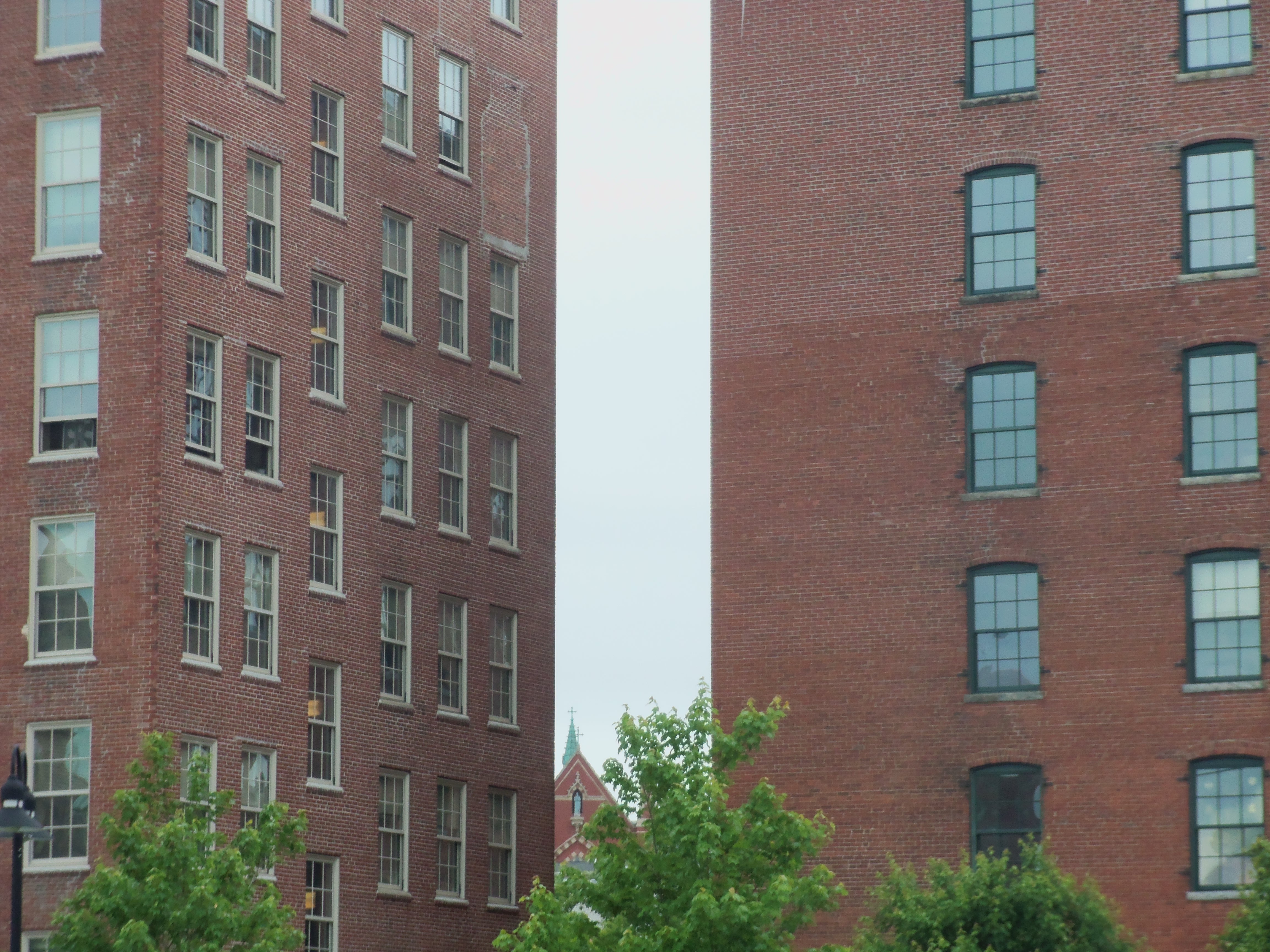
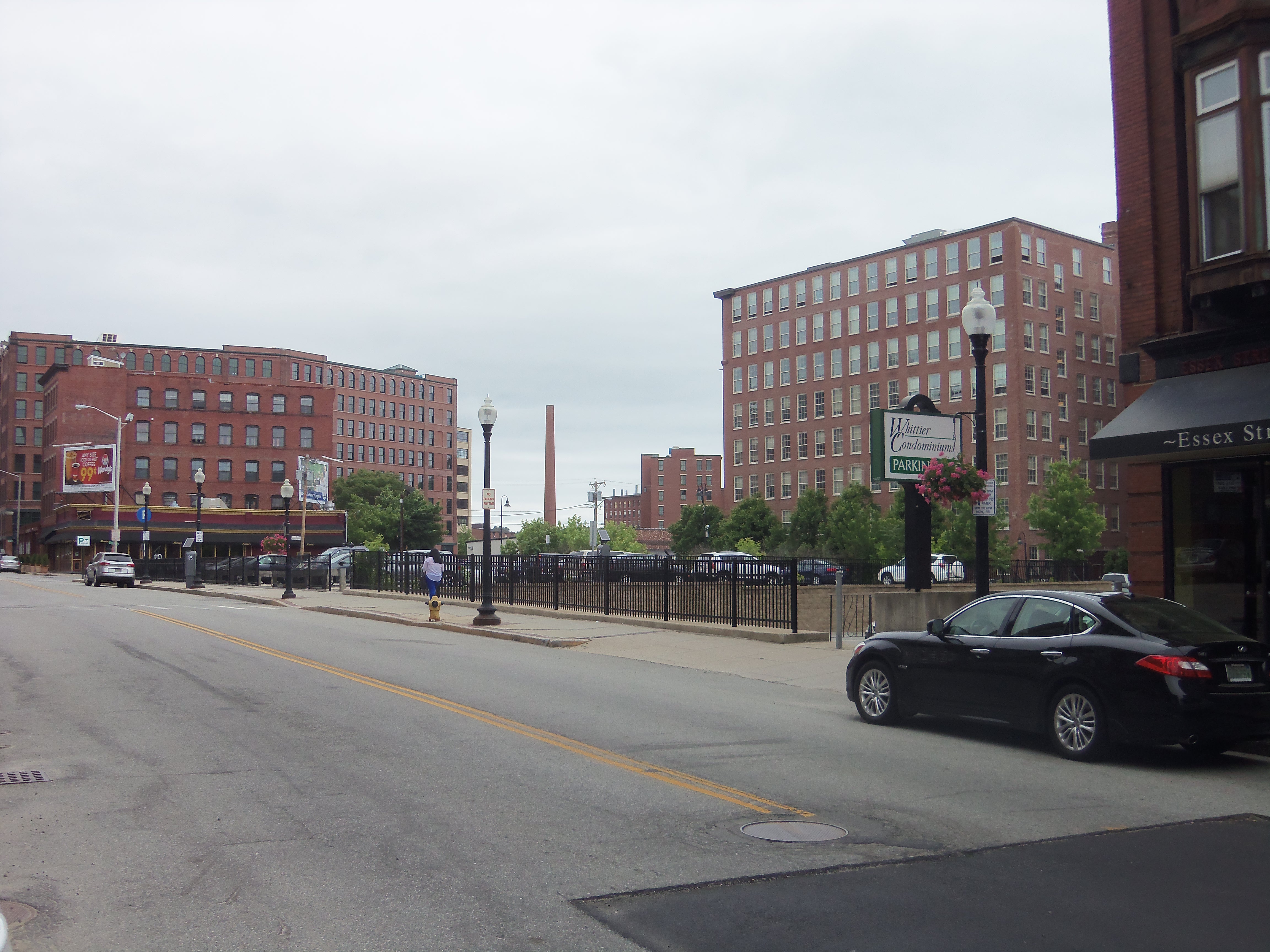
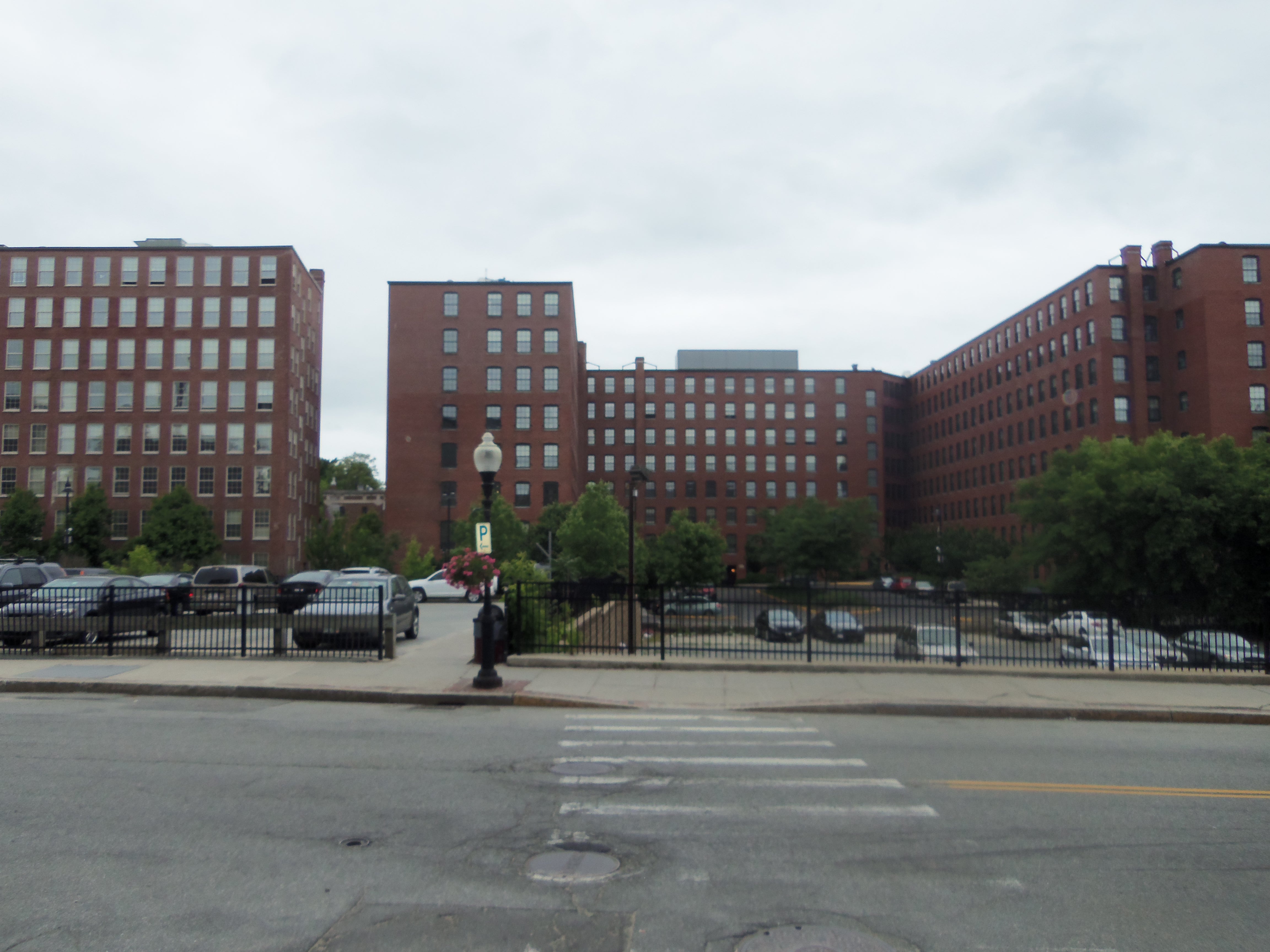
Some of Haverhill’s warren of old mills remains, including buildings converted to offices and housing.Catch the view of the distant church in the gap.Much has also been razed, often for parking lots.Here’s a bit of scale.
While textiles were the focus of much of New England’s mill output, the power was applied to other products as well. Haverhill, for instance, emerged as a center of shoemaking, by 1913 producing one of every 10 pairs in America and earning it a whimsical nickname of Queen Slipper City. Its earlier commerce rested on woolen mills, tanneries, shipping, and shipbuilding.
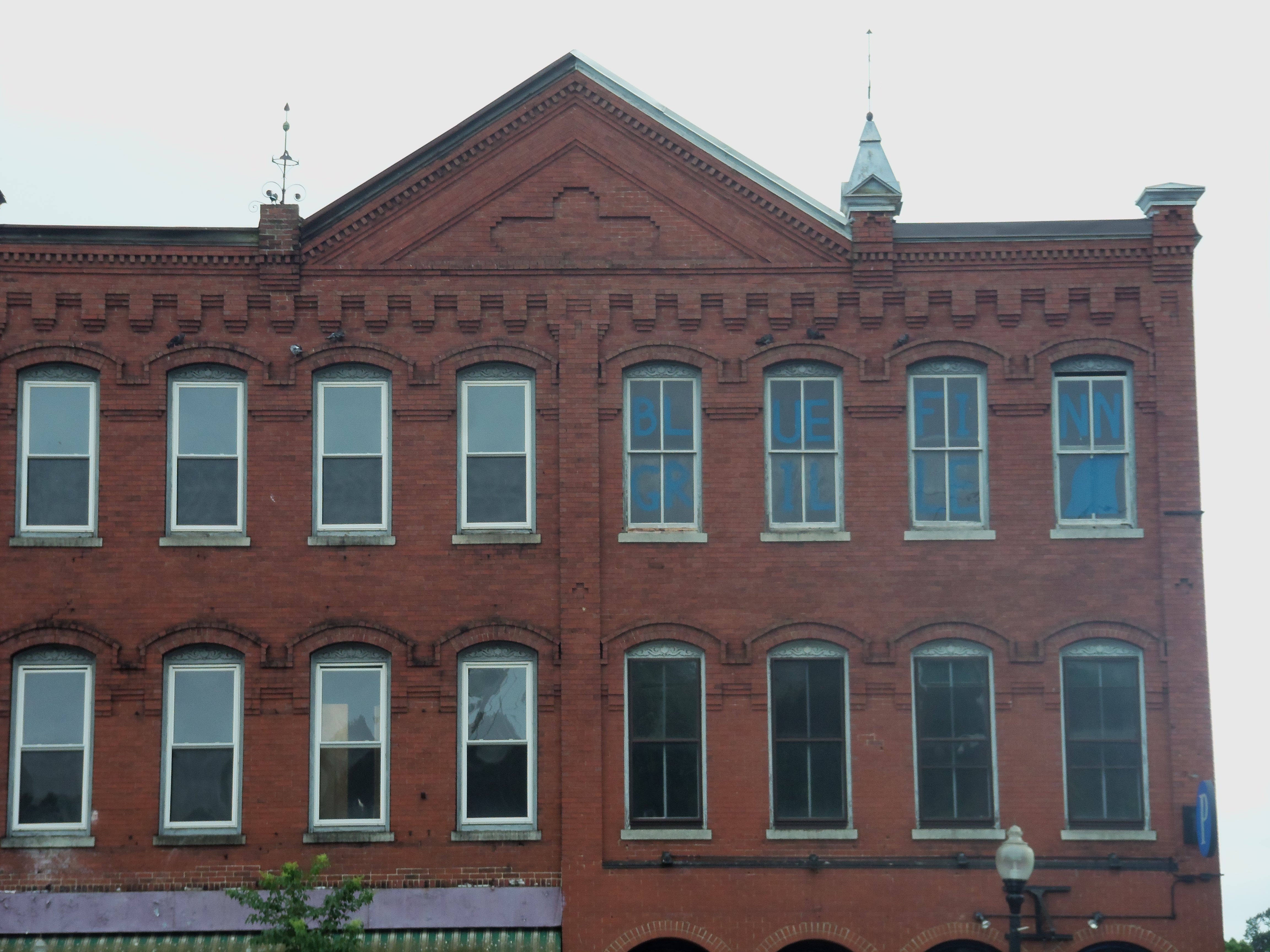
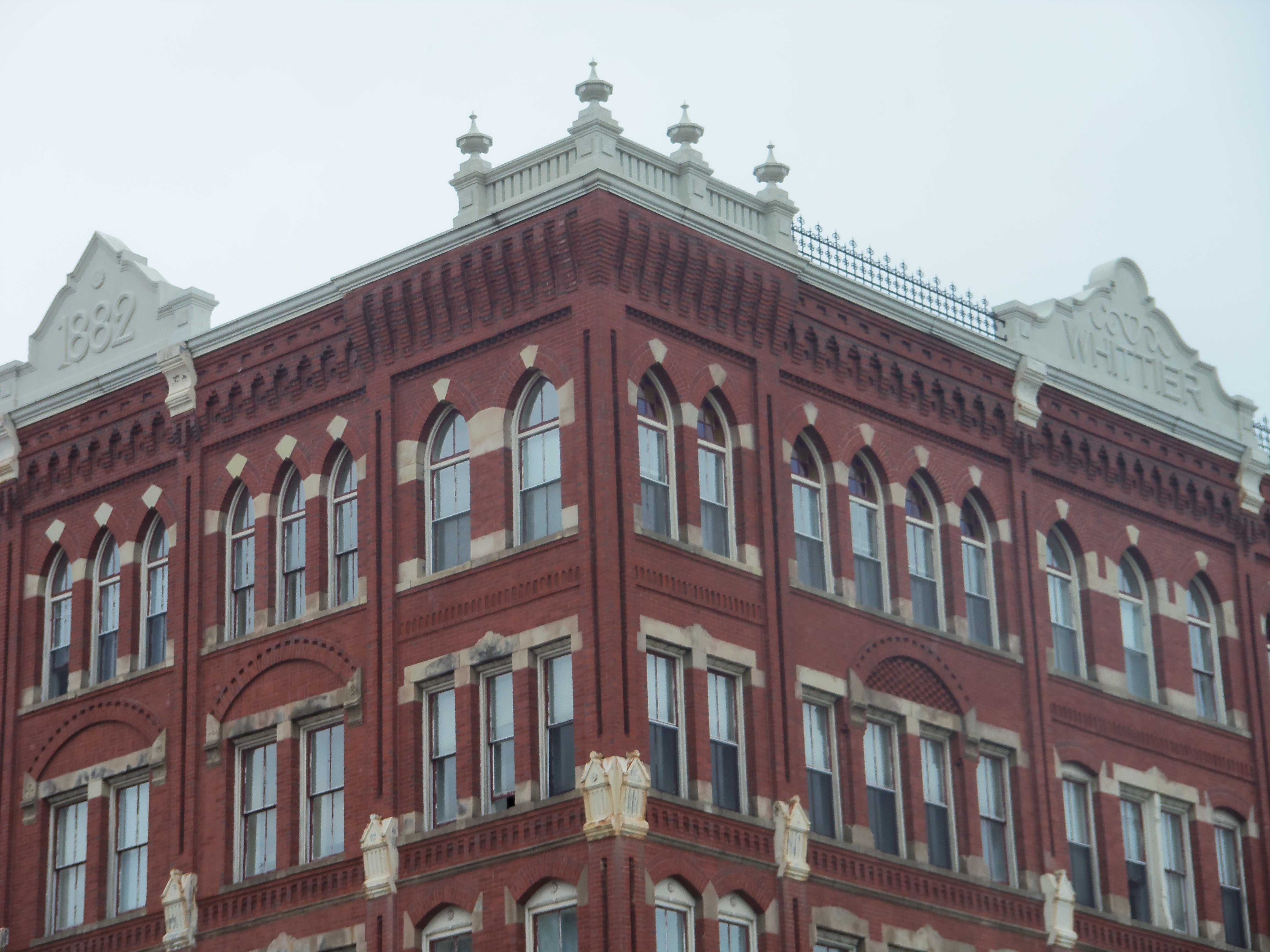
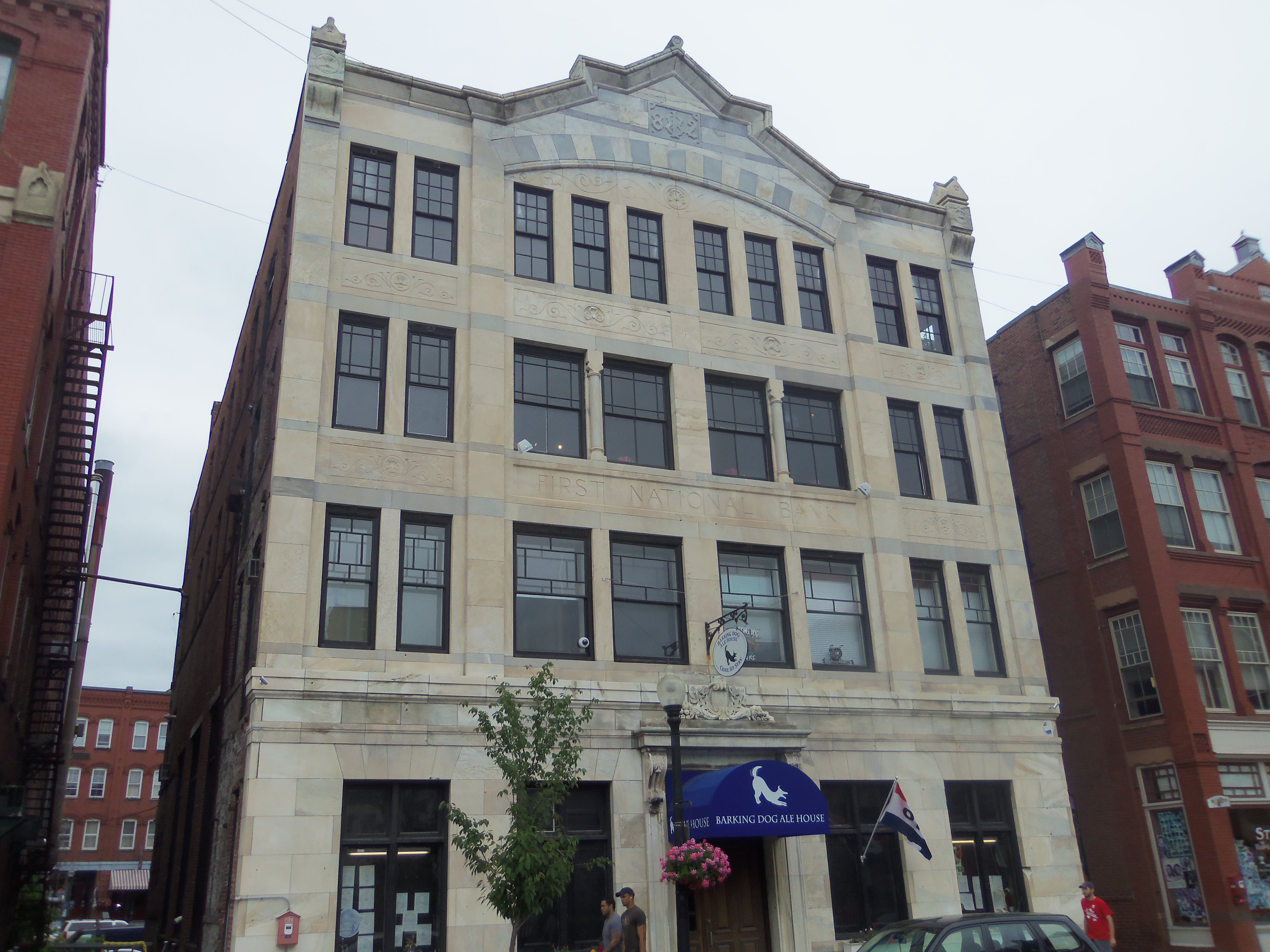
Downtown details.Still impressive.In those days, every building could be a “block.”Facing the train station, a reflection of earlier prosperity.Down the street, around the corner.Not everything was brick.
Like many of these once industrial centers, the city has been struggling to adapt to new directions and refit its legacy of old structures.
By the way, in Yankee style, it’s pronounced HAY-vril and is today a city of 60,000. But the river still runs through it.
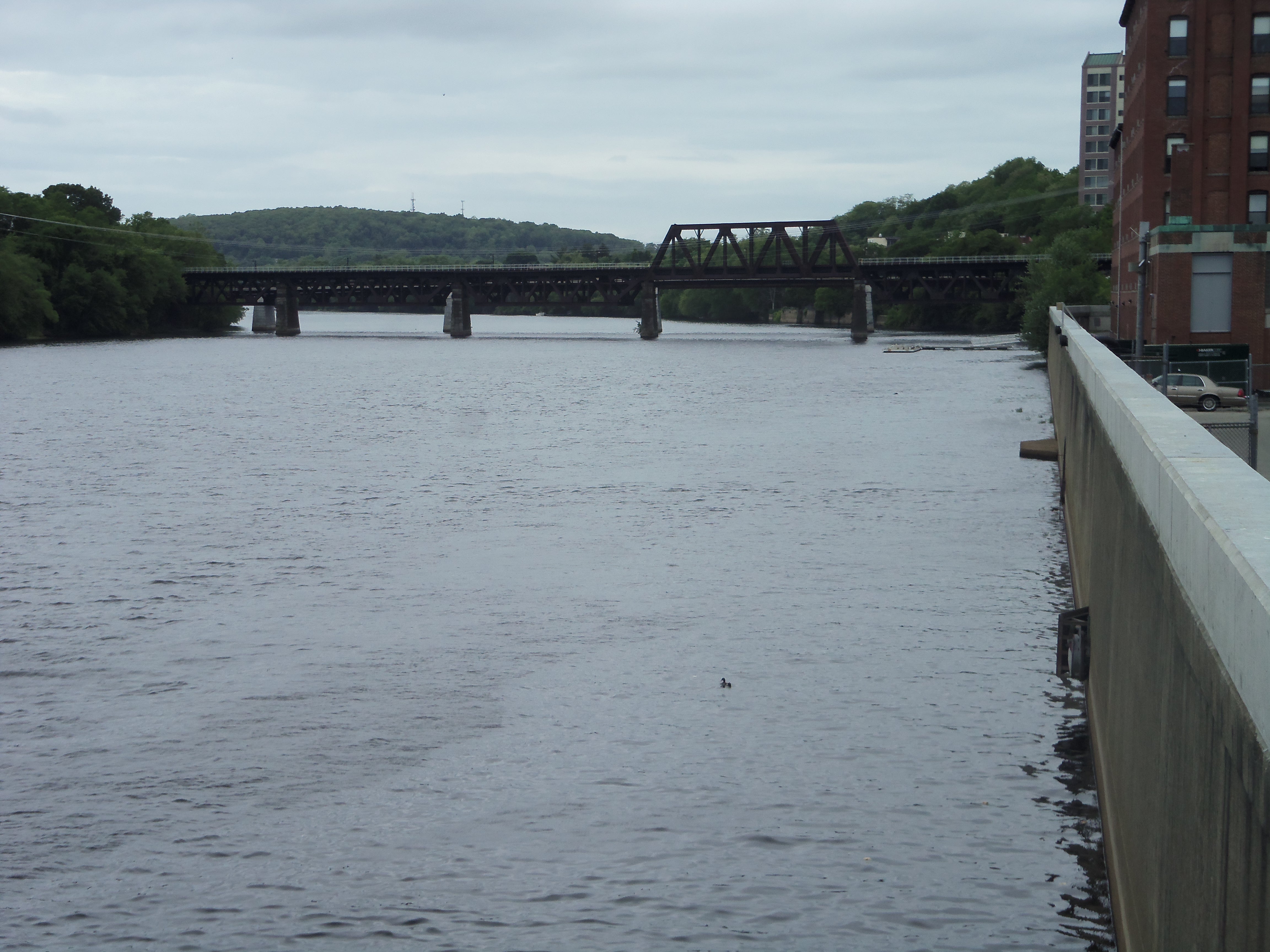
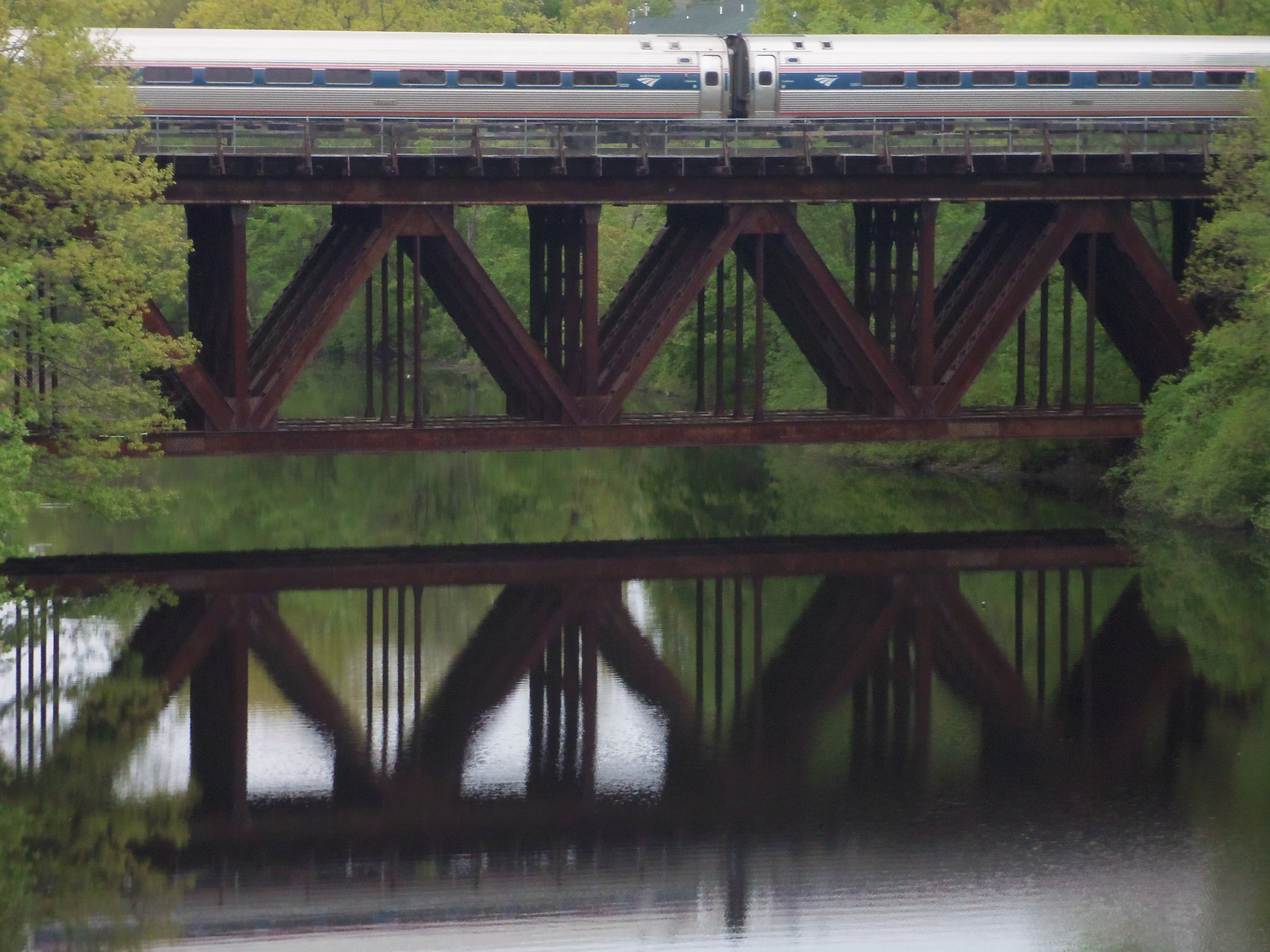
The river flows toward the Atlantic. The tides fluctuate widely here twice a day.The railroad crosses from downtown and then follows the river upstream to Lawrence. It’s a lovely ride.
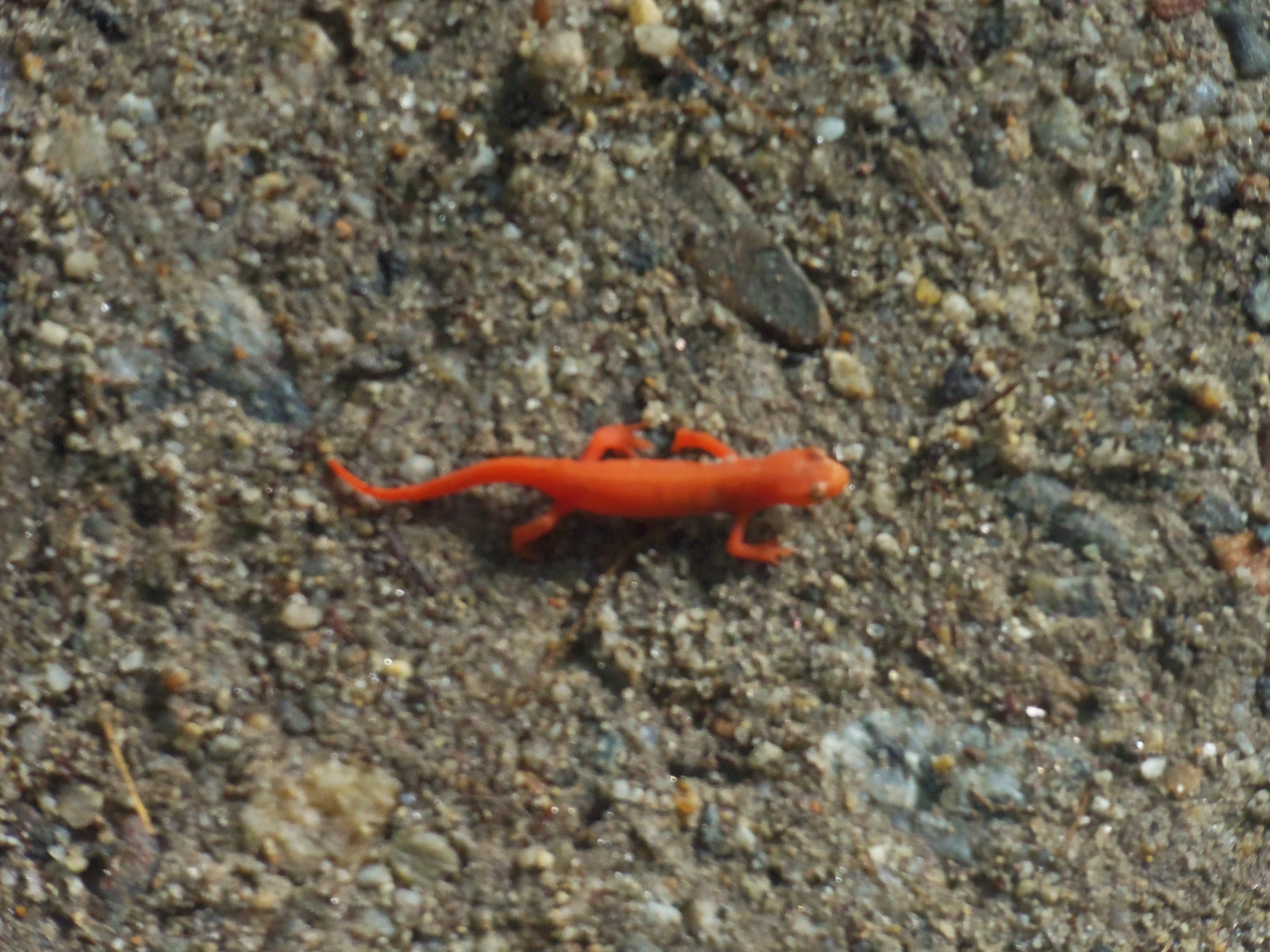
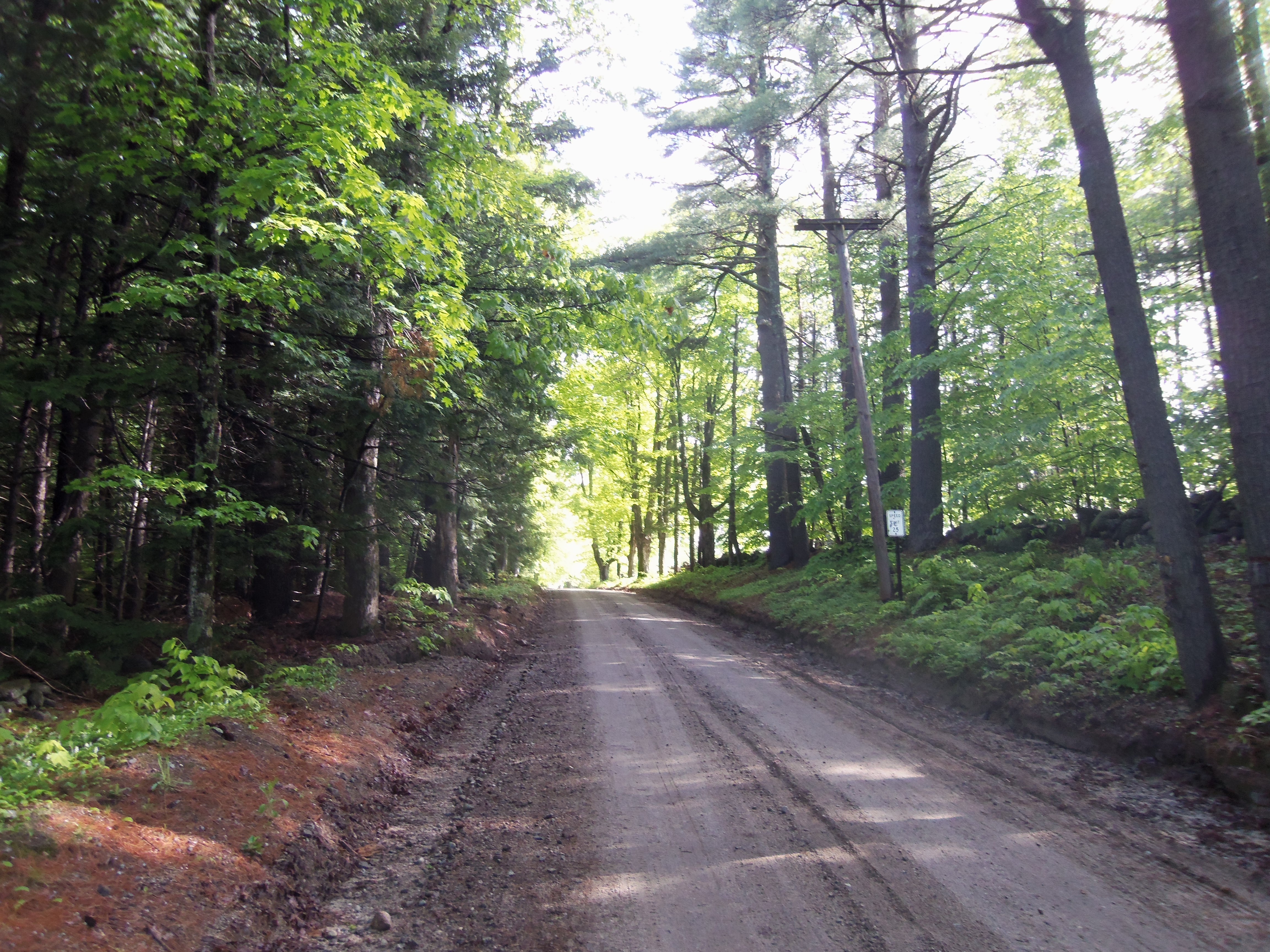
A small lizard, part of a family of reptiles informally called skinks, rests on the roadway. At least I assume it’s a skink. I’ll leave the final identification to others. It’s under two or three inches in length.I encountered the critter at the top of this incline while walking in Henniker, New Hampshire.
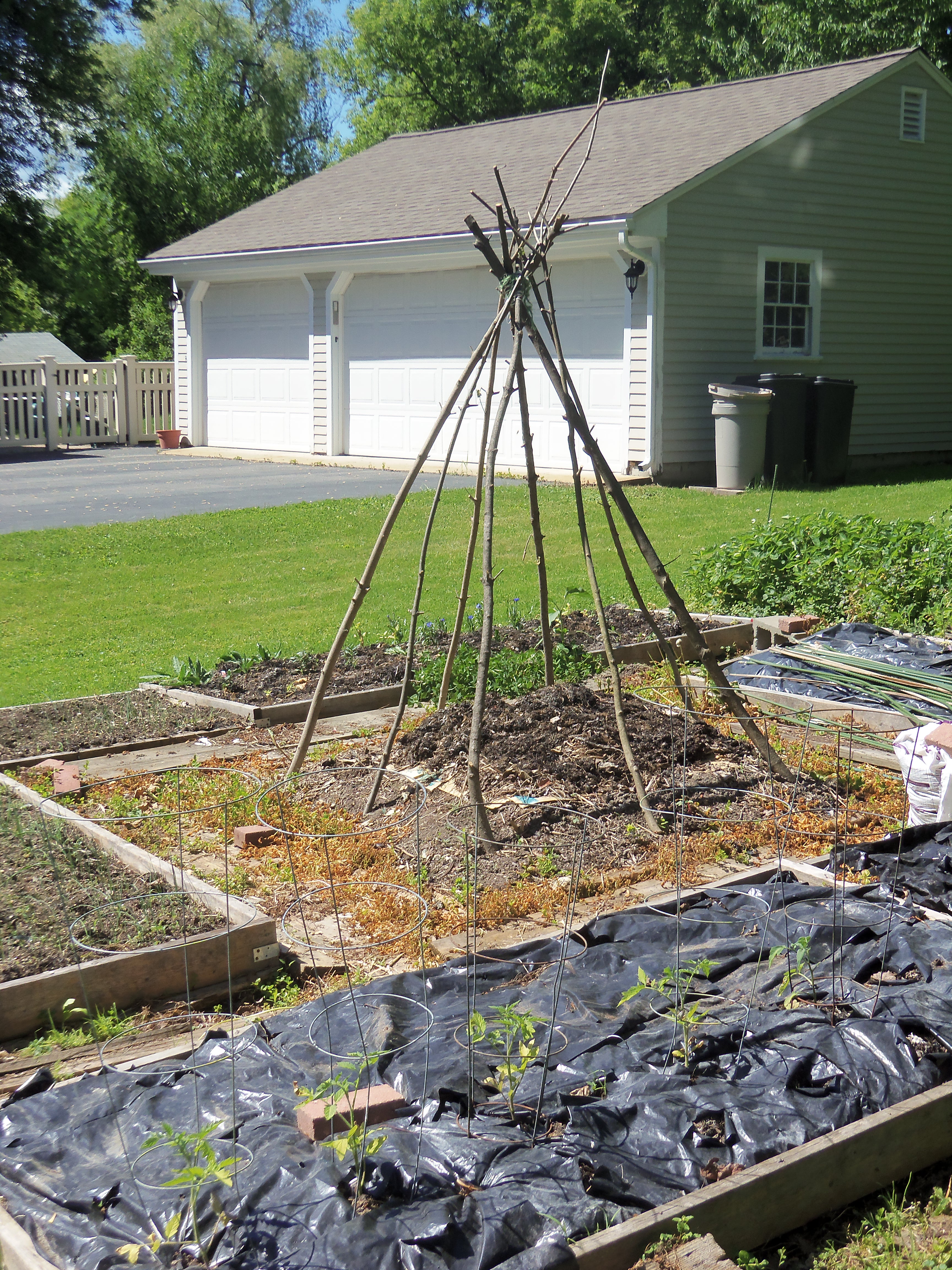
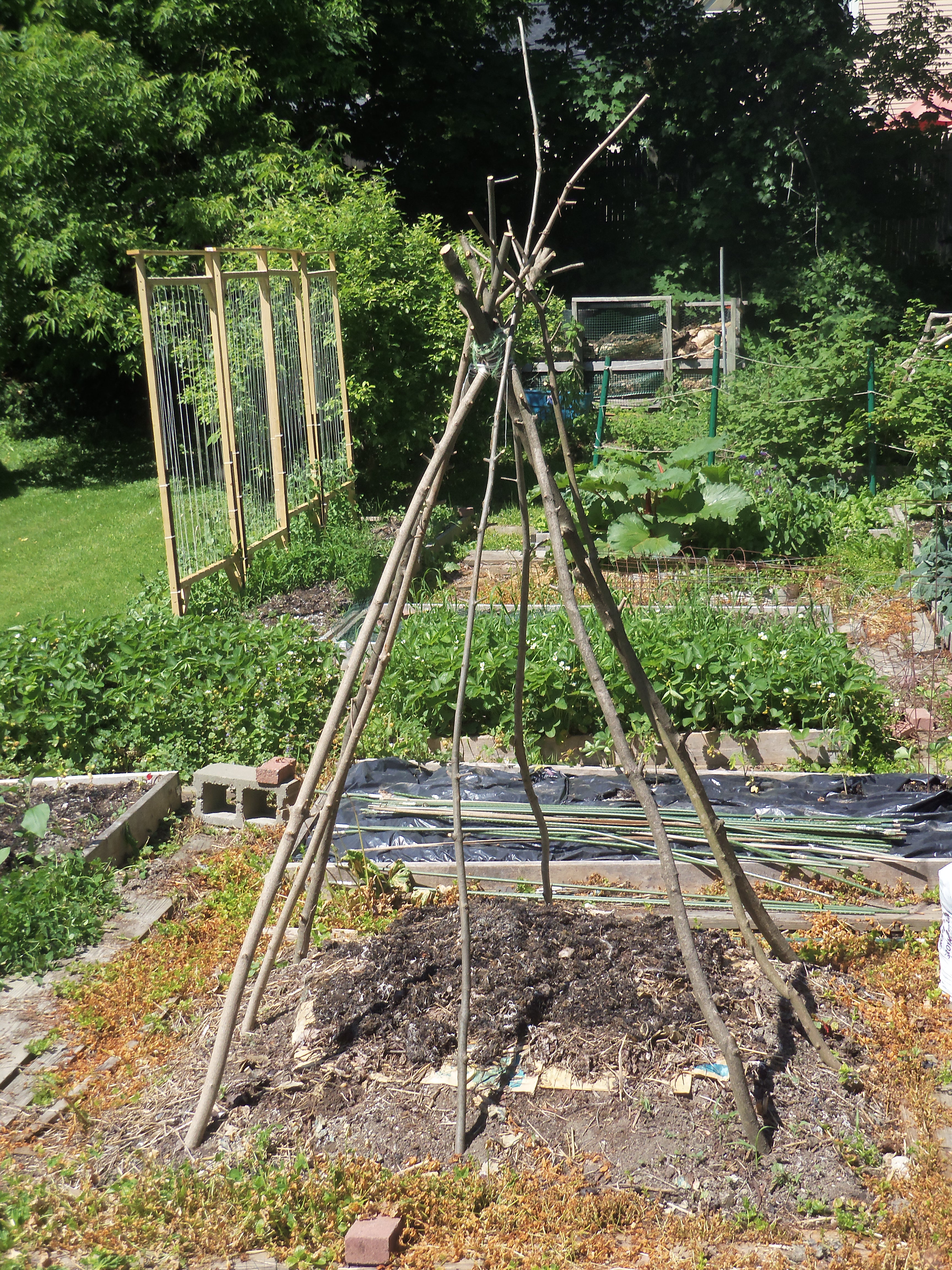
We’re trying a new approach with our bean-pole beans this year. They’ll be climbing a tepee. The poles were obtained mostly by thinning the hedges at the back of the yard.Here’s a little perspective.
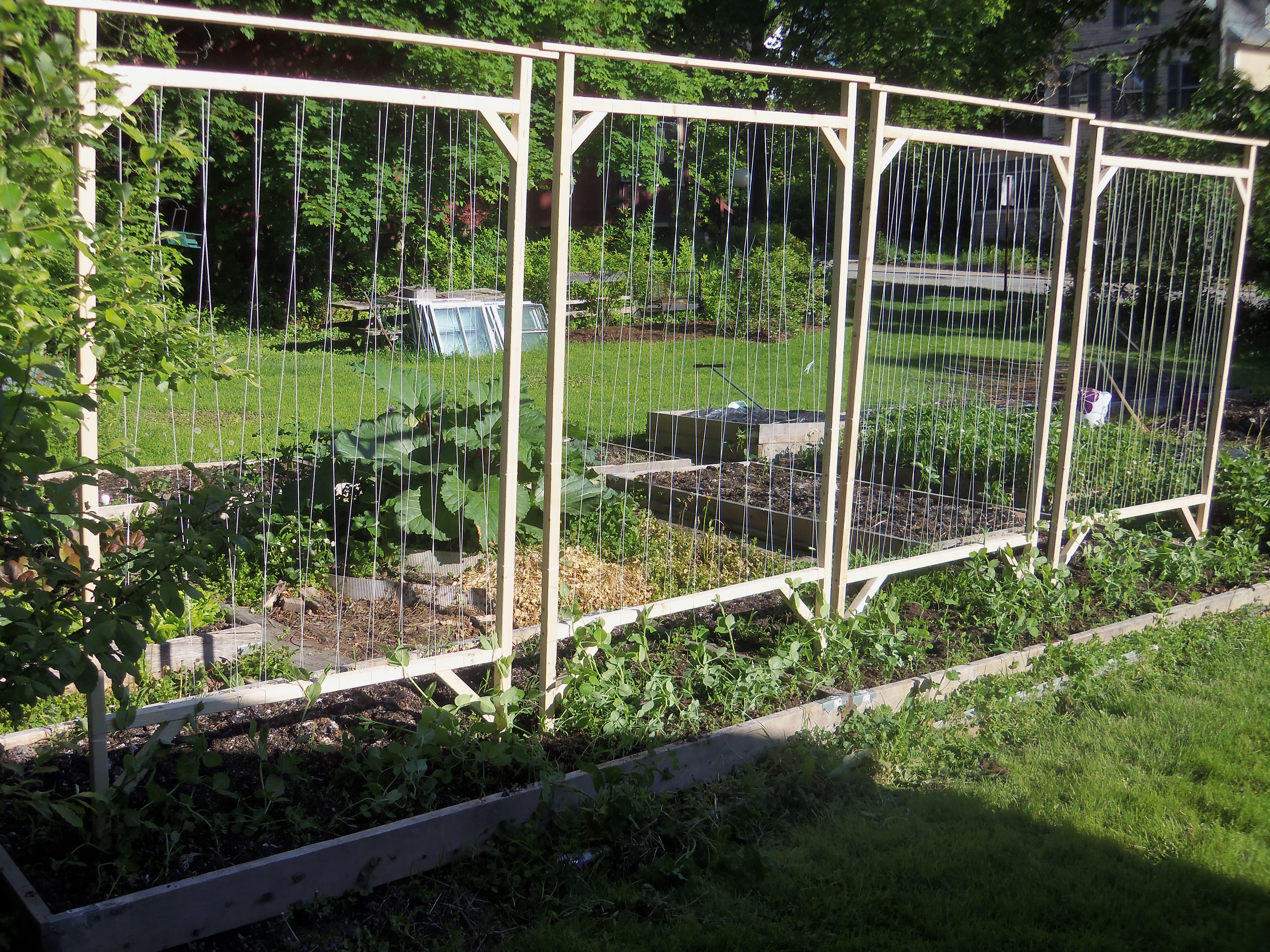
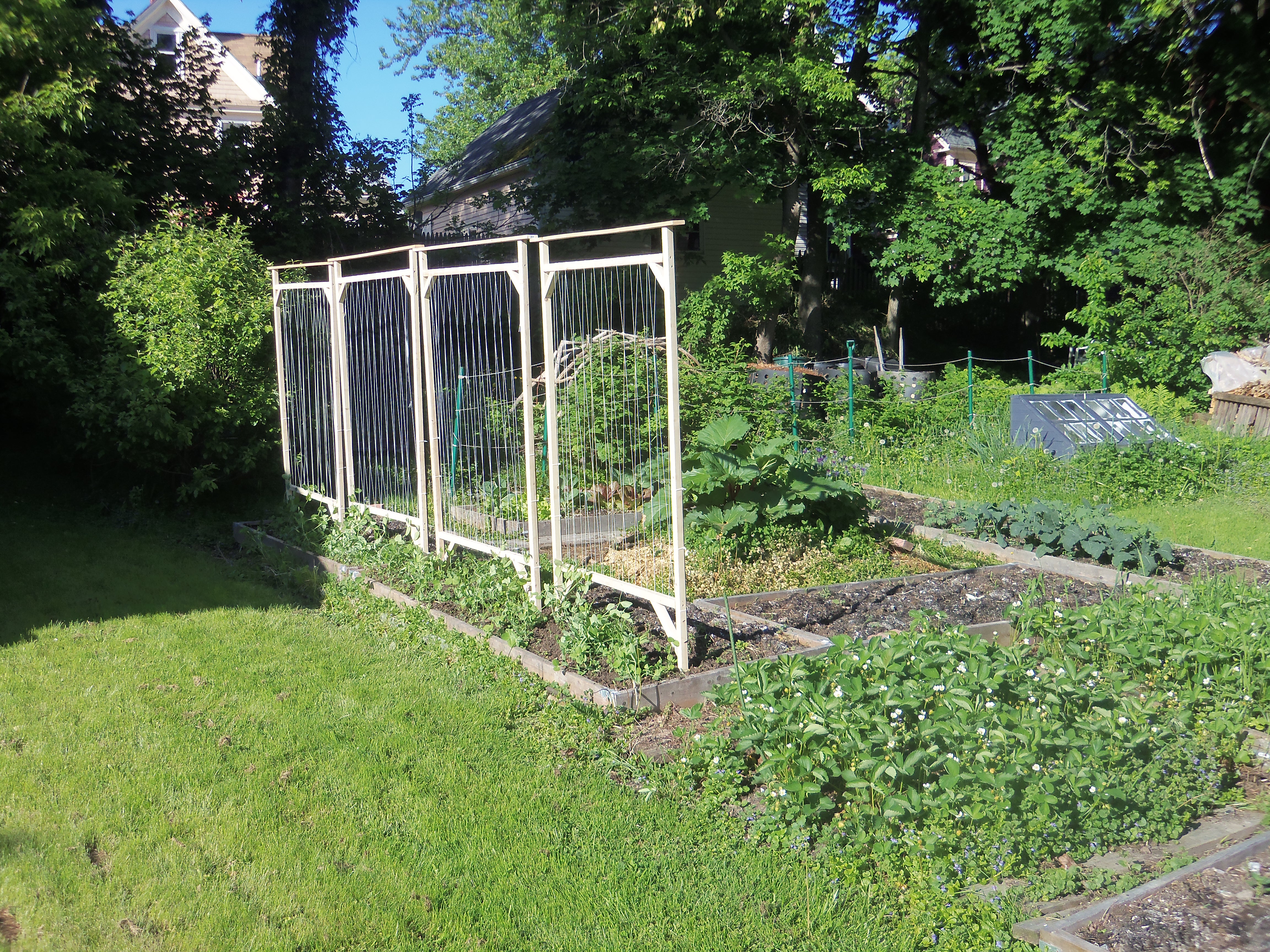
As gardeners know, growing peas can be a challenge. The vines like to climb and tangle … and they get heavy. This year, thanks to elder daughter, a new design has appeared in our beds. It’s quite elegant, I think.Here’s a little perspective.
Inscribed on gravestone of John P. Hale (1806-73) in Dover:
He who lies beneath surrendered office, place, and power rather than bow down and worship slavery …
He was the first United States senator to take a stand against slavery.
Earlier, while serving in the federal House of Representatives, he refused to follow the New Hampshire legislature’s directive to support the admission of Texas as a slaveholding state. In the following election, barred by his party from running under its banner, he ran as an independent; none of the three candidates won a majority and the district went unrepresented.
Don’t mock these humble birds. They’re great fundraisers, as I remarked in a post the other day. Now here’s the rest of the story, the one I thought I’d published long ago … but hadn’t.
At a party one night in our Smoking Garden, a friend was telling about a fundraiser her church youth group had done back in Massachusetts.
“That’s a great idea,” I said. After all, she was a United Church of Christ pastor with all kinds of connections. “UCC,” for short.
Next thing I knew, a big sign and box appeared in our Quaker meetinghouse, warning Friends to buy flamingo insurance. This is New Hampshire, remember, not Florida.
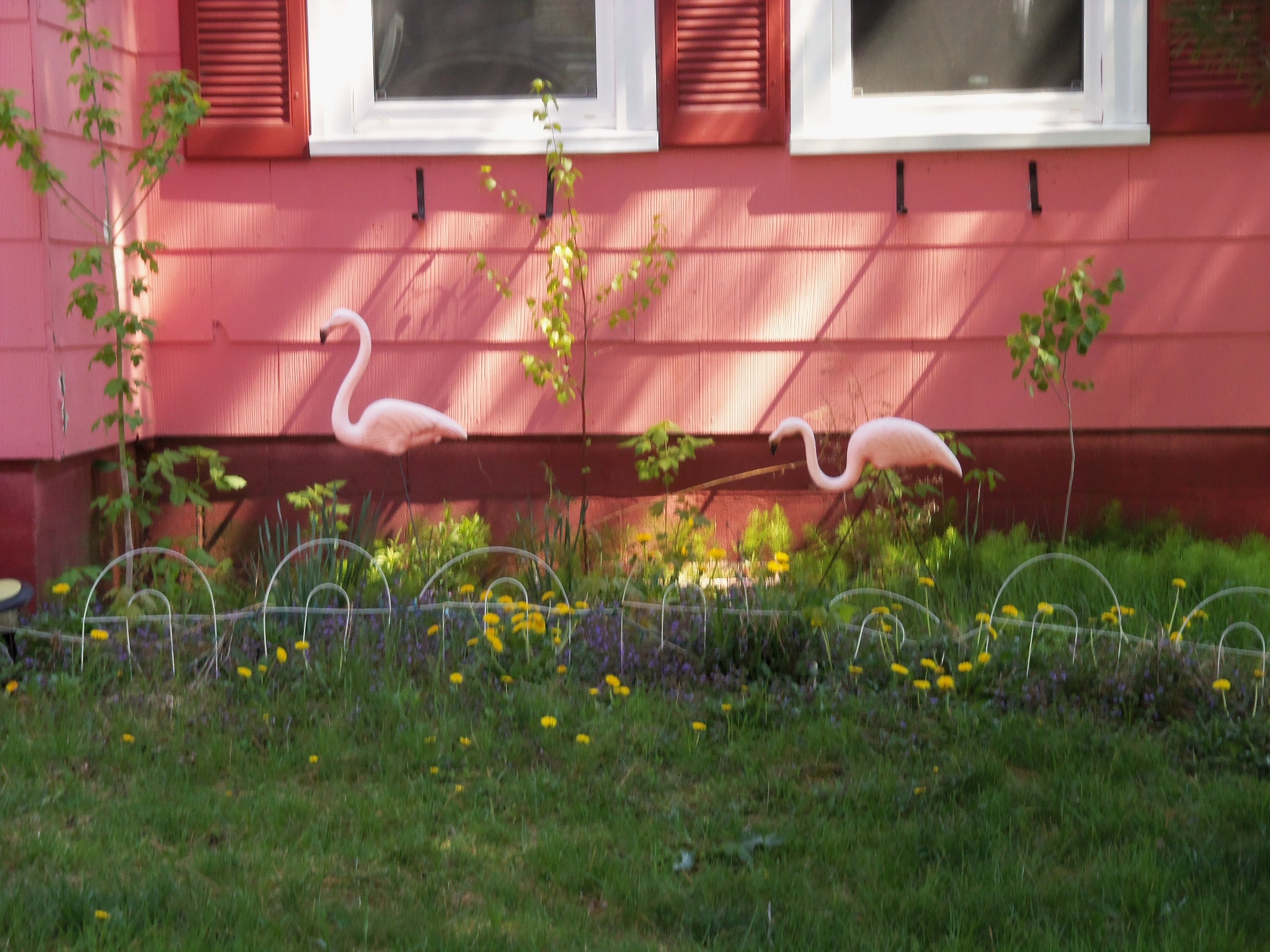
One night after our party, our renowned sculptor Jane and her husband had come home to find her flock of pink flamingos missing from their yard and garden, but a sign stood in their place: “They needed to be quarantined.”
Uh-huh. I was as baffled as anyone that Sunday as we entered the meetinghouse and faced that big sign and its box of warning.
Here’s how it worked: you could donate any amount for insurance, but if someone else trumped that figure by offering more, you could still get flocked. And if you were flocked, there would be an envelope for another donation for their removal. In other words, you could get hit coming and going.
Then the plastic birds – and wooden cutouts – began appearing in Friends’ lawns. Folks living in apartments weren’t immune, either: the birds showed up strung around balconies or in the backseats of cars left unlocked or wrapped around cars that had been locked.
For the most part, it was great fun – even for the police officers called out to investigate rustling sounds in the night. We had no idea who was in on it, and nobody from our Smoking Garden party guest list was looking guilty.
When we were hit, one of our neighbors laughed and explained why she knew we hadn’t selected the birds as permanent decor: “You’re too organic.”
(Ouch!)
The Sunday morning the operation came out in the open, a guest to Meeting told me, “We did the same thing, down in Connecticut.”
“UCC?” I countered.
“Yes, how’d you know.”
“Just a lucky guess.”
So it had been the Meeting’s kids who were keeping the secret, along with a couple of very, very discrete adults. The money we raised went to the Heifer Project. Our children had to decide what kind of animals they’d send to the Third World – something big, like a cow, or something smaller, like a lot of chickens? And then they took a field trip to the project’s New England farm to check out all the options.
It’s a much better story than the one about my ex-wife’s two birds – the ones a friend of hers stole from my yard after the separation.
Flocked
our Lady of Pink Flamingos keeps taunting
“Have you been flocked?”
where’s it going, our summer of plastic flamingos?
Asked what I consider the most essential tool for the yard and garden, I’d answer “my wheelbarrow.” A six-cubic foot wheelbarrow. Even more than my heavy-duty loppers.
It’s not just because we have gardens on either side of the house, either. I use it to move newly delivered firewood as well as shrubbery cuttings. Compost. Harvests. As well as trash. Building and filling the raised beds for square-foot gardening. Spreading seaweed and mulch. The list goes on. And on.
It even serves as a platform for working. Or, in the past, for giving the kids rides.
There’s an abundance of stealth maples, of course. Should we want the yard to revert to maple forest, we’d leave them untouched. Otherwise, they’ll overrun – and overshadow – everything we intend to garden. This is New England. Our yard has too little open, full sunlight as it is. Just ask my wife.
Each spring, we get thousands of these maple sprouts as they race to establish themselves around our yard and garden. Often, they pop up in the middle of plants you want, where they like to hide until it’s too late, so eradicating the maples early is essential.
Unless one is a truly dedicated weeder, a triage sets in: aim at the most damaging species and go after it, rather than everything at once. Thus, the maple seedlings, before they establish deep roots that are impossible to pull up. Or concentrate on specific beds each year: the asparagus and ferns, for instance.
There’s a list of common invasive species. We have them all.
Others that are welcome, within limit: honeysuckle, on the cyclone fence; mint, at the back, for mojitos and iced tea. Maybe even poison ivy, tolerated to ward off pedestrians or to establish boundary.
Dandelions (tooth of the lion) are no longer a weed now but daily greens for our rabbits and our own table, at least at the beginning of the season. After that requires vigilance.
The wild rose hips are becoming another matter altogether.









 Jnana's Red Barn