What do I want my life to say?
(Even at this advanced age.)
How about you?
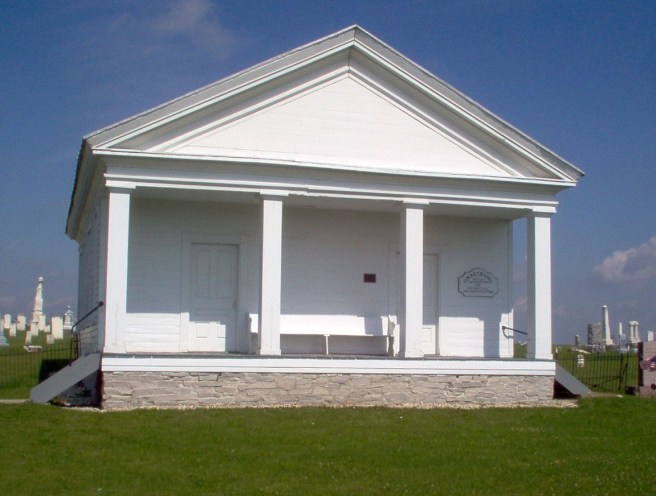
You never know what we'll churn up in cleaning a stall
What do I want my life to say?
(Even at this advanced age.)
How about you?
Not to toot my own horn.
~*~
But who am I to say? What are you especially proud of in your own life?
So many modern annoyances seem minor when you look at a more global perspective. I know, it’s become a cliché over the past few years, but it’s true.
For instance.
~*~
~*~
My, aren’t we spoiled. What would you add to the list?
From the deep past
then/now contrasts.
You know, like screwed up?
We’re reflecting on so many people we encounter, in person and their stories as well as in the news, and so often there’s a kind of lunacy involved. That, or plain tragic fate. I wouldn’t even call it bad luck.
Makes us question if anyone’s normal, whatever that is, or makes us see our own irrational failings and emotional struggles as nothing in comparison. (Yes, we still want to be better than those poor unfortunates.) As for paying the bills and that sort of thing – getting to medium income would be nice – though even that is beyond the range of possibility for many.
Lately, in revisiting the program booklets of so many musical performances I’ve attended over the years, I’ve been wondering whatever happened to so much of the rising talent I heard – the soloists or opera singers who never made it to the top, and that’s just one front.
Authors and journalists, too, as the written word has receded from the public spotlight. (No, Fox News anchors are not journalists, and that’s part of the problem.)
Makes me wonder if I’ve been looking at the whole world wrong. Maybe we should begin with an assumption of insanity somewhere in every psyche and work from there. Maybe that was the best part of the hippie outbreak, letting that side somehow out of the box. Dunno, but it was lively.
Of course, it also means looking into the dark side of life, if it’s possible to do so and not become engulfed in evil. That part’s scary.
And here we are, wishing everyone Merry Christmas.
Ding-a-ling!
In my novel The Secret Side of Jaya, she encounters an old-fashioned, water-powered gristmill when she and Joshua relocate to the Ozarks.
Turns out that the best-known mill in the Ozarks is named after some of my kinsmen who settled near Sycamore, Missouri.
Here are some facts.
~*~
~*~
Do you ever see your name on a product?

I’ve loved maps since childhood, so our new interest in Downeast Maine has whetted an appetite to investigate more of the region’s geography, which includes a lot of water. Not just the ragged coastline and bays, but also large lakes and many bogs, marshes, and swamps plus rivers and waterfalls.
One thing that’s rather boggled my mind is discovering of what’s cut off from U.S. maps on that edge of the continent.
For instance, I had no clue of Grand Manan Island, which is 21 miles long with bluffs rising 200 to 400 feet above the Atlantic just nine miles east of Maine. It even has three lighthouses. Getting there’s a whole other matter.
Still, I doubt that many Americans think of anything lying in the ocean east of the United States until you get to the British Isles or European mainland. So is there anything else we’re missing?
Well, there’s tiny Machias Seal Island further south, claimed by both the U.S. and Canada, which has a long lighthouse presence there.
What’s really surprised me is how far the province of Nova Scotia extends south.
From the easternmost point in the U.S., Nova Scotia is more than 82 miles to the southeast.
From Bar Harbor, Maine, it’s 113 miles to the east.
And further south, it runs down past Portland, Maine, where sits more than 200 miles to the east.
Put another way, nearly anyone sailing from Maine has to navigate around this extension of Canada.
If you follow the news, it also puts some of our fishing controversies in perspective.
From Provincetown, at the tip of Cape Cod, for instance, the distance to the tip of Nova Scotia is roughly 230 miles, versus 111 to Portland, Maine, meaning that the southernmost point of Canada juts that much further into what I had considered U.S. fishing grounds.
With the bigger map, one including both the New England, New Brunswick, and Nova Scotia shorelines, you can see how a funnel is formed, one where ocean currents push into Fundy Bay to create the world’s highest tides.
For me, this is a reminder of how often our comprehension of a problem is limited by conventional thinking when we look at the situation.
Just how else do you get outside the box, anyway?
~*~
What’s your favorite workspace? What doodads would we see there?
I came up behind an ambulance leaving an accident scene with its lights flashing.
And then a bit down the road, it pulled over, turned the flashers off, and continued.
Just like that.
~*~
What about you?