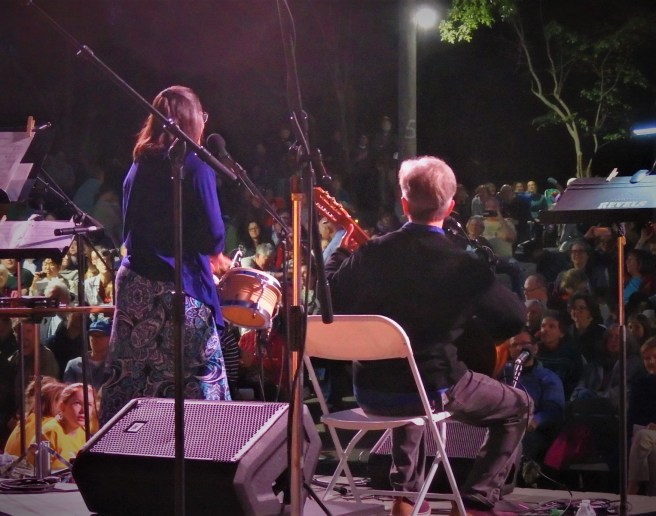
View from the outdoor stage
You never know what we'll churn up in cleaning a stall
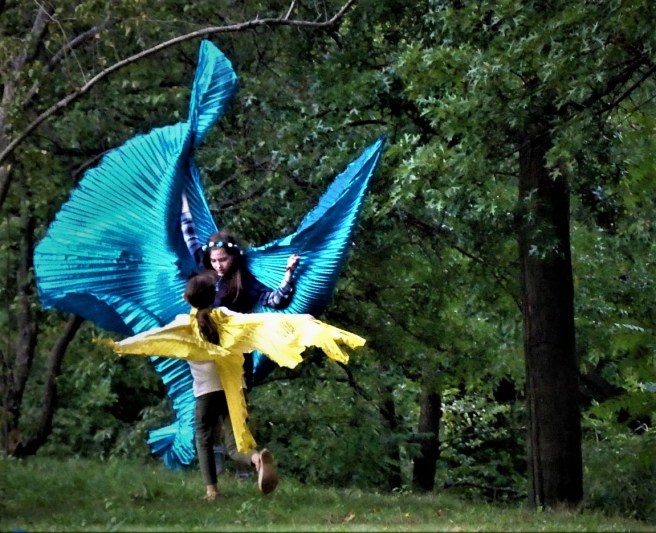

Thinking of freedom, we can see it as personal expression as well as political opportunity. For some of us, that was a big dimension of the hippie movement.
The 50th anniversary of Woodstock is coming up next month. Normally, that would mark a jubilee, some even acclaiming it as a celebration of the dawning of the Age of Aquarius. Alas, the dark ages we thought had passed have returned from the dead, in intensified deadliness at that.
Jubilee, by the way, is drawn from the Biblical book of Leviticus, and it’s a most radical idea. Every 50 years, all the wealth in the land is to be redistributed. The scriptural passage is inscribed on the Liberty Bell in Philadelphia, so don’t tell me it’s not American.
~*~
One of the passages I cut before the final version of my novel What’s Left is one where she’s asking her aunt about the hippie experience:
I’ve never asked you about your own drug use.
OK? Can I say it was just enough to convince others I wasn’t a narc?
So were you really a hippie? I mean, you had such short hair!
You trying to say a hippie couldn’t have short hair? Don’t you know how radical my style was? You ever think I could conform to anything?
Well, you’ve indicated you weren’t stoned. I’m going down the list.
Have you considered the impact of the Pill? Or free love?
Oh, I’m so glad Cassia stopped talking like this! In the final version, she’s pretty snippy.
~*~
For the record, some of the truest hippies I’ve known weren’t promiscuous or do drugs. And some others never marched in a protest.
Still, as an image of the era, let me ask: What’s your impression of Woodstock? Have you ever been to a big, multiday festival? What’s your favorite music? How do you best express your free spirit?
Stravinsky and his dictum, “Limitations make art.”
Heifitz’ love of movies yet no time to attend.
I’m so happy to hear that the New Yorker’s perceptive classical music critic, Alex Ross, is about twenty years younger than me.
There’s so much young talent to champion. And some exciting new sounds, too.
Now, more than ever.
So there we were after choir rehearsal, more than 20 of us gathered for what’s called a pub sing.
It’s commonplace in England and Ireland, I suppose, but a rarity in the States.
In fact, this was my first encounter. One of our members had reserved a room at a tavern down the street.
Our Boston Revels organization hosts public versions of these during the year, but this was more impromptu. Yes, we had a stack of the organization’s songbooks, just in case. As our motto states, “Where tradition comes to life.”
Two of those present had birthdays, so we belted out in the traditional Happy Birthday song, in glorious four-part harmony – maybe more.
And then one basso voice continued in a dark melody with lyrics like “long ago your hair turned gray, now it’s falling out, they say,” or “it’s your birthday, never fear, you’ll be dead this time next year.” He was quickly joined by a soprano across the table in what became a competition to see who could remember lines the other didn’t know.
For those with a mordant sense of humor, it’s (UHH!) great fun. You can even Google it under the “Happy Birthday Dirge.” For the record, we sang it much better than any of the versions you’ll hear there.
Fortunately, my birthday had slipped past unnoticed just a few weeks earlier.
Maybe next year?
My wife came across an article that noted the primary cultural focus in 21st century America is fine food and wine. It’s what intelligent people discuss, even argue about, in casual conversation. And just look at all the writing focused on it today.
A related factor the article raised was that in modern history, in each century one nation has dominated in one art form rather than many. That’s had me thinking, even though I think America led on two fronts in the 2oth century.
Here are ten examples that spring to my mind.
I’ll leave it to others to look for the food trends over time.
What else would you add to this list?

