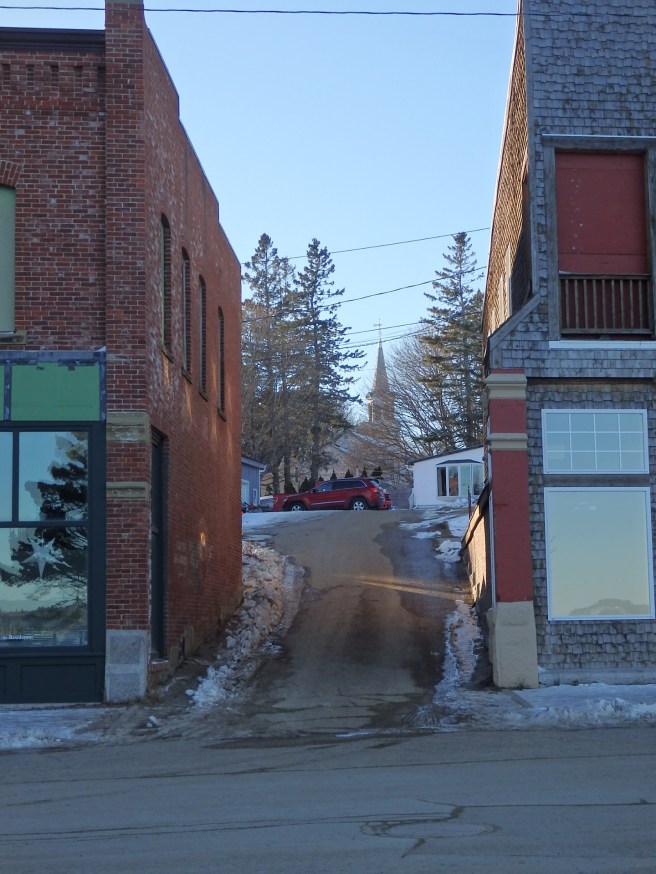
Boynton at Water Street
You never know what we'll churn up in cleaning a stall
Whale watches, the ferry to and from Lubec, plus the Fourth of July, salmon, and pirate festivals were all fun. I even observed a beluga that lingered just offshore my first time out on the water here.
The island’s ten degrees cooler than the mainland in summer – I wore shorts only three times, all of them when I was off to run errands elsewhere. And supposedly the temps run ten degrees warmer in winter, though this house is still cold. We really do need to replace the windows and thoroughly insulate.
We missed gardening, apart from the little fenced-in patch in the front yard, but not the weeding, though the rabbits still happily devoured anything I brought in. Rather than squirrels as a menace, we have deer – especially when the wild apple tree starts bearing. They eat nearly everything in sight, including tomatoes, as I learned before reinforcing the rim of our little garden. Still, I nearly got a doe to eat a cookie from my hand one evening. My wife wasn’t so daring. And tomatoes? They really don’t grow well around here. But the oxeye daisies, basil, and lettuce continued merrily all summer.
None of the big renovations we’d anticipated got done. Contractors are booked out a year in advance, and the one we had lined up backed out before tackling the roof that our insurance company wants replaced pronto. Well, even if we had gotten started, prices on building supplies did more than double. We’re hoping they drop – soon.
I know, it’s something I would have claimed for myself, too, way back when.
And it is a common identity for many today.
But after five decades in a disciplined tradition, here’s how I’ve come to see it:
It’s like the difference between a one-night stand and marriage.
Or between lust and love.
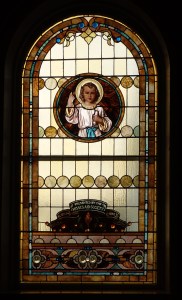
On a less flip note, I’ll admit that a problem with a lot of religion arises when it comes second-hand, even as speculation or shallow platitude, rather than from a personal experience of the mysterious divine. And also when it’s approached as law, with its thou-shalt-nots and rewards or punishments, rather than a relationship with the Wondrous Other. (I’ll leave the particular definitions open, for now.) I’ve called the latter approach “thinking in metaphor,” for good reason.
You can see how the theoretical or law-and-order approaches can mess up a romantic relationship. Ditto with the practice of faith.
By the way, I cherish religion that addresses daily life, in the here and now, more than in an abstract hereafter, though I’ll also agree with Freud’s disciple Otto Rank that religion is the one means we humans have with dealing with our ingrained fear of death.
As the saying goes, God is in the details, and I can be quite critical of various traditions and teachings, including my own. Missing the mark, in a Jewish translation, is one definition of sin. At those points, turning – the basis of the word “repentance” – is required. But I’ve also come to cherish what one old Quaker called “mutual irradiation,” those places where humble practitioners of different disciplines cross paths and inspire each other.
Admittedly, I do come at this from an essentially mystical community that requires individual awareness, one that’s sometimes referred to as an Alternative Christianity. For a better feel of it, visit my As Light Is Sown blog.
In that stream, William Penn, an unapologetic Christian minister, boldly wrote in the late 1600s:
“The humble, meek, merciful, just, pious and devout souls everywhere are of one religion and when death has taken off the mask, they will know one another, though the diverse liveries they wore here make them strangers.”
As for religion, he noted:
“There is a zeal without knowledge, that is superstition. There is a zeal against knowledge, that is interest or faction; there is a zeal with knowledge, that is religion; and if you will view the countries of cruelty, you will find them superstitious rather than religious. Religion is gentle, it makes men better, more friendly, loving and patient than before.”
Put another way, spirituality and religion are two sides of the coin. One without the other would be counterfeit.
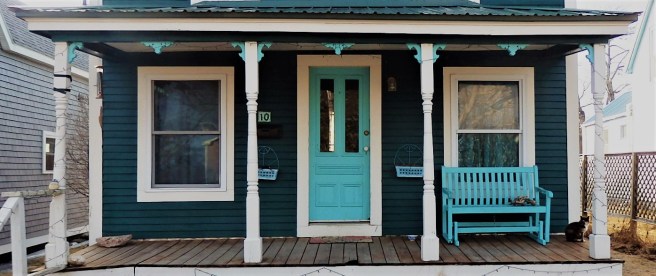
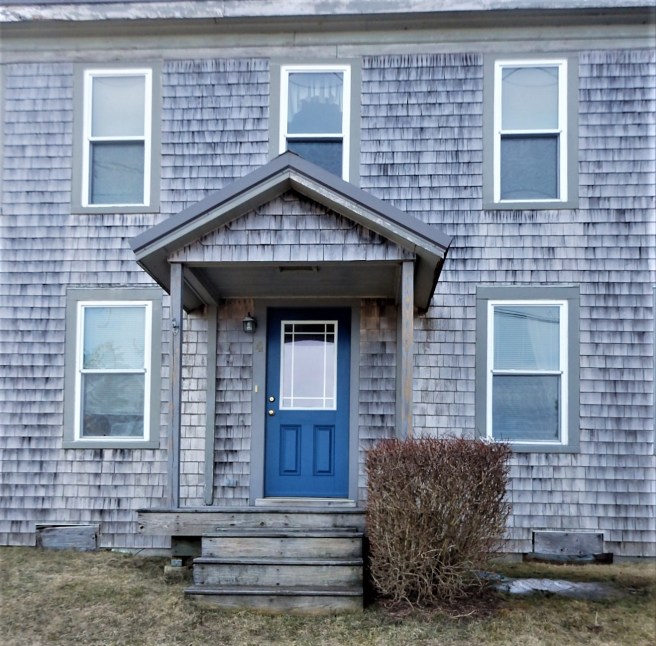

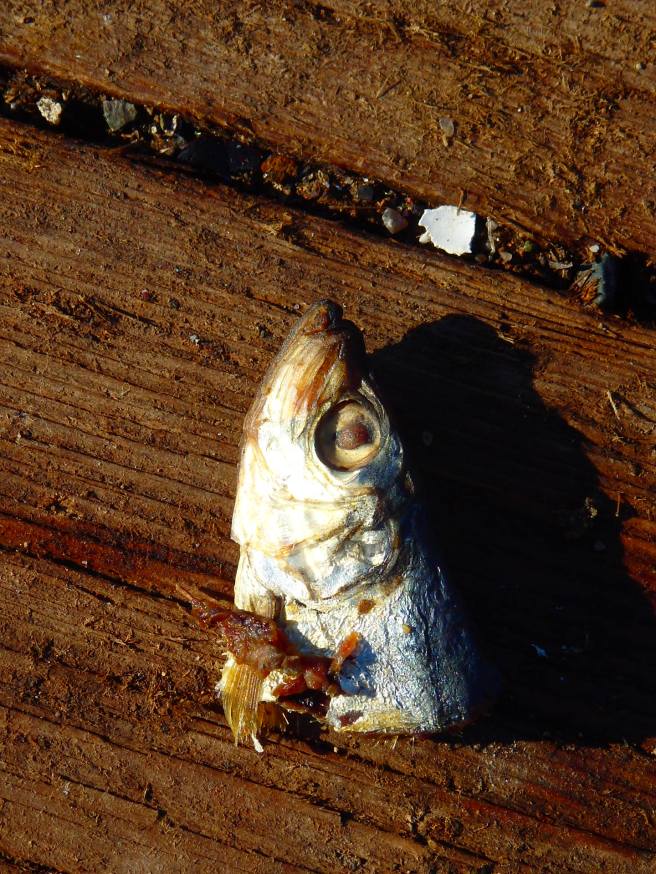
Come the first touch of chill here, and three-quarters of the population begins to vanish. Those folks quietly pack up and return to their primary residence, as have the many tourists. It rather reminds me of living in a college town, but in reverse.
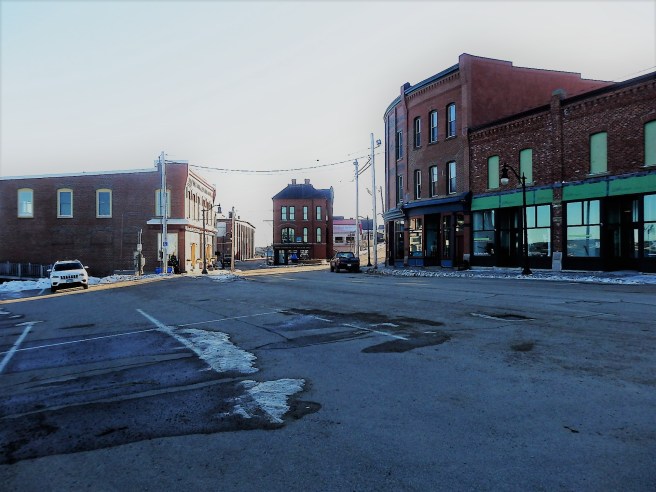
The waterfront and downtown are no longer crowded and festive. Many of the stores, galleries, and eateries are closed up, as are the whale watch, water taxi, and passenger ferry to Lubec. By Halloween, roughly two stores, a diner and a restaurant plus a gallery or two remain open downtown, plus the IGA, two banks, and Family Dollar over on Washington Street.
It makes for a challenging business model, trying to pay the rent and all on a four-month retail prime time. Here the highly watched Black Friday, the make-it-or-break-it financial hurdle of American retailing, doesn’t wait till the day after Thanksgiving but probably hits sometime around the beginning of August.
I have to admire the entrepreneurs who manage it anyway, especially those who stay open through the slim volume of the two-thirds of the year when Eastport’s remote fishing village nature is most prominent.
It also means a lot of do-it-yourself involvement. If you want to see movies, you join the film society. Music? Pitch in with the choir or orchestra. Theater? You guessed it. Dining out? One of the neighboring towns must be having a church supper. Seriously.
And you turn out for others.
Yes, it means more work than just sitting on the sidelines, and with a small population, keeping things going can be a struggle.
But one thing I’ve noticed. It doesn’t take long to be appreciated when you take part.
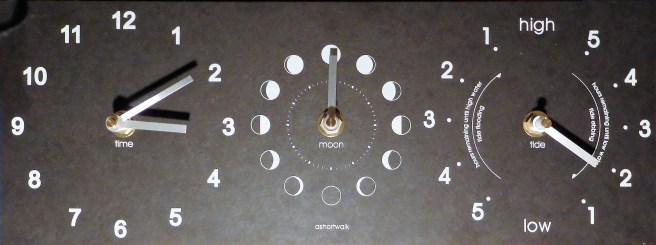
This three-ring clock made for a really appreciated Christmas gift. Its dials (not digital!) track the phases of the moon as well as the rhythm of the tides, which are truly impressive where I’m now living and change every 6 hours and 13 minutes or so. I can know before setting forth what to expect along the waters, especially if I’m thinking of tide pooling or looking for sea glass.
For their part, moon cycles are supposed to be related to mood swings and creativity and, as I’ve heard, even artificial insemination of cattle, whether the calf is going to be male or female. (I got that from some very scientific farmers, by the way.)
Since the night sky around here is often clouded, I do like not being ignorant of what lunar phase we’re in, even if I might scoff at its significance. It’s kinda like having X-ray vision.
All in all, these revolutions make me feel more connected to my place in the universe. Wherever that is.
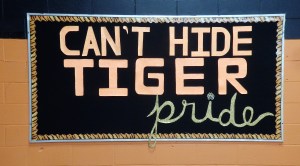
I used to joke that I swam laps to keep my doctor happy, but that ended with the outbreak of Covid. And then I moved to the remote fishing village, one without even an outdoor pool, and, in a routine checkup, my new doctor expressed concern about my blood pressure readings. On reflection, I realized I wasn’t getting enough physical exercise. I wasn’t even climbing stairs the way I was in the old place. And then I learned that the local high school gym is open to walkers on weekday mornings through winter. Voila! I’m now joking that I walk the black track around the gym floor to keep my doctor happy.
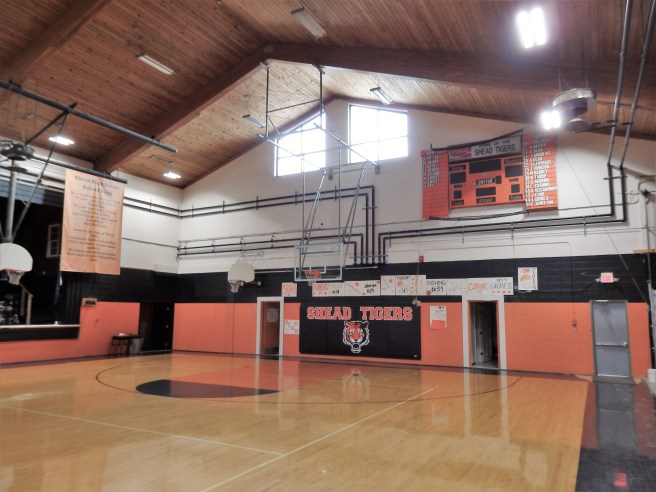
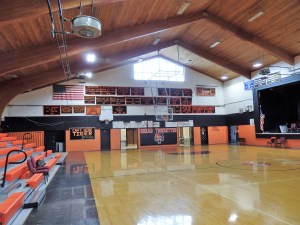 Why walk around the mall, even if we had one?
Better yet, there’s a rumor that we seniors are even going to get some exercise machines here, once the basketball season’s over. Remember, nearly half of the school’s enrollment is on the boys’ and girls’ teams.
How many other high schools are that inclusive?
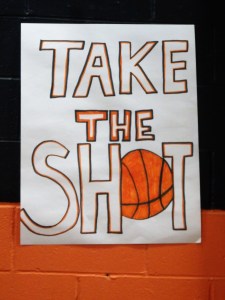
By the way, keep this up, we just might start referring to the place as the Shead Seniors and Senior High School. Those kids should be honored.
Somehow, much of Downeast Maine feels mountainous, even without the loft. The highest points in Washington County, for instance, are Lead Mountain, at 1,479 feet elevation in Beddington, and Pleasant Mountain, 1,373 feet, in Devereaux Township, mere foothills in some other places I’ve lived. Yet the terrain has steep slopes that still challenge motor traffic, as well crests that offer long views of seemingly unending forest.
In that way, it has a lot in common with the Allegheny range in Pennsylvania or neighboring West Virginia, which touts itself as the Mountain State.
The elevations here can be misleading, since much of the landscape is only 20 or 30 miles from the ocean. The town of Wesley, for example, population 98 or so, occupies a highland reaching only 226 feet above sea level, but that’s also a windswept blueberry barren with far horizons. The drifting snow piling up on State Route 9 there can be treacherous, as I learned the hard way.
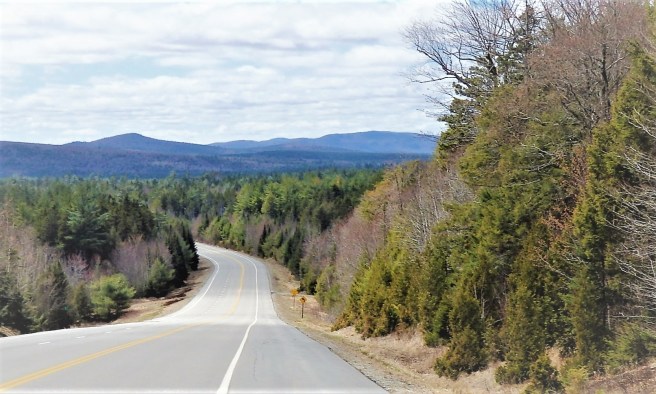
The highway itself sometimes runs along ridges as long as it can before dropping to a streambed below and then climbing to the next crest. I’m struck to see the next landmark cell-phone tower on my route not off in the distance in front of me but rather far to my right or left with a chasm and lake in-between.
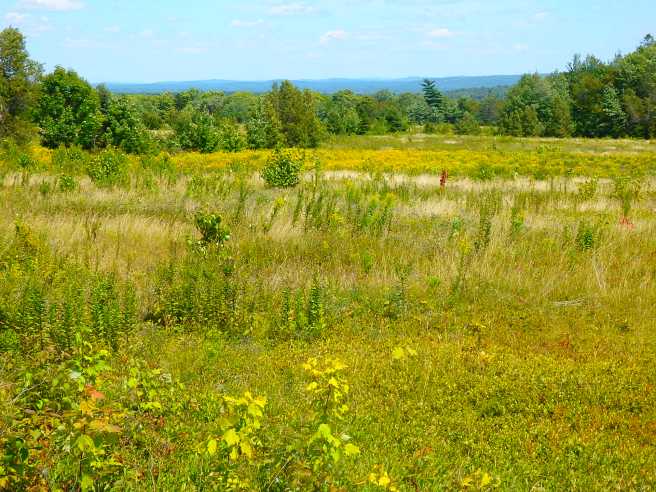
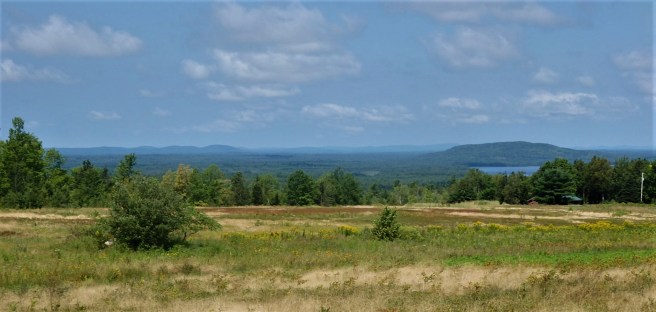
Much of the land is boulders and exposed bedrock rather than rich loam.
There are reasons, then, those hills are named mountains. Pay heed.
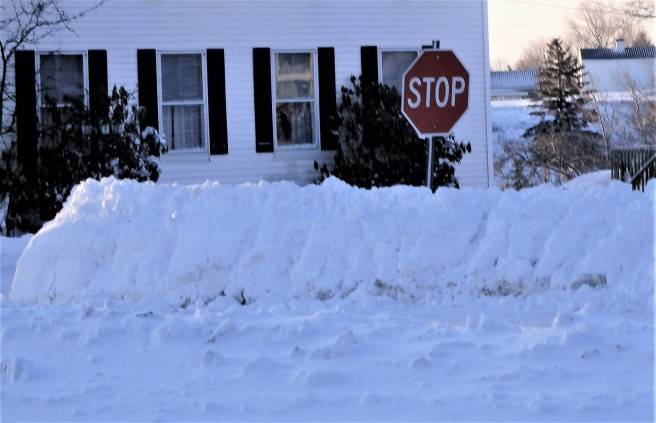
Snow comment needed.
 Jnana's Red Barn