Tag: Maine
Here’s why we celebrate the arrival of each New Year twice
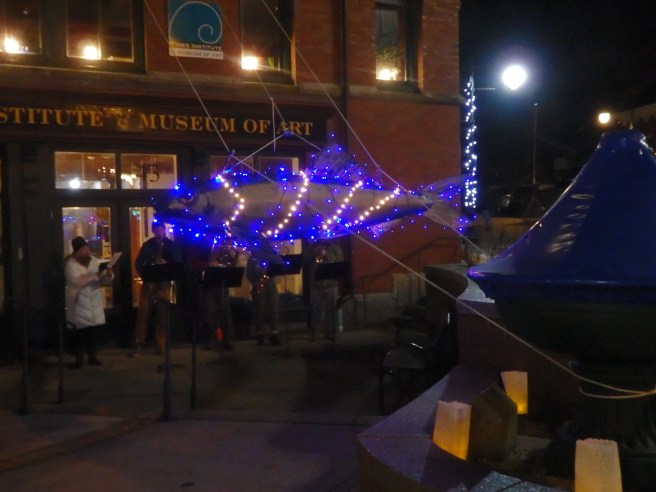
Every New Year’s Eve where I now live, folks gather in front of the Tides Institute – also known for the occasion as Tides Square – for the drop of a festive maple leaf emblem at 11 pm and then convene again for a giant sardine sculpture at midnight.
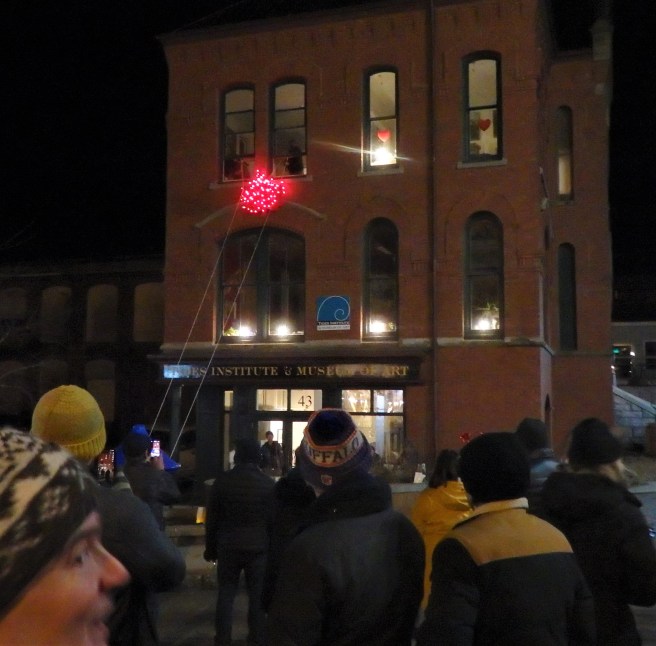
Forget crowded Manhattan. This is the kind of homegrown affair where you can actually run into people you know, as well as others you’ll be hoping to see more of.
With New Brunswick just a mile or two across the channel and very much a part of our community, Eastport can’t help but mark the one-hour time difference between the two shores. Your cell phone certainly reminds you, shifting from one to the other. And so, at midnight Atlantic Time, we drop the lighted red maple leaf while a small brass band plays “Oh, Canada,” with many of the observers singing along. And then there’s the first burst of pyrotechnics overhead. Yay! Wow! Grins!
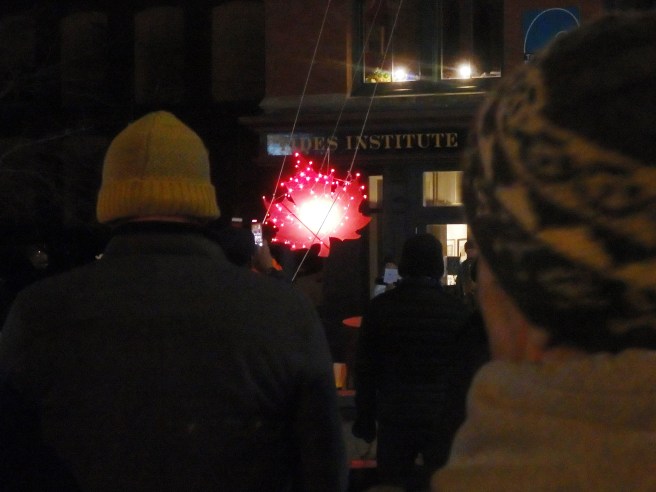
Time for a break, perhaps for hot chocolate down the street or a stop at several diners open uncommonly late, or even a dash home.
An hour later, reflecting the fact that Eastport was once the sardine capital of the world, everyone’s back, awaiting a giant sardine sculpture to descend at midnight Eastern Time from the former bank building that now houses a museum. This round, we all cheer to “Old Lang Syne” and then a festive outburst of fireworks.
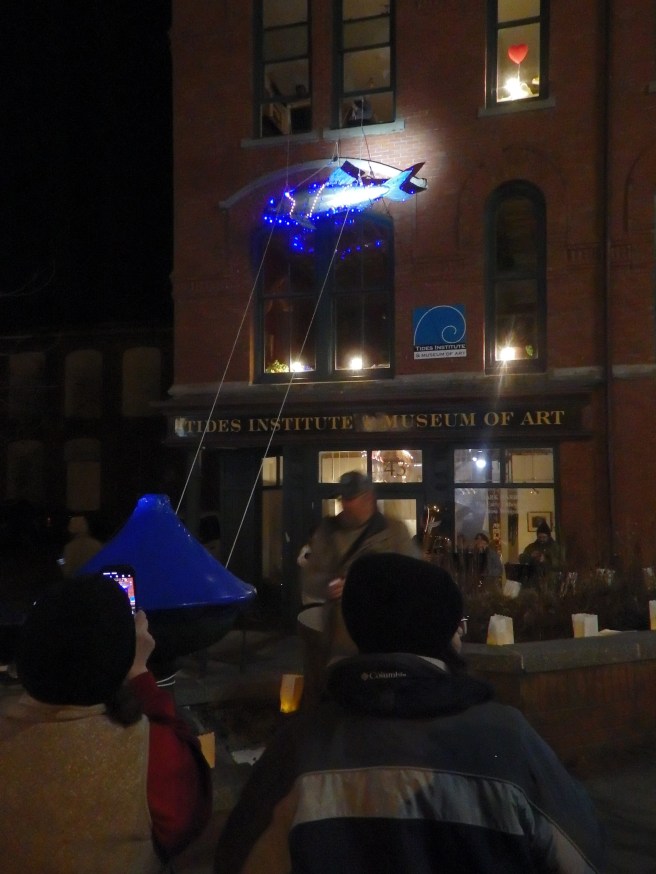
Here’s what we’re looking forward tonight!
The world’s most glorious sauerkraut
For most of my life, I never would have thought sauerkraut could rise any higher than maybe a gag-inducing edible in an obligatory sort of way. You know, like liver. Something in some households you might be required to eat on New Year’s Eve to assure a good 12 months ahead. Think of lutefisk (lye fish) in Nordic cultures as a parallel.
Well, my best friend’s parents, of good German Lutheran stock, made their own, but they also composted for their garden, and back in the ‘50s, that seemed pretty weird.
I am convinced that there are certain dishes that will never become acquired tastes to some or even many tongues. (Feel free to make nominations here.)
That said, imagine my surprise in recent decades in discovering the joys of fine Chinese cuisine, along with the shock of learning that the filling on those snappy eggrolls and spring rolls was essentially sauerkraut, just by another name.
Maybe that set up the moment of revelation.
Morse’s in Waldoboro.
First came some nibbles after an old Mainer made his annual pilgrimage, returning with 20 or 30 pounds or so.
The taste was sweet and tangy, even refreshing. I do like pickles, but these are in a class all their own. I mean, they’re glorious. OK, I had come to prefer coleslaw with a vinegar dressing more than the conventional creamy one, so maybe that had prepared me. (Not that I turn down either.)
That’s set up our own trips in the family, including one with me in the depths of a very snowy February. The road out of the village to the store seemed to take forever, I was sure we had taken a wrong turn somewhere, but then the small store appeared, and it offered more crocks of pickled traditions than just kraut. It also had a small but very tasty German restaurant, which appears to have fallen victim to Covid restrictions. All in all, a delight.
Upshot is, it’s a dish I’ve come to anticipate each winter from our own ten-pound or so purchase.
Morse’s is, in itself, a fascinating story of a family business that’s undergone some transformations but maintains a small niche in an increasingly monolithic food industry. I have no idea if you can find it anywhere near where you live, but then maybe that might inspire another entrepreneur to rise to the challenge. Bigger is not always better.
Why there’s no Eastport, Massachusetts
From 1653 until 1820, Maine was governed by Massachusetts.
The westernmost port down there is Westport, beside Buzzard Bay. A lovely place, by the way.
And the easternmost port was Eastport, in waters subsidiary to the Bay of Fundy. As you’ve been seeing here.
But then, come 1820, the two extremes separated when Maine finally became independent as a state.
Now I guess that easternmost point down under distinction falls on Chatham, out on Cape Cod. And Maine has no Westport.
One year, while still living in New Hampshire, I was in Eastport one weekend, and Westport, the next. I saw it as some kind of weird coincidence, not knowing there really had been a rational connection.
Have you ever thought about the name of the place where you’re dwelling?
Where the local beer’s listed as ‘Imported,’ not ‘Domestic’
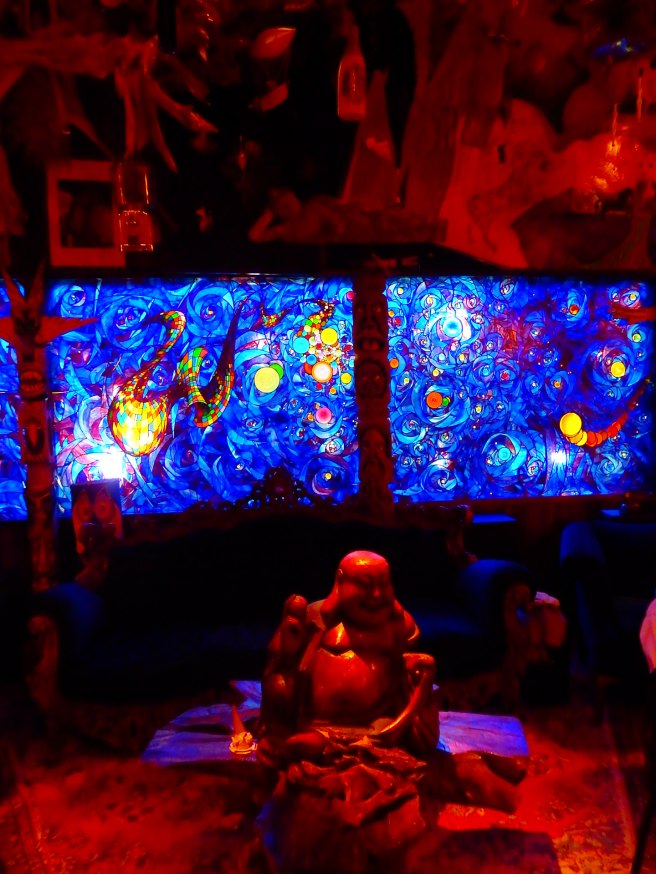
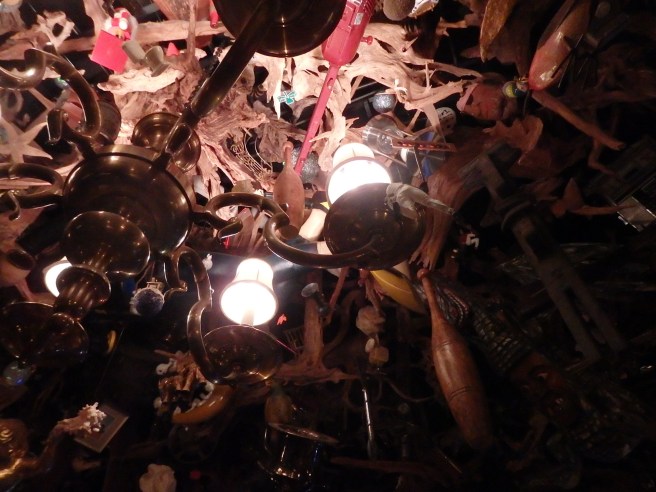
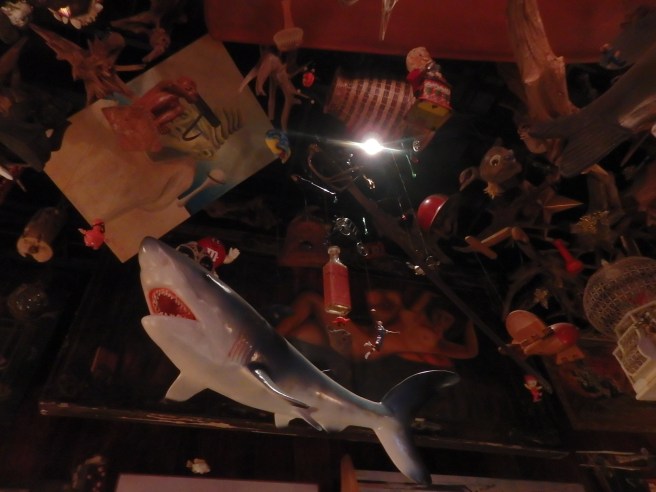
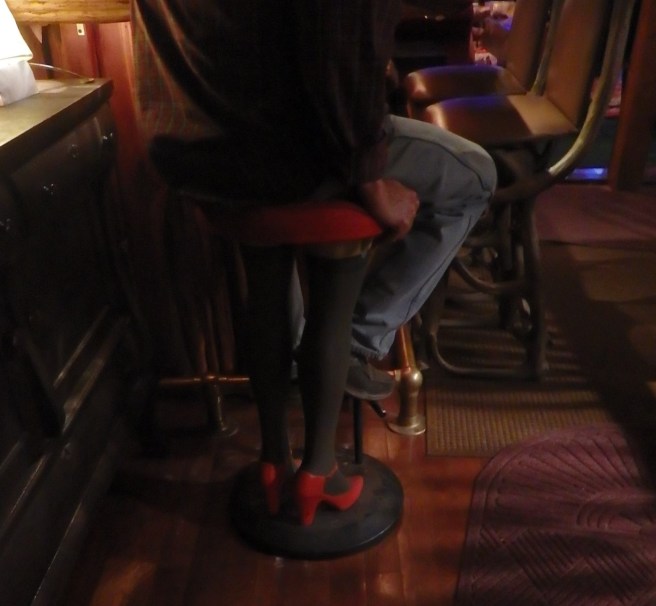
Well, they do promote themselves as the World’s Most Absurd Bar.
And we’ve concluded the reference isn’t just to the décor.

Scalloping in the dead of winter
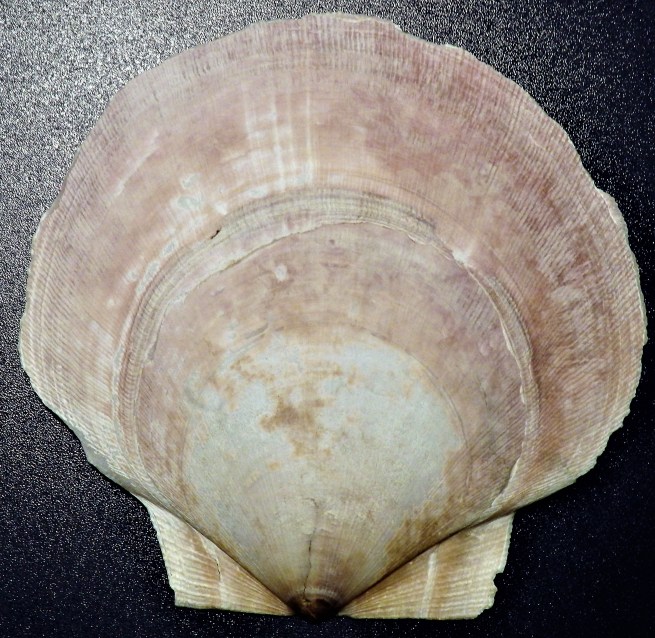
This time of year, I hear the puttering motors in the chill air before the sun’s even up as the fishing boats head out to drag the depths for scallops. No matter how low the thermometer reading or how bad the weather, the vessels venture by, or attempt to, intent on catching their daily limit of ten or 15 gallons a day in a season that runs no more than 50 or 70 days but may close earlier, depending on the sustainable harvest in each of the regulated zones.
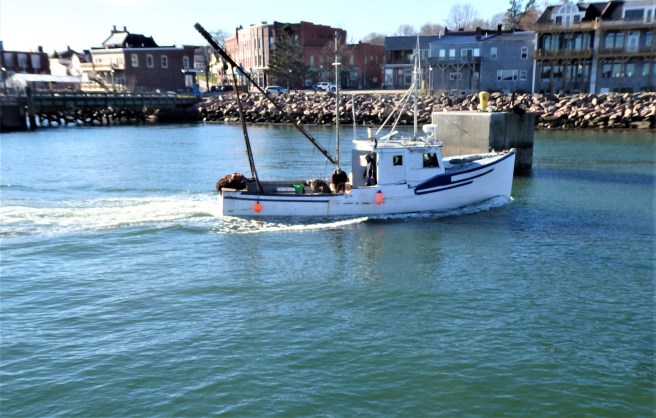
A day not out on the water of the bays around Eastport is a day’s income that’s lost for the season. The economics of fishing are precarious enough.
These intrepid fishermen shuck their catch onboard, tossing the shells overboard, which provides grounding for the breeding of more, and then return to port with their precious harvest, often well before noon.
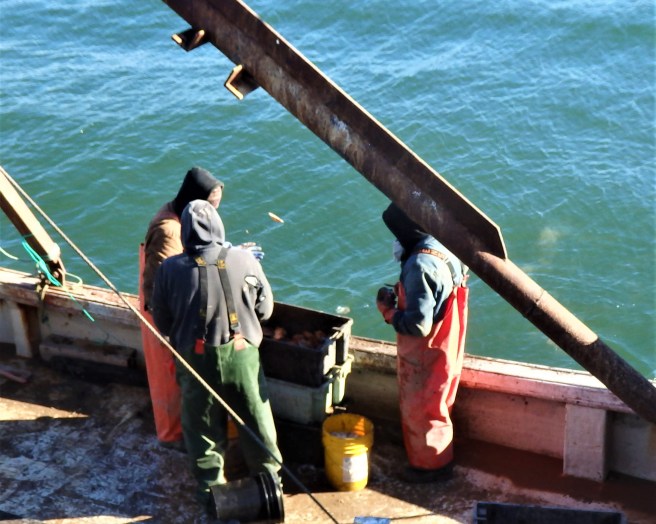
The licenses are coveted and even the size of crews is limited by state law.
Come summer, many of the boats, with their rigging reconfigured, and their crews will have turned their attention to lobster.
Other important harvests here are urchins and clams.
What workers impress you the most when they’re out in bad weather?
A half gallon of fresh scallops

Or about 4½ pounds, purchased from a dragger docked at the Breakwater pier, where the crew of three was busy shucking the morsels from their shells. After dining on these two days straight last Christmas, we agreed we have a new holiday tradition. Unlike ones you would purchase at a market, these have no water added, and that means you can get a lovely sear when sauteing them in a bit of olive oil and butter. Do I need to add they taste heavenly?
Right around the corner from us

As I’m finding
The end of the road
is not the end of the world.
~*~
This could even be a book title.
On the other hand:
~*~
If this is an escape,
it’s a place of no escaping.
She was born to run