It’s is not my debut novel. Rather, I have the feeling it’s the opposite — the final one. I could never do this again. What’s Left is a big novel chock full of surprising turns, deep thoughts, and lively details. Unless Cassia starts speaking to me again, there will be no sequels. For me, at least, the story condenses so much into its pages I’m feeling completed.
Unlike my earlier novels, this one was not written on the fly while working full-time as a journalist. Like them, though, it’s undergone extensive revision.
Woven through the book are themes I’d explored in my earlier stories, now seen in a new light, while investigating others I’m tackling for the first time. Family and family enterprise, adolescence and childhood, death and divorce, and Greek-American culture, especially, are new while counterculture, romance, spirituality, community, nature and specific place, livelihood, journalism itself all run through my previous work.
~*~
Think of this bit as going into the compost rather than being served on the plate:
All I’m doing is asking you to apply your new comprehension to the rest of your life.
~*~
Of course, you’ve heard somebody blurt out, “I’m never going to forget this as long as I live!” Or some such. And sometimes it’s true.
Me? I have trouble remembering nearly everything. Could it be one reason I read so widely is to help me remember? Of course, writing gets it down on paper, once again so I don’t forget.
So while I read to help me remember and to gain insight on the world around me, it’s not the only reason by any stretch.
What do you look for most in a novel or poem?
~*~
A large Queen Anne-style house with a distinctive witch’s hat tower something like this is the headquarters for Cassia’s extended family in my novel. If only this one were pink, like hers.
Sitting down to compose a novel requires some bravado, an assumption or presumption, even outright arrogance, that you have something important to say and an ability to do it in an interesting way.
You know, balls, swagger, mojo. Go to a writers’ group and just listen. But it’s not all sheer ego-driven. For many, at least, there’s an ongoing tension between believing in our own talents and shielding ourselves from the nagging self-doubts. Even Stephen King has them. Remember, the practice of the craft is a solitary act, not a team sport. It gets lonely, especially in the absence of feedback or fans in the stands, whether they’re cheering or jeering. Sometimes, to your surprise, harsh criticism is easier to handle than any praise.
Unless you’ve been there, you have no idea how precious a voiced reaction can be in nurturing you. Those brief reviews and star ratings are important, not just for guiding others to certain books but for guiding you as an author in your practice. An astute reader picks up important elements that have slipped right over their creator’s consciousness. Please, please, please take a few moments to weigh in when you finish a volume. We all need confirmation that we’re not wasting our time – or yours. Best of all is the epiphany when we’re left feeling that someone finally “gets it,” actually understands what we’re about. Don’t be shy.
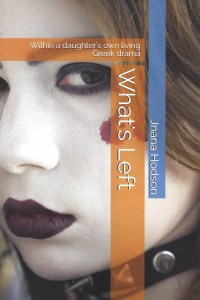
The paperback cover …
I recall giving a friend a booklet I’d written about the Quaker metaphor of Light. (By the way, in the first two centuries of the Society of Friends, the term was always Inward Light or some variant, never the Inner Light expressed today. It’s a crucial distinction.) When he finished, he thanked me, said the text had cleared up his understanding, and then added, “You write very well.”
Even after four decades in the words-on-paper business, I was taken aback, considering that he is, by any measure, an important American literary figure and a master of the language. It was like “welcome to the club,” the exclusive one with the dark paneling and Manhattan address. It was like a cup of fresh water in a desert. Within myself, I felt freed from the “hack writer” label so often applied to journalists from Dr. Samuel Johnson on.
Later, in an aside, he told me I was more of a poet than a novelist. Knowing his fondness for poetry, I took some comfort in the perspective, as well as some umbrage about the fiction part.
On reflection, I now have to agree on his assessment, at least as my novels stood then. He certainly helped my character Cassia press her case for the reworking of all my existing novels, as I did in the aftermath of What’s Left, where she’s the star.
There’s also that frightening moment in the gap between when a book’s been accepted for publication and when it actually comes out. We’re afraid someone’s going to somehow uncover our darkest secrets or that we’ll be shamed by some indiscretion or that we’re about to make an unforgivable transgression. Again, go to a writers’ group and listen … or even ask. If you’re an author, you think you’re somehow bonkers when you feel this, not knowing how much company you actually have.
… and the back cover.
I’m of the camp that hews to Bukowski’s regime of daily “butt time” at the keyboard, day in and day out, regardless of how inspired you might be feeling. Many days it’s a dry struggle, but on others something different and amazing blossoms. From my perspective, it’s when writing becomes a kind of prayer and you find yourself in a “zone” where things come together as if by magic and characters start dictating to you, if only your fingers can keep up with what your soul is hearing. It’s a dialogue with the Other, as in Muse, and you’re the mere scribe at her service.
It’s what happened when Cassia started dictating to me.
It’s not always at the keyboard, either. Sometimes it happens while you’re in the shower or on the throne next to it or swimming laps in the pool or commuting to work.
You can’t control this. Realistically, it happens when you’re not in control.
It happened to me at the finale of “Subway Hitchhikers,” which years later became the launch pad for “What’s Left,” where I had to make sense of what I’d been given, however intuitively.
Perhaps the best, well, I just had a phone call and lost the thread of thought. Maybe it wasn’t that important.
It’s about 700,000 times smaller than the average human.
It has 960,000 neurons, compared to 86 billion for a human.
It has six articulated limbs, each with six segments.
It has five eyes. Two of them are compound eyes made up of 6,900 lenses and cover about half of the face, These two mega-eyes sees the world differently. Red looks black, and the three primary colors are blue, green, and ultraviolet. It detects motion intensely but outlines are fuzzy and images, blocky.
Its other three eyes detect only changes in light, as a warning of danger.
Its four wings move at 11,400 strokes a minute.
The wiggle dance tells other members of the colony where a nectar supply is within a five-mile radius of the hive.
Of 20,000 species of bees, only four make honey.
Around 80 percent of all American fruit, vegetable, and seed crops are pollinated by bees.
Its straw-like tongue extends far beyond the jaw but has no taste buds. Instead, specialized hairs sense the chemicals that brush up against its exceptionally hairy body.
– from an article by Natasha Frost at Atlas Obscura
Like most of us, Cassia finds herself carrying a host of identities. She’s Greek-American, on one side, and Midwestern WASP, on the other. She’s been raised with both Tibetan Buddhist and Greek Orthodox religious influences. She’s a female, of course, and an entrepreneur. She’s part of a large extended family, a Hoosier, a bohemian, a college graduate, a devoted sister, a daughter. And that’s just for starters.
What are your most prominent identities? How do they shape your life?
Said the writer: Implicit in the Four Noble Truths is the lack of a self or a soul. There is only this process. … The wheel of the Dharma is like a benevolent monarch’s chariot that can go anywhere …
Jacob rather frowns on swimming, but Bleu and Ohio Boy love it while Swami just grins “Om” before a letter from South Carolina says they’ve named their farm Bee Riddle Farm, which I find wonderfully poetic yet if the buzzers proliferate, shouldn’t it be Bee-Riddled Farm? ending with Love and God’s Peace, no doubt, but who ate all that sweet corn?
In creating What’s Left, I’ve been on fragile ground with both Greek-American life and the behind-the-scenes realities of the family restaurant business.
Those are both places your insights would be gratefully received, especially when I hit a wrong note.
Well, we can extend that to the entire work as it treks across a lot of unfamiliar ground.
What have I caught right? And where I’m I off-track?
~*~
Horiatiki. I’ll probably leave some ingredient out when I make it. Or add something I shouldn’t.
Savoring those rare moments when I don’t feel an inner compulsion to be moving on from whatever I’m actually doing. That is, when I’m free of that old weight of duty kicking in.
As happens in Quaker worship. As well as Orthodox Easter and other feast days.
The North Atlantic.
Birds at the feeder. Or sighting an eagle or osprey anywhere, even hawks or hummingbirds.
Fresh tomatoes or asparagus. Along with other things straight from the garden.
Lobster, scallops, mussels, crabs. The joys of living so near the ocean.
A good poem or novel, especially by an unknown writer.
Musical performance that breaks free of convention while remaining true to the score.
The mystery of the big bang, something out of nothing, a scientific paradox, all leading to human consciousness. A honeybee cannot be an accident, nor can a human.



 Jnana's Red Barn