HOMAGE TO THE BEST … AND BACK TO THE SCREENING ROOM

We sometimes express a yearning for the return of the Renaissance Man – the individual who could be conversant on all fronts of intellectual inquiry – but the reality today is that it’s impossible even to stay abreast of the developments in one’s own field, much less other more widely shared interests.

Just ask folks who read if they’ve read your latest hot discovery, and you’ll likely get blank looks. It’s just a fact of life, even for works that are in the basic canon.

It extends to the other arts, too, and we won’t even raise the frontiers of science.

That reality hit home the other night when we sat down (finally!) to view Citizen Kane. I knew from my cinema studies (uh, 44 years ago) that the work was then considered one of the four greatest movies ever made, but somehow it had slipped through my viewing. Yes, I’d seen Birth of a Nation and the Battleship Potemkin and likely the fourth work on that tally, though I can’t remember what it was.

And now? I’m in the camp that considers Kane the most important movie ever made. Period. And, as my viewing companion said afterward, “I was ready to respect the movie, but I didn’t expect that I’d enjoy it as much as I did.” Which was immensely.

If you want to know how Orson Welles and his team changed the face of movie-making so utterly profoundly, go to the Wikipedia entry for the movie and then watch Peter Bogdanovich and Roger Ebert’s running commentaries, which are included on the Netflix DVD. Apart from the advent of color, there’s really nothing they didn’t revolutionize. (If you see something they missed, speak up.)

I’m glad we saw Kane after we’d watched The Grand Budapest Hotel. For all of Wes Anderson ‘s wonderful quirkiness, we could now appreciate the ways he and his team paid homage to Welles and the incredible cinematographer Gregg Toland at the head of that list.

We’re now going to have to watch both movies again.

SPRING MILL

kodak1 022

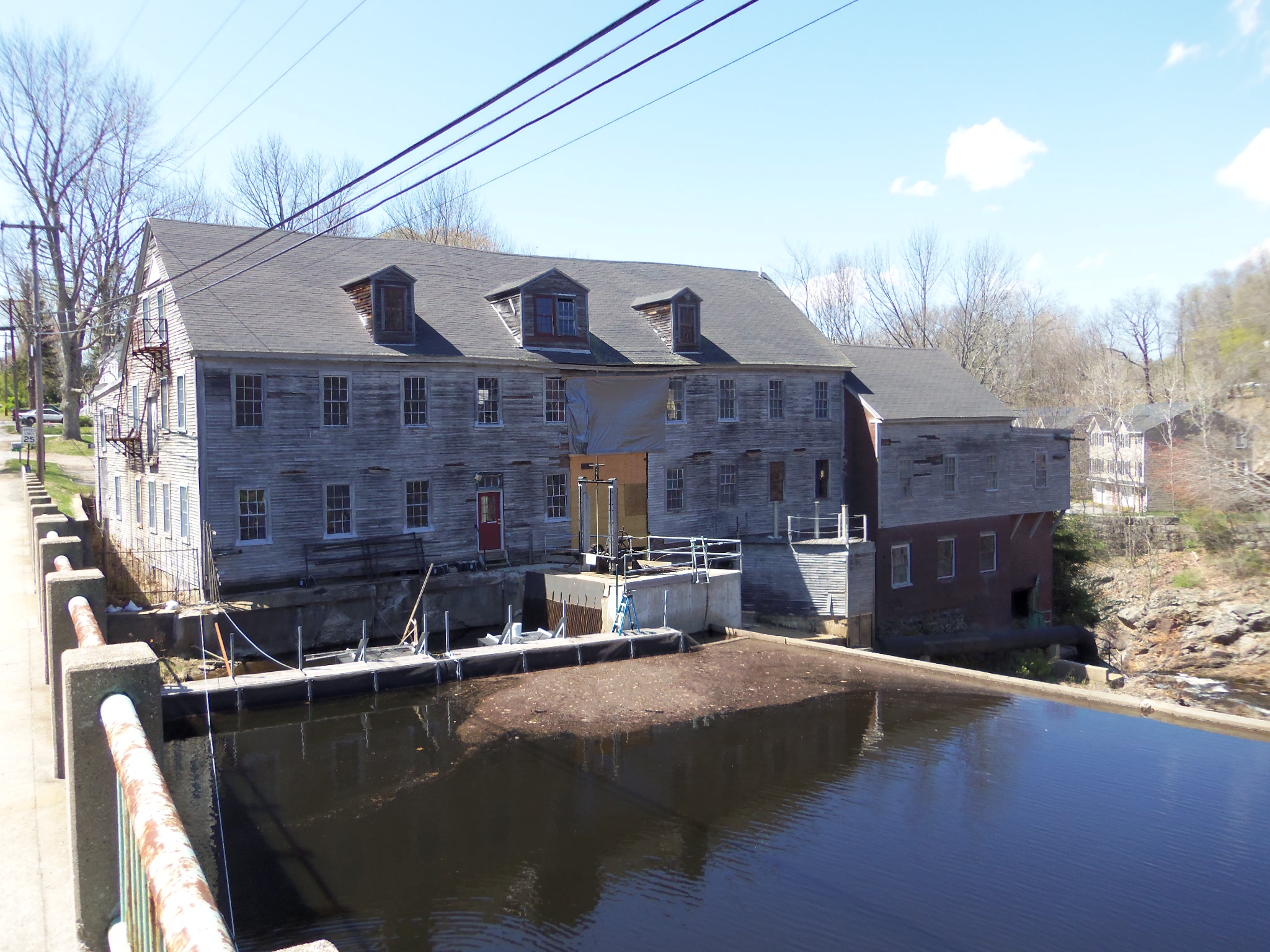
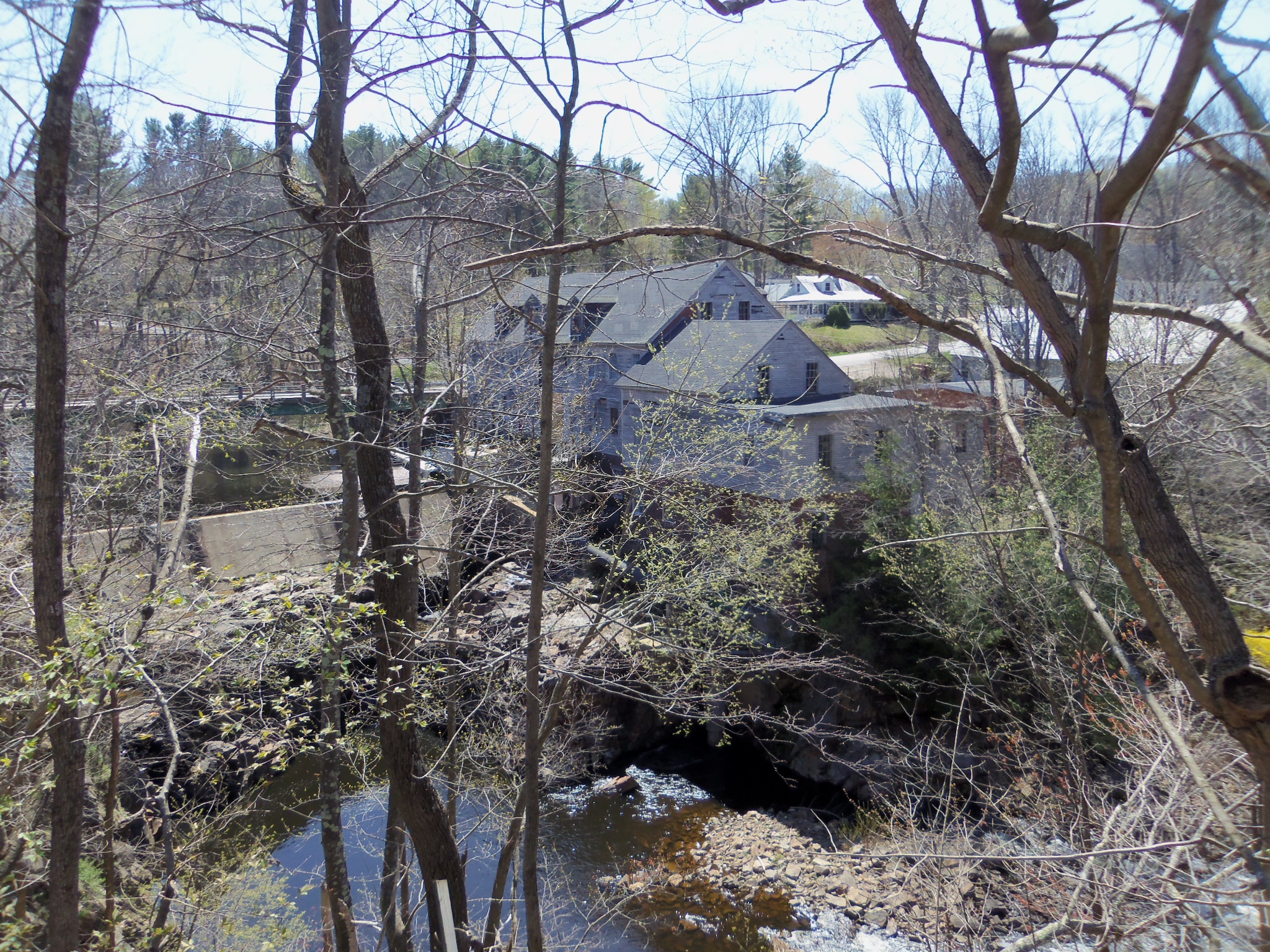
Streams that could be harnessed for water power were prized in earlier periods of American history, perhaps nowhere more than in New England. Here are views of a mill on the Great Works River (fittingly named by Quakers) in South Berwick, Maine.

The leafing trees will soon obstruct this view of the mill perched on the edge of the falling water.
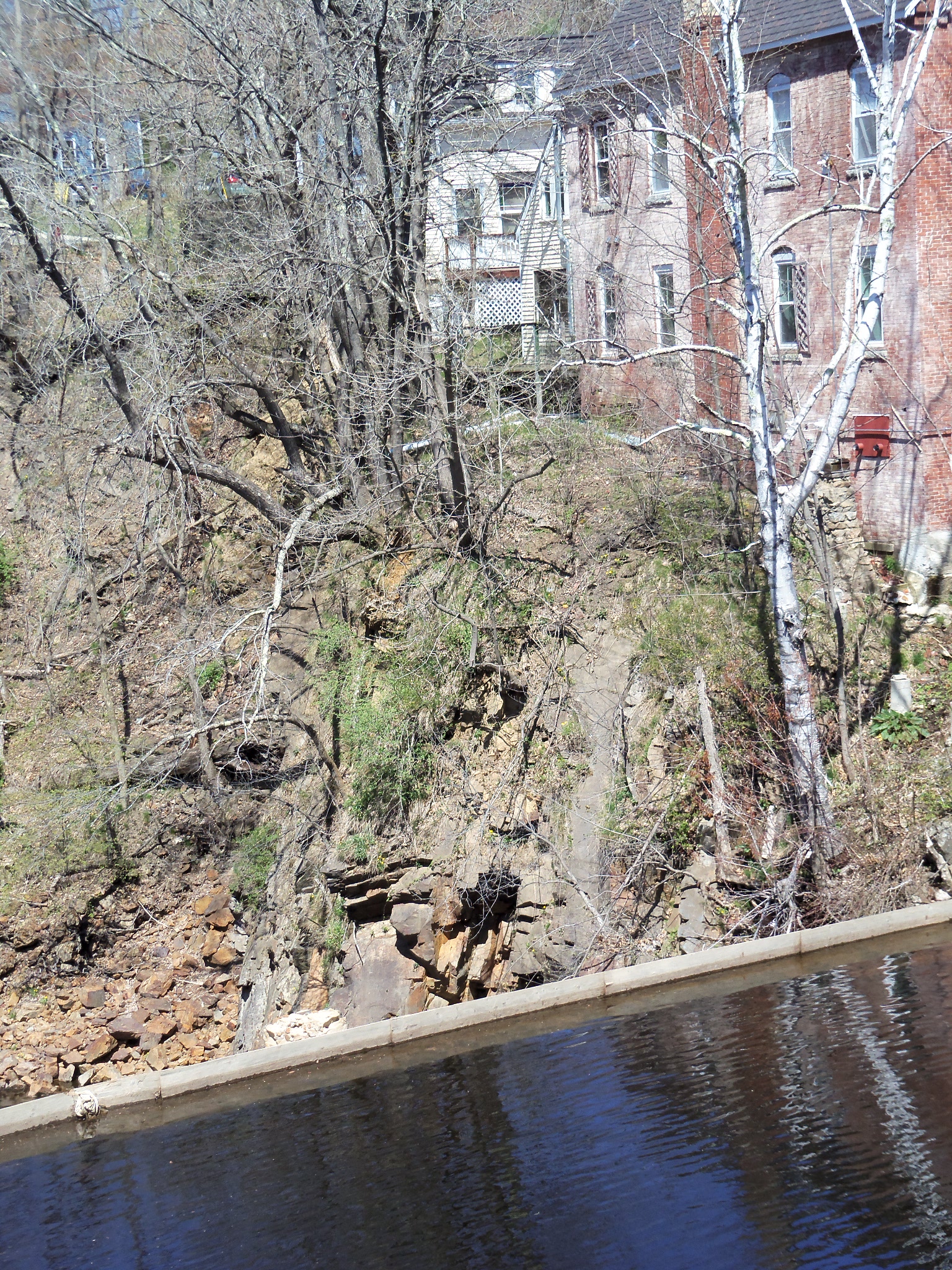
Houses, too, perch at the edge of the drop-off.

HOW DID THEY AFFORD IT?

Viewing several documentaries on the writing life in Manhattan in the 1950s leaves me wondering just how anyone could afford it. Yes, the world was quite different then and, if we can believe their arguments, the written word was king the way it would no longer be by the late ’60s.

Still, it’s hard for me to believe that writing would have paid that much more in the era than it did when I entered the profession. How many plum magazine assignments were there, anyway? Or how many lucrative book advances?

The argument that rents were low, especially in Greenwich Village, is hard to believe for anyone who tried to find a decent place upstate in the early ’70s, as I did. Even for a full-time journalist working for Gannett, the best the pay would cover was a slum where a heavy rain would leak on my typewriter.

And that was without the heavy drinking that we’re told was required of the New York literary set, as well as the psychotherapy, sometimes daily. Plus the heavy smoking. Did I add, all the men wore suits and ties. (And all of the writers and editors, it was emphasized, were males. Women were employed as “fact checkers.”)

Still, when I run the numbers, they don’t add up. Can anyone tell me what I’m missing?


FORSYTHIAS

Spring yellow, for Easter. I cut branches of forsythia, bring them indoors, find an appropriate vase with water, if Easter’s falling early. And then they open, with a profusion of yellow. Sunshine.

Some, soon adorned with suspended eggs.

Happy Easter!
Happy Easter!

SPIRITUAL ENCOUNTERS FROM THE HIPPIE ERA

Nowhere do we see a bigger before-and-after contrast of the hippie impact than when looking at mainstream religion in America.

The idealized smiling family of father and sons in suits and ties and mother and daughters in their hats, dresses, and heels – maybe even with gloves – was once a common image with the church and steeple in the background. But that has become a rarity, and even at funerals and weddings the dress is likely to be casual. Intact families are a minority – weekends are often custody matters – and going to church or temple is a low priority.

Before we blame it all on hippies, we need to look at other influences from recent decades, including the elimination of blue laws, and the expansion of weekend job demands and children’s soccer leagues and the like.

Still, I see a few glimmers where the hunger many hippies felt for a spiritual connection has taken hold.

First is the practice of meditation, which is no longer considered exotic. Even health providers are urging people to turn to it daily, maybe not as a religious pursuit but at least for letting go of some of the daily stress.

Second, yoga studios are everywhere. It may not be with the strong spiritual teaching I feel is essential, but it is another way of opening ourselves to inner awareness and peace.

Third is a recognition of the feminine side of the holy, including the Jewish and Christian traditions. For that matter, think of all the women pastors and rabbis now found across the continent. Others will point to Native American, Wiccan, and other teachings with feminine components that now proliferate.

Fourth is a sense that faith is not an obligation, to be performed as a social requirement, but rather a relationship that includes hands-on, sensory experience. As the axiom went, “If it feels good, do it,” extends to religion this way.

As a fifth facet, I’ll point to outdoors encounters with their Transcendentalist streak. God, as you’ll be reminded, can be felt keenly when you’re close to nature.

Look closely and you can see the hippie influence working. There’s a desire for community and caring, on one hand. And the mega-churches with their rock-concert emotions, on the other, as well as the praise songs with their repetitions function more like Hindu chanting (kirtan) than the motets and hymns of Christian tradition.

But there are also examples of shoots gone astray. I keep thinking of Jim Jones’ Peoples Temple and its cyanide-laced Kool-Aid, especially.

As we kept watch in the ashram, the warning was this: “You’re on a false trip.” No matter how exciting it might have felt at the moment, there was always the danger of ego-based excitement rather than a deepening surrender to the Holy One.

For me, then, the most crucial part of the legacy is in having a circle of others committed to the practice, to encourage one another and keep each of us on course, as best we can. This form of discipleship is rather communal, actually – and far from what I saw growing up in the pastor-and-sheep model.

So what are your spiritual encounters these days? And how’s the “inner hippie” responding?

CULTURE SHOCK

It had been ages since I’d gone to the cinema multiplex – you know, the kind in the vast parking lot beside the mall. Usually, when we go out for a movie, it’s an art house in Concord or a volunteer-run series at the Music Hall in downtown Portsmouth.

But Wes Anderson’s latest, The Grand Budapest Hotel, was showing, and we figured we’d better make it there fast. No telling how quickly anything that quirky, formalistic, and savvy would be playing. (As we juggled our schedules, we realized it would have to be Monday night, overriding another activity on my itinerary – as we discovered, if you’re going to hit the big-box of showrooms, that’s the night to do it. We practically had the rectangular cavern to ourselves.)

I’ll leave it to others to lavish praise on the witty plotting that continually turned in unpredictable yet seemingly inevitable developments; the impressive casting and stylized acting; the precise cinematography; or the marvelous interweaving of actual sites in Germany (the hotel interior was actually the atrium of a defunct department store), miniature models of varied scales, and special effects to create a sense of fantastic and delightful artificiality. Anderson, as his fans know, is a moviemaking genius with a voice and vision all his own. (For one engaging detailed look at the roots of the story, click here.)

For me, though, the outing also invoked a series of culture shocks. Now that I’m “retired,” income’s tight, I’ll admit. I’m spending much less than I did before, and gasoline’s toward the top of my out-of-pocket budget. So the current ticket price (go ahead and laugh, you debonair rounders, when I tell you it was $11 apiece for three) made me gasp silently. (I know a good Greek restaurant where we could have dined out for that.) (I’m I really turning into this?)

From my end, it’s hard to take the very interior and decor of consumer society reflected in these big-chain outlets. It all feels plastic, cake-frosted, impermanent, unnatural. No one would want to linger in the vast lobby (what’s the point, anyway?), and no matter how plush, the showing rooms are – well, showing room sounds like something you’d find in a funeral home, which may be a good parallel, except that in much of the country, the mortuaries are usually in some amazing Victorian mansions. Nothing cookie-cutter about them, unlike these concealed warrens. None of this matches what I consider a theater or concert hall or even a house of worship, the kinds of places I prefer to assemble with others.

The third shock came in viewing the trailers and commercials. I’m still offended to be bombarded with big-screen ads after paying what I consider to be inflated ticket prices, after all, but to be hit twice with a promotion for a new computer game was especially egregious, especially with its pseudo-documentary interviews with its “creators,” a handful of pretentious nerds claiming social value for violent nihilism. I’m sorry, their world vision leads nowhere but destruction.

Actually, it was the amplified violence repeated in the trailers as well that most aggravates me. What in the American psyche so fosters terrorism of this scale? What justifies the reveling in gore for so many (and at such a price, even before we get to the price on our psyche)? Here’s the road that deserves a sermon of hellfire and brimstone, indeed. Wake up, folks, will you?

No wonder I prefer intimate, small-scale, gentle, playful, European or indie productions! They, in contrast, have soul and reality.

Anderson, I must confess, goes well beyond the small-scale criterion, but he earns the right to do so. And he’s generous to those who contribute to the effort, from the visual artists to the payroll accountants. One of the things that kept going through my mind as we were watching, actually, was an awareness of the lavish investment he was expending in the process and the question of whether he’d ever make it back. Well, maybe it wasn’t any greater than those of the futuristic trailers we’d watched beforehand, but still … Hollywood and Las Vegas have more in common than I’d like.

Maybe their biggest gamble is in making works that demand to be seen on the big screens rather than on our laptops or TVs via Netflix.

If you were a moviemaker or investor, what would you do? Or, as a film buff, what are you doing now?

A MEDITATION, OF SORTS

At the beach the other morning, observing the beauty of the blue surf at low tide on a crystal-clear day, I realized my mind and heart were not in oneness with the postcard view before me. Yes, I was there, but on a mission, and I was all too aware of a desire to be home before my wife left for her afternoon and evening obligations.

My oneness, however, was with the seaweed before me as I put it into buckets and transferred these to black bags in the trunk of my car. The drive home was also a meditation, as was spreading one of the bags over our asparagus bed.

The goal, of course, is to be fully present where I am. Rather than off somewhere far ahead or far behind me.

BIRDS OF OUR YARD

Quaker7 116

feeder, especially:

  • goldfinch
  • purple finch
  • house sparrow
  • black-capped chickadee
  • junco
  • tufted titmouse
  • nuthatch
  • mourning dove
  • pigeon
  • pheasant
  • cardinal
  • blue jay
  • catbird
  • cowbird
  • mockingbird
  • starling
  • purple grackle (such a funny word!)
  • cedar waxwing
  • downy and hairy woodpeckers
  • phoebe
  • pine siskel
  • rufus towhee
  • hummingbird
  • robin (as an afterthought!)
  • blue-gray gnatcatcher
  • Peregrin falcon and/or Cooper’s hawk or sharp-shinned hawk
  • common grackle
  • grosbeak
  • bluebird

report of one wild turkey one November

overhead:

  • geese
  • hawks
  • crow
  • gulls
  • raven
  • bald eagle
  • swallows

*   *   *

someday maybe I’ll know by song
all the birds that stay hidden in our treetops

AT THE FEEDER

I’ve already mentioned my astonishment at the range of wildlife we’ve had at our property inside the city limits. We’ve enhanced that, of course, by keeping our bird feeders up through the year. In fact, they devour much more in warm weather than in the depths of winter.

Watching them along with the garden can provide a marvelous awareness of the changing seasons. Here are some notes I made in the passing:

EVEN IN WINTER GARB NOW EMERGING


LATE SUMMER

already the goldfinches are losing their bright yellow,
shifting over to their “traveling clothes”
cardinal flower still scarlet
the sunflowers nearly past
will we have any pumpkins in this crazy year?

a stream of crows, maybe a hundred, all headed south
(the ten thousand roosting together in a cemetery, how spooky)

admiring the white gull against blue sky
and the black band on its wing
four white droplets fall away and vanish
never seen that before!

today, two large hawks, soaring

*   *   *

and the goldfinches lost their yellow …
how sudden and uniform this molting!
now-dun at the feeder


MIDWINTER

cardinals singing boisterously, 5 a.m.

a raven or two in our yard
regular visitors
under our bird feeder

corn / cracked corn in the mix

poem copyright 2014 by Jnana Hodson

SOUNDS FROM THE HIPPIE ERA

For many, as we’ve already noted, the hippie experience revolved around its music. Just think of Woodstock and the many ways it was the explosion that spread the movement across America and the globe.

Each of us likely has a musician or band we most identify with the era. Maybe it’s tracing the Beatles in their evolution to “Lucy in the Sky With Diamonds” and beyond, including the individual paths after the breakup, or the Rolling Stones or, of course, the Grateful Dead.

I think, too, of Crosby, Stills, and Nash whenever I turn to the jam sessions depicted in my Hippie Drum novel.

Personally, it’s Sly and the Family Stone, Jethro Tull, and the Incredible String Band who most embody the hippie sound in my ear. Maybe with Leonard Cohen, James Taylor, and Leo Kotke or Leon Redbone thrown in. Whatever happened to those folks around me who introduced these musicians, anyway?

Whether you were there or came along much later, there are probably a few favorites of your own. Were they at Woodstock? Did anyone else even know of them? What memories do they stir up? Please fire away in the comments section here!

I’m hoping we got that list of top musicians started yesterday. But there’s more than a list to consider. Get busy. Fire away. And we’ll listen.