Frankly, I can do without all of the secular holiday music, or at least most of it. I want something less contrived and commercial. Even Tchaikovsky’s Nutcracker score wears thin.
I’m not entirely insensitive, though. Here are ten I enjoy singing, especially in a choir.
~*~
People, Look East: this 1928 Advent carol by Eleanor Farjeon is a joyous accompaniment when making preparations ahead of Christmas.
In the Bleak Midwinter: I want to think of this as a plaintive folksong, but the words are by Christina Rossetti and the music’s by English master Gustav Holst. It catches the blue side of the approaching winter, but also the hope and comfort to be found therein.
Once in Royal David’s City: If you can, go for the fully celebrative midnight mass with a full pipe organ and all five verses sung in the Anglican style that alternates soft and loud.
There Are Angels Hovering Round: It’s an old call-and-response hymn that seems to have hundreds of verses, if you want to keep going. There’s no escaping the sense of togetherness when you’re singing.
Fairest and Brightest (Star of the East): I first heard this in a recording by Kentucky folksinger Jean Ritchie, but it also works in formal arrangements. The text is a protest song befitting the suffering classes of the story.
Nouvelle Agreable: by Swiss composer Jean-Georges Nageli, the bouncy music almost sounds like Mozart though even Native Americans near the Arctic will sing and dance to it, too. (Check it out on YouTube.)
La Valse Cadienne de Noel: words and music by Jeannette V. Aguillard. What, you don’t waltz during the Twelve Days of Christmas?
Traveler’s Carol: A traditional Catalan carol of coming together for the holiday. We use English by Susan Cooper in an arrangement by George Emlen.
The Coventry Carol: a haunting sense of Herod’s slaughter of the innocents and of the crucifixion to come infuse this lullaby.
The Old Year is Dying: a cheerful Welsh piece to welcome the New Year. Again, New Year’s Day falls in the Twelve Days.
Remarriage after years of wandering. Not that I’m anywhere near a mastery of intimacy yet.
The novels and poems. They really are a record of my pathway to here, as well as my deepening skills in the craft of writing.
A week on the Appalachian Trail. I was 12 and survived under a heavy backpack, unlike the lightweight gear available these days.
Making it to retirement in a shrinking profession.
Becoming a Friend, building on my ashram experience.
Working with future Nobel laureate Elinor Ostrom.
Landing a job in the Pacific Northwest. I got to explore a dream landscape, including the trek to Camp Muir on Rainier and the mountain’s ice caves in the mouth of a glacier.
Singing in an extraordinary choir. There were times in rehearsal where just listening to the others would blow me away. Public performances were always a revelation.
Genealogy, connecting my line back to North Carolina, initially, and then all the way back to 1500s Cumbria, England.
Blogging. It’s simply been personally satisfying. I never expected to be communicating with readers on six continents.
~*~
But who am I to say? What are you especially proud of in your own life?
If you’re a writer, you no doubt know the dictum, “Write about what you know.” It remains sound advice. Another side, though, is equally valid — write about what you don’t know. It’s a means of exploration and discovery.
What’s Left takes that approach more than any of my earlier works. As an 11-year old, Cassia’s living in a financially secure extended family quite unlike any I’ve known intimately. She suffers a tragedy that prompts the action of the novel, again quite different from my own experience. Cassia tells most of the story in her teen years as she investigates the central questions in her life.
For me, this also required constructing a back story beginning with her great-grandparents and moving to the present. What do I know about running a restaurant, managing a family business, being Greek-American or Greek Orthodox, for that matter?
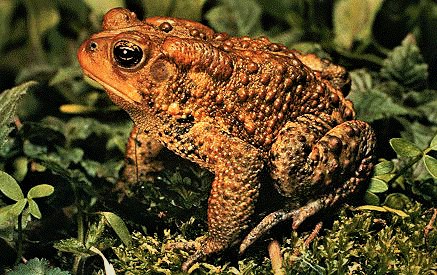
Well, as she advised me (and you readers) at one point, “You better be good to toads.”
I simply recorded what she dictated to me.
Read the book and you’ll see why.
~*~
I thought about “correcting” that to “You better be kind to toads,” but my sense is that it’s closer to what an 11- or 12-year-old may say under the circumstances.
To be honest, I don’t remember much from when I was that age. There may be good reasons I keep blotting it out.
We’re reflecting on so many people we encounter, in person and their stories as well as in the news, and so often there’s a kind of lunacy involved. That, or plain tragic fate. I wouldn’t even call it bad luck.
Makes us question if anyone’s normal, whatever that is, or makes us see our own irrational failings and emotional struggles as nothing in comparison. (Yes, we still want to be better than those poor unfortunates.) As for paying the bills and that sort of thing – getting to medium income would be nice – though even that is beyond the range of possibility for many.
Lately, in revisiting the program booklets of so many musical performances I’ve attended over the years, I’ve been wondering whatever happened to so much of the rising talent I heard – the soloists or opera singers who never made it to the top, and that’s just one front.
Authors and journalists, too, as the written word has receded from the public spotlight. (No, Fox News anchors are not journalists, and that’s part of the problem.)
Makes me wonder if I’ve been looking at the whole world wrong. Maybe we should begin with an assumption of insanity somewhere in every psyche and work from there. Maybe that was the best part of the hippie outbreak, letting that side somehow out of the box. Dunno, but it was lively.
Of course, it also means looking into the dark side of life, if it’s possible to do so and not become engulfed in evil. That part’s scary.
And here we are, wishing everyone Merry Christmas.
Working on my novel What’s Left, had me exploring unfamiliar terrain when it comes to writing itself. Here I was, after a lifetime in newspaper journalism and a shelf of experimental novels and volumes of poetry, now drafting and revising a new work that was unlike anything I’d done before.
The details, for the most part, felt right, as did the structure. I’d eased into a voice in which Cassia could relate her progress, with the verb tenses of past events repeatedly changing back to the present, the way people do in speaking. The opening pages and final chapters actually excited me. But something bogged down along the way in-between. Not that it wasn’t good; it just wasn’t … well, something.
Much of my awareness as a writer has regarded the matter of style. How crisp, sharp, polished, muscular or sensual, even musical are the pages? In literary circles, that would ask just what in particular gives a specific writer a unique signature or sound, but my background originated in my high school years when I discovered the dictates of newspaper style — the strict rules given journalists for uniform spelling, story structure, word choices, and so on, matters that essentially create a uniformity or even anonymity in voices. Anyone want to mention Hemingway at this point?
With What’s Left, though, the word that kept popping up for me was tone. It was somehow just a little off.
Thinking of it in musical terms, I’m always surprised at what happens when our choir changes the tone of a piece by moving it up or down a half-step or so. It becomes brighter or more melancholy, for instance, as well as easier or harder for us to sing, depending on how it presses our vocal ranges. Well, this is also looked at as a matter of pitch. And it can make a world of difference.
With my novel, I slowly realized I didn’t want it to sound too much like a novel — I wanted it to be more an overheard conversation. As I also found, that can be tricky when we’re looking at a stack of old photos or family history.
~*~
In the family, Cassia’s great-grandfather Ilias would have known food like this. A plate of cooked snails with tomato in Crete, Greece. Served in the town Agia Galini. Photo by Helentr via Wikimedia Commons.
~*~
Now that the novel’s finished, I’m reflecting once more on the basic of tone. One definition calls it the attitude of a writer toward a subject or audience, and I’m seeing how it’s been both in my case. Over the course of the revisions, the subject mutated from her father to his photographs and, finally, to the experiences of Cassia herself. In addition, her position shifted from her telling of looking back on her discoveries to having her tell of them as they occurred — in effect moving the center of gravity of the story well into her early teens. That, in turn, changed my attitude toward the audience.
Tone, as the definition continues, can be formal, informal, serious, comic, sarcastic, sad, and cheerful, among many other outlooks. Well, where her voice got younger, I did find her bursting into outrageous, delightfully irrational lines that have become some of my favorites.
My thinking about tone was also stimulated by things my ex-wife, a painter, had repeated about the necessity of tone in visual art — something many artists seem to lose sight of (sorry about the pun) as they work. Here it’s the contrast of lightness and darkness, in color as well as black and white — highlights and shadows. Squint your eyes and see if everything blurs into one. It’s still an important parallel to the written word.
So in my novel the tone would need to be colloquial. In the draft and early revisions, Cassia’s mostly the reader. But in the final draft, it’s largely her father. My attitude toward the subject has definitely changed, as has hers.
There’s also the attitude toward details. In fiction, to establish the contrast of lightness and darkness, it helps to keep many of these suggestive, open to the reader’s imagination — unlike the specifics demanded in journalism. Think of having shadowy areas where things can move about in the background without interrupting the action at hand.
In another shift, as she began voicing questions in place of flat-out statements, the reader just might start arguing with Cassia (not me!) — or even to say to herself, “I remember something similar” or “I’m glad that’s not how it happened with us.”
~*~
Since her family’s involved in the restaurant business, we can change our perspective slightly. Finding the right tone is something like deciding what kind of meal you’ll sit down to. A picnic, for example, is quite different from one with white linen on the table or from a quick lunch of burgers and fries.
As for something at home? It helps to know who’s coming.
Do you ever have the feeling when you’re reading or listening to certain discussions that you have little idea what’s going on?
The kind that hinge on knowing certain figures being referenced, for starters?
I could point to overhearing the lifeguards gossiping about their plans for the weekend or last Friday’s party, or even some of the slang they’re using. Fair enough.
These days, now that I’ve been out of the news business nearly eight years, it can happen even when people are discussing political developments or pop culture celebrities. Yes, I’ve curtailed my awareness there – too many other things to work on.
With other people, I’ve commonly missed social cues, leading to awkward situations or much worse. Add to that my lack of hands-on ability in home repairs and other domestic necessities, even before we get to high tech or digital gaming.
And trying to remember people’s names and faces has always been a challenge.
Oh, my, this confession hurts – but I have witnesses. And it’s not even where I thought this post would begin.
Look, I’ve been considered a rather intelligent guy all my life, one with a broad range of inquiry of an interdisciplinary type. Something of a geek, actually, who loves classical music and opera and the great outdoors but labors as a wordsmith.
But here’s where the twist kicks in.
Too often when I’m reading an article in, say, the New York Review of Books, I’m feeling flummoxed. No, I haven’t read most of the books or even authors being discussed, the subtleties of the argument are eluding me, I have no background on the time or place or conflicts under consideration. And they’re being raised like it’s something every real thinker should already know. Yipes!
It’s happening again as I read a collection of conversations and correspondence between Gary Snyder and Julia Martin. I get the mentions of other poets, yes, though some of the talk gets pretty technical. But when they wander off into Buddhism, it goes way beyond my many readings, and then there’s a whole library of ecological and goddess philosophy volumes they invoke, all unknown to me.
Once again, I’m feeling stupid. Not just humbled but speechless.
Perhaps I could turn to my beloved musical experiences, but even there, I’m a rank amateur. Yes, I often baffle those around me when I mention a certain composer or performer, but put me in a circle of real musicians, and I’m again overwhelmed. I can’t even tell you what key a piece is in when I look at a score. Just wait till they get really technical.
Well, I do have some specialties, beginning with Quaker theology and history, but even there I’m a rank amateur compared to the pros, meaning college professors.
The fact remains that I believe these things are important, even if I can’t remember details like the title of a poem I truly enjoyed or the import of particular yoga luminaries.
Maybe in wanting to know it all, at least on some corner of the intellectual frontier, I’m left knowing very little.
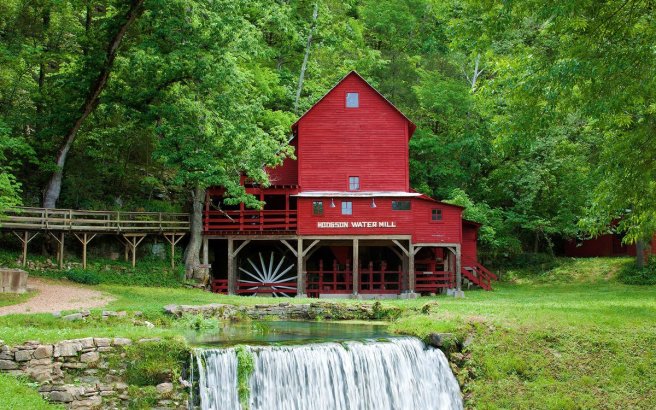
In my novel The Secret Side of Jaya, she encounters an old-fashioned, water-powered gristmill when she and Joshua relocate to the Ozarks.
Turns out that the best-known mill in the Ozarks is named after some of my kinsmen who settled near Sycamore, Missouri.
Here are some facts.
~*~
The Hodgsons were Quaker millers in Guilford County, North Carolina, before heading north in the 1820s. At one time two cousins, both named William, had mills there. The Missouri line descends from one. I descend from the other. (For the family line before that, see my Orphan George blog.)
For a while after leaving the Piedmont region, that line of the family briefly spelled the surname the way I do. Then they reverted to the original, with the “g” in the middle.
A grain mill has graced the site at the foot of a bluff on Bryant Creek, Missouri, since 1837. The current three-story mill was built in 1897 by Alva Hodgson, who mostly worked alone on its construction.
After 1909, Alva imported top-of-the-line French buhrstones from the Pyrenees Mountains and installed a turbine to provide electrical power to light the mill and surrounding buildings. The electricity also ran a half-dozen sewing machines producing overalls in a neighboring general store.
Alva Hodgson also purchased the site of the Dawt Mill near Tecumseh, Arkansas, in 1901 and rebuilt that mill in 1909. Today it continues to grind grain. It’s also a full-time resort with three restaurants, a concert venue, and float trips.
The Hodgson Mill left Hodgson hands in 1927.
Until its purchase by Hudson River Foods in Castleton, New York, last year, the Hodgson label was still a family-owned operation.
At the time of the purchase, the company’s headquarters and production facilities were in Effingham, Illinois. The milling was still done in the Ozark Mountains of Missouri.
In addition to its signature cornmeal and unbleached flour, products include whole wheat pastas, breakfast cereals, bread mixes, pancake mixes, wheat bran, and pure cornstarch.
Principal competitors include Bob’s Red Mill Natural Foods, Nature’s Path Foods, and Spectrum Foods.