Farewell, Dover … in a way

It’s not like I won’t be back. My next book is a unique history of the town’s Quakers, for one thing, and I’ll be promoting it. And I’ll still be connecting with Dover Friends, especially through New England Yearly Meeting. Yes, Downeast Maine is still part of New England, thank God.

Will I miss people? Definitely. Some great neighbors, the Greek Orthodox circle, the lifeguards and fellow swimmers at the city’s indoor pool would be high on that list. My fellow musicians, on the other hand, were down in Boston, and I haven’t seen them since before Covid. Our beloved conductor even stepped down in the face of its digital demands. The local writing circle, meanwhile, adds some valued faces to the list, though I can’t say we were close or even much on the same page. But that’s where I did learn about Smashwords, where all my novels quickly appeared.

Which brings up another point. This new move would be much harder if we were leaving extended family behind or, more crucially, that rare friend who connects intimately on a range of shared interests – those things that fit one’s life mission or identity. For me, that would be a nexus of Quaker spirituality, off-beat literature, classical music, natural wonder and wilderness, back-to-the-earth awareness, even folk dancing. Things like gardening and foody smarts would be more on my wife’s side of the equation.

What, you think there are tons of people who match my varied interests? Surely, you jest.

Death has already taken a toll there, as has spiraling illness, their moving away to a distance, or even insurmountable conflict. But in my new setting, I am meeting some fascinating eccentrics. More later, I’m sure.

I do wish we had more words to describe friendships, though I’m afraid any subtlety would quickly be eroded. The fact is there are few of those soul-mate connections, especially among males of our civilized species. Women seem to be naturally inclined toward that one-special-friend connection, the kind of person you have to phone (or text) every day. Or every-other hour. Not so guys, to our own detriment. Mea culpa.

Let’s also note that Covid precautions have also already detached us. We’re rarely in physical contact, no matter how much Zoom and other platforms allow me to catch up with buddies even when I’m way up Downeast Maine. And, from everything I’m seeing, that’s likely to continue into the foreseeable future.

~*~

My wife and I have both been surprised how quickly I’ve switched into my new center. Once my workstation and files were set up in our new address, that’s where my heart was. Dover is undergoing what I expect to be an amazing rebirth, but I won’t be part of it, and I’m aware of that.

Quite simply, it’s become a great place for me to visit, but no longer home. All of my goods have ether been moved to the new address or are in the storage unit we’ve rented.

In other words, the dream has stepped on.

~*~

As I look back on my years in Dover, I realize I see I hadn’t spent as much time in neighboring Portsmouth as I’d expected or at the University of New Hampshire just a town away. Even once I’d retired from the newsroom, I was largely hunkered down in writing, revising, and publishing. So much for the writer’s life!

I can say I feel comfortable in leaving Friends Meeting in good hands and wish the best for the new owners of our old house, barn, and precious gardens.

I can say Dover’s been the best years of my life. So far. You will be seeing more from that through the coming year, here at the barn.

What would you miss most if you uprooted?
 

Reasons I still love type on paper

Well, compared to ebooks and all this digital reading.

  1. I can caress it. Yes, even the texture and weight of the paper itself.
  2. Admire the spine on a shelf.
  3. Frame a page and mount it on a wall. (I’m thinking of a broadside, especially.)
  4. There’s marbling in some old editions, and end-papers. Nothing like that in ebooks.
  5. Underline and make notes as I read, enhancing the engagement.
  6. A sense of timelessness. Unlike a computer crash.
  7. Open an old book and there’s a special aroma. Hopefully not mold.
  8. Reading one works better at the beach, in full sunlight.
  9. Easier to find errors when correcting galleys or drafts.
  10. It really does feel finished.

Before naming the icon

drawing on banked experience and earnings, I deplete the rotting woodpile of any past, my flaking barn filled with scorched ore, my private cemetery of flickering weeds all ablaze banked coals blown to life, all reduced to uncommon metal ingots of no commercial value after which I’ll no longer be gnawing lawn furniture out on the road but holed up, frugally assembling and polishing double-edged maps and chronographs to fuel industry with some fork into prophecy or political revolution or Elysium or celebrity-bashing iconoclasm, I won’t be spooked by the alchemy of regret except, maybe children

Ten clerks of Dover Friends Meeting since I’ve been in New Hampshire … it’s a very hard (volunteer) job

In local Quaker congregation, the head honcho is called a clerk, an important (unpaid) job even when there’s a pastor. (A whole other discussion.)

In a traditional body that observes “unprogrammed” worship like ours, the role carries the added burden of being the official spokesperson for all and the presumed face and voice of the Meeting. (Not that everyone will agree. Not in our pluralistic age. Beware of the back-sniping.)

The position rotates among members deemed worthy, and I have served five years, plus a few others as the deputy recording clerk and also as clerk of our regional umbrella, so I’ve done more than a little. But I’m far from the only one. Nor am I whining.

Here are ten others from the three-plus decades I’ve been in New England and active in Dover Friends Meeting.

  1. Silas Weeks. Replanted from an old Long Island Quaker family and long the steady hand in rebuilding our Meeting. Quite a Character.
  2. Pat Gildea. Quite an administrator. She loved having lunch to discuss things. After marrying, she scurried to England and new challenges. Whew!
  3. Barbara Sturrock. A beloved elder. Now in a retirement center up the coast.
  4. Charolotte Fardelmann. Grounded in her heart. In a retirement center closer by.
  5. Sara Hubner. Now much appreciated in her demanding, detailed work in the yearly meeting office. Membership moved to Gonic Friends up the road. Board games, anyone?
  6. Connie Weeks. Silas’s wife and then widow.
  7. Chip Neal. A New Hampshire public television personality and producer with a gentle sense of wonder who has since moved under the shadow of Parkinson’s, yet still showing flashes of wonder.
  8. Bill Gallot. Deceased all too early and dearly missed.
  9. Jean Blickensderfer. Also deceased and ditto. I never would have made it through my terms in the role if it weren’t for her support, eventually recognized as assistant clerk.
  10. Chuck Cox. Organic farmer. It helps, especially where nurture and patience and more patience are needed. I always lean on his warm smile and twinkling eyes.

~*~

As you can see, it’s an equal-opportunity job gratefully sifted by the Nominating Committee. Tell us about similar public servants you’ve known.


Family honor means something

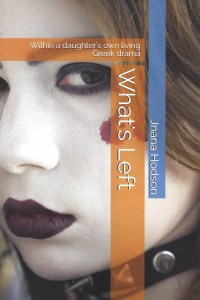
In my novel What’s Left the family-owned restaurant is a local institution, one set at the edge of campus even before her grandparents and their siblings took over and made it distinctly their own. Everybody in town seems to know them.

Have you ever been recognized because of something your parents or grandparents did?

~*~

My novel’s available at the Apple Store, Barnes & Noble’s Nook, Scribd, Smashwords, Sony’s Kobo, and other fine ebook distributors and at Amazon in both Kindle and paperback.

The paperback cover …

Retreat and regrouping led me into poetry and fiction

There was no Nita for me during college or immediately after. Had she existed, my route would have been much less conflicted. Somehow, though, I managed to figure out enough on my own, often through seemingly chance introductions, to survive in an alien milieu.

After college I landed in a place where I knew nobody except a few people from my previous summer as a newspaper copy desk intern. I was a Midwesterner trying to comprehend the East Coast, a hippie working in a low-paid newsroom. Single and lonely.

The locale I create in Pit-a-Pat High Jinks is situated vaguely somewhere north of New York City. It could be in the Berkshires of Massachusetts or in southern Vermont or places like Oneonta or Cortland, New York, perhaps even Utica.

The paperback cover …

I paint it as smaller than Binghamton, the strange place where I was living and working. The Tri-Cities, as it was referred to locally, was flailing to recover from collapsing industry, especially its shoe-manufacturing ruins, as well as a deteriorating but expensive housing supply. The new state university attracted socially awkward straight-A geeks and nerds. My first year I resided in a neighborhood that was Italian by day and Black, as in ghetto, by night. And then there was the summer and autumn on the farm we shared up in the hills. My work schedule was crazy like Kenzie’s, except for the three-day weekend once a month, which I really wish had been in place – I took that from a newspaper where I worked a dozen years later.

Strangely, I also soon came to love the region. There’s something distinctive about Upstate New York, with its hills and forests and lakes, and almost all of my friends were from The City, meaning the Big Apple aka Gotham. Few of them confined their definition to Manhattan, I should note. Through them I got to know Brooklyn, the Queens, Staten Island, Long Island, and northern suburbs as much as the sliver between the Hudson and East rivers.

I initially addressed this fertile period in my life as two parallel novels – one where the hippie boy largely fails to connect with free love; the other, X rated, where his fantasies come to fruition. Either way, the plots arrived at the same finale. Later, in light of Cassia’s perspectives in What’s Left as well as a few of the early reviews, I returned to these two versions and blended them into a much more cohesive, and I hope more engaging tale, “Pit-a-Pat High Jinks.” Well, that is one of the advantages of ebook editions – you can always update them.

There’s still so much that baffles me about the time and place. How one housemate would come home with a different lover each night, all of them gorgeous to my famished gaze. What was his trick, other than that twinkle in his eye?

In the revised rendering, Kenzie encounters a sequence of hippie chicks, goddesses, lovers, each of them leading him to fresh understandings. Still, I’m left wondering how each of these interludes would sound from the woman’s point of view. I suspect Kenzie wouldn’t fare so well.

Also, for me, it was yoga rather than Buddhism as a new spiritual practice, but that’s told in Yoga Bootcamp.

More lingering are the questions of what’s happened to so many I’ve met in the broader Bohemian spectrum. I can’t even remember many of their names, but I have learned that some went on to become OBGYN physicians, United Way executives, federal attorneys, United Nations officials, photocopier technicians. Hardly what you’d expect of hippies, right?

Well, I’ve tried to record and reflect on what happened, seen mostly on the run. Can you experience something – live it – and still step back enough to record it? In my novels, that’s what the photographer tries to do, similar in its own way to my own struggle. And now you can see how much that role’s changed, too, in the shift from film and darkrooms to the digital ease of today.

Ways reading an ebook feels different from a paper edition

  1. No pencil or highlighter. You type notes or make marks in a side column instead.
  2. No flipping ahead. You scroll or use the slider at the bottom of the screen.
  3. But it also means you have less of a feel for the size of the text ahead – whether this is going to be a novella or an epic.
  4. You’re less likely to lose your place if the pages slip free of your finger.
  5. Search function for a particular word or phrase. Now this is really useful!
  6. Easier to transport and store. You can have hundreds at hand on your reader, tablet, or laptop, where they add nothing to the weight of the device.
  7. You can discover more unknown writers.
  8. Your hands can be free. You need them only to tap to the next page or keyboard a note. Or, if you’re like me, there’s no pencil in the hand that isn’t holding the book open.
  9. You’re less likely to read it at the beach, I suppose, because of the glare. But I find the ebook easier to read at a table.
  10. It’s cheaper. Ideally, much cheaper.

Working all hours, for starters

Here’s something I’ve pondered in revising my big novel What’s Left:

Does the restaurant business essentially operate at the fringe of normal society? Or do weird characters naturally gravitate toward jobs there?

If you’ve ever worked in a commercial food operation, what’s you most telling impression?

~*~

What a tradition!