After reviewing old clippings: “How close my writing has come to greatness … or to babble.”
At the RT, how much our photography carried us, especially considering how thin, until the end, our local coverage was – how important our Saturday front-page feature was in setting us apart and giving the staff a fairer schedule. .
Morning on long-distance calls to Bordner, Aldrich, Swaisgood, L. Nighswander.
Other fronts, Russ called back, said Larry Hale expected an “editor’s position” in several weeks … So much confusion, would I really want to go back there?
And the letter from Tacoma, $20,000 arts and entertainment, if they get the opening … What do I make of this? McClatchy upswing versus Gannett versus a fighting crew at the foot of Pike’s Peak?
So what about Colorado?
Imagination still reeling with thoughts of the Rockies. A place to be at peace? Low pay may be an incentive to freelance or grow.
The West may spur a novel. I’m too boxed in here.
On the brink of Colorado. A time of despair, anxiety, and waiting through the layoff.
Early May, Colorado Springs, round-trip ticket, $189.
On flight out: half of southern Indiana is forest. Region defined the sudden shift to farmland where the hills give way to flatness.
Contrasting smoothness of disked fields next to rougher plowed.
Strip-mine lakes outside Terre Haute.
~*~
Colorado Springs Sun: Don’t feel there’s much I can do here – to many “trained incompetencies,” exhausting and routine-work hours. B.B. [the editor who was to hire me] is leaving for Detroit after eight months here.
No local color in the paper. Newsroom looks and smells like RT. Computer (VDT) may help – question is, how much?
Upon seeing first UPI lead, realized how clear, precise, and simple my own style has become. Newspaper work may destroy that – at least, I feel it slipping away.
No sense of nuance, of grace, of individual voice – that is, true style – in this news writing, which exists as stilted and artificial as any literary style. It is divorced from the human voice and from American speech.
Another Far West facet
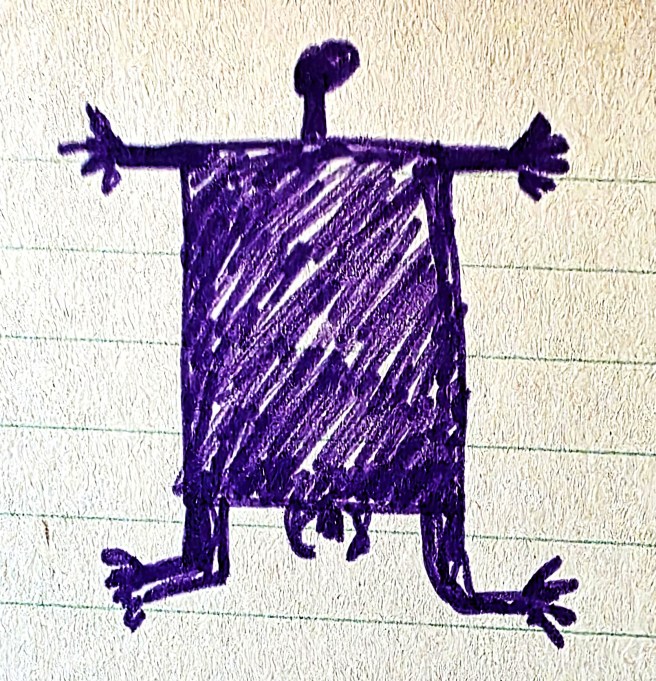
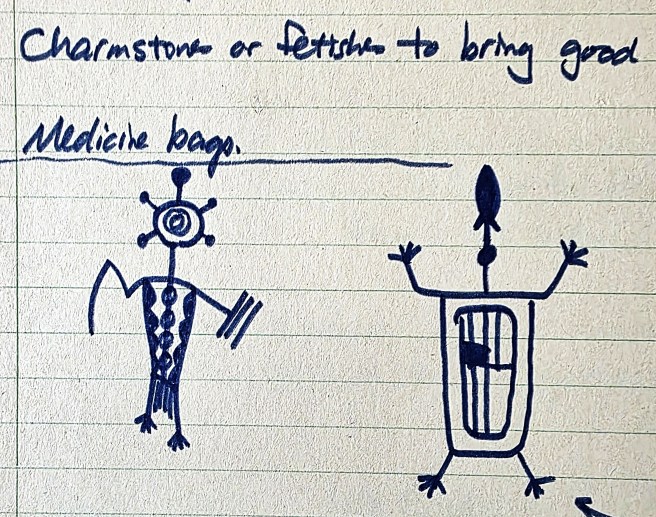
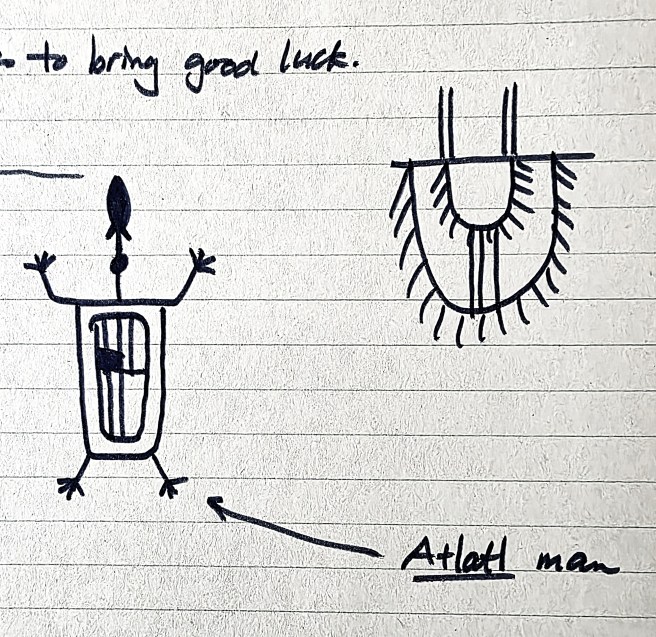
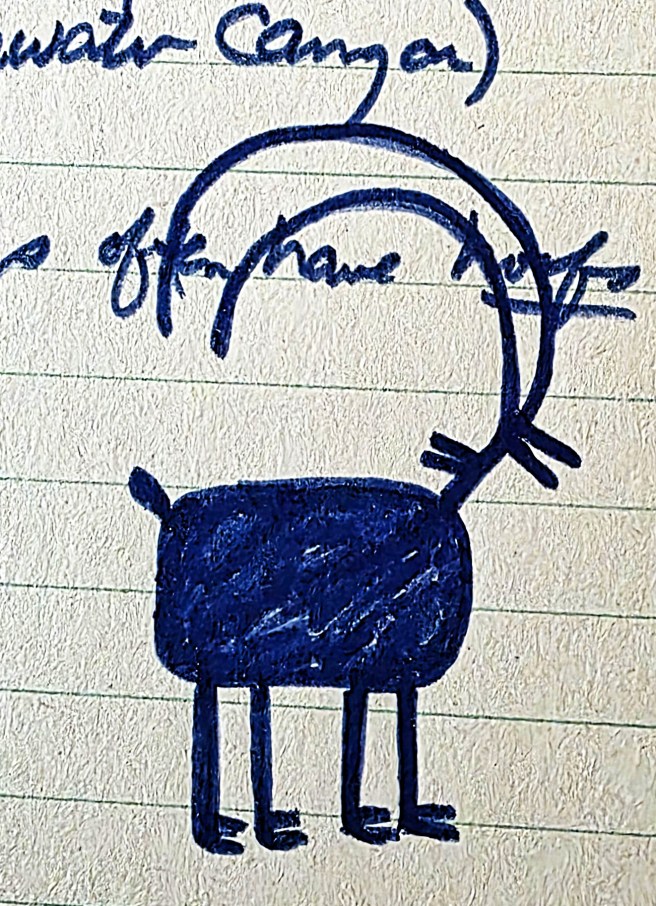
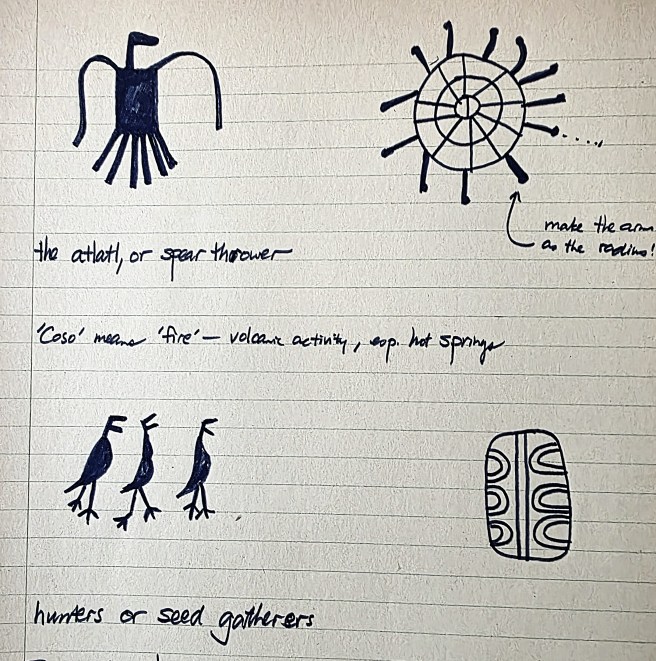
All along during my stint as a research associate, I was reading technical material on Indigenous artwork. Here are some sample entries from my Bloomington journaling.
~*~
Back from the Rockies
Indiana feels too thick, too green and wet in contrast. My sinuses are acting up again. I’m out-of-place in America.
Horoscope says a month or two before big change. We’ll see.
Looking at the cons: long hours (nine to ten hours a day), ending at 2 or 3 am; low pay, publisher interference, no investigative reporting, and someone named Dana …
I’m having to admit that not getting that job was a blessing. I would have been engulfed. The trip was, though, at my own expense, devouring half of our savings.
Just where might I be heading?
Doubts about “where I want to go.” Should we make the plunge into NYC? Find an agent yet? (I’d rather wait two more years.) I feel the necessity of steady income, yet also feel “duty to yourself” calling. Turned down music critic position at Herald Telephone. Hard for me to say No to any job, even with low pay. ($10/review; negotiate on features, say $50/page.) Don’t think I really want newspaper work. That’s hard to admit.
Copy editors are a kind of janitor and paid accordingly. Hence, I should concentrate on power-writing. (Like advertising?)
My own failings coming home as nobody wants to hire me, not yet, free me from the damn suspense/suspension with half of our goods packed in crates and warping corrugated boxes, the general feelings of inutility accented by this ungodly heat and humidity
Late June, returned yesterday from two days [of housesitting] at Dietz’ … and found a letter waiting from Yakima. Very exciting prospect, work split between copy editing and general assignment reporting. A nice balance, good pay, exactly where I’d like to be – the dry side of the mountains. And Kat’s very excited. Hope everything works out. (Received a formal job application to fill out and return.) Getting anxious to get the address situation straightened out and new pieces into the mail. …
Wherever we wind up, I’d like to publish a few chapbooks of my work, for free distribution to friends and critics (and some for sale). Would also like to get a typist to do final drafts of potential freelance pieces. Will need to arrange more office-type space … we need Kat’s extra income …
Already, we’re anticipating spending that extra income … new car, furniture (that’s her idea), new clothes, bigger place, airfares …
A call today from Center for Law and Poverty in Indianapolis, a job I’m not too crazy about but one that might be the springboard for the southern Indiana magazine/tabloid I’ve been pondering.
Other calls to/from Yakima, which sounds better and better but less and less likely, like an impossible dream.
Nancy Neubert saying Yakima is a very nice, good place: agricultural, wealthy, conservative, hydroelectric cheap electricity, good produce abundant and cheap, Spanish and English …
The m.e., there since March, Steve Kent, from Albany, New York, thus appreciated my Binghamton angle. A good phone conversation.
Located Snyder’s lookout towers on the map, though Sourdough was not shown. Some of the other sites he relates, though, were.
Spicer: “West Coast is something nobody with sense would understand.”
Good place to end this journal. 10:20 pm, night of new moon, unseen through the haze
~*~
From Spiralbound Hoosier, with commentary from now.