Sometimes I’m feelin’ funky

You never know what we'll churn up in cleaning a stall

Small sign left outside the Amesbury Quaker meetinghouse:
Nothing can be great
Without first being good.

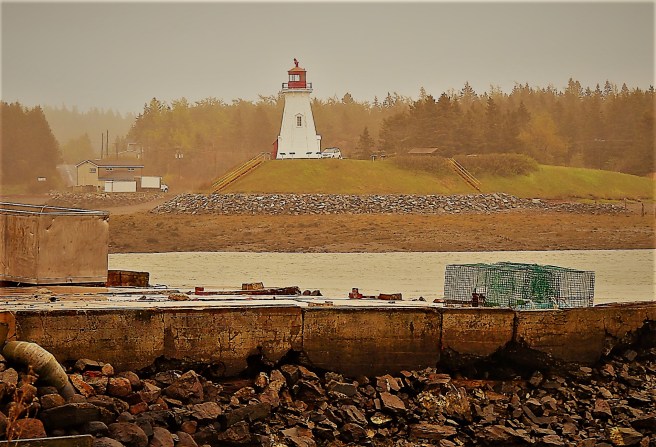
Kittery, Maine, is a few miles downstream from where I live. It’s also across the Piscataqua River from Portsmouth, which is loaded with eateries – maybe as many per capita as Manhattan.
For much of its existence, Kittery has been pretty blue-collar. It’s home to the Portsmouth Naval Shipyard – the U.S. Navy’s oldest continuously operating yard – and now tasked with the upkeep of nuclear submarines. It’s also home to a lot of lobstermen.
When I first came to New Hampshire, the Kittery Grange Hall was the scene of a monthly contradance – both the grange and the event now ancient history.
Oh, yes, and its strip of discount outlet stores along U.S. 1 is a major tourist attraction. Seriously. As is the adjacent sprawling Kittery Trading Post.
But with Portsmouth booming and the cost of its retail space skyrocketing, Kittery has been undergoing a transformation. Nowhere is that more apparent than in Wallingford Square, which used to be a gritty cluster of bars around one of the shipyard’s two gates. Today it’s been rechristened Kittery Foreside and is the center of some enterprising fine dining and food sellers.
Here’s what you’ll find.

~*~
Nearby is the Beach Pea bakery, the best baguettes around, and Loco Coco’s Tacos, with its wonderful fine Mexican cuisine.

While monasteries with wider church support are a longstanding institution in Christian history, independent, self-sustaining faith-based communes have made their mark in America. Unlike a monastery, not all of them were celibate.
Here are ten.
Any you’d add to the list?
Top Ten, Religion, Spirituality, History, Inspiration,
Wendell Berry’s two Muses (Standing by Words – highly recommended – page 204): “There are, it seems, two Muses: the Muse of Inspiration, who gives us inarticulate visions and desires, and the Muse of Realization, who returns again and again to say, ‘It is yet more difficult than you thought.’ This is the muse of form.
“The first muse is the one mainly listened to in a cheap-energy civilization, in which ‘economic health’ depends on the assumption that everything desirable lies within easy reach of anyone. It is the willingness to hear the second muse that keeps us cheerful in our work. To hear only the first is to live in the bitterness of disappointment.”
Here, a different slant on work from an unabashedly Christian poet and essayist. (North Point Press, San Francisco, 1983.)
As Greek Orthodox Christians everywhere sing joyously while waving candles aloft in the darkness before dawn this morning, the hymn continues:
Thanato thanaton patisas,
ke tis tis mnimasin,
zoin xarisamensos.
And in English-speaking places, they alternate that stanza with a translated version before repeating both over and over:
Christ is risen from the tomb
trampling down death by death!
And on those in the tombs, he has granted life!
XRISTOS ANESTIEK!

Through much of my working career, the question lingered: What do I want to be when I grow up?
The answer finally shaped up: Retired!
So it’s hard to think I’ve been retired six years now – make it seven if you include the early buyout that allowed me to work more flexibly in the newsroom for a year.
Frankly, I don’t feel retired – whatever that is. I don’t play golf or spend all day at the beach or play evenings of card games like bridge.
For me, what I wanted was more time to read and write and attend to Quaker matters and be out in the wilderness – that sort of thing. Do what Gary Snyder would call the Real Work.
My wife scoffed when she saw some of my early plans for retirement. Would I devote regular blocks of time to each pursuit? Would I rise at five to meditate and do yoga before moving on poetry or fiction?
Scoff? She was more infuriated that I wasn’t including time for household chores or gardening or togetherness along other kinds. Saw it as being self-centered.
~*~
Suffice it to say those early scheduling ideas are far from what emerged. They didn’t include swimming laps every weekday, thanks to the brilliant Christmas present of an annual indoor pool pass from my elder daughter, who wisely decided I needed more exercise, seconding a motion from my physician.
Nor did they include being performing in incredible choir in Boston, which takes up the better part of a day. Or, more accurately, an afternoon and evening. Never in my wildest dreams did I ever anticipate making music on such a high level.
Nor was blogging on those blueprints. It’s wound up occupying more time than I expected, but it’s also freed me from the submissions process in getting work published – so timewise, I think it’s a bargain. And that includes having my own small-press imprint on my Thistle Finch line here at WordPress.
~*~
I have been able to devote more blocks of time to the fiction, which has been satisfying, but I still feel myself pressed for time when it comes to doing all I want or should.
I’m still trying to make adjustments for the domestic needs, especially now that my wife’s back in the workforce.
The joke is I’m not really retired – I’m just not receiving a paycheck.
In retrospect, I’m surprised by how much writing I actually accomplished in my own time all those years I was employed. It gives me a deep well to draw on.
Across town from this red barn, when I sit in the 250-year-old Quaker meetinghouse, the ancient Regulator clock ticks away. It irritates some worshipers and comforts others.
I know the timepiece wasn’t part of the original décor. Likely arrived a hundred or more years later. The classic Regulator, with its eight-day run on a single winding, came along with the railroads as one way of getting everyone on the same time to match the trains’ timetables. No more guessing, I guess. These days, our instrument gains about eight minutes a day. But it’s also on its last legs … or hands, ahem. The clock repairers have told us that much.
There’s something fitting about an old clock marking time now. Its heartbeat, so rooted in the past, has an air of eternity along with the flash of the passing present.
Hard as it is for me to believe, the Red Barn is entering its eighth year, and each one has been somewhat different. Last year, for instance, the focus shifted to my newly released novel, What’s Left, and some of that emphasis will continue through the year coming. That volume has become central to the series that originally proceeded it, and as a result of recent revisions, those books have now been thoroughly reworked to more fully embody the new perspectives.
As a result, we’ll also be reflecting the releases of two more of those novels this year, plus another thoroughly revised tale involving yoga.
With these publications, I’m feeling the satisfaction of having accomplished a standard I long believed was within my reach. I hope readers will feel similar pleasure in their pages.
~*~
Jnana’s Red Barn is the flagship of my related WordPress blogs, which are also gearing up for the new year.
Thistle/Flinch, my personal small-press operation, will keep the name in its address even as the imprint itself goes to the originally planned Thistle/Finch moniker, after the golden songbird – just for the L of it, as a punster might say. (It might be confusing, I know, but it beats changing the URL altogether.)
Its pace of releases will step up to one a week, including photo albums and printable broadsides.
The new direction will also reissue many of the earlier collections in much shortened, easier-to-handle formats. A full-length collection may be great when you’re buying a paper edition, but it’s just too clumsy, I think, in a PDF file.
Chicken Farmer I Still Love You, meanwhile, will be recasting its Talking Money series, this time keeping each post short, sweet, and more tightly focused for individual reflection. These useful exercises in addressing personal finances are timeless, ready for a new generation to apply their wisdom.
As Light Is Sown will also be in an encore mode as it repeats its Daybook of inspiration that originally ran in 2014.
Take a look at them all!
I hope they add pleasure and value to your new year.
My newest novels are both set in the same college town, but each one focuses on a different locale within it.
Daffodil Uprising takes place largely on the campus, and even when three of the characters move off into a shabby apartment, their focus is on college. It’s an outpost in more ways than one.
What’s Left, in contrast, settles into a neighborhood between the school and the courthouse square. The town and its university aren’t even named in this account. Instead, Cassia’s family’s restaurant is the center of attention, along with their surrounding properties. This story has a strong sense of the town itself, including the river, and the family’s impact on the community.
One thing I’ll confess is that in abstracting the location, I’ve created a place that doesn’t actually exist in the state. There’s nowhere along the Ohio River that’s just an hour from Indianapolis. Consider it as something like the visual tricks Edward Hopper performed in his paintings. Things feel right, despite the realities.
Southern Indiana, with its hills and forests, really is defined in large part by its relationship to the river. I hope I’ve heightened that sense.