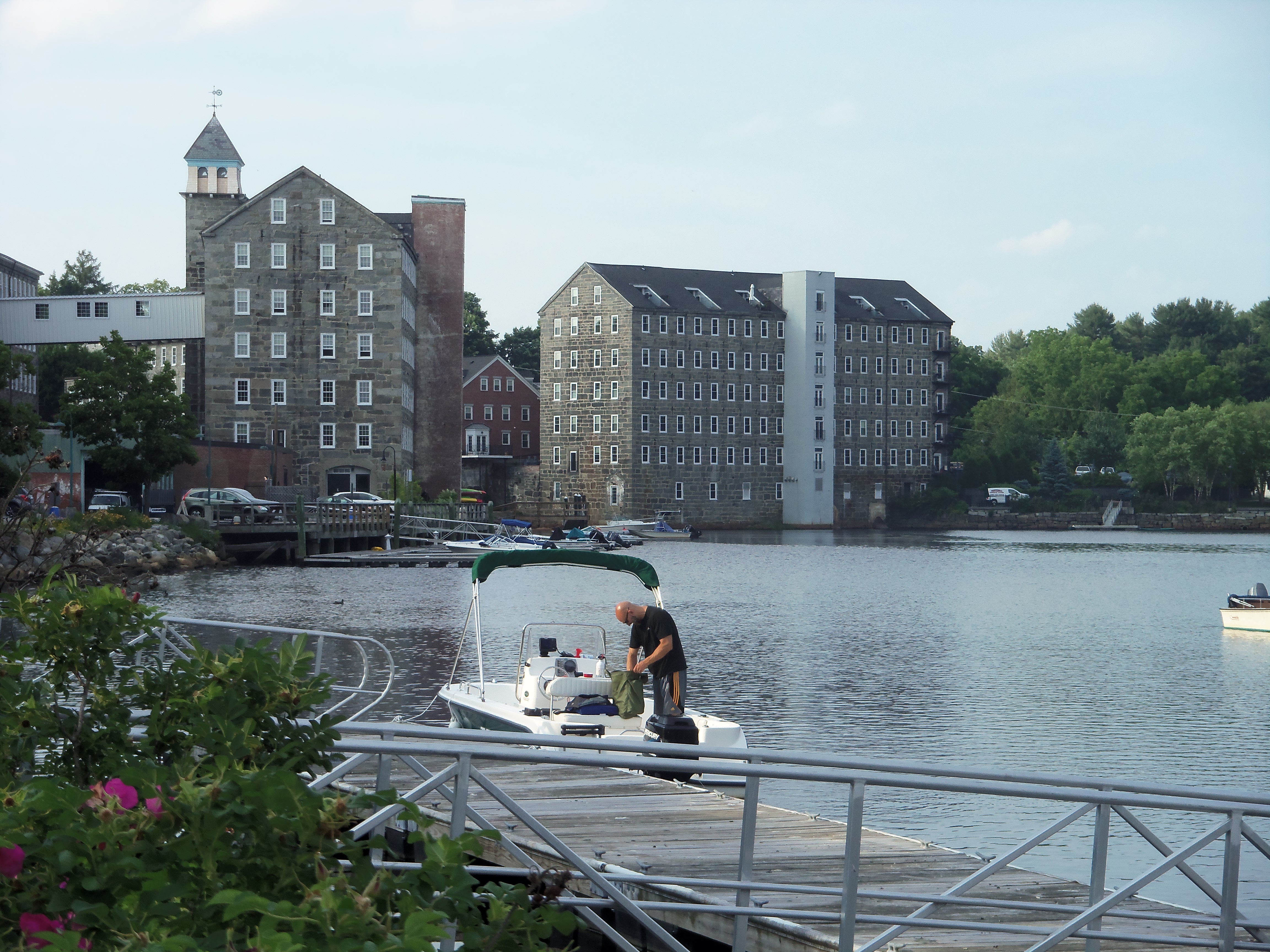
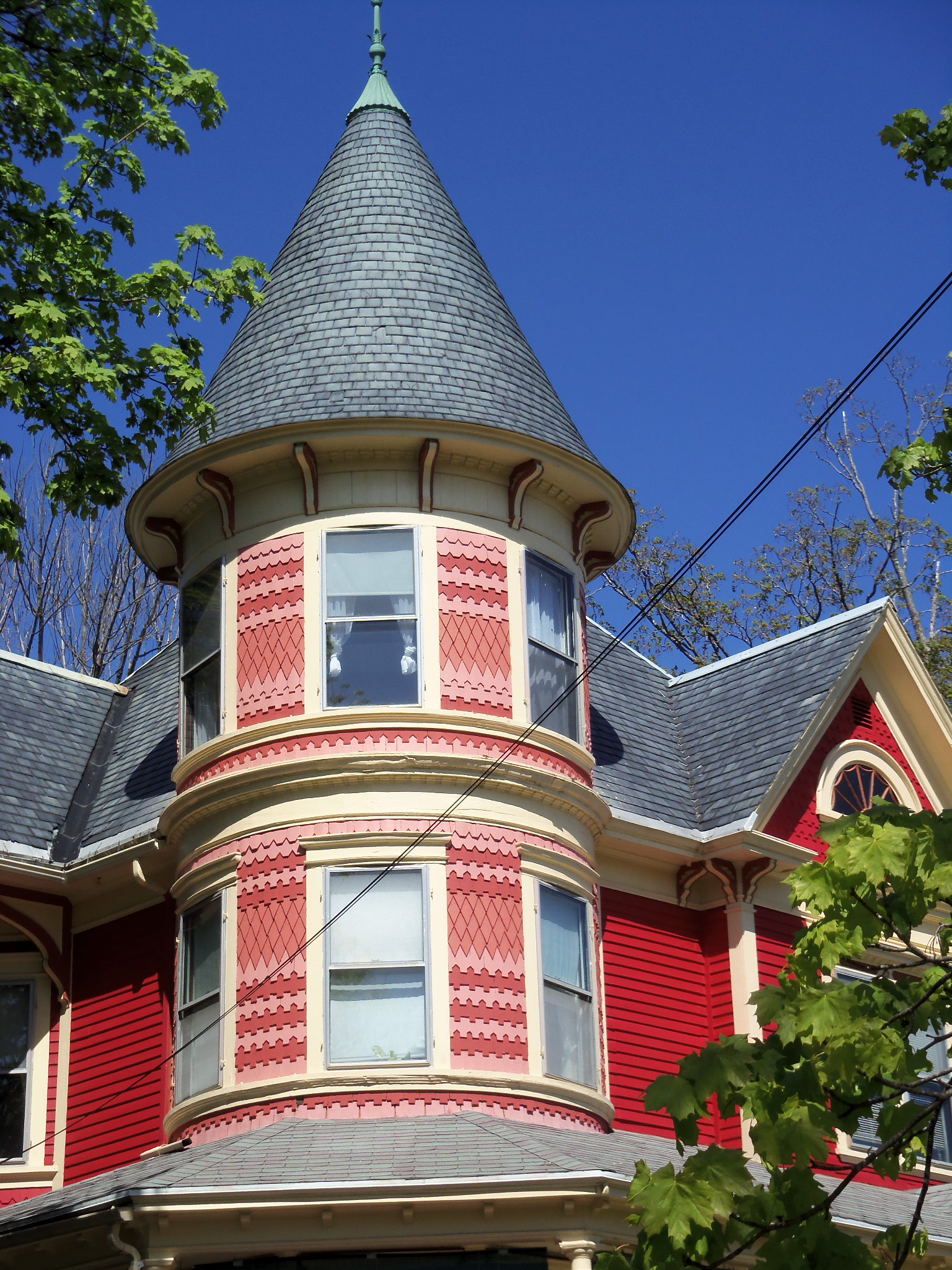
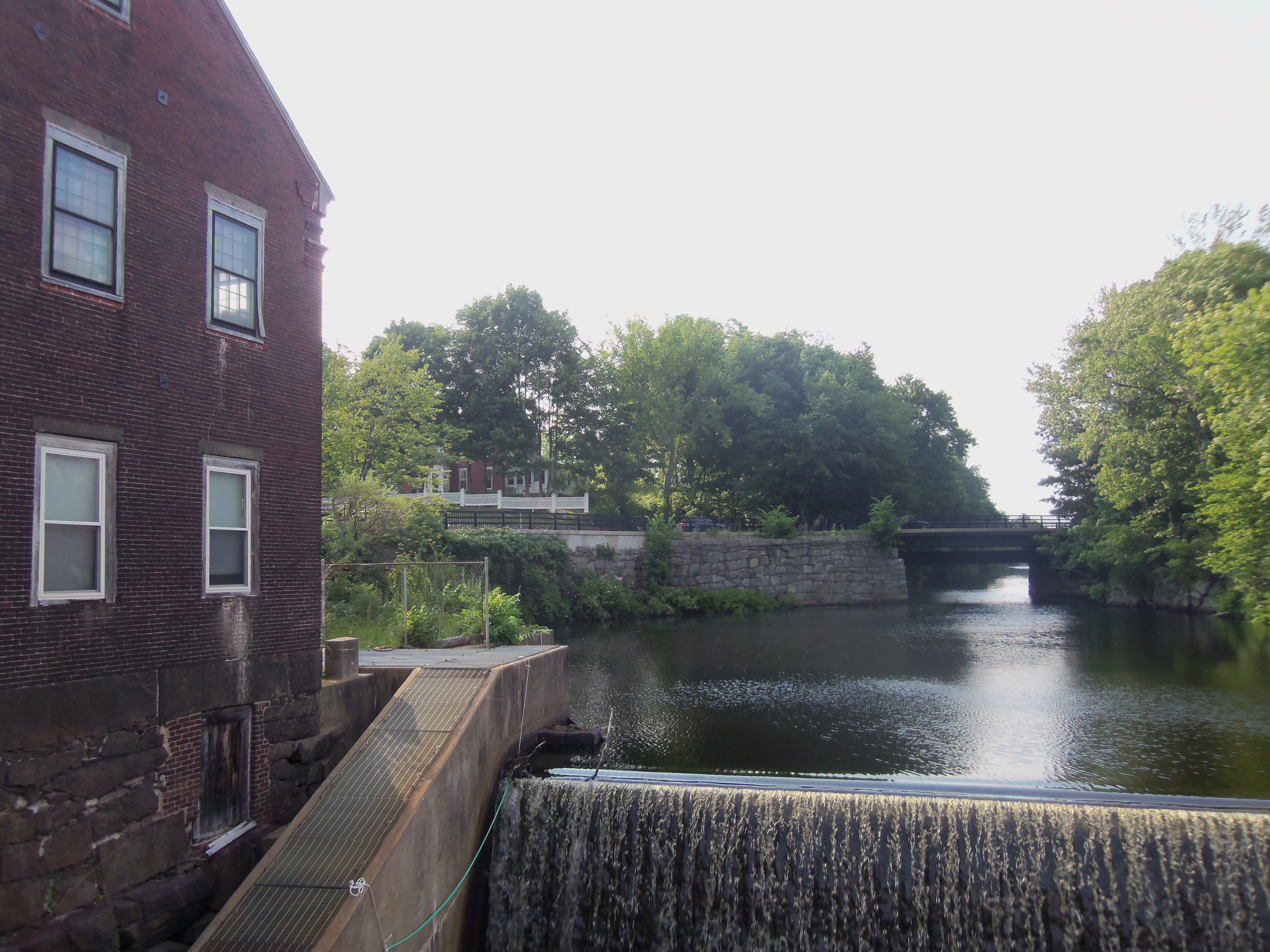
Towers and turrets make for a room with a view.
Strolling Dover: for more, click here.
You never know what we'll churn up in cleaning a stall
Towers and turrets make for a room with a view.
Strolling Dover: for more, click here.
The first printing press in America arrived in 1638 at Harvard College in Cambridge, Massachusetts, where it was used to publish Puritan religious materials, including the Bay Psalm Book, free from censorship in England.
Perhaps its most remarkable book, though, was its first complete Bible, which appeared not in English but a Native language in a translation by John Eliot, a task that required him not only to translate all 66 books of the English Christian Bible but also to create a new alphabet altogether.
The resulting 1,180-page volume, now known as the Eliot Bible, appeared in 1663, a translation into Algonquin of the Geneva version used by the Puritans.
(At the time, sects found important distinctions in the texts of their translations. For example, before her execution by Massachusetts Puritans in 1656, the Quaker Mary Dyer’s letters challenging her charges quoted the King James, or Authorized, version, something that would not have gone unnoticed by her accusers.)
With our overwhelming abundance of printed materials today, it’s impossible for us to imagine the immensity of this task. I’m still amazed that small typefaces could be cut as cleanly as they were and then be cast into metal. Hand-setting the resulting type is slow and arduous labor, and each sheet of paper would have been printed individually, rather than in the continuous rolls we now use. (I remember the blur of newspapers on the press, measured in the thousands per hour.) In Colonial times, to store, collate, and bind all of those pages into all of those volumes required both strategy and space in a time when most buildings were small, especially by our standards. As for ink and paper itself? These things were precious.
My first encounter with an actual Eliot Bible came at the Roger Williams National Memorial in Providence, Rhode Island, where Williams’ volume is displayed, along with his notes in the margins, done in his own style of shorthand. Think of that twist: the founder of the first Baptist church in America, banished from Massachusetts by the Puritans, was also concerned enough with spreading the Gospel that he, too, learned the Native language and reflected on ways to open its message.
In these early literary efforts, then, we see glimmers that relations with Native populations in the Northeast could have gone in much more peaceful ways than the violent turns they took in the hands of others.
As we learn in other, more tragic, pages.
Understanding that we don’t see light itself but rather what light illuminates opens a fresh way of envisioning the divine Spirit of life.
As I examine the writings of the early Quaker movement (Society of Friends), I find a remarkable wisdom emerging within their application of the metaphor of Light and through that, an alternative Christianity itself.
Consider the argument and then its applications.
For your own copy, click here.
When I see this …

… I think of this.
For the free ebook novel and more, click here.
Is it true that Donald Trump’s hairstylist is among his finalists for vice president?
Makes as much sense as anyone, so far. Would anyone else dare get that close?
Donald Trump’s refusal to release his income-tax filings naturally spurs suspicions. What’s he trying to hide? What’s he afraid they’ll show?
What, you think he’s squeaky clean? Please! The fact-checkers have found little in his outrageous claims that’s really true. We don’t need a liar-in-chief, we need someone we can trust.
So Trump’s financial dealings are bound to be fair game as the campaign spirals on.
For one thing, they give us a clearer view of how a candidate handles money. The Obamas, as we discovered, are really quite frugal, even conservative. Trump, on the other hand, seems to employ a lot of sleight-of-hand, as his loans-to-donations-to-himself demonstrate. (How many times can you count the same dollar, anyway?)
Well, we can assume the accountant-types will have a feast with whatever is there, as will the tax experts and financial gurus and businessmen large and small.
In the meantime, it’s fodder for the pundits.
Among the possible reasons Trump won’t release his income-tax filings? Are there clues to indicate:
Well, right or wrong, it’s a start. The facts will either support his claims or knock them flat.
Any other wags want to weigh in?
He claims to be a skilled negotiator, someone who can finesse a deal, but that’s not what we’re seeing. It’s all bluster and bullying. In a business deal, the other party cries “Enough!” and leaves the table. No deal, forget it, we’ll do business elsewhere. Or the workers strike or quit en masse or simply but effectively undermine the whole operation. (Anyone want to cite case studies? By the way, this guy’s refusing to open his books to potential suitors. Where are those tax returns, anyway?)
One possibility, as some power brokers seem to be sensing, he’s way out of his league. Are they sniffing weakness behind all his bravado? The way a wolf pack smells blood? Or the way an investor or market quickly turns in a flash to depose of a loser? Write off a bad investment or risk? Is there enough in his political portfolio for as much as a fire sale? Can he even keep his shirt, if his act falls apart?
Besides, in this game he should know, the house always wins, at least over time. Remember, he’s not playing in Trump Casino anymore. This is the Republican tent, where the owners are getting antsy and wonder about calling in security to escort a player from the premises.
Besides, the joker’s not the only wild card in this deck, and it’s dwindling.
Now, whose turn is it to deal?
You never know what you’ll find when you start rummaging around in an old barn. That’s how they found the 1776 grandfather clock made in Lancaster, Pennsylvania, decades later covered in grime in Montgomery County, Ohio. The one that fascinated me as a child, climbing to the top of the farmhouse stairs. The one, as Cousin Wilma later demonstrated, with such sparkling, ethereal chimes.
So here we are, in my own barn. Not nearly as big or as old. The rafters themselves far less sturdy.
For those who set out to shut down government in Washington, the next step should be fascinating. Are they prepared to shut down their own political party?
A line emerging in the sand (is that quicksand?) would separate those determined to stand on their stated values from those putting their faith in continuing the organization at all costs, regardless of its position. It’s looking more and more like they can’t have both.
This is shaping up as a definitive history-making moment. An earthquake, perchance? In Cleveland? Woodpecker will be watching closely, sensing it looks a lot like climatic instability, an issue many of them have long denied.
But then, sometimes reality hits. This time, a mega-storm seems to be brewing.
When I see this …

… I think of this.
For the free ebook novel and more, click here.