Is a job search always a tribulation?

After reviewing old clippings: “How close my writing has come to greatness … or to babble.”

At the RT, how much our photography carried us, especially considering how thin, until the end, our local coverage was – how important our Saturday front-page feature was in setting us apart and giving the staff a fairer schedule. .

Morning on long-distance calls to Bordner, Aldrich, Swaisgood, L. Nighswander.

Other fronts, Russ called back, said Larry Hale expected an “editor’s position” in several weeks … So much confusion, would I really want to go back there?

And the letter from Tacoma, $20,000 arts and entertainment, if they get the opening … What do I make of this? McClatchy upswing versus Gannett versus a fighting crew at the foot of Pike’s Peak?


So what about Colorado?

Imagination still reeling with thoughts of the Rockies. A place to be at peace? Low pay may be an incentive to freelance or grow.

The West may spur a novel. I’m too boxed in here.

On the brink of Colorado. A time of despair, anxiety, and waiting through the layoff.

Early May, Colorado Springs, round-trip ticket, $189.

On flight out: half of southern Indiana is forest. Region defined the sudden shift to farmland where the hills give way to flatness.

Contrasting smoothness of disked fields next to rougher plowed.

Strip-mine lakes outside Terre Haute.

~*~

Colorado Springs Sun: Don’t feel there’s much I can do here – to many “trained incompetencies,” exhausting and routine-work hours. B.B. [the editor who was to hire me] is leaving for Detroit after eight months here.

No local color in the paper. Newsroom looks and smells like RT. Computer (VDT) may help – question is, how much?

Upon seeing first UPI lead, realized how clear, precise, and simple my own style has become. Newspaper work may destroy that – at least, I feel it slipping away.

No sense of nuance, of grace, of individual voice – that is, true style – in this news writing, which exists as stilted and artificial as any literary style. It is divorced from the human voice and from American speech.


Another Far West facet

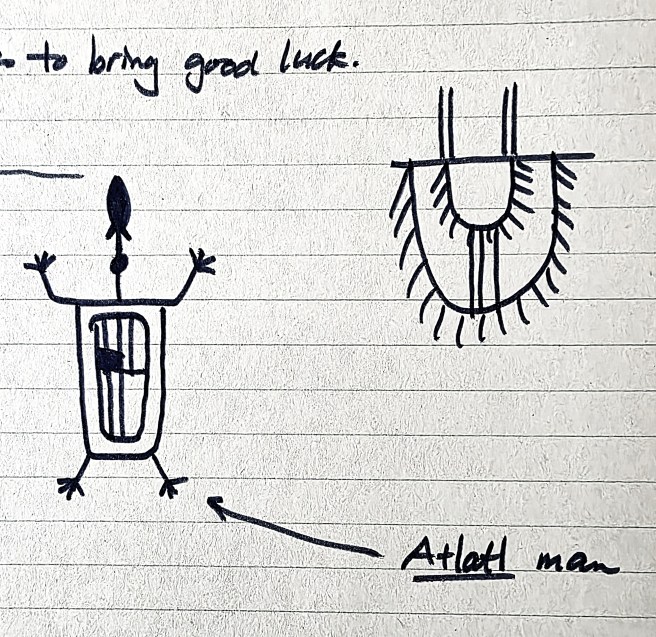
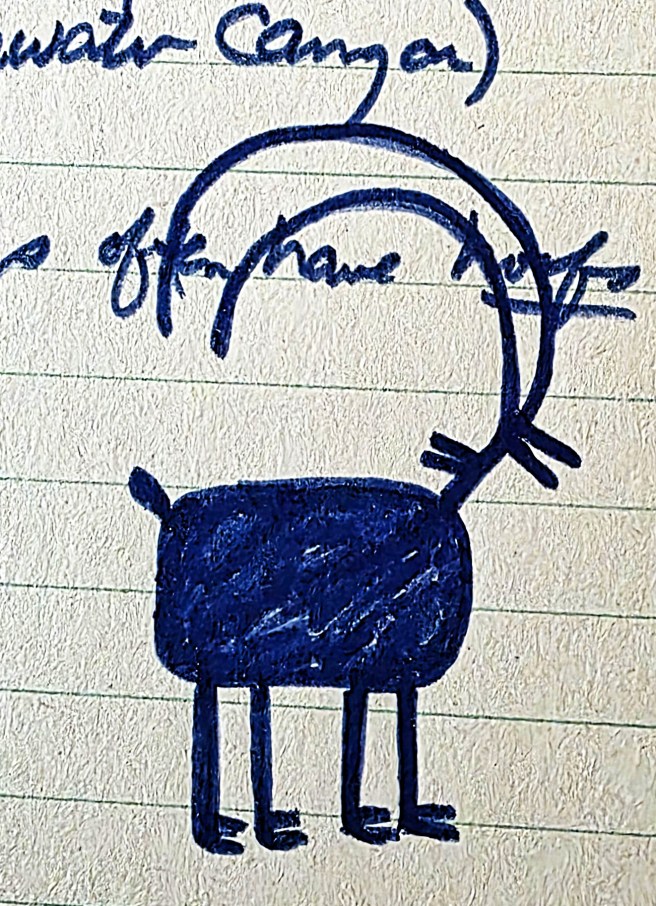
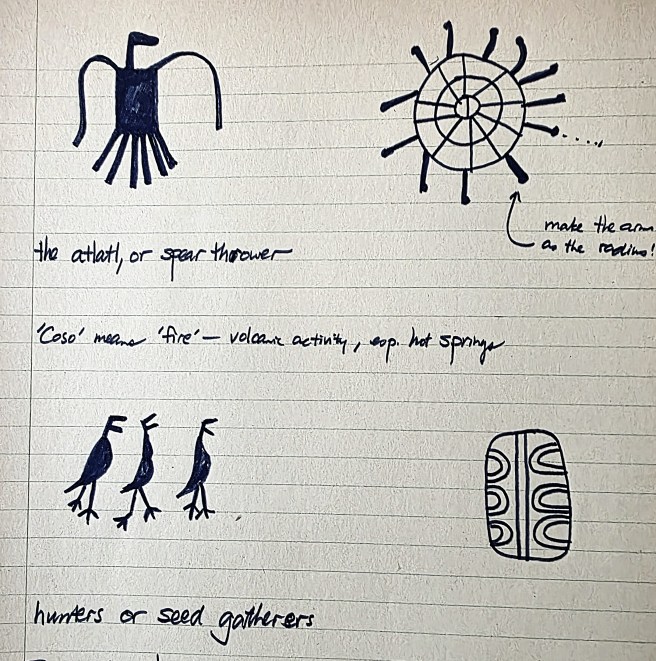
All along during my stint as a research associate, I was reading technical material on Indigenous artwork. Here are some sample entries from my Bloomington journaling.
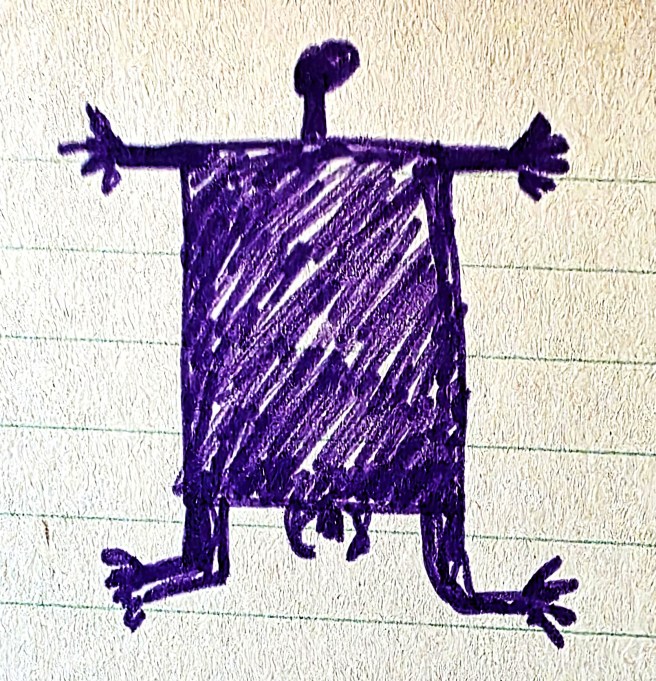
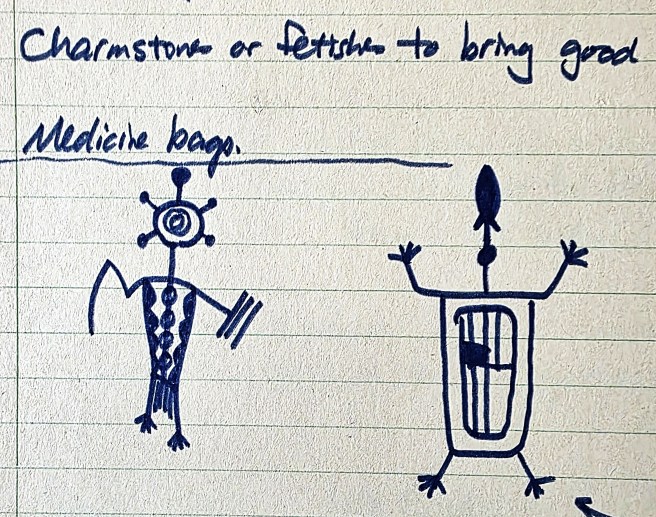


~*~

Back from the Rockies

Indiana feels too thick, too green and wet in contrast. My sinuses are acting up again. I’m out-of-place in America.

Horoscope says a month or two before big change. We’ll see.

Looking at the cons: long hours (nine to ten hours a day), ending at 2 or 3 am; low pay, publisher interference, no investigative reporting, and someone named Dana …

I’m having to admit that not getting that job was a blessing. I would have been engulfed. The trip was, though, at my own expense, devouring half of our savings. 


Just where might I be heading?

Doubts about “where I want to go.” Should we make the plunge into NYC? Find an agent yet? (I’d rather wait two more years.) I feel the necessity of steady income, yet also feel “duty to yourself” calling. Turned down music critic position at Herald Telephone. Hard for me to say No to any job, even with low pay. ($10/review; negotiate on features, say $50/page.) Don’t think I really want newspaper work. That’s hard to admit.

Copy editors are a kind of janitor and paid accordingly. Hence, I should concentrate on power-writing. (Like advertising?)

My own failings coming home as nobody wants to hire me, not yet, free me from the damn suspense/suspension with half of our goods packed in crates and warping corrugated boxes, the general feelings of inutility accented by this ungodly heat and humidity

Late June, returned yesterday from two days [of housesitting] at Dietz’ … and found a letter waiting from Yakima. Very exciting prospect, work split between copy editing and general assignment reporting. A nice balance, good pay, exactly where I’d like to be – the dry side of the mountains. And Kat’s very excited. Hope everything works out. (Received a formal job application to fill out and return.) Getting anxious to get the address situation straightened out and new pieces into the mail. …

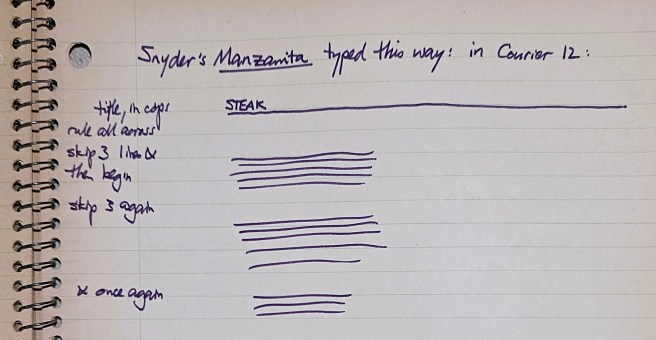
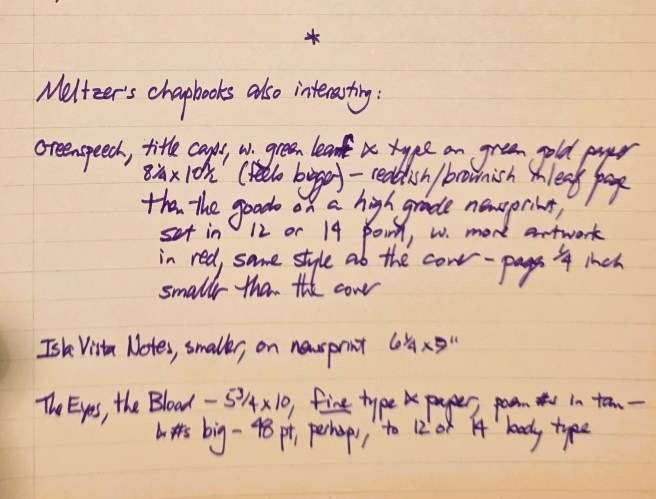
Wherever we wind up, I’d like to publish a few chapbooks of my work, for free distribution to friends and critics (and some for sale). Would also like to get a typist to do final drafts of potential freelance pieces. Will need to arrange more office-type space … we need Kat’s extra income …

Already, we’re anticipating spending that extra income … new car, furniture (that’s her idea), new clothes, bigger place, airfares …

A call today from Center for Law and Poverty in Indianapolis, a job I’m not too crazy about but one that might be the springboard for the southern Indiana magazine/tabloid I’ve been pondering.

Other calls to/from Yakima, which sounds better and better but less and less likely, like an impossible dream.

Nancy Neubert saying Yakima is a very nice, good place: agricultural, wealthy, conservative, hydroelectric cheap electricity, good produce abundant and cheap, Spanish and English …

The m.e., there since March, Steve Kent, from Albany, New York, thus appreciated my Binghamton angle. A good phone conversation.

Located Snyder’s lookout towers on the map, though Sourdough was not shown. Some of the other sites he relates, though, were.

Spicer: “West Coast is something nobody with sense would understand.”

Good place to end this journal. 10:20 pm, night of new moon, unseen through the haze

~*~

From Spiralbound Hoosier, with commentary from now.
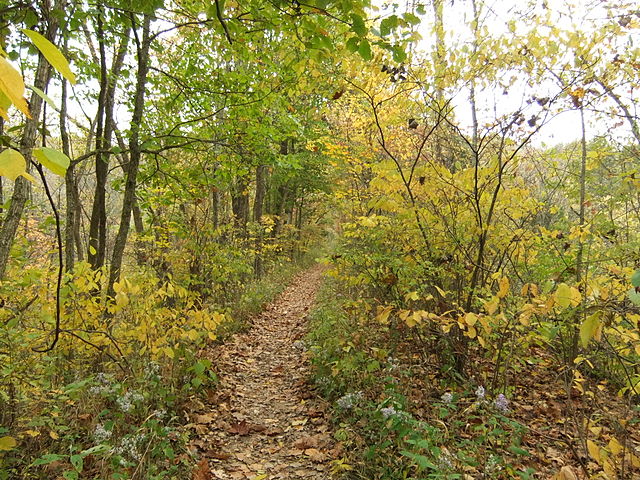
 

Aftermath of the layoff: anxiety and rest

I have had the leisure of a year in these woods – some weeks, every day – to watch and learn and assume their changes. Meaning, I’m turning.

 My insecurity over income – as for antiques as a line, seems akin to Swami Rudi and his disciple (the routes not taken!) …

At least I was on unemployment compensation.

The dripping wet richness of these soils.

Meeting, with all the people I wanted to get to know better.

Electrical outage: Can’t write, can’t cook, TV won’t work, music’s silent, too dark to read. Our life has come to this?

Horses can tear up trails, too.

~*~

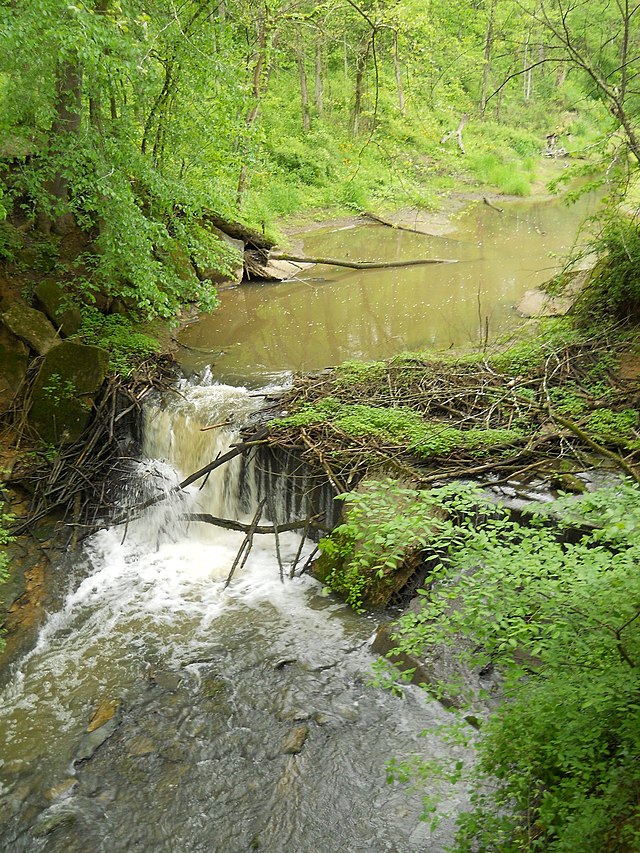
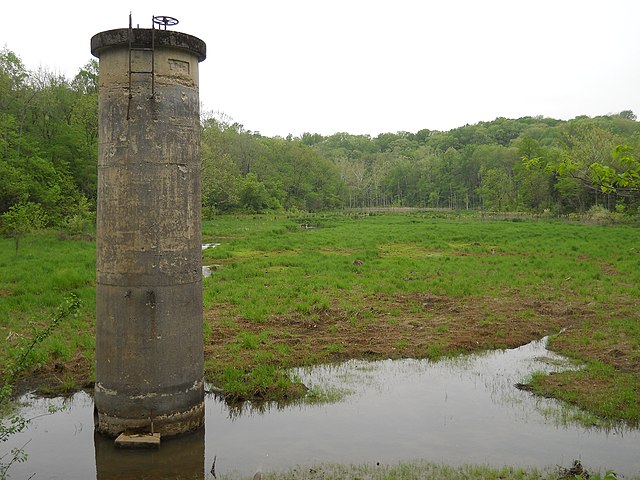
We lived on Leonard Springs Road, named for a ravine and at the time hidden cave beyond our home. My frequent explorations inspired a set of poems, which can be found at my Thistle Finch blog. The terrain, which included the then breached city water reservoir, has now become a public park, as you”ll find in a photo album at Thistle Finch. The woods had more than its share of trash at the time.


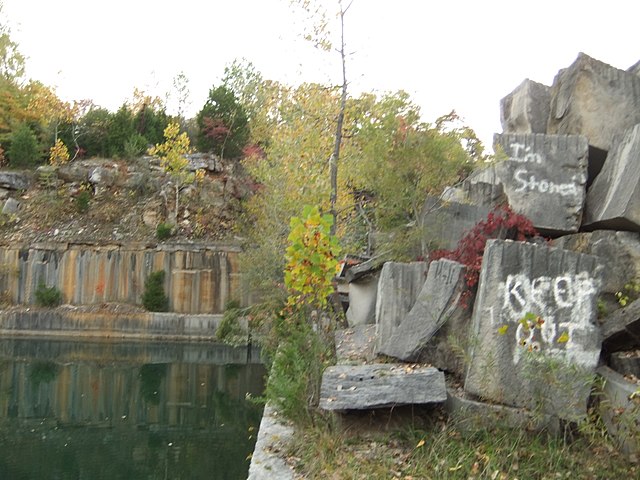
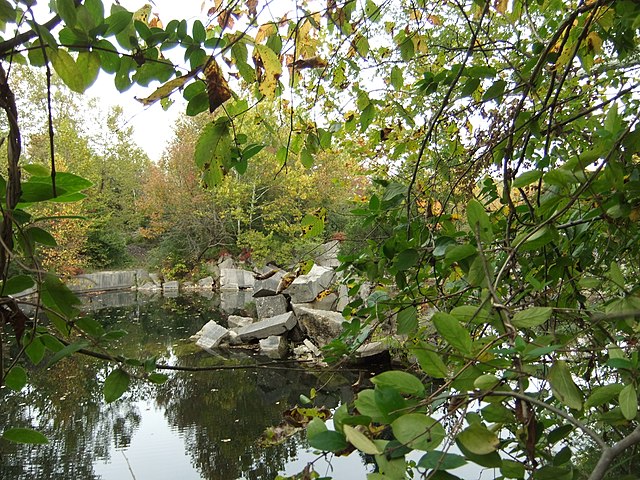
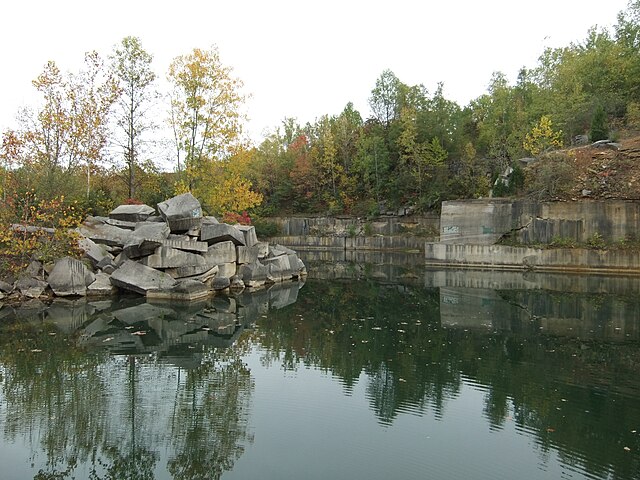
Images by Vmenkov via Wikimedia Commons.

~*~

Don’t remember this, must have been a Mtg picnic at the Dietz’:

Crazy sunfish, or some other board with two sails, won’t steer right, won’t steer left, the wind’s unsteady, shifting, blowing us over again and again.

We can’t go back, keep going in circles.

Two hours in May, cold lake water, chilled to bone before we run ashore on the dam.

Bill comes out in his outboard boat to tow us back.

A hot shower, group hug, and two cups of coffee couldn’t warm us from that.

Half of our goods packed, not knowing whether we’ll be here or faraway – no way to plan.

Kat upset (but trying not to show it) because her husband is a bum (she keeps wanting to see me working around the house, but I feel cramped in/crammed in) … I’m wondering how inert a human can be … she’s not working at her art, either …

 A break in the 90-degree weather: “bearable, even pleasant like Upstate bright sunlight amid small clouds.

~*~

From Spiralbound Hoosier, with commentary from now.
Workshop, part two …

Plain sheet, “Session w. EO: 16 December 75”

Qs about my future direction: poetry/fiction or social science, technical editor? (Would like to pull them all together, in manner, say, of Norman Mailer.) We need to think these through.

If top-notch soc sci editor, need further methodological/statistical expertise (Tuftde’s reader?) Also, the Psychological Assn. stylebook. NEED TO EXAMINE TABLES IN OUR OWN MATERIAL. That means going beyond the text side of the work.

How does a niche writer/editor survive outside New York City/Washington? How does one get out of the newspaper game, with its dead end in the future?

Need to invest time in reflection, in serious review, in gestation of a piece (and of myself).

Schedule normal [regular] half-hour/week session with EO, putting more concerns on paper, increasing the communication between us.

With tables, I need to verbalize what’s happening: create sentences summarizing the data: check the data with the text. Haven’t been doing that.

Revisiting this, I cringe. The prophecy is on the wall.

~*~

A break, a vacation – chance to think, breathe, reflect – pushing too long, with too little success …

Notes of struggles at work, in my own literary efforts, and at home …

Pages of attempting to come to grips with editing statistics …

Induction / Deduction
Specific / general
To general / to specific (syllogism)

Probability soups, judgment soups, convenience soups, etc.

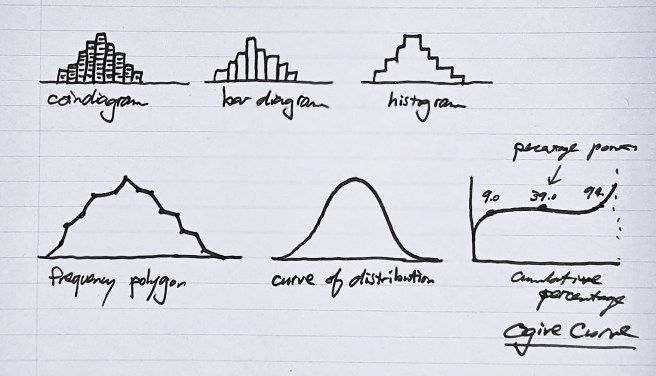
Frequency or distribution of measures: straight tables, numerical &/or percentage, as I noted.

~*~

3 feb 76: Valve blown on Omkara; engine will be torn down to see how bad the damage is. Long conversation with EO and RBP today. Feel they are half pleased, half unhappy with my work. Very frustrating. Job very demanding but feel most of the time I’m working in a vacuum. RBP wants more incision on statistical recitation, more devotion (upset at Thanksgiving trip away), more initiative (finding outlets and ways of repackaging our materials). EO needs more time to write, as does RBP. Send them memos, rather than speaking, unless in a meeting.

 Graduate Library, all the floor indication lights/numbers on the elevators worked today,

Vol. 40, blue IU, 5:III:76, opens: Layoff.

Portentous day

Kat gone to Louisville (w/ classmates?).

Meeting w/ EO & RBP expecting the worst on “the newsletter and the future” turned out to be two-months’ notice. “The time has come to realize our paths are diverging and to part while it’s still cordial.”

EO saw our different directions, the increasing math editing to come, plus the budget delays.

Pflum: “They always do it so gently.”

Looking at options for future, and whether Kat could complete her degree in a year. Freelance editing? “The insecurity scares me.” Among the scenarios I put on the plate: go to Sycamore, clean up Mom’s old place next door, learn antiques for a year or two …

“I feel abandoned and unbelievably alone. Haven’t felt this way since meeting Kat … Noz is lonely and trying to bat this pen”

I need to recapture and regenerate the joy of life, the simple contagious power to live …

WILD-ness and clarity.

 What an emotional stress the Workshop has been – the anxieties, deadlines missed, wild-goose chases; their anticipation of 60-hour weeks (yet also quality and originality), the deadening meetings and academic facades.

I sense one principal has never suffered. He lacks that depth, or didn’t learn from if he did, or else formed a shell.

These days I wonder how much the movement toward quantification in political science (statistics rather than theory or philosophy or psychology even) has led to the conundrum today: surveys and strategies for votes – an absence of moral values, convictions, or purpose.

~*~

From Spiralbound Hoosier, with commentary from now.
There were a few continuing trips to ashram

I have never meditated that it wasn’t productive, even when there were no thoughts.

At times I see yoga [or real religion] as a way of preparing for death; at others, I see it as a way of intensifying life. It is one thing to acknowledge something exists or occurs but quite another to embrace it. For the unenlightened, their glance is fleeting: as soon as they’ve identified the object or movement by name, they bounce on to something else. The yogi or artist or philosopher, for that matter, looks beyond the surface and into the structure and ways it fits into the whole of the scene. It’s looking with in a sense of oneness, blending the unity and changing faces of nature. This occurs very deep in the heart, or what the Psalms call soul.

Leaving the ashram can bring a period of “awari” and “subari,” as the Japanese put it – poverty and solitude – to test and strengthen the previous lessons with the master.

Inner strength is more than an idea or a philosophy: it is an exercise, an ongoing practice. When the routine falls away, how does one keep the core strong?

Sometime in March, Kat and I visited the Poconos ashram. We helped prepare for a Seder. Here, a room half-full of young adults raised Christian in a center ostensibly teaching a strand of Hindu faith, inviting a broader Jewish community to the celebration. One Spirit! A concept of communion taking a fresh depth and joy. This was also Holy Week, and the Seder was on Maundy Thursday.

When I returned to the ashram on another visit, I heard, “The realizations have been very heavy” or “We’ve been learning a great deal.” Same thing, over and over. My insight? What is learned is not as important as the experience of learning, or perhaps relearning. Human life is nothing more than consciousness.

In contrast, so much of life in the secular world reduces and dulls one’s existence. Routine, noise, responsibilities, focus on products deflect us.

The new meditation room is gorgeous and airy, like a cloud, rich big windows, spacious exercise mats, cherry wood paneling left unoiled … Swami’s baby grand piano amid plants in the alcove … a seemingly “homemade” Dharma Hall.

Kat fasted three days

What I also realized was that moving back to the ashram with Kat in tow was not a possibility.

~*~

From Spiralbound Hoosier, with commentary from now.
 

Some interactions with other poets …

D.W., envious of my electric typewriter.

Me, envious of the garage he converted into a large writing studio.

Poetry workshop, as we called it.

I was asked to read at the end of the evening – just as I was about to leave, actually. So I shared three pieces.

“Your poetry is very rich. It’s almost so rich you don’t know what to do with your wealth,” one person said to me afterward.

Pflum was very pleased. “You’ve improved a lot in the past year.” He enjoyed the suggestion, the room for the reader’s imagination. I told him I had a lot of help.

Earlier, I had sensed in his reading a real or whole person, despite his disclaimers.

A poetry journal I noted had a “Zen mood.”

Rejection 21:I:76: “… your poems lack vitality, are surface, not involved.”

Was surprised by our featured reader, who had contributed so little to the group and usually left immediately after reading. … She invited her ex-husband to come and hear her read of lovers and her abortion.

Am thinking about a style that requires a new turn in each line, so that the poem move forward by mosaic rather than each line alone

Pflum and Wade arguing over whether to discuss a work-in-progress or wait till it’s done.

In Pfingston’s poems, every word is right, exactly on target. His deceptive clarity is so much harder to achieve than is apparent, so that some might dismiss these as “so what.” Not me.

David Halpern on poets under 40: “There is no poet-public. Name a well-known living poet. Few people could.”

~*~

You never know where you’ll find inspiration:


~*~

From Spiralbound Hoosier, with commentary from now.

It was a time of crucial growth for me as a poet

As I journaled: All of my writing moves toward silence. The practice is a cleaning out of past accumulations. Let me burn like a candle until I reach a supreme transparency. [Not transcendence!]

My head throbs at the thought as I receive yet another rejection slip: there are 1,500 published poets in the USA [this was back in ’75!] … this, according to a new directory.

My first poetry reading at University Lutheran’s Spring Arts Festival: I had won $15 for second-place in their competition with the poem “Binghamton,” not “In Ashram” as my memory would have it. Nor first-place.

One of the jurors’ daughters liked mine best.

Pavarotti was singing down the street.

At another reading, Victor Contoski: “I decided there were thousands of love poems, but none about an air conditioner,” or, “This is my shoe poem.”

My take? Having decided the subject, he forced himself upon it like a flat-topped economist.

The next volume, had a red cover and, yes, pink pages.

“Read my ‘crazy’ poems at poetry workshop tonight. Went well, very well.”

Read four poems at Hummingbird in Naptown. Good crowd, half-Black, responsive to the word, willing to laugh, to hell with the erudition …

Destruction, when a poem takes form.

My writing strives to erase my past, wring it dry, work down to bone for the present, take flame from there.

“What do you write about?”

Let’s start with places and seasons and hope to find love.

 Notice that I wasn’t having so many diatribes by this point.

 Found poet who seems to have what O’Hara strove for, and in plainer, stronger English: JACK SPICER!

 Dick Pflum called late night (10:30). Me, groggy. Wanted some poems for WFIU to consider. Earlier that week I had wondered why the station didn’t intersperse local poets in addition to the national network offerings. I had even thought of writing the manager and suggesting it.

“You walk a lot. I feel it in your poems. I walk, too.” Another woman at Mtg.

Go-Between (III) accepted by Cottonwood Review today. Quite surprised, didn’t expect an acceptance. The piece, the fourth variation on a source, has no adjectives – or verbs. The nouns all have associations and emotional weight. … They also liked section 5 of Survival Kit, the part I thought was weakest. So it goes.

Anthologies seem to choose the poet’s least visionary work – or a least safest work.

Use of chorus in Native chants:

“I was there, I was there, I was there”

“We will kill, we will kill, we will kill”

Writers “living by our wits,” working hard but unable to capitalize/obtain equity from our labor – the fear of growing old.

Thinking about so many good writers who work only two hours a day – or 40 lines or some such – constant limit.

Inscription in A Book of Music: “No Spicer book was ever © copyright.”

His Book of Magazine Verse, with a cover designed like Poetry (Chicago): “None of the poems in this book have been published in magazines. The author wishes to acknowledge the rejection of poems herein by Denise Levertov of The Nation and Henry Rago of Poetry Chicago.”

Regarding Jack Spicer, per acolyte Robin Blaser: “The final aspect of Jack’s work is in this – that the reader participates in the meaning of the poem – that the poet is only one voice alongside another – that the poetic reopens words into an action.”

So here is a statement of the tantric aspect of objective, selfless writing that I’ve been pursuing. How ‘bout that!

Manny G found my poems “too delicate” or “too fragile,” yet wants to see more …

Also, regarding “opening the field” or “projective verse,” the necessity for keeping the meaning open …

“The batch of submissions that is mailed must be consistent: i.e., if one poem is down on love, the next shouldn’t be about your wife, otherwise you will seem shallow.”

~*~

Through the university libraries, I had access to some wonderful small-press works. I analyzed them closely, hoping to apply their lessons somewhere in my own future.


~*~


On 9:IV:76, was featured poet with Paul Solyn … audience of 20+ included Nancy Neubert, Francie Bish, Charlotte Pennel, Robin and Andy … Bonnie, walking in late from a yoga class, said the “feeling was exactly the same” …

Pfingston later wondered if it was actually one long piece. I had conceived of it as a yoga class. Need more humor, though. He perceived autobiographical development.

Pflum found new depth in my work, finding an intellect at work in the longer presentation that didn’t appear in the shorter readings.

Betty Q. found the reading full of incredible visual minutia. She also felt I had done everything I could in Bloomington and was now moving in different directions – in my experience, expression, and geography.

Several people said they most enjoyed the poems they had previously seen or heard. Perhaps I should repeat the micro-poems three times each, like a chant or circular work.

Kat suggested more patter, thought I read too long (35 minutes), didn’t like me sitting in half-lotus(!) (too hard to see), though I found it more concentrated and closer to my work – no mic in the way.

In assembling an extended reading, an unanticipated voice emerged. Not the Snyder or Brautigan or Bly, but wholly my own, somehow not the silver I had feared but a sense of craft and, more important, emotion or life or of watching a nearly indefinite sense of my existence emerge in dimensions … not my mind but my heart and feelings emerging truer, in the whole, in ways I couldn’t have known if asked … expression

Betty is right, it is time to move on, though I don’t know where or how.

Pound: “Only emotion endures.” And, “Nothing counts but the quality of the emotion.”

Carlos Williams: “When a man makes a poem, makes it, mind you,” it has “an intrinsic movement of its own to verify its authenticity.”

Creeley: Writing is an act [or a way] of discovering … Poems have been about the same matters for 20,000 or 30,000 years.

Curiously, I began delving into poetry and journaling when Nikki and I were breaking up, a time of intense emotions, when my writing needed to spit out in more powerful or sappy, less thought-out or rounded out expressions that I had previously worked.

[In retrospect, I see how much of looking for my problem instead looked at the problemed society in the larger society around me …]

During that period I discovered shorter forms: Brautigan and Borges, then Creeley’s Pieces, often untitled, Tom Clark’s Stones, Snyder, Saroyan. Here I was writing headlines for a living – short, tense, accurate use of words. Only later did I turn to longer forms [often cobbling together shorter bits!]

I admire Creeley’s one-sitting draft, but find after keeping most of the original I hone it later into something much more compact. And to think he dropped out of Harvard.

Reading at the Hummingbird, Jerod Carter’s comment, “I enjoyed your poems. They have a marvelous [wonderful?] delicacy, almost Oriental.” … Somehow, I wished they were stronger.

 Two of my poems were accepted by the Bloomington Poetry in Public Places project.

~*~

From Spiralbound Hoosier, with commentary from now.

Getting to know the Quakers better

“Live adventurously,” as one woman at Quaker Meeting recalled reading. Another was upset that our “silence” can cover too many “barren spots,” as snow does. Had I replied, it would have been in anger, praising the silence. [Fifty years later, I would confirm the occasions when silence ignores an elephant in the room, a tension or injury that needs to be addressed: an opportunity for Truth to work.]

Another in Friends worship quoted Montaigne: “Respect the man who seeks Truth; be wary of him who has it.”

 So many people reading spiritual and religious books do not comprehend them. Recognizing this makes me understand why Tibetan masters, among others, were so careful to keep their teachings “secret” or “hidden,” lest others ruthlessly exploited the words.

Why Jesus talked in puzzles – parables – rather than open logic.

 I notice that Paul is more important to Christianity than is Jesus.

 In this journals review, I’ve been struck by how much identity – first as a yogi and then as a Quaker – shaped my decisions and action, morally, especially.

A visitor to Meeting told how Quakers and other Protestants in her community were caring for a dying Zen monk. She didn’t know why.

Meeting, for me, became a community of Light, upholding the essence of yamas and niyamas, something that is often lost in the pageantry or theater of various schools of Asian practice, at least in the New World. The ethical constraints and actions, that is.

 In worship-sharing, an “important event age 5 to ten” … one Friend observing her grandfather’s suicide as the first death in the family

For me, the natural museum classes.

 Millard, after Mtg, mentioned how Jesus’ time was the most beneficial period for spreading a new faith. The Roman armies had subdued rivalrous tribes/nations, persecuted highway bandits, and built roads throughout the empire.

Paul, as a Roman citizen, could travel anywhere without a passport (or its equivalent).

Alice, quoting “an old white-haired woman in a Pennsylvania Meeting,” reminded another worshiper, “But if the vocal ministry doth not speak to thy condition, thou canst pull down thy body over thine ears and thus continue thy meditation.”

 All the Quakers I came to know were intense people, and thus as instruments they moved toward fulfillment, however humbly or stubbornly.

 At Gulli’s Brahms last night, Dennis remarked that one woman has put a number of people off. Not me. Perhaps I’ve simply grown to ignore that side of her.

Sitting is silent worship with the meetinghouse window open to a world of birds and breathing, children’s laughter, an electric saw, the wind even a neighbor’s radio with the smoky voice of an indistinct church organ, not that any of them matter

~*~

From Spiralbound Hoosier, with commentary from now.
Yoga clash …

Rudrananda Ashram here, with its businesses. As the locals say, a third of the town is owned by the university, and another third by the ashram. The bakery, restaurant, construction, property management, framing and art gallery. [Starts to sound like Cassia’s family in my novel What’s Left!] Phonebook had numbers for all of these but not for any classes. And there were no vibes.

Has about 70 members, said a girl with a pleasant, pre-recorded smiling voice, hint of tension. And another 40 at Big Indian in the Catskills.

When I first stopped into Rudra Gallery, with Kat, we were hit by cold words of business being spoken into a phone: an orange-sweatered, burr-headed Taurus, or so I assumed from the corpulent body and luxurious surroundings as he held forth in his court of very expensive, carefully selected items displayed for sale.

I inquired about some Tibetan prints, how much, after complimenting the quality, and he proceeds to tell me “This is a Buddha and in Buddhism, uh, they believe that everything comes from the Void, or nothingness, and all of this around him comes from that, it’s his own world.”

I went on acting dumbly, while inwardly Kat was splitting a gut.

I had a feeling I had seen this guy before, perhaps as a visitor in the Poconos ashram, but he did look like two older guys in my Scout troop, too. [Turns out he was a year younger, but got into yoga about the same time I did.]

I sized him up as a creep. He strolled around in self-importance. When he began explaining another tanka to me, in a patronizing manner, trying to impress me with his thin knowledge, I mentioned how confusing these names got in going from Tibetan to Sanskrit. I replied that we knew this cosmic conflict better as Shiva, “Think about that,” and we left.

He wanted us to come back in, but I later recognized he was trying to suck me in with his vibes: they weren’t pure but of an occult power sort. He’s no swami, despite the orange. [He changed his name in 1978, to Swami Chetenananda.]

We went on to a leather store run by a good-energy BS 6-5 Aquarian “businessman” who was enjoying people as an extension of his job. We were his first customers of the day and just had a good time talking. On a later visit, we bought the broad belt with its huge, shiny sun buckle, which always garnered praise.

As it turned out, the yogi in question left a trail of financial and sexual scandal along with division in his movements to Portland, Oregon. And I was wondering if my judgments were too harsh?

In retrospect, how pivotal this becomes in my gravitation toward Quakers. I needed a circle where I could meditate. 

~*~

Another almost connection involved Thubten Jigme Norbu, assistant professor of Uralitic and Altaic studies, a lama teaching Tibetan. With Walter Kaufman just did a book on Tibetan chants for IU Press.

Turns out he was the brother of the Dalai Lama. As for all of those Tibetan readings I had done in Fostoria? And here he was, commuting to campus on the same bus I took occasionally.

~*~

Each spiritual practice must be rediscovered and reinvigorated by each generation. This is a responsibility of the Teachers, otherwise known as Elders.

A true Teacher lets the Seeker find the Truth for himself, but lends the Seeker strength, especially to admit when he’s deluding himself, which is all too easy.

What is the difference between the ashram leader with his commercialism and my struggle to survive in the world and yet be a swami?

~*~

From Spiralbound Hoosier, with commentary from now.
Old associations on my birthday

Bumped into Nikki yesterday at the Gables [once a hamburger dive but turned hip]. An awkward moment, but Kat went on to class while I tried to chase down my first lover. How strange the interval of time.

Yes, there was unfinished business to bring to closure, if only we could.

Running into a few others from the past?

MG: “You used to weight twenty-seven pounds” meaning me but she’s married now.

KP: “Just hanging out,” divorced after five years.

“We just got bored”

Now intrigued by my mysterious, ineffable changes, she’s finally wanting to touch me.

I do remember her showing me a photo after an artsy shoot and her joking about having “banana breasts.”

~*~

By dwelling on the other side of downtown during my return to Bloomington, we were introduced a much different landscape than I had known in my residency on campus. Here’s an example from the southside of town by Vmenkov via Wikimedia Commons.

~*~

From Spiralbound Hoosier, with commentary from now.

 

My, how the town and campus had changed within a few years

Bloomington has brightened so much: the new public library, buses, Dunkirk Square, Musical Arts Center and Glenn Black Laboratory …

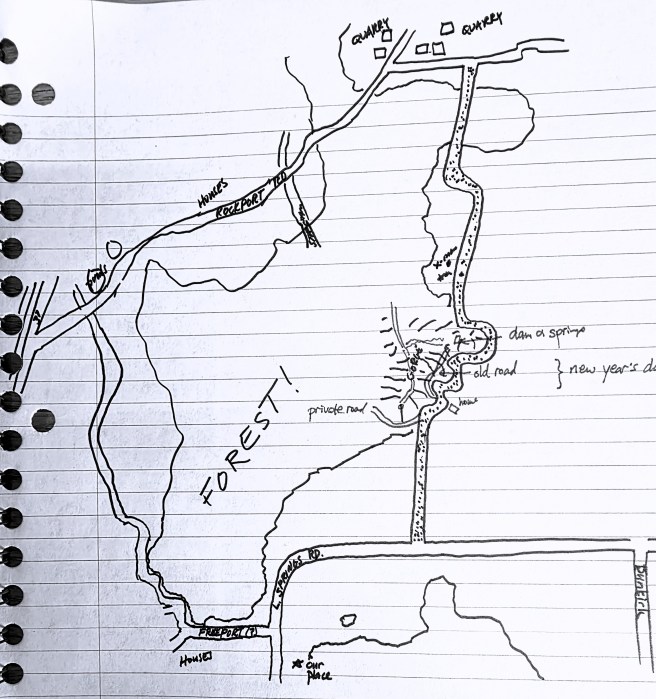
That Tuesday afternoon [December 10] when I went for “a little hike,” over the hill, “to catch the sunset” … sink holes all over, found a dirt road “Xmas Trees ¼ mile” and took it past forest and a bottomless gorge and on and on … taking the next left actually took me further astray, until finally, I passed a few houses and asked someone, “Excuse me, how do I get to Leonard Springs Road?”

He either laughed or looked at me as a dope.

“It’s right here.”

I didn’t get home till 7, well after dark. Kat was very worried, actually went out looking for me.

Turns out my little walk was 7½ miles. “Around the block.”

I drew a map, which I later filled in with details.

[Gee, don’t think I had another walk like that till Marconi Station on Cape Cod decades later.]

~*~

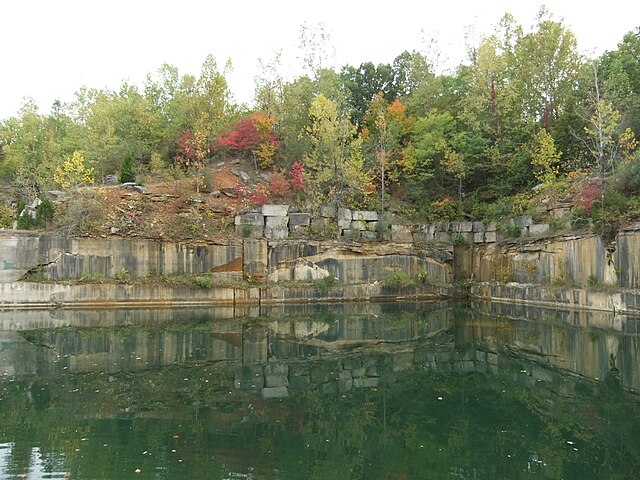
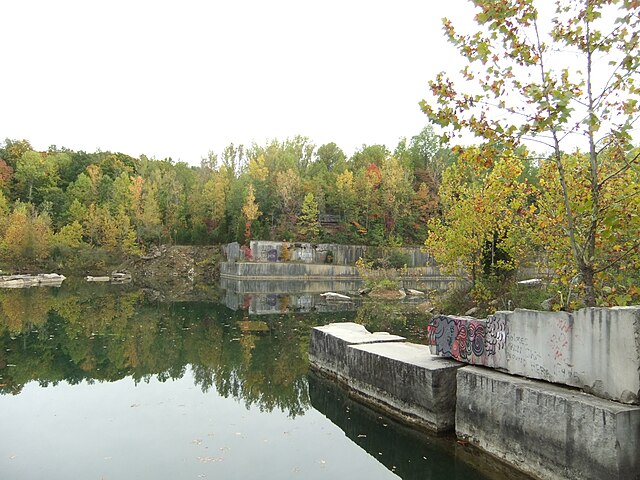
One of the things I encountered on that walk was abandoned limestone quarries, which I would soon view as common features tucked away in the woodlands beyond town. They typically flooded in. Here’ are some examples by Vmenkov via Wikimedia Commons.


~*~

Other explorations? A long drive, including Spring Mill [Madison?], Paoli, West Baden Springs, Washington, Amish country, and Bloomfield. But we were back home by 5 and had dinner at Michaelangelo’s up the street on our side of town.

A mention here of Mennonite, though I still knew next to nothing about the faith. We did pass two lovely white-frame, clear-window, “severely simple” meetinghouses, no name attached. The second had an outhouse behind.

Windmills gave the Amish away, before the lack of utility lines did.

White houses and barns.

Clotheslines in January: solid, somber colors or white.

The radiant face of a middle-aged woman on a buckboard who turned to us and waved.

That woman’s face stuck in my mind.

In its first decades, Paoli was known as a Quaker town, the seat of Orange County, named for the one in North Carolina. Included Lick Creek (later Paoli), Newberry, and Beech Grove Friends meetings.

So much Greek Revival / Greek Temple Revival through southern Indiana.

What struck me was the order – mathematical, geometric, classical – of Paoli in its design and construction. A step beyond the state of log-cabin and rough-cut stone development at Spring Mill as wealth built up into brick homes.

The old wire bridge across White River at Hindoostan: farm-style fencing rather than railing along the sides, three boards on each side as a single lane over a flooded river, in places too widely spaced for our Bug, in others, the bottom boards have broken through. Unbelievable, looking back, that we made it.

Hindoostan settled 1818, vacated 1828: “terrible death” outbreaks of Yellow Fever or cholera. Never resettled. Bluffs nearby.

More formally, Hindoostan Falls. Originally on the stagecoach route.

Nearby, in forest: “Greenwich, 1778, first – in Indiana.” Didn’t get that vital part in driving past.

Vincinnes, founded 1732[!]

Clarksville, founded 1784 by George Rogers Clark, Indiana’s oldest American community; the man hated Indians and wished them all exterminated.

Patoka, 1789.

New Albany, on the Ohio River, was state’s largest city in 1840.

Madison, also on the river, founded 1805, was largest city in 1850.

New Harmony, originally a commune, 1814.

~*~

Spring Mill State Park, an 1816 village of log cabins and a great stone mill a marvelous beauty. Caves and sinkholes all over. As a kid, my family camped there several times.

The great eerie hall of Baden Springs. Decay, the polish gone, earth sinking, buildings crumbling: “new hotel” built in 1901 after fire claimed the first. Who would want to wear a suit and tie while on vacation, even to gamble? As for the waters of the spa? Such formalities!

Caves as vertical shafts of cold air rising and fogging in an otherwise barren field: 66 recorded caves and pits in Monroe County, meaning around our home.

US 150, approximate site of ancient buffalo trail from Louisville to Vincinnes, in 1840 became Indiana’s first toll road. Meaning the earlier ones were private?

Lost River: out and then back into the earth, blind fish and crayfish, endangered by flood-control projects (Orangeville).

Back from the road, facing a creek and hillside, Union Primitive Baptist Church, plain cars still there at 1 p.m. Two doors, men’s and women’s. Plus outhouses.

Further on, Hebron Valley Baptist, 1822.

The eerie silence of caves in a fog: “Do not enter this pit without permission.”

Not sure quite where:

Three caves, two days – strange beauty of the muddy sculptural underworld. The twisting rooms, cold reflective water returning whatever light we introduce. Dripping from ceiling.

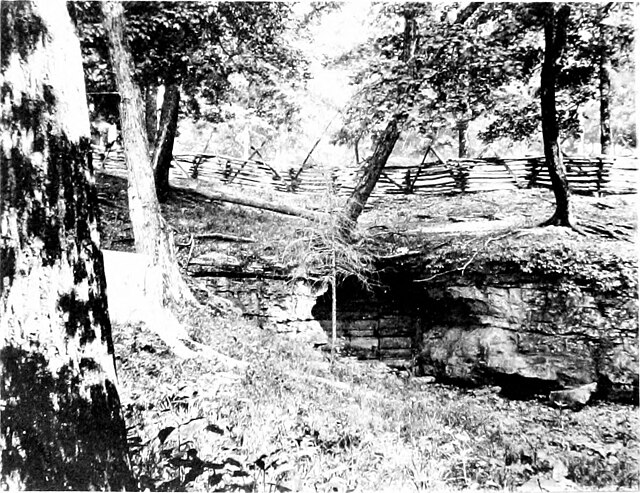
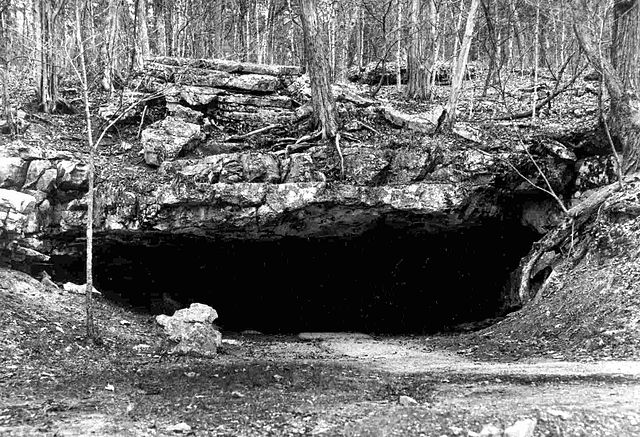
Southern Indiana is laced with caves, including Mayfield’s situated a couple of miles from our home, not that you could see it. Photo from 1907 by Arthur Mangun Banta via Wikimedia Commons. Wyandotte was another, public domain image via Wikimedia Commons.

~*~

Brown County thick with stupid gawking, the contrast of neatly-creased shorts and black Orlon socks and oxfords gawking at rural life and earlier eras punctuated by rough log cabins.

~*~

From Spiralbound Hoosier, with commentary from now.