
BELL? WHAT BELL?
You never know what we'll churn up in cleaning a stall
This time of year, we head out to collect sprigs of red berries from along the roadway – wild rose hips my wife uses for decorating the interior of the house. A seasonal touch.
Holly is another matter. Our sole bush remains stunted after all these years. Fortunately, we have a friend whose plant proliferates. She’s glad to have help with the pruning.
Ho, ho, ho!


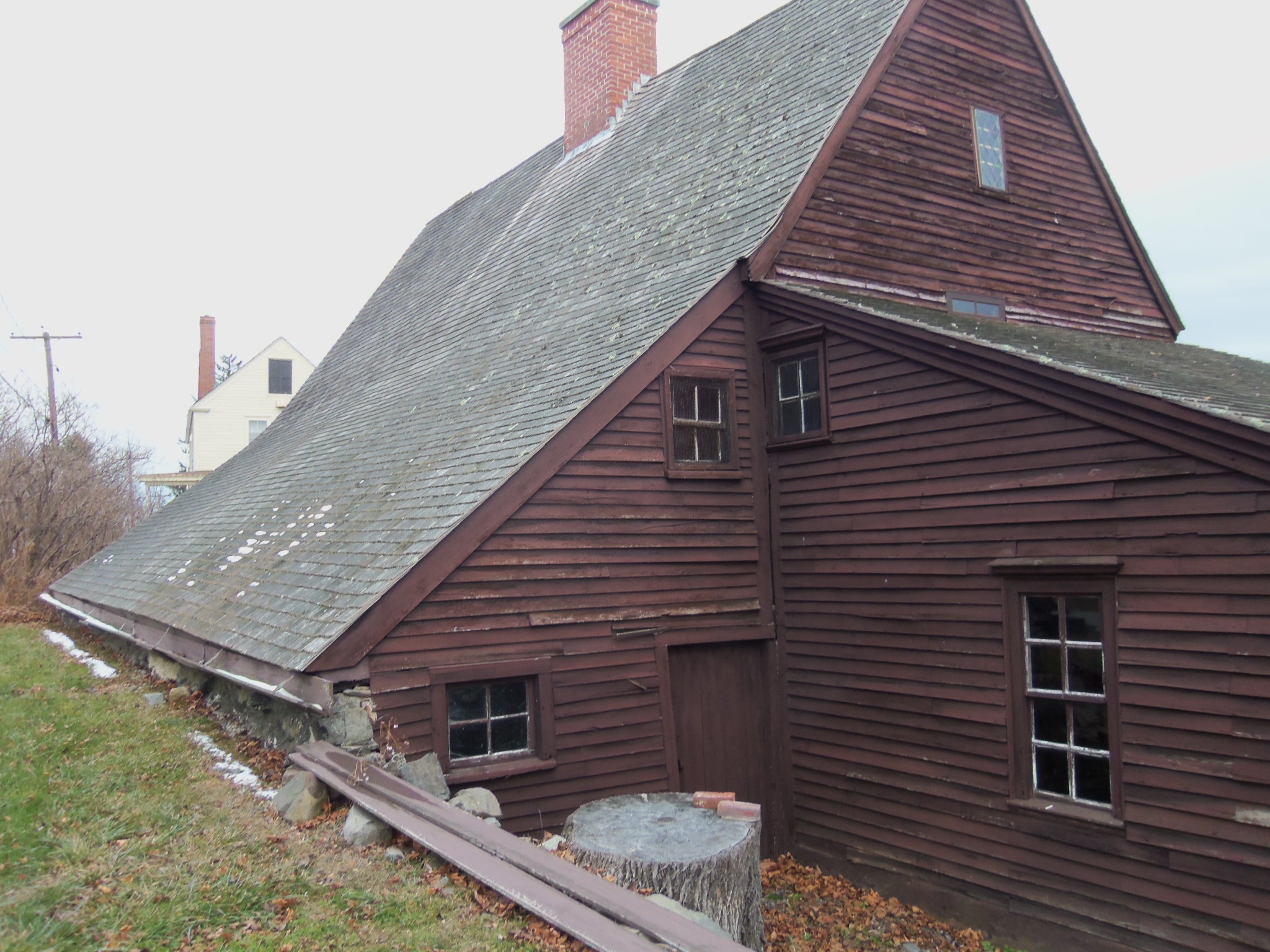
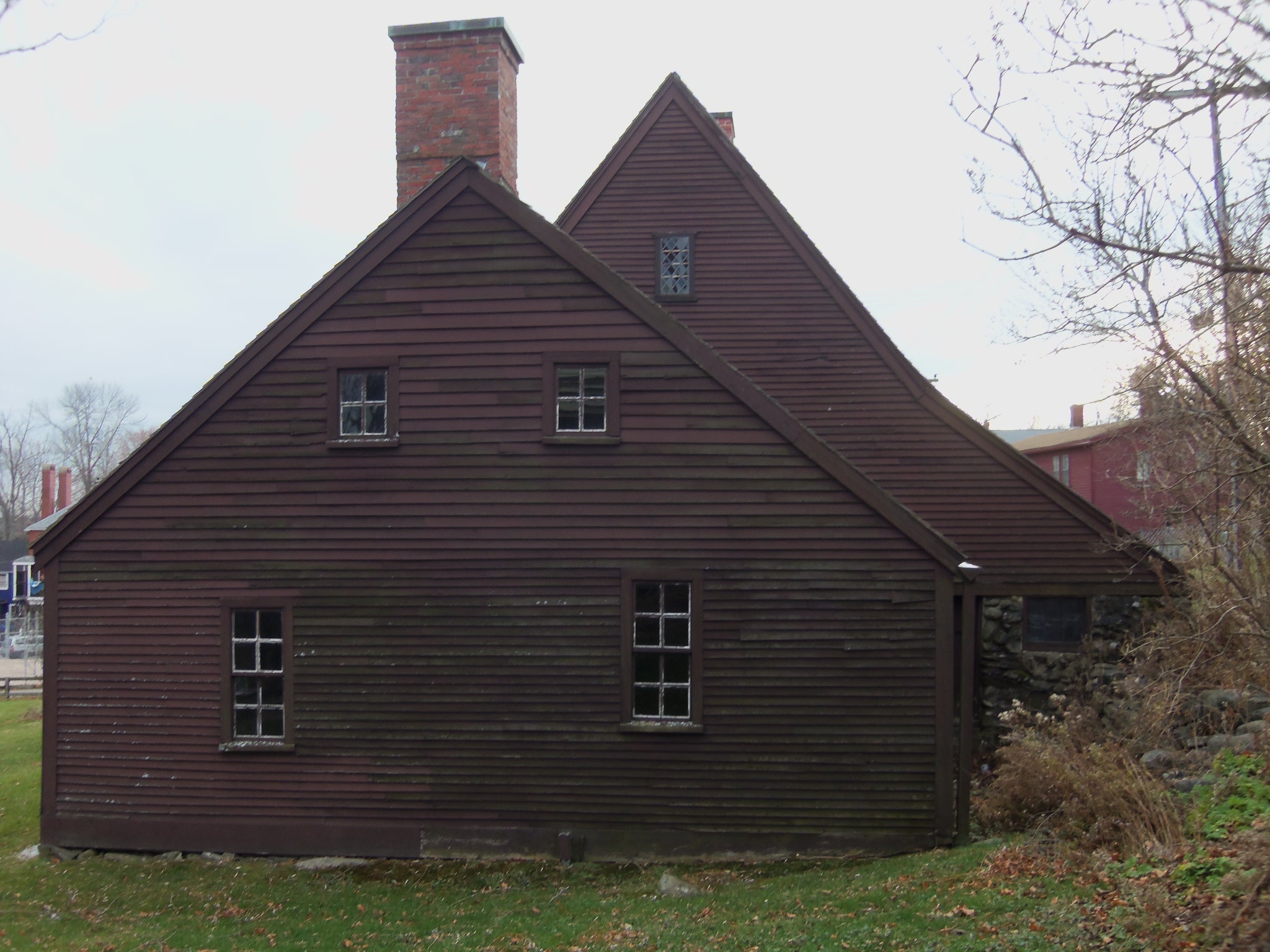
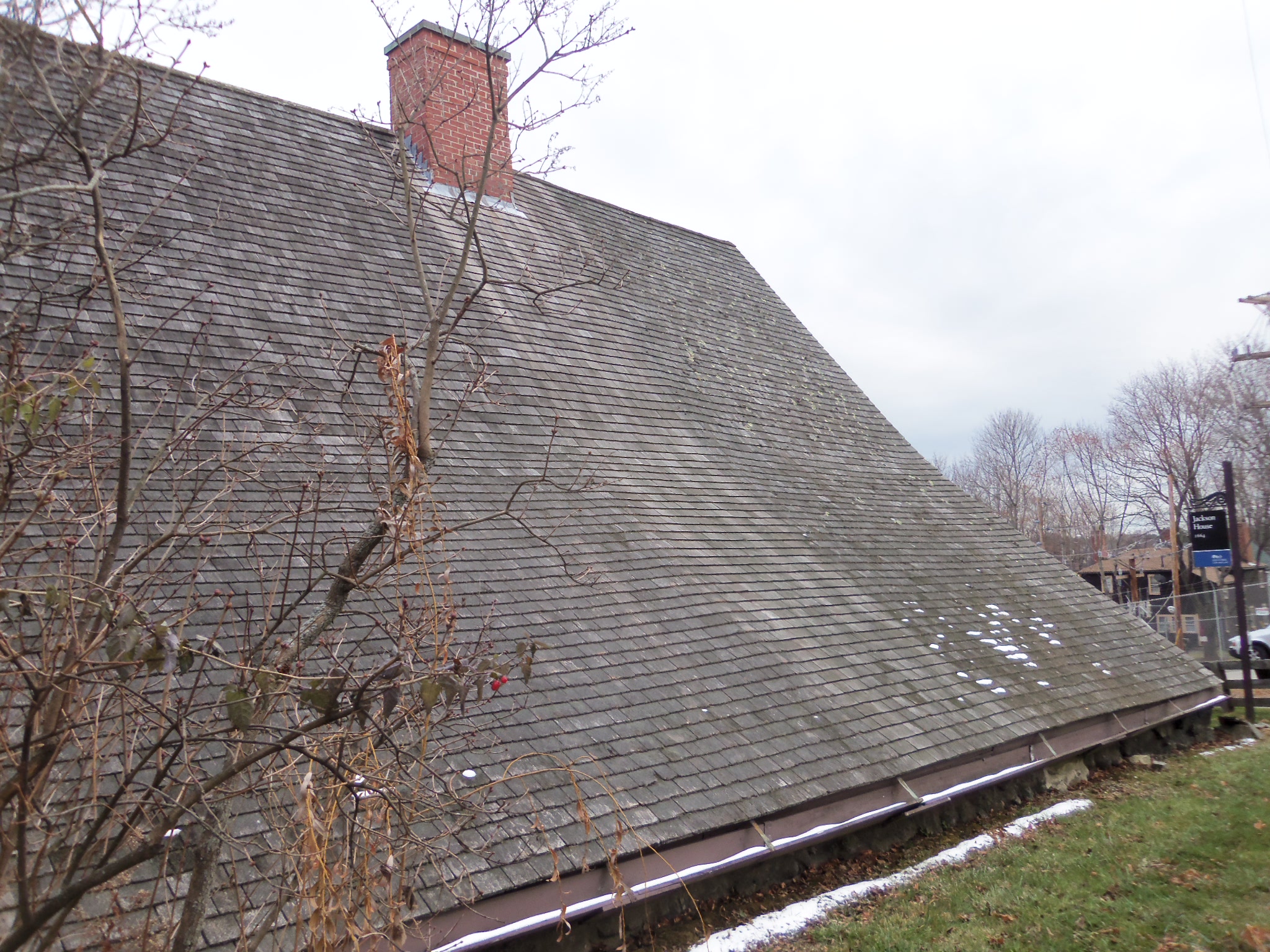
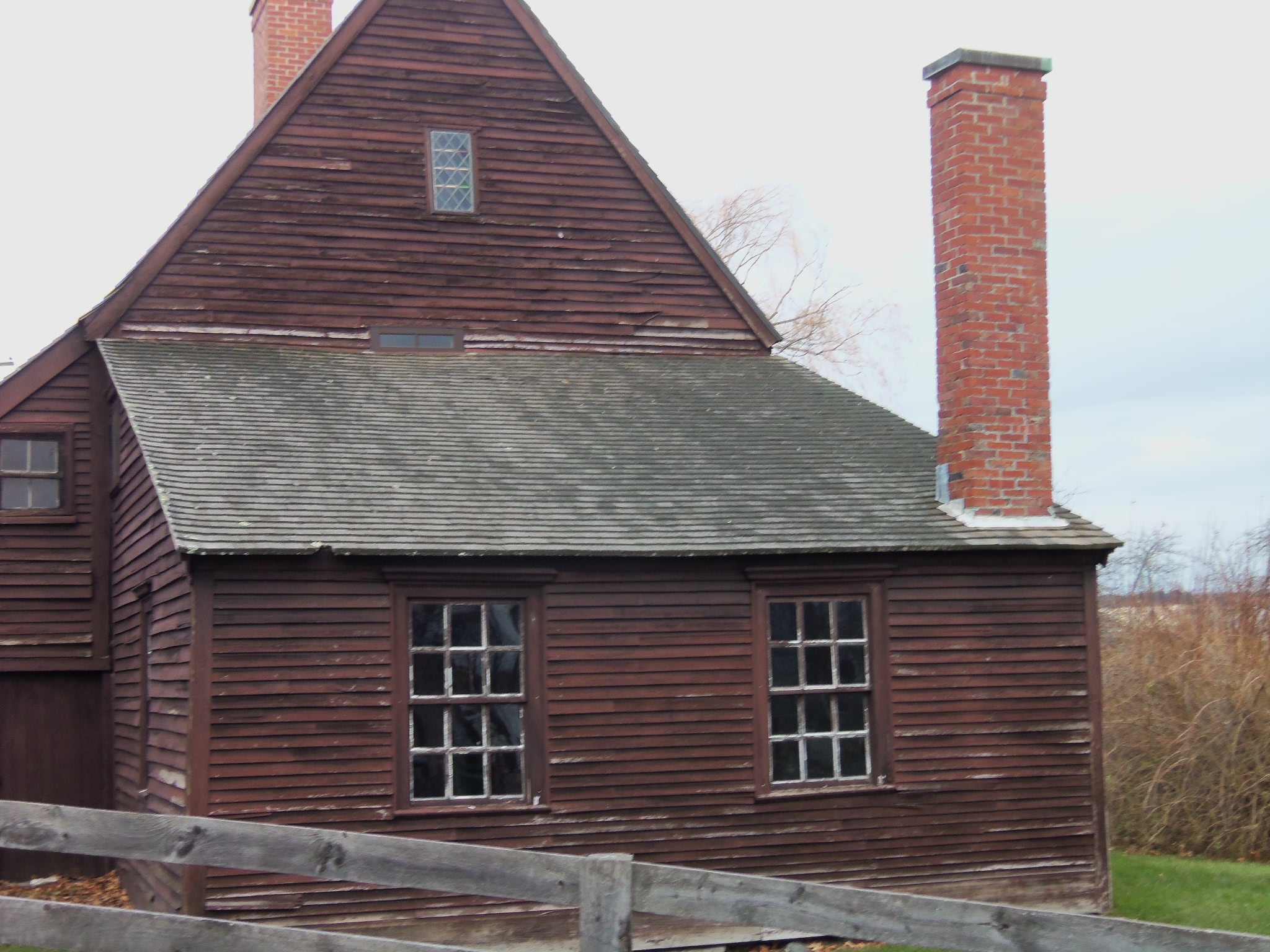
The 1664 Richard Jackson house in Portsmouth is the oldest surviving wood frame dwelling in New Hampshire or Maine. The additions turned it into a multi-family residence.
There it was on a public television broadcast, a curator proclaiming that no other artist had made as many bad lithographs (and maybe other kinds of prints) as Picasso. But, came the rejoinder, no other artist had made so many of genius, either. The freedom of one was necessary to open the other.
I took the message to heart. Genius, of course, is another matter.
It didn’t take very long for my philosophy class in college to realize our professor was wearing the same outfit all the time – suit coat, tie, pants, and Hush Puppies. We wondered about the white shirt, his socks, and underwear, and presumed he was changing those. The second semester, he did the same thing, but with a different outfit. (This was the same teacher whose final the previous year had a single question, “Why?” – which led most students to write profusely in their blue books, hoping to somehow hit the answer by accident. A succinct “Why not?” turned out to be the B+ answer, while “Because” earned the A.) Maybe he was just too lost in thought to be concerned about attire. On the other hand, some in the class repeated rumors that he had a girlfriend in Sweden and was spending most of his income on long-distance bills. (Why not?)
When I’m grabbing the same set of clothes for, say, the third day in a row while getting ready to dash off to the office, that recollection flits through my mind. Sometimes the thought connects with the concept of Plain dress, too, and how we’ve made things more complicated by switching to the less tightly defined “simplicity.” For old Quakers, the question of “What will I wear today?” was much easier than it is for us.
Of course, Plain dress was also a uniform – a symbol of belonging, and belonging to a cause, at that. There are all kinds of uniforms, and not just for the military – mail carriers, retail clerks, priests, mechanics, utility workers, many of them today wearing embossed T-shirts. You know what to expect from them.
There are many reasons I’m not suggesting we return to Plain dress. For one thing, such a move would have to express a unified community; otherwise, we would just appear to be quirky along the lines of my philosophy prof. In addition, putting the focus on the outward appearance ignores what exists within. Still, such a move would be a public rejection of the fashion industry. And it was said that Friends who had taken up Plain dress became more aware of individuals at the fringes of society – and more responsive to their needs.
As for the philosophy prof, I guess the biggest lesson he taught me was the importance of questions in the logic of life. The dressing’s purely secondary.
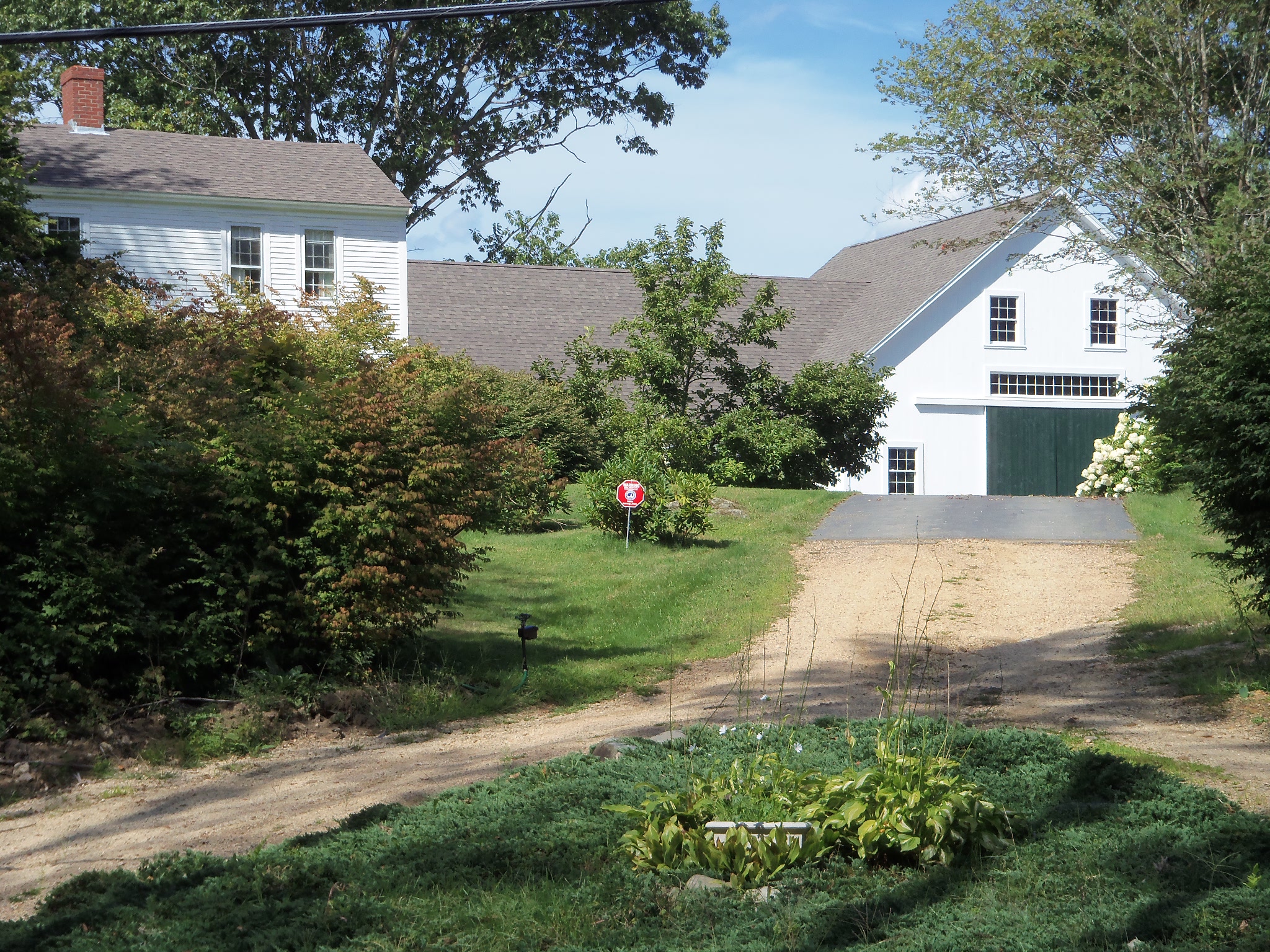


I’ve mentioned the space we whimsically call the Smoking Garden – the funky patio, as it were, beside the barn.
It’s great for late afternoon and evening dining all summer, or parties ringed by Tiki torches, though it’s been a while.
Even so, here it is.


In 1922, the Chicago Tribune conducted an international architectural competition for the design of its new headquarters. The World’s Greatest Newspaper, as it proclaimed itself, could have erected a landmark modernistic tower envisioned by Walter Gropius and Adolf Meyer or an impractical giant lectern styled by Adolf Loos but instead went with a neo-Gothic bullet by Howells and Hood.
By the mid-‘80s, when I was employed by the paper’s syndication service, the grimy gray building was surrounded by many much newer buildings that resembled the glassy proposal the publisher had rejected. Maybe that says everything, in the end.
By then, though, the newsroom had definitely changed. Gone were the typewriters, long replaced by computer terminals and keyboards. Tours were guided through glass-shrouded catwalks overhead, where they could look down on journalists at work. I remember being fascinated to recognize there were four semi-circular copy-desks below me, each one ringed by copy-editors and a single “slotman” at the center, just as it had been when I started. I’d heard, too, that none of those seats were ever vacant long; this was a paper edited ‘round the clock for its many editions. But then I noticed that the editors on one of the rims were doing nothing except writing and editing photo captions. Nothing else for the entire shift. I’m sorry, but I’m used to far more variety when I’m editing. How did they ever stay awake?
Since we were really there to see two of our cartoonists, we headed for a set of elevators serving floors six through 32. And we were headed to the top, Jeff MacNelly’s suite, which sat just under the floor of microwave gear.
With his panoramic windows between flying buttresses looking out over Lake Michigan (you couldn’t tell where the water ended and the sky began that day), I wondered how he ever got any work done on his editorial cartoons or his Shoe comic strip.
One floor down, which Dick Locher commanded, was quite different. With its tiny diamond-shaped windows, the suite wrapped around the elevator and service shafts felt more like sitting inside a gargoyle.
At that point, one of my colleagues noticed a framed Pulitzer Prize on the wall. “That’s all it is? A piece of paper?”
Locher, who drew the Dick Tracy strip in addition to his editorial cartoons, had won two.
On the couch, MacNelly, who’d just won his third Pulitzer, grinned. “Yup, that’s about it. A piece of paper.”
 Jnana's Red Barn