CULTURE SHOCK

It had been ages since I’d gone to the cinema multiplex – you know, the kind in the vast parking lot beside the mall. Usually, when we go out for a movie, it’s an art house in Concord or a volunteer-run series at the Music Hall in downtown Portsmouth.

But Wes Anderson’s latest, The Grand Budapest Hotel, was showing, and we figured we’d better make it there fast. No telling how quickly anything that quirky, formalistic, and savvy would be playing. (As we juggled our schedules, we realized it would have to be Monday night, overriding another activity on my itinerary – as we discovered, if you’re going to hit the big-box of showrooms, that’s the night to do it. We practically had the rectangular cavern to ourselves.)

I’ll leave it to others to lavish praise on the witty plotting that continually turned in unpredictable yet seemingly inevitable developments; the impressive casting and stylized acting; the precise cinematography; or the marvelous interweaving of actual sites in Germany (the hotel interior was actually the atrium of a defunct department store), miniature models of varied scales, and special effects to create a sense of fantastic and delightful artificiality. Anderson, as his fans know, is a moviemaking genius with a voice and vision all his own. (For one engaging detailed look at the roots of the story, click here.)

For me, though, the outing also invoked a series of culture shocks. Now that I’m “retired,” income’s tight, I’ll admit. I’m spending much less than I did before, and gasoline’s toward the top of my out-of-pocket budget. So the current ticket price (go ahead and laugh, you debonair rounders, when I tell you it was $11 apiece for three) made me gasp silently. (I know a good Greek restaurant where we could have dined out for that.) (I’m I really turning into this?)

From my end, it’s hard to take the very interior and decor of consumer society reflected in these big-chain outlets. It all feels plastic, cake-frosted, impermanent, unnatural. No one would want to linger in the vast lobby (what’s the point, anyway?), and no matter how plush, the showing rooms are – well, showing room sounds like something you’d find in a funeral home, which may be a good parallel, except that in much of the country, the mortuaries are usually in some amazing Victorian mansions. Nothing cookie-cutter about them, unlike these concealed warrens. None of this matches what I consider a theater or concert hall or even a house of worship, the kinds of places I prefer to assemble with others.

The third shock came in viewing the trailers and commercials. I’m still offended to be bombarded with big-screen ads after paying what I consider to be inflated ticket prices, after all, but to be hit twice with a promotion for a new computer game was especially egregious, especially with its pseudo-documentary interviews with its “creators,” a handful of pretentious nerds claiming social value for violent nihilism. I’m sorry, their world vision leads nowhere but destruction.

Actually, it was the amplified violence repeated in the trailers as well that most aggravates me. What in the American psyche so fosters terrorism of this scale? What justifies the reveling in gore for so many (and at such a price, even before we get to the price on our psyche)? Here’s the road that deserves a sermon of hellfire and brimstone, indeed. Wake up, folks, will you?

No wonder I prefer intimate, small-scale, gentle, playful, European or indie productions! They, in contrast, have soul and reality.

Anderson, I must confess, goes well beyond the small-scale criterion, but he earns the right to do so. And he’s generous to those who contribute to the effort, from the visual artists to the payroll accountants. One of the things that kept going through my mind as we were watching, actually, was an awareness of the lavish investment he was expending in the process and the question of whether he’d ever make it back. Well, maybe it wasn’t any greater than those of the futuristic trailers we’d watched beforehand, but still … Hollywood and Las Vegas have more in common than I’d like.

Maybe their biggest gamble is in making works that demand to be seen on the big screens rather than on our laptops or TVs via Netflix.

If you were a moviemaker or investor, what would you do? Or, as a film buff, what are you doing now?

GARRISON HOUSE

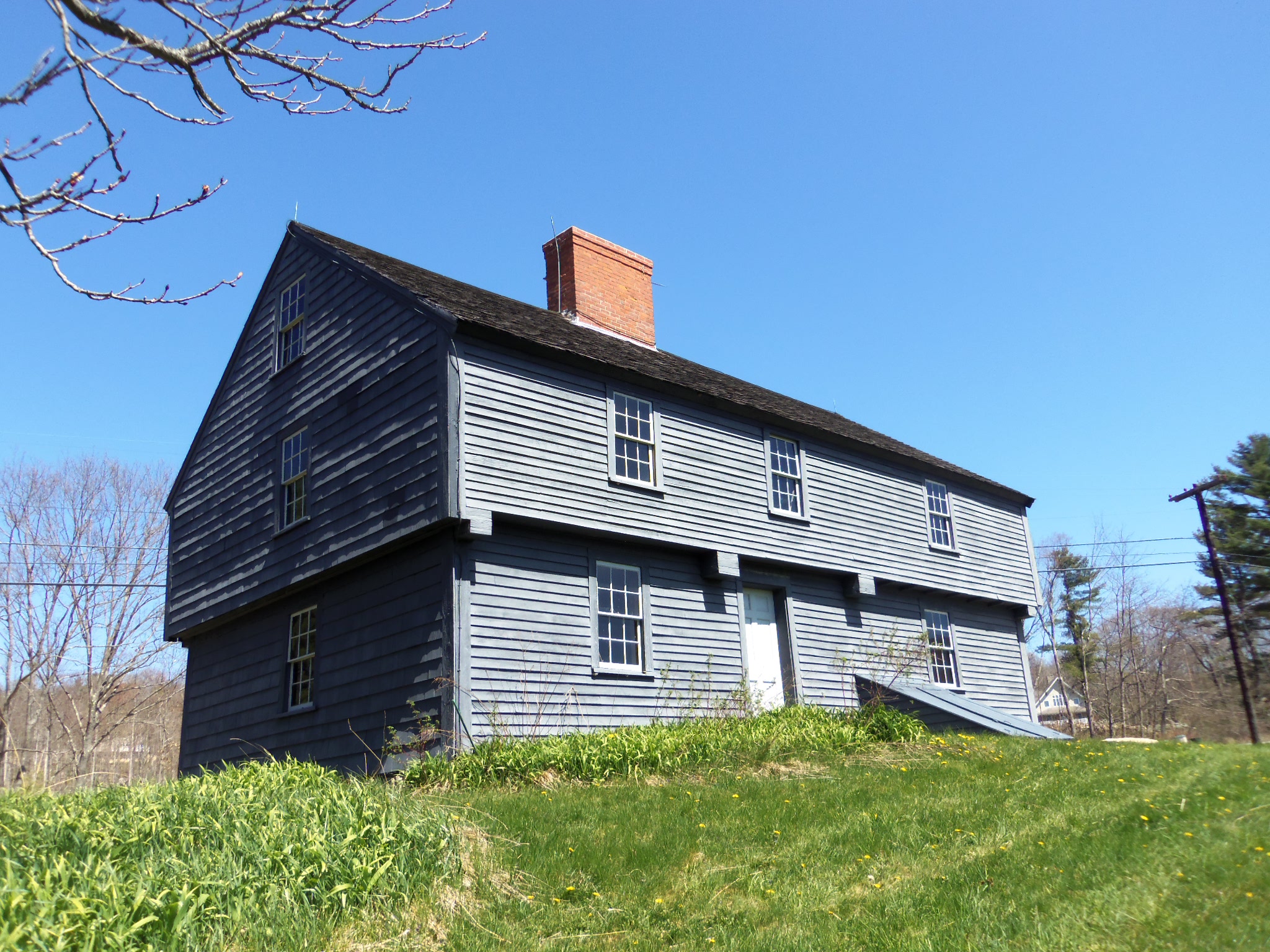
The distinctive overhang design allowed for self-defense from within.

From the outbreak of King Philip’s War in 1675 until the conclusion of the French and Indian War in 1763, much of northern New England was under an ongoing threat of violence along its frontier. Nearly all of the English settlement in Maine was pushed back to a few towns nearest New Hampshire, and many villages, including Dover, suffered devastation and massacre.

Indeed, officials ordered many residents to construct fortified garrison houses, like this reproduction along Cider Hill Road in York, Maine, where families could retreat for armed protection when an alarm was sounded.

The site overlooks the inland tidal salt marshes that give rise to the York River. The hay from such spots was prized, even though feeding it to cows would produce a distinctively salty milk.
Also on the site is a more traditional New England style of construction -- shingle siding that weathers to gray.
Also on the site is a more traditional New England style of construction — shingle siding that weathers to gray.

ANTIQUE OR JUST OBSOLETE?

Climbing around the barn the other day, I came upon a few items I now realize are ancient history. The T-square, for instance, was used for paste-ups for pages that would be photocopied for publication. But nowadays, that’s all done in the computer. The circular wheels were actually slide rules we used to calculate proportions when cropping photographs, also for publication – and once again, that’s all done in the computer these days. The metal ruler has special calibrations in picas and points, the measurements traditionally used by printers. You run into point measures now in the font section of your word program. And then there’s the mouse pad. You remember those, back before you switched to laptop?

100_6667

So I came back into the house and turned on my stereo. You may notice I still play vinyl, which probably deserves a posting of its own. When I was a teen, I dreamed of the day I’d have an entire wall of LPs and the system to play them on. Now I look at this and realize it can essentially fit into my laptop or, uh, an iPod, if I ever go there.

100_6686

COCHECO MILLS CLASSICS

A typical water-powered textiles mill would have thousands of these foot-long bobbins feeding its looms.
A typical water-powered textiles mill would have had thousands of these foot-long bobbins feeding its looms.
A sampling of the designs that made the Cocheco Mills world-famous.

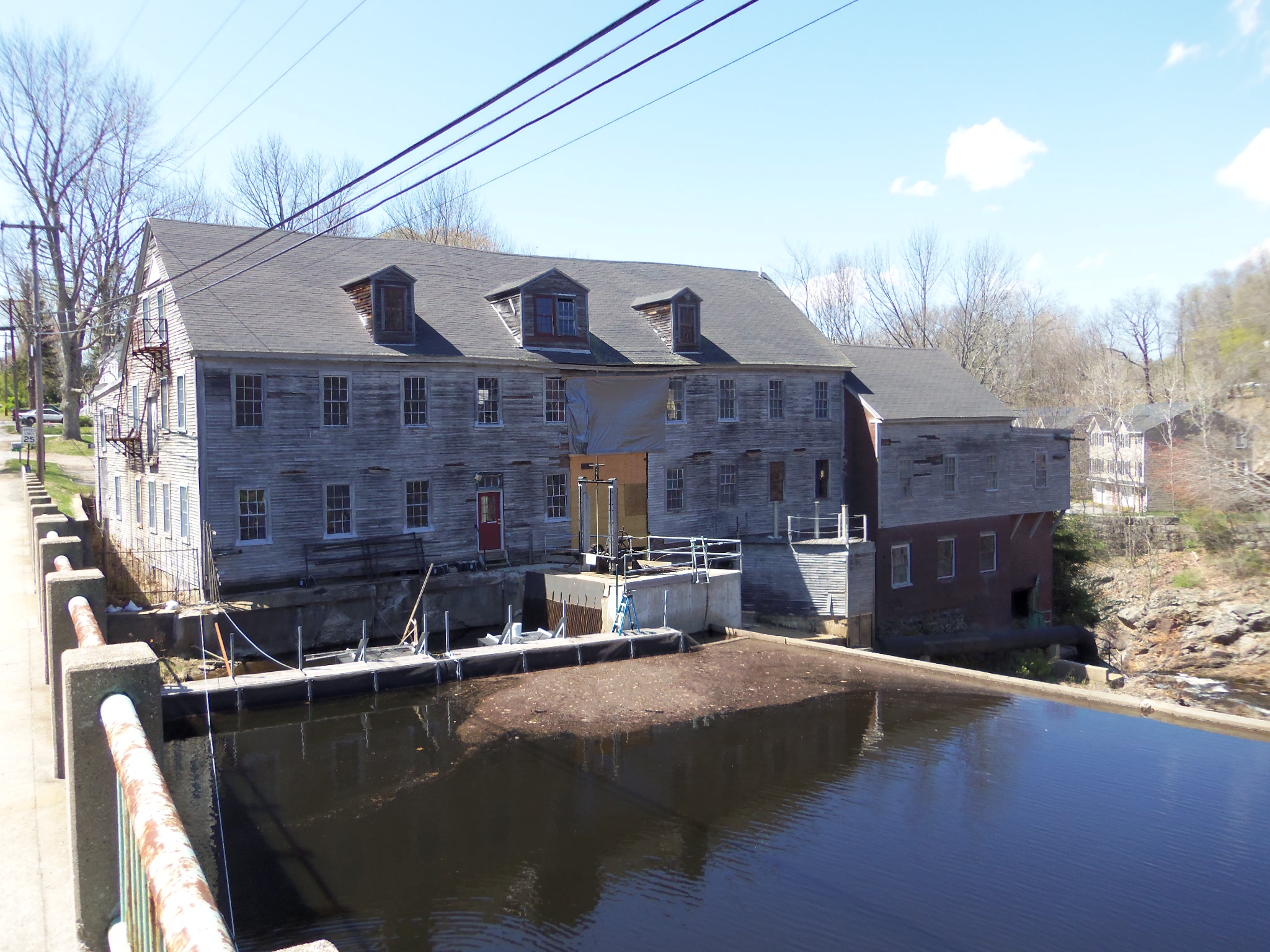
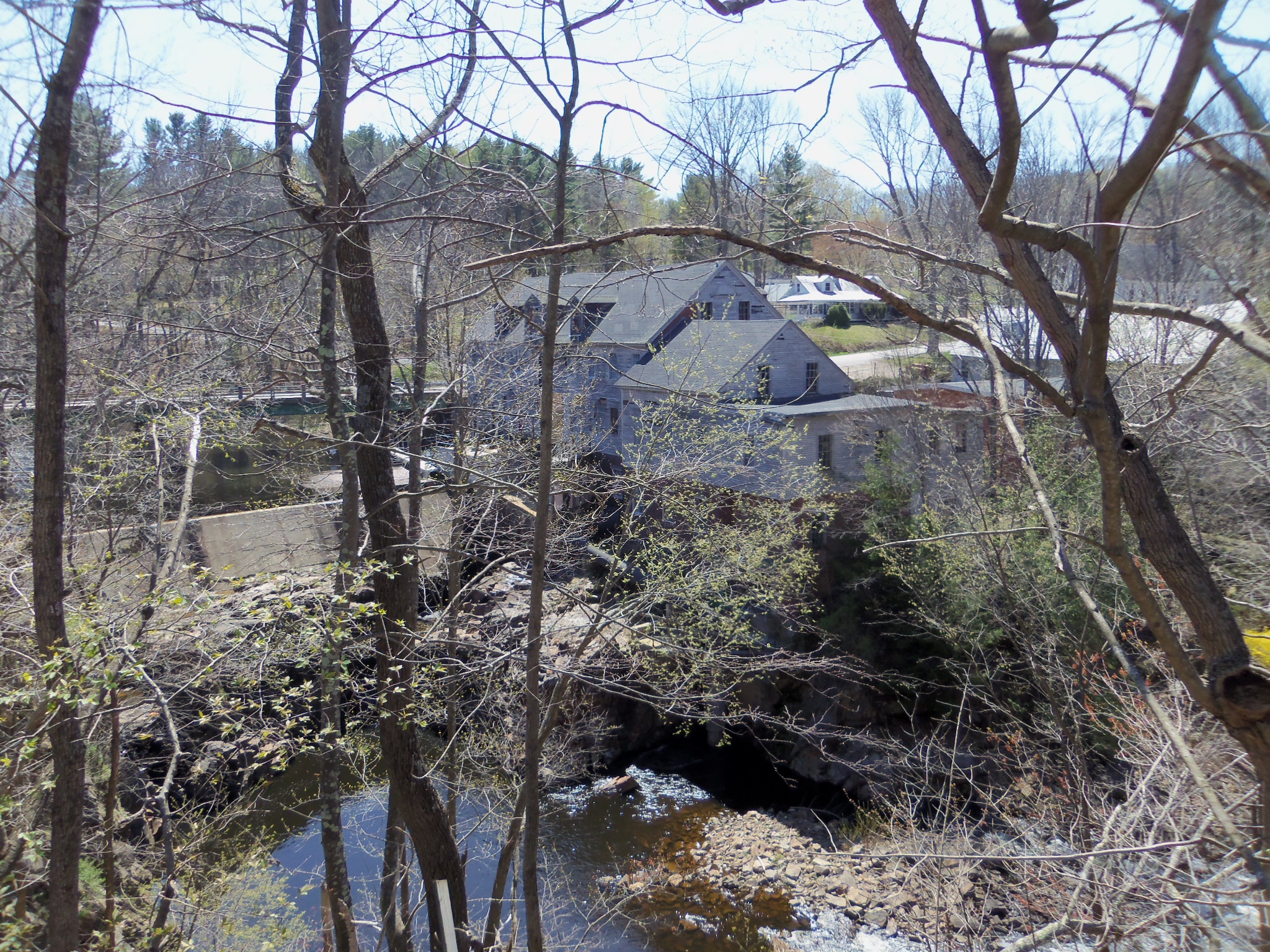
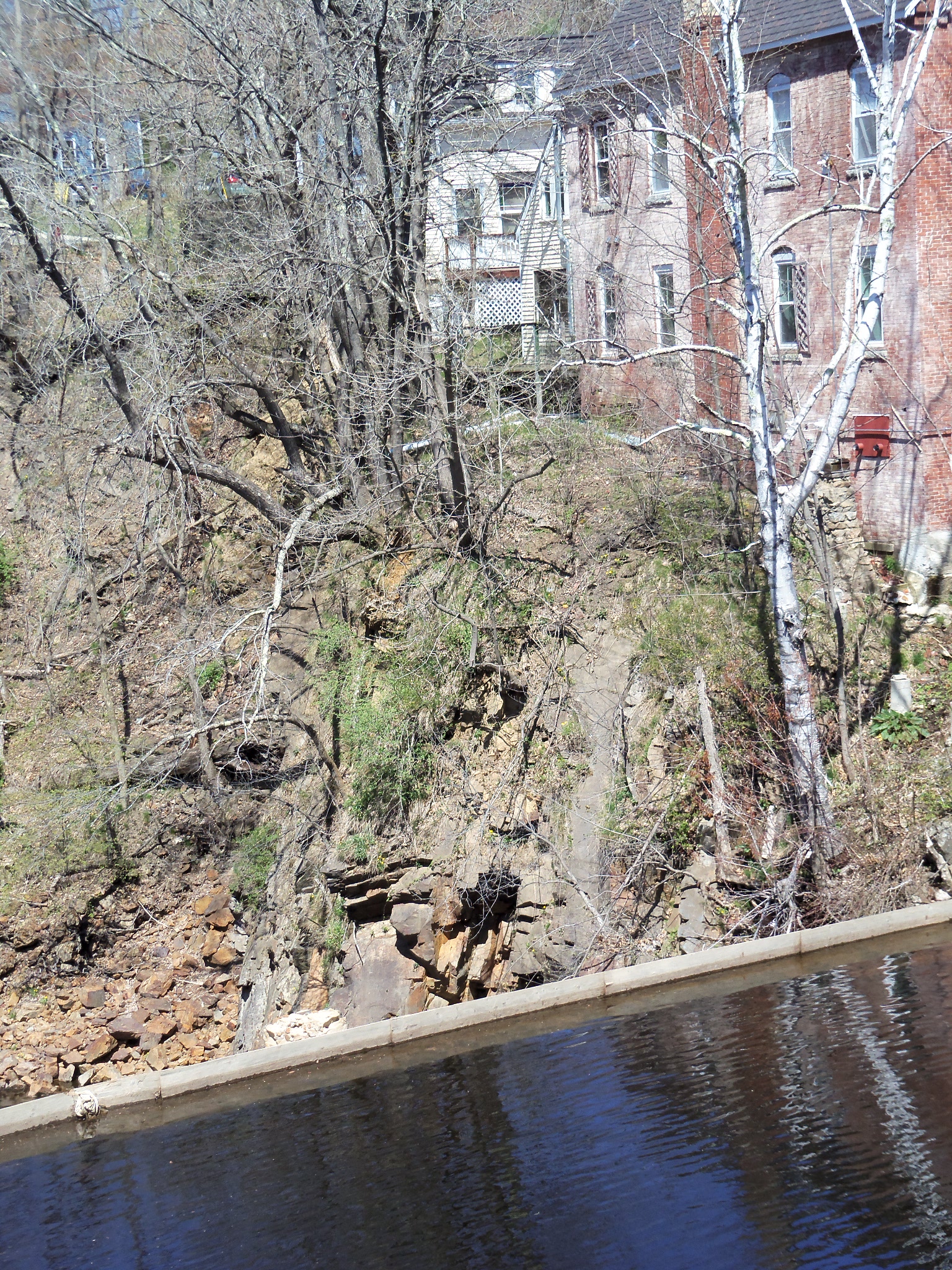
The short distance between New England’s mountains and its Atlantic coast means its rivers and streams drop in elevation rather quickly, and that has provided both powerful currents and many opportunities for power-generating dams. As a consequence, the region is peppered with old mills – usually brick but sometimes stone or even framed wood – that were once the industrial backbone of America.

Downtown Dover, for instance, is built around the Cocheco Falls, where the river plunges into the tidewater. The falls are topped with a dam, and the diverted water once powered a complex of textile mills that produced world-famous calico, among other woven products. The Amoskeag Mills in Manchester, meanwhile, were noted for their denim, which supplied Levi Strauss in his legendary San Francisco production. Nor was fabric the only product coming from the mills. Everything from precision tools to locomotives to shoes and socks and cigars was being shipped from the cities and towns along the waterways.

Over the years, many of these mills have fallen into disuse through a combination of newer technologies, cheaper competition from steam-powered Southern mills, and overseas production. But the legacy remains.

As I learn from my elder daughter while examining a glorious sampling of cloth she’s intending to turn into quilts or comforters, the designer Judie Rothermel has recreated some of the classic patterns found at the American Textile History Museum in Lowell, Massachusetts, and reproduced them in partnership with Marcus Fabrics.

The Cocheco Mills Collection, issued serially over several years, is one of the impressive results.

Let me say, some of the technical results are mesmerizing while the colors are deep and delicious.

How did we ever stop making this?

REGARDING A GRANDFATHER CLOCK

When I was growing up, “going to the farm” meant a trip to my grandmother’s sister and brother-in-law in the other corner of our county. One of my memories was of the grandfather clock that stood at the top of the stairs and Aunt Edna’s mentioning that it had been carried over the mountains in a Conestoga wagon “from the place where Conestoga wagons were made.”

As a history buff, I eventually realized that was Lancaster County, Pennsylvania, now famed for its Amish population. The plot thickens, as I explain at my genealogy blog, The Orphan George Chronicles.

Decades after the farm had been sold and I began working on the genealogy puzzle, I received a few photographs of the clock, and a few days ago I scanned them into my computer. You can’t see many of the details, but I remember the small moon and sun that would rotate in the clock face. A few years ago, back in Ohio, I was surprised by how short the clock itself is. We think of grandfather clocks as large, but this one is probably shoulder-high to me.

Most amazing, though, is the sweet ringing it issues in singing its quarterly rounds. Not a gonging sound at all, but more like the clinking of crystal stemware.

And to think, the clock itself had been rediscovered, hidden away on its side in a loft of one of the barns. Just goes to show, you never know quite what to expect when you go rooting around in an old barn now, do you?

SCN_0002

SCN_0001

SCN_0003

EARLIER OWNERS AND THEIR IMPRINT

Every time we undertake another repair or remodeling project with our old house, I’m reminded why I don’t do it myself. Yes, I’ll assist our carpenter/electrician or even keep an eyeball on the plumbers, but the earlier work we encounter always presents something inexplicable.

When we were stripping the walls and ceiling of the kitchen, for instance, Rick looked up and said, “I don’t like that.”

“Don’t like what?” I replied, looking at the weird angles of the two-by-fours running to the ridgeline. I could have as easily said, “Now what?”

“The roof’s not attached to the walls,” he replied. Oh? We both calculated it had been that way eighty years or so, however miraculously. “I’ll do what I can to strap it down.”

It’s a long list, actually, of guys who thought they knew how to fix things. But they weren’t pros or even skilled. Makes me wonder about a lot of the construction guys at work today. So I’ve become ever so grateful to turn to people who are truly capable. The best ones are worth every penny.

BOBHOUSES

100_6739

Alton Bay on Lake Winnipesaukee is a popular site for bobhouses each winter.

When they lived way up in Maine, with a large lake just down their road, I remember hearing Eric tell about the morning he looked out the window and saw a traffic jam. Miles and miles from the nearest traffic light, here were bumper to bumper pickup trucks heading to and from the lake. Soon, he realized they were removing their bobhouses before the ice melted.

Bobhouses, of course, are part of the male culture of northern New England and many other frozen parts of the world. Since I don’t fish, no matter how much I admire fly fishermen and their skills, I really don’t appreciate the special savvy of landing one’s meal from under the ice. You can do it, of course, by drilling a hole in the thickness underfoot and then sitting or standing out in the cold. But the really serious guys build or buy their own little houses for the tradition – some are quite basic, while others, I’m told, come with TVs and Web connections. Still, I’m curious about what draws men from their warm homes to spend long days or evenings in a very cold environment. One of the answers is that it’s an excuse to drink with your buddies. Another is that it’s just to get away from the women. Except that it turns out some very adventurous women join in on the expedition. Are the fresh fish really worth this much effort?

Even so, that afternoon, Eric looked out again and saw another traffic jam, this time with trailers hauling their boats to the water. Presumably for more fishing.

How did they know this was the day the ice would go? What clues am I missing?

FROM QUAKER CULTURE TO JANE’S CLAY PUPPETS

Continuing this month’s survey of Books Read, here are a few more entries:

  • James Walvin, The Quakers: Money & Morals; Jean R. Sunderlund, Quakers & Slavery; Barry Levy: Quakers and the American Family. These three volumes, tackled together while purging my spirituality shelves in my lair, present a fascinating examination of Quaker economic systems in history. Walvin approaches the rise of Quaker wealth and capitalism in Britain, especially through the networks of traveling ministers, apprenticeships, extended families, and so on. Of course, within three or four generations we had the phenomenon of much of those families leaving the Society of Friends and, later, the companies themselves being acquired by larger corporations. Sunderlund examines the resistance in Philadelphia Yearly Meeting to the abolition of slavery, finding it more intense in some quarters than in others – but most intensely entrenched in the yearly meeting’s hierarchy itself. While he ponders the events that allowed the yearly meeting to turn in the 1750s, he does not calculate what I sense might be the most obvious: the wealthiest families, which were most likely to own slaves, were drifting away from Friends. Combine that with the deaths of the previous generation of wealthy leaders who remained Quaker, and you have the possibility that persuasion had less to do with the transformation than we might hope. Levy, meanwhile, raises the model of Quaker farming as an underpinning of the success of Friends as an institution across multiple generations. He suggests that the families that were least able to set their children up on their own farms or businesses were also the least likely to see their children find mates within the Society of Friends, and thus marry out. He also observes that in Quaker marriages, the husband was not the authoritative head of the household, not in the model Calvinists followed. Rather, a marriage was subject to the women’s meeting, shifting the authority to the women elders. This is a powerful aspect of the women’s meeting I’ve not previously seen articulated, and one that could be greatly advanced.
  • Christian Pessey & Remy Samson: Bonsai Basics: A Step-by-Step Guide to Growing, Training & General Care. A lovely little book (yard sale find) that may very well convince me not to undertake what would obviously become another compulsive activity.
  • Andrei Codrescu: Whatever Gets You Through the Night: A Story of Sheherezade and the Arabian Entertainments. More about the royal brothers and their problems, ultimately, than the ostensible subject. Gets lost in scholarly insider jokes and footnotes and socio-economic/political sidebars. Quite disappointing.
  • Jane Kaufmann: Unframed. A marvelous coffee-table art book autobiography of a popular New Hampshire ceramic artist and her life’s work. Great for endless inspiration, especially in keeping a light yet acerbic touch.

100_6848

FROM THE CROSS TO CHINESE CHARACTERS, WITH LADY CHATTERLY ALONG THE WAY

Continuing this month’s survey of Books Read, here are a few more entries:

  • Richard John Neuhus: Death on a Friday Afternoon: Meditations on the Last Words of Jesus From the Cross. A beautifully designed volume laced with some tender pastoral memories, the line of argument ultimately collapses for me under the weight of the Augustinian tradition and its emphasis on Paul (or more likely pseudo-Paul) rather than Jesus himself. Despite all of the subtle contortions, I don’t see God getting off the hook here.
  • D.H. (David Herbert) Lawrence: Lady Chatterley’s Lover: What a marvelous bit of storytelling! I love the way he’s free to tell, with just enough show to make it compelling. Some marvelous dialect here, too. As for the scandal, he was pushing the envelope of conventionality. All of the anti-social diatribe, however, reminds me too much of Micki. How curious!
  • D.H. Lawrence: Women in Love, Sons and Lovers, Short Stories. A tedium sets in quickly with these, especially as one sees them as studies for the later Chatterley. So much of the dialogue awaits action, which proves tepid when it arrives.
  • Friends General Conference, Religious Education Committee: Opening Doors to Quaker Worship. Some interesting exercises for deepening an understanding of Friends Meeting, some for adults. One to pass along.
  • Walden Bello: Visions of a Warless World. A survey of world religions regarding war, including the dual strands in the Judeo-Christian stream in which God originates as a war deity and is transformed along the way. But I find the broader vision missing – just how, for instance, do we channel the innate aggression in human nature?
  • Ernest Fenolosa, edited by Ezra Pound: The Chinese Written Character as a Medium for Poetry. What fun to revisit this piece from much earlier in my career!

100_7030

FROM CELIA THAXTER TO CHARLES IVES, WITH ANTIQUITY IN BETWEEN

Continuing this month’s survey of Books Read, here are a few more entries:

  • Celia Thaxter:  An Island Garden. A delightful book. The Childe Hassam illustrations are classic, and my favorite parts of the text are her descriptions of the sea and island life. Of course, the gardening advice is no slouch, either, especially with her passionate details of battling slugs.
  • Jennifer Toth: The Mole People. A daring demonstration of enterprise reporting by a Los Angeles Times correspondent in New York, detailing the rise of homeless people in the 1980s who retreated to the depths of the city, including those of the subways and railroads. Her investigations ultimately placed her life in danger. A remarkable alternative to my freewheeling, playful Subway Hitchhikers perspective.
  • Antonia Fraser: Cromwell: Our Chief of Men. After all of my Quaker histories and Christopher Hill’s The World Turned Upside Down, this biography provides a third leg for triangulating the upheaval that shaped the Society of Friends. I now see the Protectorate as a subset of the Interregnum, one in conflict with both Parliamentary rights and the political power of the Army (including its Leveller and Digger voices). Fraser’s description of the origins of the New Model Army as “godly men” hints that its span may have had several incarnations; also, John Lilburne’s role within this period, as a vocal dissident, leaves me concluding that Cromwell’s failure to extend the vote for the House of Commons to all free Englishmen (or at least all of the Army, who had fought for its freedom) was the central fatal flaw of the revolution, especially as Cromwell floundered in his attempts to rule with a greatly muzzled Parliament. From Fraser’s perspective, the Quakers were generally just one of the many sects flourishing at the time, and the Nayler trial by Parliament, while troubling in its legal foundation and execution, was not the pivotal event seen by Douglas Gwyn and others. In the end, Fraser is long-winded. What I would now like to see is a definitive treatment of Lilburne, another of the New Model, and yet another on the General Baptists of the era.
  •  James Joyce:  Ulysses. Such a troubling, disjointed work! On one hand, it points straight to Kerouac and William Burroughs in its free-flowing association. Despite many imaginative and wonderful lines and, especially, puns, it’s hard to follow the characters through this single-day pursuit, or to have any sympathy for any of them.
  • Jack Miles: Christ: A Crisis in the Life of God. This ex-Jesuit’s examination builds on his earlier biography of God, and his conclusion that, for various reasons, the God of Israel can no longer deliver his end of the covenant. Miles approaches Jesus exclusively as God Incarnate, rather than any of the alternatives I’ve perceived, and sees the Crucifixion as essentially a self-suicide by God – an offering of appeasement for his failure. Indeed, Miles sees Jesus as repeatedly evading questions about the free Jewish state promised in Isaiah, especially, and calls Jesus an “ironic Messiah.”
  • The Confessions of St. Augustine. His conceit of addressing these to God, as in prayer, even though the deity already knows all the details and more, provides an intimacy for the general reader to whom the work is actually aimed. Of course, Augustine’s ultimate denunciation of the turns that led him to his life in the Church – in fact, his appreciation of those steps – taints the work for me. Too much self-piety, in the end, with all of his destructive role in leading Christianity into the “dark night of the apostasy.” On the other hand, much of this is also a day book for reflection: not the way I handled the volume this time, but perhaps at a later date.
  • Charles Ives:  Essays Before a Sonata, The Majority, and Other Writings. The essays regarding the Concord Sonata and its Transcendentalist inspirations are provocative and insightful. His political writings, however, can be embarrassing, except for the sense of the Emersonian influences Ives is attempting to apply – his naïve faith in a Majority (the People) over an elite Minority (the Non-People) is all the more telling in that Ives (and, for that matter, classical music itself) will never appeal to the Majority in America!

100_6806