Retriever profile
You never know what we'll churn up in cleaning a stall
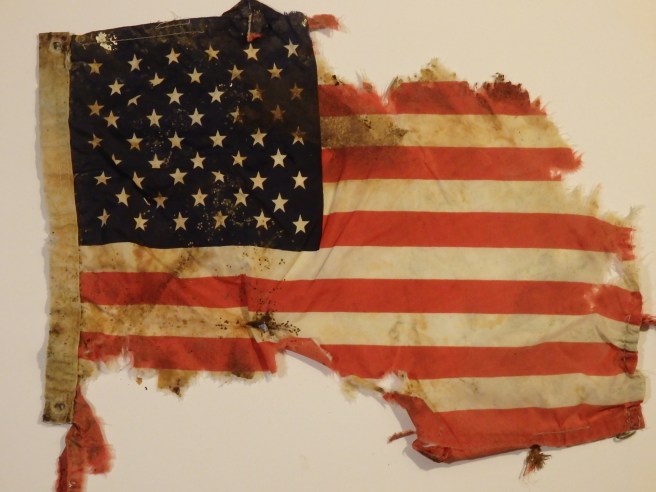


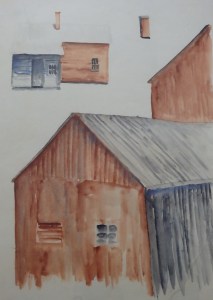
As the inspector said, the house has good bones. And as others have confirmed, the place feels good.
If I were living here solo, it would be too big for my needs. The second-floor could be reserved essentially for guests in season.
For two of us, both working from home, that second-floor would definitely come into play, and adding a daughter and son-in-law to the mix, even as frequent visitors, makes for yet one more set of calculations.
So here’s what we’re looking at on the horizon:
It sounds like a lot, but we’re finding it exciting. We did just as much in Dover, only piecemeal.
The Cape we bought was listed as circa 1865, but from some of the detailing, we’re guessing it was more likely around 1835. A bird’s-eye view map from the 1835 shows a house on this site, though maybe not this one.
Many potential buyers passed on the place, for whatever reasons. It is definitely a fixer-upper, but it feels good, and we like its in-town, close-to-the-ocean location.
One chimney was in peril of collapse, and it’s already been removed. The fuel-oil tank had to be replaced. Also done.
We’re looking at the work ahead in two stages.
The first, of course, is more essential. The second, renovating the place more for our dreams.
Not that I especially wanted another This Old House kind of series, but this time we think we can tackle the project more comprehensively, rather than piecemeal.
Here’s what’s on our plate as soon as possible:

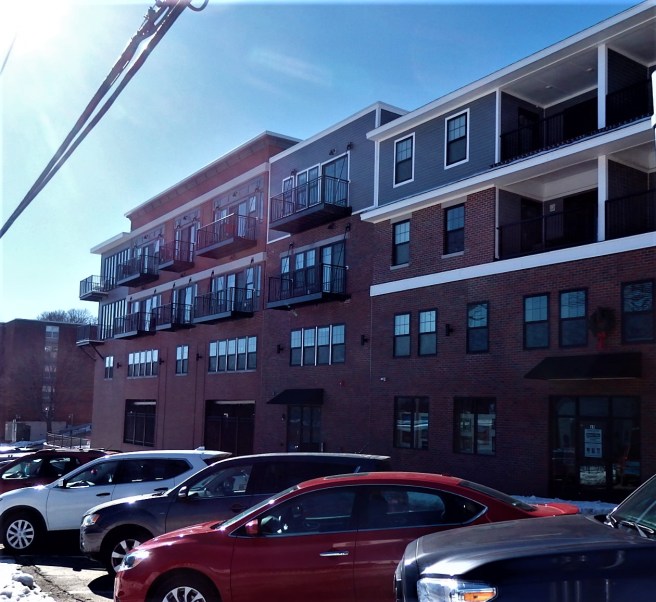
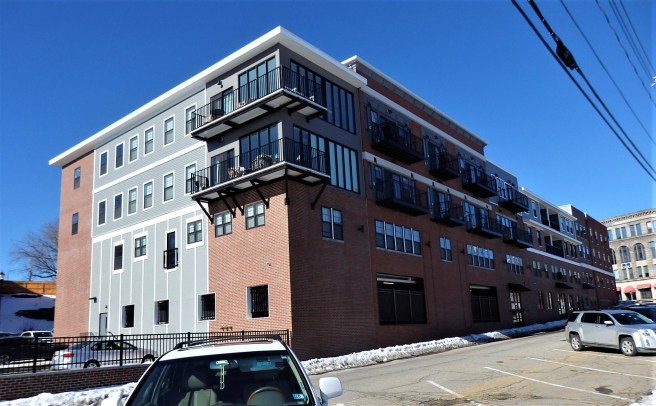
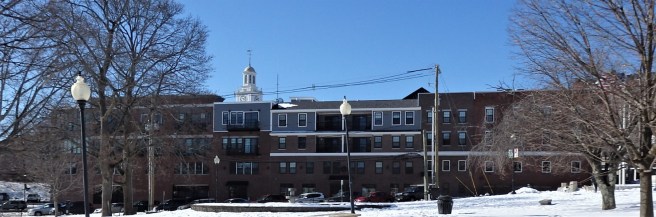
The old Foster’s Daily Democrat newspaper plant had been added to willy-nilly over the years, and there was no way of hiding that in the building’s transformation to multi-use tenancy. As we’ve seen in previous posts, much of its rear side facing Henry Law Park was essentially a windowless concrete block wall. Not anymore. The corner apartments were quickly rented.
 Jnana's Red Barn