Original? Turns out the Eastern Orthodox do this, too … every year.
I’d still take the room atop the tower

When a Chinese student stayed in our home
Last summer, we had a college student from China stay in our home while he worked an internship at the children’s museum in town.
We found it to be an enriching experience.
His big desire was to improve his English, which he did, but he also wanted to “eat American.” That meant, as we learned, that he really loved our homemade Mexican more than a Big Mac … and my fried rice more than the Chinese restaurant downtown. And don’t overlook the brownies and potato chips.
Lobster, on the other hand, required too much labor to dissect, as his friends agreed.
As a city boy, he was annoyed by the insects when we dined outdoors. Alas, we ate indoors a bit too often.
In return, we’ve been endowed with some of the best green tea in North America, along with some great memories.
His English was, shall we say, much better than my Spanish (my point of reference in trying to translate to another language), but our great discovery was of an effective way to translate when we got stuck on an interpretation. No, it wasn’t a dictionary. It was the ubiquitous cell phone.
Like when he wanted to buy some sleepers.
Pajamas?
No, sleepers.
After a few rounds of that, he pulled up the image online.
We were in the drug store.
Oh, flip-flops! Now I understood.
That is, slippers.
Made sense to me. An “i” can, after all, be pronounced as “ee.” It is in Spanish, for that matter.
We headed for the aisle behind him, found a suitable pair for under three bucks – made in China, actually. Small world?
Continue reading “When a Chinese student stayed in our home”
Building on their values
In my new novel, What’s Left, she’s grown up taking much of her family and its restaurant enterprise for granted. After all, every kid in her extended close-knit family has had to work shifts there. After the death of her father – her Baba – when she’s 11, she uncovers what had attracted him to the home she’s known.
Early on, his input into the expansion of the restaurant must have felt invigorating. Beyond its pure financial calculations came some intense consideration of spiritual values, growing culinary awareness, and out-and-out-sensory delight. Could you put these together as an artistic experience? That kind of thinking.
Mixmaster? Just look at ‘What’s Left’
What, me as a Mixmaster? Just look at the topics percolating in my novel What’s Left.
Here are ten.
- Questions of personal identity. For Cassia, this moves from a desire to fit in with what she considers normal for her peers and classmates and turns into something more solitary Goth before she hits stride as a rock concert manager.
- Questions of just what, exactly, identifies a family. Hers has its landmark restaurant as well as a circle of close cousins and siblings she calls the Squad. But she’s still missing her dad.
- Greek-American experience. She grows up in her mother’s extended family, the fourth generation after two brothers and their spouses, two sisters, arrived in Indiana from Greece. It’s a colorful tradition.
- Family owned-and-operated business. Their landmark restaurant means the kids learn to work early, and their parents often have to miss big events at school or sporting events. It also presents uniquely troubling aspects when company clashes erupt or a member dies and inheritance taxes are due.
- Guerrilla economix. Her uncle Dimitri advocates a community of small-is-beautiful economics using the restaurant as its base. Seeing himself as a socialist capitalist, he champions generous worker benefits, funding worthwhile startups, and creating considerate rental housing.
- In this family, even its initial hot dog joint adds distinctive touches. When they acquire burger-and-fries Carmichaels’, they look for local sources to give them an edge, especially in their daily soups and specials. And then when they branch out into upscale and vegetarian lines, the thinking turns especially creative.
- Bohemian life. There’s Gypsy, from one direction, and hippie, from another. And Cassia’s aunt Pia, so full of kefi, makes the most of it.
- Keys to success. Cassia soon realizes the ideal of the self-made man is an illusion. Her family is a model of working together, even mentoring. Her father’s fame would have never come about without their support.
- The Dharma. Members of her family, especially her father, take up Tibetan Buddhist practice before she comes on the scene. It gives her a dual outlook on religion and spirituality.
- Emotional loss and recovery. Cassia loses her father to a mountaineering accident when she’s 11, setting her on a course to recover whatever she can of him. But ultimately everyone in her family suffers a deep personal loss, and how each of them addresses it leads either to bitter despair or else emotional growth and wisdom. Guidance often appears in the most unexpected times and places.

Carbohydrates in my dietary mix
Adapting to a Healthy Heart diet, which greatly limits my old fallback choices of cheese, eggs (with the yolks), and butter, has led to another shift in what I’m eating.
My carbohydrate intake has spiked. It’s bad news if I start to show indications of diabetes.
At least I don’t have to watch my salt levels, for now. That could be another whammy.
But I have decided that if I’m ever given a terminal prognosis, I’m going to go out with a bang. Load up on all that’s been curtailed, maybe start the day with bourbon or bubbly, that sort of thing.
Oh, who am I kidding. By then, I’ll probably have lost my taste for it all. Oh, shucky darn, right?
While looking for a positive male authority figure
Among her mother’s male ancestors in my new novel, What’s Left, my personal favorite is clearly Ilias the Cypriot, even if I might hope to be less obvious in my telling. Ari, Perry, and Stavros all have their better qualities, but I doubt I’d get along with any of them for long. There are reasons, though, that Ilias is also known as the Philosopher, even when he’s become a successful construction contractor in Chicago before he and his wife relocate in what they erroneously assume will be semi-retirement.
He’s gentle, curious, generous, and instills in grandson Dimitri and granddaughter Nita, at least, qualities they ride to success in their own fields.
If only he’d been present to comfort Cassia in her grief after her father vanishes in an avalanche halfway around the globe – we would have had a different novel. Is there a point where the elderly are simply too weak to lend comfort or guidance, even when they’re still breathing? In the novel, unlike some of the more dramatic deaths, Ilias and Maria simply fade into a past. I imagine them going off arm in arm, smiling, but leave that to the reader’s discretion.
~*~
Think of the circles around you. Who do you look to as your favorite male authority figure?
~*~

Ten favorite restaurants in my experience
Some of these no longer exist, other than in my memory. And while some are expensive, others are quite the affordable but deserve kudos for skillful preparation and good ingredients.
- Big Night, Dover. Anything Chris and Linda did here or in their later incarnations in South Berwick, Maine, was always masterful, often with a French or Mediterranean base. Small-scale, as in a two-person operation, can truly be beautiful. They’re the standard by which we now measure all others.
- Fore Street, Portland, Maine. On a larger scale and an industrial style room, this is simply great food. We had a sauvignon blanc that was delivered with very little markup from retail simply because the owners thought this would be perfect for our meals – and we’re still searching for another bottle that comes close. My wife will rattle off the details of our meal and why we were so thoroughly impressed.
- North, Providence, Rhode Island. Another small setting – 18 seats, plus a small bar – this Asian fusion laboratory was a revelation with tastes I didn’t know even existed.
- Gasperetti’s, Yakima, Washington. A small setting – about 48 seats at the time – this was considered by many to be the best Italian restaurant in the Pacific Northwest when we lived there.
- A tiny Japanese restaurant near Golden Gate Park, San Francisco. Four tables, as I recall on my first and only visit to the city. My introduction to raw fish (shashimi), sake, and plum wine. Heavenly.
- PB Boulangerie, Wellfleet, Cape Cod. Wonderful French with a chef proprietor from Lyons.
- Little Saigon, Worcester, Massachusetts. I love Vietnamese, and this one most of all.
- Lobster in the Rough, York, Maine. Many fine Sunday afternoons here with a cover duo and families playing bocce. They knew how to make fine onion rings and French fries, in addition to haddock and lobster. And don’t overlook the slaw. Straight-forward fare like this can be a tough test for many restaurants. We really admire the ones that pass with flying colors.
- Wonderland Café, Watertown, Massachusetts. Unpretentious Chinese cuisine that demonstrated the importance of fresh ingredients. This was takeout that was welcome a two-hour drive away a day later. ’Nuff said?
- Ta-boo, Palm Beach, Florida. My first truly upscale restaurant experience, thanks to my girlfriend’s parents. Had my first raw oysters and first orange flambe while being entertained by a Yale glee club. After that, everything’s a delirious swirl.
~*~
So how about your favorites? And what makes them stand out?
~*~
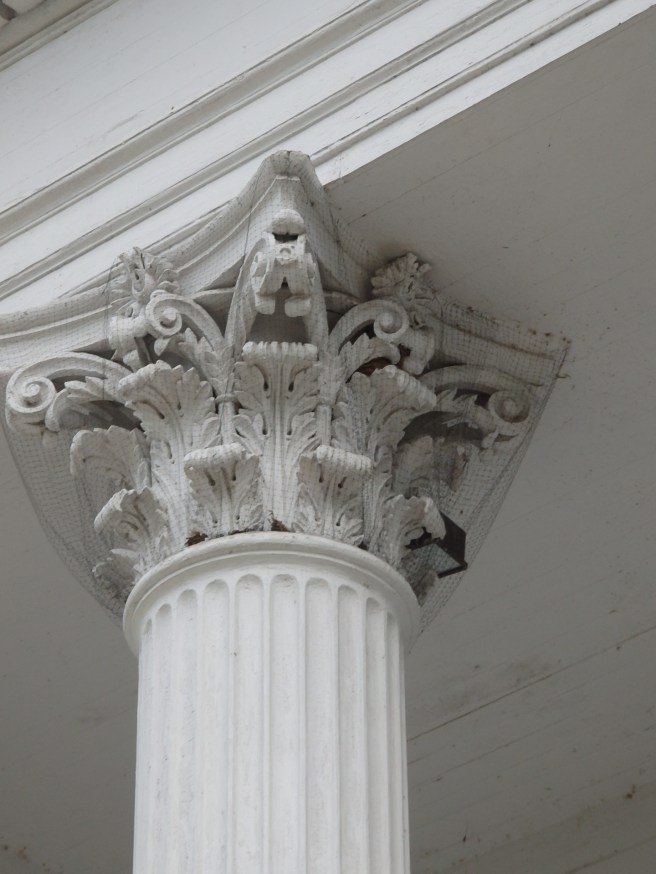
Of course, this is totally unrelated to the theme. Just another thing on my mind.
Seven acts of faith
Hopping in the shower (expecting hot water)
Assuming the food won’t be poisoned
Pumping what they say is gasoline
Sleeping . And dreaming
Banking
Putting an envelope in the mail
Traveling . In any direction
Sometimes the story goes its own way
Considering his love of mountains, I am surprised that I didn’t have Kenzie heading off on mountainous trails on more of his days off work. He was certainly living close enough, if he wanted to drive a few hours each way.
Instead, it’s swimming at the secluded lake those two summers as well as riding the underground rails of Gotham one weekend of each month.
Sometimes, then, what happens all depends on the people you’re with or are meeting.
That’s how it worked for me, in a situation similar to Pit-a-Pat High Jinks.
Maybe Kenzie just thought he’d get the mountaintop opportunities later? Or maybe just not quite where he planned?

