Darling Ilene

perhaps you remember the one whose moon-eyed lovers were reflected within the ringing gravel } none of them yet the maid of honor or a best man’s cattle, hogs, goats grunt in discomfort, sniffing the usual rounds without any drum healing wounds at least only to burn away { somewhere in the distance

Ready for a few recent thoughts arising from all of our teleconferencing (trademark?)?

(By the way, I’m wondering if that “?)?” is a first in the English language.) (Along with opening a writing in a parenthetical mark.)

To the point: After all of this time Zooming, specifically, I’ve finally found a visual background that works for me, almost a stage setting.

In our new old house, my workstation is in what’s also my bedroom rather than somewhere up in an attic. In common with many New England homes, there’s no closet, so when the laptop’s camera is in its usual, sharp focus, my hanging clothes are in full view.

How embarrassing. Or candid. At least I’m not naked, in all my senior-citizen glory.

I’ve played with several photographic backgrounds as alternatives, but they do use up valuable bandwidth, sometimes even interfering with the signal or pixilating my face, and they get wonky if I so much as twitch.

Moving myself and the said laptop to another room gets complicated, especially when I need to reach for a book or paper (back in the earlier room) for reference. New lighting conditions are an additional consideration.

Do we all need a stage manager or producer or even a dramaturge working on our behalf, much less sound engineers? I hope not!

So the solution, where low-tech me is? Voila! Or amazement. I chanced upon the “blurred background” option on the Zoom toolbar and like it. In fact, it can even look dramatic, keeping the focus on (drumroll, please) me. Maybe I’ll keep it.

~*~

As long as we’re on the subject of Zoom, does anyone else find conversation or dialogue unnatural and awkward? There’s hesitation when we’d simply join in and then jump out contrasting to talking over each other because we have no eye contact or other non-verbal cues regarding each other. There are times I’m sure I come off cold simply because I’m stepping back to listen yet other times I no doubt seem rude piping up the same moment others do, like drivers all trying to enter an intersection at the same moment.

By the way, I do think our faces are appearing in a less harsh light than we did earlier in this transition.

For a while, it seemed we were all at less ten years older, children excluded. We looked ghastly.

~*~

I’m also discovering there are many people I recognize more by the sound of their voice than by their faces. Maybe it’s a consequence of joining a new community in the age of Covid, but there is a world of difference between individuals unmasked on my computer screen and masked (or not) somewhere out in public, often miles out of context.

How has your Zooming changed? Any advice to share? Or off-the-wall particulars?

The Puritans came to establish a utopia, not religious chaos

The conventional explanation that the Puritans migrated to New England for religious freedom misses the obvious.

When the Puritans first arrive in 1629, followed the next year with the beginning of their great flood of migration, theirs is a well-orchestrated and well-financed scheme to establish a utopia, one based on their Calvinist Protestant worldview. In many ways, it ranges well beyond the confines of religion.

They set forth in droves.

Crucially, sensing that their mission could be corrupted by false teachings and practices, they squelch unorthodoxy and dissent early on. Within the first decade of their arrival along Massachusetts Bay, they banish Samuel Gorton, Roger Williams, and Anne Hutchinson, who find refuge in Williams’ new colony of Rhode Island. Early Quaker history turns its focus there and neighboring Cape Cod, for good reason, though much also happens north of Boston in Salem, Hampton, and Dover.

Hutchinson’s brother-in-law, the Reverend John Wheelwright, also takes flight and founds the town of Exeter, on the other end of Great Bay from Dover, in New Hampshire.

The Arabella, one of the Puritan fleet. Imagine spending two months confined to a vessel like this in often turbulent waters.

Others head more or less straight to Dover. Among them is Hansard Knollys, a minister whose evolving theology will lead him to being a founder of the Baptist denomination when he returns to England. He’s not quite there yet when he formally organizes the church in Dover as a congregational society just six years after its first services. Had he been a bit clearer in his theological evolution, Dover could have established the first Baptist church in America, a year before Williams in Providence. Oh, well.

But that does leave an opening for the Quakers a decade later.

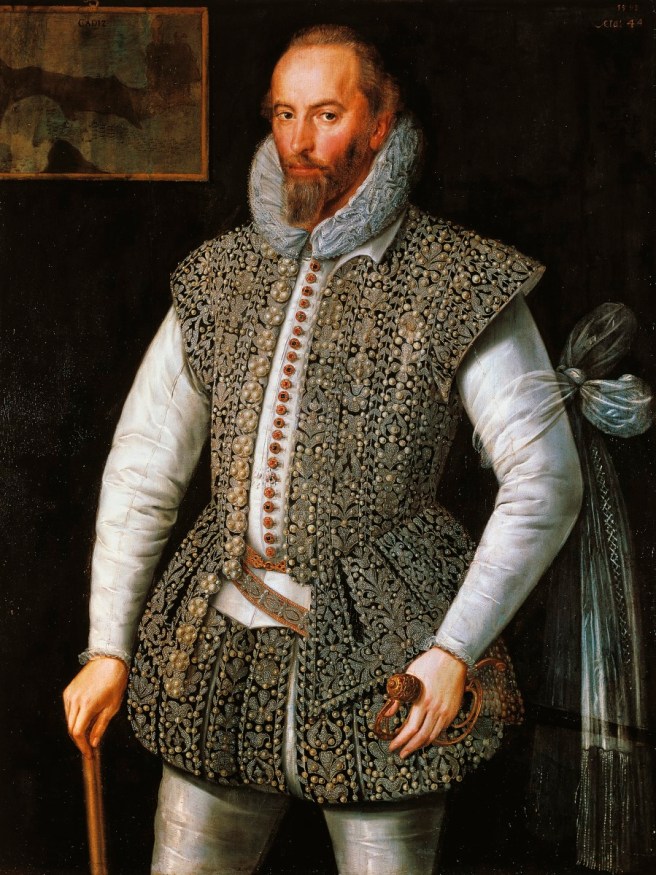
Yes, Puritans. They do look like a smug, judgmental lot. Of course, that’s a judgmental view on my part. I’d hate to get in an argument with them. Ahem.

All the more, I sense that Knollys leaves enough nonconformist thought in his wake to lead some independent spirits in Dover to privately question the ongoing Puritan preaching. As my new book will note, there are hints of that in the town records – supposedly subversive thinking that has to await the arrival of the itinerant Quakers for confirmation and action.

As we’ll see, it’s a volatile mix awaiting the spark for explosion.

Post Office and old Customs House

Anchoring one end of Eastport’s main street downtown is the Post Office and former Customs House.

Though the Customs role has moved closer to the Breakwater but not so the mail, especially this time of year..

The building still bespeaks of a special authority and order.
From the water, it’s a landmark.
And inside, the post boxes are pure vintage.
As is the staircase up the tower.


Yeah, cabin fever has kicked in

It had to happen, especially after the euphoria of last summer. The return of Covid only intensified it, especially when family and friends came down with it. A letdown was inevitable. The summer people are gone, and Eastport nearly resembles a ghost town.

So here we are.

Cabin fever. The winter blues. The blahs. Even if I weren’t up here living alone, building new friends I can’t quite drop in on yet. Zoom meetings go only so far. Ditto the radio. At least choir practice is resuming, even if we’ll still be doing it online.

Further dampening my spirit was finding myself stuck on breaking through on the next steps for the book. I don’t want to take up new projects till I see this one over the next few hurdles. So I keep nipping away at the edges.

Some nasty weather had me not wanting to leave the house at all, sometimes several days in a row. If only the place weren’t so cold, indoors and out. (And the fuel oil bill comes as a shocker, as does the electrical. Just for me, mostly.)

By now, I’m getting tired of my own cooking. There aren’t a lot of options up here that are better, either. One night I headed down to the brewpub for a cup of zesty soup or an imaginative panini by our resident culinary angels, aka Bocephus, only to find they’ve departed to his relations in Spain for a month. Well, they’ve earned that part and just might return with a supply of smoked paprikia for my wife. Fingers crossed. Otherwise? A boxed Newman’s Own pizza from the IGA managed to suffice.

Obviously, I’m not the only one under this cloud.

The high school actually had a Cabin Fever Week before their winter break, and since I’d be up there anyway for that hour of indoor walking ‘round the gym, I thought I’d follow along.

  • Monday, for instance, had everyone wearing red, pink, hearts, something lovely. Xoxo. Well, it was Valentine’s Day. I could do that.
  • Tuesday was “anything but a backpack” day for carrying books and gear. More of a challenge, considering the gray messenger bag that goes everywhere with me. My eyeglasses, emergency meds, and cell phone got stuffed in parka pockets. As for the kids? It was backpacks.
  • Wednesday? “Wear your best flannel and/or camo. Let’s get real Downeast here, folks.” Now for me, that’s a challenge. My only flannel, apart from the sheets on the bed, was a shirt that’s rather black-and-white rather than the traditional plaid color choices. Forget the splotchy hide-from-the-enemy alternative.
  • Dress for Success came on Thursday, “Come to school Interview Ready.” Gee, I haven’t worn a tie in how many years now? I do, however, still have some loud ones.
  • The week ended with a school spirit activity. My version was having beloved company on the way up for the three-day Presidents’ Day weekend.

The arts center’s Sunday afternoon free series has been a lifeline – if only we could all take off nearby for more.

By the way, I was wrong about the last of those near-zero overnight lows. We’ve had a few of them return, but on the heels of some highs in the 40s and 50s. The trick is to not believe spring is just around the corner, even if you see a robin hopping around on repeated days.

What’s getting you through the depth of winter?

National parks I’ve truly enjoyed

I have to confess to how many of America’s national parks remain on my to-visit list. But I still have some favorites among the ones I’ve explored. They don’t have to be massive to still be impressive.

  1. Rainier, Washington: Most of all. It’s top of the list for reasons I’ve described elsewhere on this blog. Living a few hours away, I had four years of exposure to this glacier-clad beauty and its forests below.
  2. North Cascades, Washington: Geologically some of the most incredible mountains in the continental U.S., along with rewarding hiking and camping. Some of our best beat-era poets were forest fire lookouts on its remote summits in the ’50s and ’60s.
  3. Smokey Mountains, Tennessee-North Carolina: I was nine or ten or so when we ventured down from Ohio. We weren’t yet doing family-camping, but there were some wild experiences with cheap motels. But then, when we got to the park, how could I not be blown away? So this is what mountains were!
  4. Lowell, Massachusetts: I’ve blogged about our daytrip to this pioneering industrial community and its water-powered textile mills. Try to time it so you can also take a ride down the canals through the mills and out to the Merrimack River.
  5. Cuyahoga Valley, Ohio: This meandering swath of greenery along the Cuyahoga River in the former Connecticut Western Reserve corner of the Buckeye State is a touch of sanity within a populous region. It even includes some decent waterfalls. The Cleveland Orchestra’s summer home is nearby.
  6. Acadia, Maine: The rugged Downeast coastline starts here, more or less, and there’s nowhere else so much of it is available to the public.
  7. Olympic, Washington: It’s the heart of a unique realm worthy of a Tendril of its own, as well as a longpoem you can get at my Thistle Finch blog.
  8. Mammoth Cave, Kentucky: The world’s longest known cave system, only part of it is open to public tours, but what is shown includes spectacular geologic formations and chambers.
  9. Crater Lake, Oregon: It’s impressive but usually seen as an auto circuit around the volcanic crater of what was once mighty Mount Mazama. The lake sits at 6,178 feet above sea level.
  10. Everglades, Florida: To appreciate this ecological system, you need to take a guided boat tour into its vegetation and zoological wonders. This is the real Florida, almost surreal. Well, compared to much of the commercial development throughout the state, maybe a better adjective is needed.

~*~

There are many more, awaiting personal discovery. So what are your favorites?

Lowell, 1850

As an example of the kind of excellent journalism we’re missing these days, let me offer this modest example

My wife forwarded me a link to a Washington Post article about the ways international supply-chain problems impacted a small, family-owned, dairy north of our place in easternmost Maine and its signature product, a chocolate milk with a passionate following.

For me, it’s a great piece of journalism, or as I told her, my ideal of reporting.

In fact, it fit into the aspirations I present in my novel Hometown News.

Personally, I favor longer pieces that take a long-range view, as this one does, especially when they encapsulate a much bigger, more difficult, issue in ways that hit home.

In contrast, the trend has long been for shorter, faster, less complex dispatches that move on to the next sensational blast. You know, the 24-hour news cycle. Or less. Most of it is forgettable, puff in the air, hit-me-with-what’s-next superficiality.

Instead, what we have here is a consequence of assigning a reporter full-time to the Northeast, as the Washington Post does, in one of those expenses that might seem superfluous to the bean counters who fill too many executive positions in too many industries. In fact, we can blame them for much of the supply-side issues that plague us. Prestige, after all, is rarely seen as a quantifiable asset.

Moreover, I doubt the Post would have found this story without that marginal investment. (The nearest daily newspaper, fine as it is, finds itself way too overwhelmed by everyday issues to dig into something requiring an investment of time like this. In fact, one of the things I that drew me to working at the New Hampshire Sunday News was the opportunity to assist similar projects, where we might have a week to dig into the dimensions and then display the findings properly.)

I also love the fact that the Post hired an excellent photographer to pursue the story, too, and paid for his time to look beneath the obvious surfaces. Again, it takes time to get a feel for what’s beneath the surface and come up with something fresh and expressive. His shots tell a full, parallel, story of people dedicated to their seemingly commonplace employment. What emerges is almost like a film score underpinning a movie.

Better yet, in this case, the difficulty encountered was about chocolate – who couldn’t love that! As well as the schoolchildren who loved the dairy’s chocolate milk as part of their lunches. You can’t build a better connection than you do with kids, except maybe through the words of their parents, as this report does.

My kudus to reporter Joanna Slater and photographer Tristan Spinski – and their unnamed editors for publishing this.

If only we could see much more along this line of journalism!

Parts of Maine often resemble the Far West 

Maine is larger than the rest of New England combined, and except for much of Vermont, it was settled much later than the rest of the six-state region. That is, the parts of the state that were ever settled at all. Half of the Pine Tree State has no year-round population at all, for good reason.

The result is that there are paved roads where you can drive for miles and see nary a utility line or a mailbox, much less a house. Often, the only human activity you detect is timbering or mining. Hunting and fishing are a way of life. It wasn’t that far out of Bangor I used to see the bear-hunt guide sign.

Those roads remind me of driving from town and out toward a mountain pass on my way to trails in the high country out West.

There are trails for hiking or ATVs just about everywhere, many of them through conifer forests like those of the Far West. Here’s one at Shackford State Park within Eastport’s city limits.

Downeast Maine’s open blueberry barrens on the ridges, meanwhile, give me a sensation of the Big Sky Country of Montana or the Horse Heaven Hills of Washington state, except that the blue overhead isn’t the same deep intensity.

I believe that the presence of Indigenous peoples is another part of the mix. Eastport is adjacent to the Passamaquoddy’s Pleasant Point Reservation, as we’re reminded every time we drive to or from our island. They’re one of the four tribes comprising the Wabanaki Alliance in the state.

Yes, there is a kind of frontier feel around here. I’d suggest calling the area the Far East, but that name’s already been taken.

Fact is, many of the old ships that sailed to the Far East were built along these shores rather than those of the Far West.