For several months now, you’ve been getting tastes of my upcoming book, but I have kept much of project under wraps, including the title.
The curtain goes up on that right now.
So roll the drums, please, and take a deep breath of anticipation. Here’s what I’m rolling out:
Do the title and image intrigue you? Pique your curiosity? Hold you for more than a split-second?
As I’ve discussed in previous posts, book covers – and magazines, too – are a specialized design challenge.
The ebook version has to work as a postage stamp, sizewise.
Print editions often get cluttered with pitches of all sorts, just in case one hooks a reader.
An effective title, of course, is a huge consideration, but not the only one.
~*~
Creating a compelling image that matches the content has been especially difficult in this case. The book spans more than 400 years, and I couldn’t find anything that quite reflected the place or its people, now or then, or that extended an appropriate emotional appeal.
A seismograph didn’t do it, though several geometric zig-zag patterns looked cool.
One design that excited me featured a portrait of John Greenleaf Whittier’s mother, but others saw her as forbidding. What I saw calm and collected they viewed as sorrowful and inhibited. Oh, well.
But then, while going through my own photos, I came across a late-autumn photo of the Cochecho River, scene of much of the action. I loved its timeless mystery and beauty and the fact it didn’t look generic to just about anywhere else in the world.
One of my earlier posts pointed out that the cover should promise the reader something rather than mirror the story. It’s a matter of eliciting a gut-level attraction.
Somehow, I hope you feel this cover leads backward into time, with the drama of a storm on the way. Just what is around that bend, anyway?
~*~
Please stay tuned for the release details in the days ahead.
The revolution was supposed to be about liberating the people, not obliterating them. Well, we have seen more than a few of them run amuck. The guillotine was one example.
As for wealth being the cause of war and class oppression?
It’s time for a devoted Marxist to stand up and expose the old spymaster. I was going to say “from the left,” but that distinction loses all meaning in our time. He’s going to brush off any criticism from capitalist countries, in part because of his Communist roots.
The tyrant’s grounding and career, let’s be clear, were largely party-line Communist, which claimed to be based on the teachings of Karl Marx. So somewhere in that philosopher’s matrix imprinted in Putin’s mindset may be the key to turning him around. Maybe even call him to repentance.
Just what manifesto is today’s czar wannabe following, anyhoo? Does anyone want to remind him what happened to the last one?
One of the things the Dover 400 project is doing is raising an awareness of the Indigenous peoples who inhabited the region for millennia before European colonists arrived.
The tribes were far more varied than the generic “Indian” label conveys. Sometimes they were in open conflict with each other, and there were many differences in language, culture, and lifestyles. There were also alliances with other tribes, creating subtle but significant relations across the region.
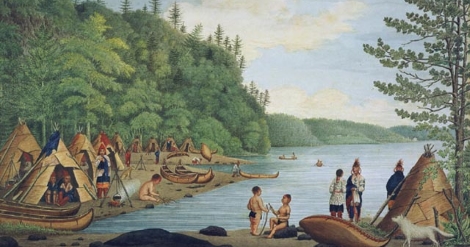
Some lived in permanent villages, often along streams. Others ranged from ancestral site to site through the year in a cycle of fruit, vegetable, and animal fare.
As hunters and fisherfolk who often traveled by water and lived in villages along the shores, many of their names for places are often translated as some variation of “water,” with distinctive nuances that are lost to Western ears but still hint of sharp observation of the character and advantages of each site.
Their name for Hilton Point, for example, is something along of the lines of “place encircled by water,” while Cochecho is more like “foaming falls,” each one, however, unlike other points or coves or waterfalls.
As for our own names applied to these places? I doubt we give them a second thought other than perhaps their spelling.
And, to our loss, we have none of their mythopoetic stories in their original richness – narratives rooted in their unique environment. At least we can begin to listen to those told by surviving tribes in neighboring Maine.
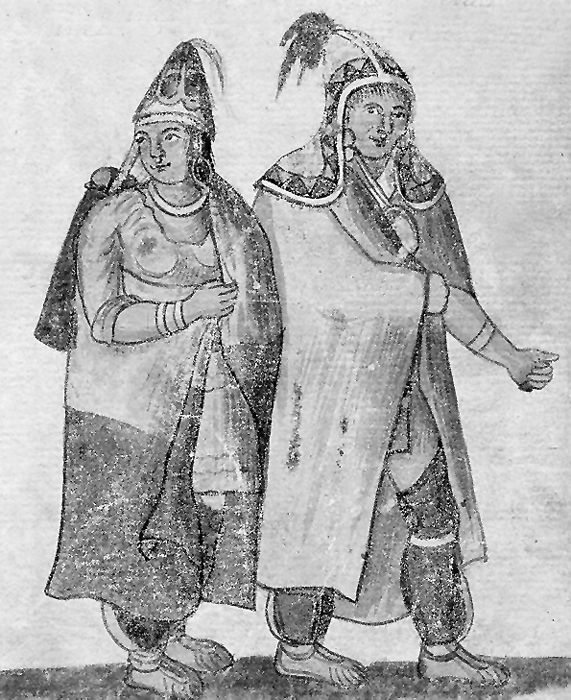
There are good reasons the Abenaki and other New England tribes didn’t dress like the High Plains Natives far to the west.
~*~
WHEN THE ENGLISH ARRIVED in New England, most of the tribes had been decimated by pandemics, many of the illnesses resulting from contact with earlier explorers and traders. The sharp loss of population gave the Pilgrims an opening in their settlement at Plymouth.
The first traders brought items the Natives appreciated as useful – metal pots, knives, blankets – that could be obtained in exchange for furs.
As we know, the dynamic changed. We’ve rarely heard the Indigenous voices tell their side of the struggles. The English, French, and Dutch all have barbaric actions to atone for.
The marker at Ambush Rock on Route 101 in Eliot, Maine, for example, makes it sound like the victims were an innocent party on its way home from church one Sunday in 1697. There’s no mention that the prime target, Major Charles Frost, was Richard Waldron’s cohort in the notorious “games” of 1676 that ended up in the arrest of nearly 400 Natives who were then executed or sold into slavery. The Natives waited 21 years for revenge. Frost was the highest-ranking militia officer in Maine.
For me, the missing details change my view of the event entirely. It’s not an isolated instance.
~*~
DOVER WAS IN PENNACOOK COUNTRY, a tribe closely related to the Abenaki – the identities are sometimes merged, suggesting change over time. The Pennacook spanned over much of New Hampshire, neighboring Maine, and parts of Massachusetts. The English jurisdictions didn’t match theirs.
Another consideration is how many of the English settlements occurred at earlier Indigenous villages, as seems to be the case both at the falls in today’s downtown Dover or neighboring Exeter, Newmarket, Durham, Rollinsford, Somersworth, and South Berwick.
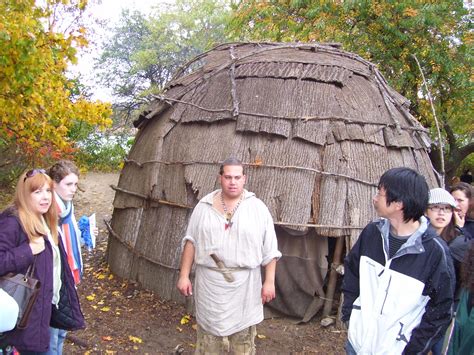
A wigwam at the Plimoth Plantation living history museum allows visitors to explore a typical Indigenous winter dwelling. The interior is bigger than you’d expect. (Photo by Swampyank via Wikimedia Commons.)A Pennacook encampment much like those in the Piscataqua watershed.
~*~
ONE THING THAT WAS OBVIOUS TO ME in a visit to the Plimoth living history museum in Massachusetts was how superior the Wampanoag’s communal wigwams were for living through winter compared to the Pilgrim’s drafty cottages of 1630.
I’m sure the same can be said of the shores of the Piscataqua.
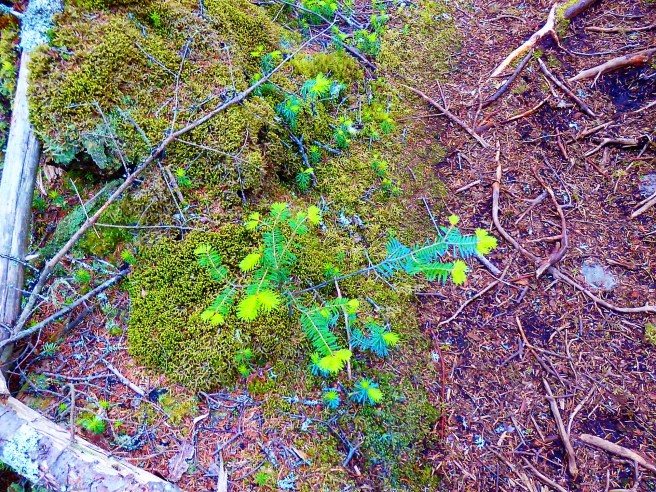
Many of the forests around here rise in beds of deep moss – and much of that is actually beat bogs.Soon the evergreens will be showing bright new tips like these.Openings like this in the forest provide habit for snowshoe hares.
As our City in the Bay has been redefining itself, in part thanks to its lively arts scene and surrounding natural wonder, tourism has been ticking up, even in the face of Covid-19.
Part of Eastport’s appeal is the deepest natural harbor in the continental U.S., a port that at one time, back when there was a lot of smuggling, was the second-busiest in the nation – something a shift in federal tax laws and heightened enforcement soon curbed.
Still, we have a long history of steamship travel, right up to the auto age.
And now, this year, hooray, we’re even anticipating the return of passenger vessels, albeit of the increasingly popular “small” ship variety rather than the floating cities that can overrun a seaport.
First, the 210-passenger, 325-foot Pearl Mist is scheduled for five visits, most of them 3½ hours ashore, as part of a seven-night round-trip out of Portland. Other stops on its Fundy Bay circuit include Rockland and Bar Harbor in Maine, and St. Andrews, St. John, and Grand Manan Island in New Brunswick. Fares run from about $4,000 and up.
Second, in September we host the innovative 530-passenger, 459-foot Roald Amundsen expedition ship on a 10-hour stopover. Originally, this was to be part of an adventurous 44-day navigation across the Arctic Ocean in a Northwest Passage venture from Vancouver, British Columbia, an ultimate bucket-list voyage. But the fares, starting around $57,000, may have been too pricy for the Covid-antsy market, causing it to be broken up into segments – the first ending at Nome, Alaska, and the second continuing from there on to Greenland and ending at Halifax, Nova Scotia. Eastport is now tucked in as the cherry in a shorter, more affordable, New England dessert.
More exciting is the news that the Amundsen is now scheduled to return next year as part of an even more audacious 94-day cruise – a Pole-to-Pole adventure that will originate in Vancouver, British Columbia, and traverse the Northwest passage before coming to Eastport and then continue on to equatorial warmth, the Panama Canal, the Pacific coast of South America, and finally shore visits on Antarctica. Think of going from icy summer to the edge of autumn in New England to the tropics and on to spring while exploring three continents. The lowest fares figure out around $600 a day.
And little Eastport will be part of that.
In Maine, the bulk of the cruise action hits Bar Harbor, at the edge of popular Acadia National Park, where frequently two ships a day debark during the summer season, and in Portland, which gets especially busy during the fall foliage season.
We’re really not set up for the mega-cruise vessels that have dominated the industry. Let’s see how our emerging niche shapes up.
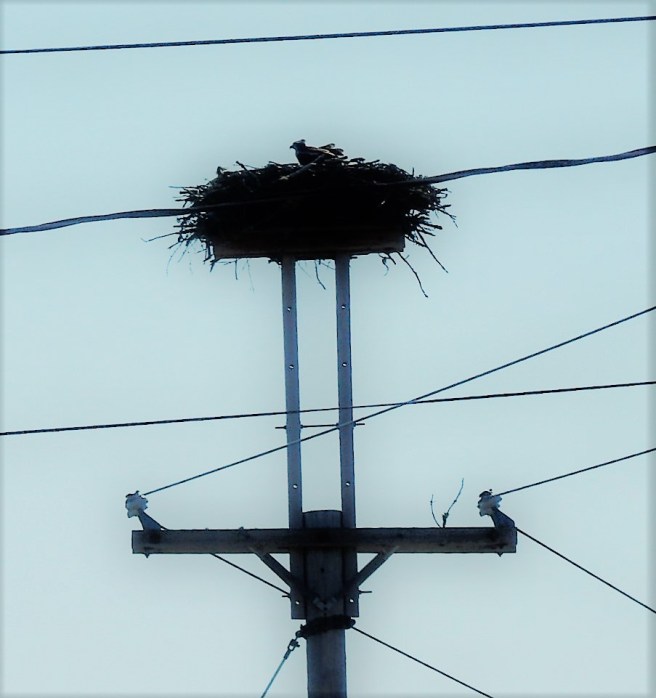
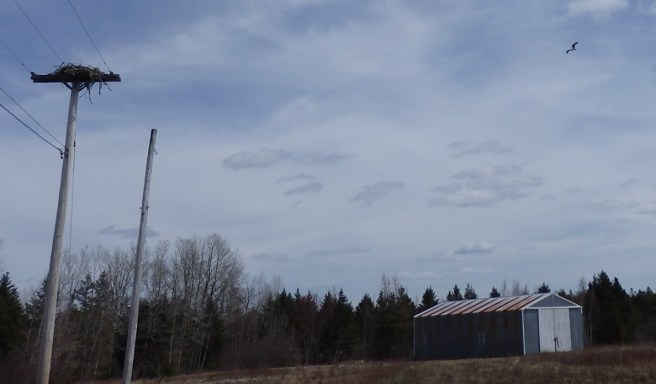
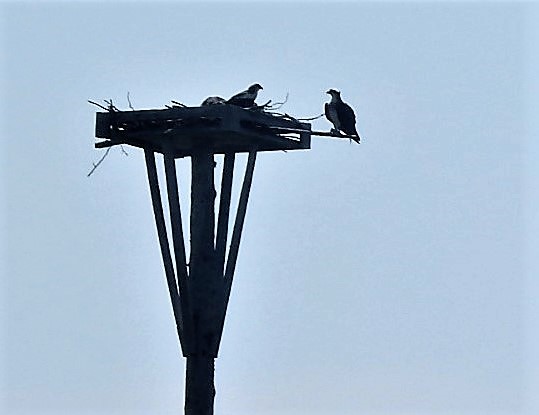
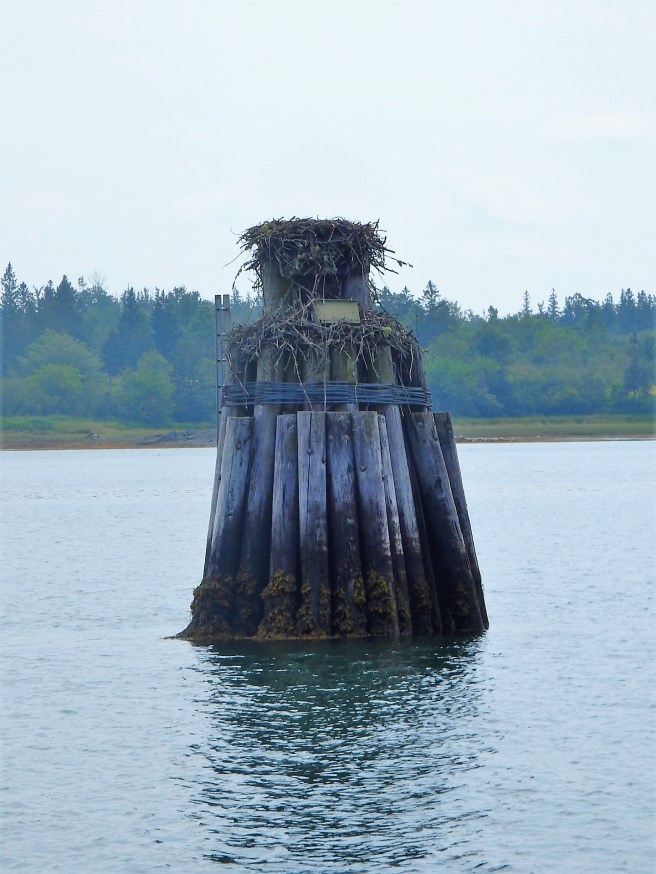
Mama’s head keeps a vigilant watch. For some reason, osprey often build their big nests atop power poles. This one is in Cutler.Once alarmed, she’ll take flight, raise a racket, and threaten to attack. So beware. As I learned in East Machias.Here’s an active nest in Princeton, atop a post in a human family’s yard, actually.In Pembroke, there’s this impressive nest atop a piling at a landing. Almost looks like the structure was built for these majestic birds.
No, not the usual listing of milk, bread, eggs, butter, potatoes – those are givens. Rather, the things special to me you’re not likely to pick up if you’re doing my grocery run.
Olives. Big green stuffed ones, though I love ripe ones as well, elsewhere.
Gin. Where did you think those green olives were going?
Bagels. Or breakfast pastry.
Craisins. They go well in yogurt or on a salad.
Sunflower seeds. On that salad, too.
Cookies and pretzels. Something to snack on.
Garlic. Rather than onion.
Lemons. And limes, for someone special.
Orange juice, or grapefruit. Perk me up in the morning.
Not as frequently but all the same: miso, sesame oil, rice vinegar, almonds.
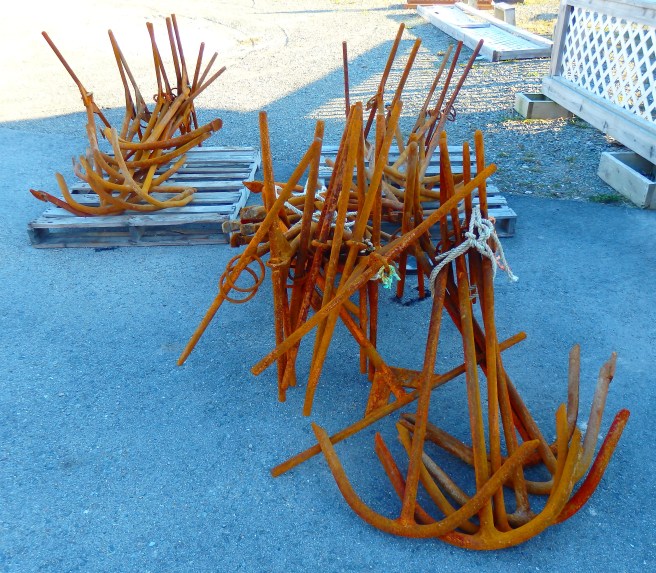
There they were, down by the lobster pier. I’m assuming they’re used in the new system of stringing traps in a row along the bottom, rather than lines going straight down from a buoy, to reduce the possibility of entangling whales.
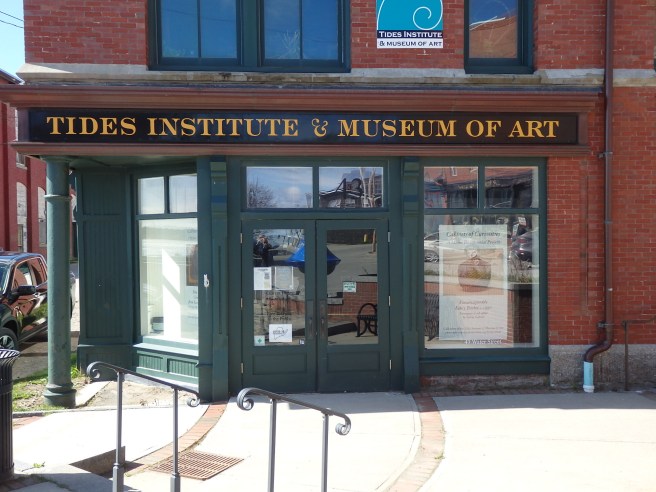
The catalyst of re-envisioning Eastport is the Tides Institute and Museum of Art, founded in 2002 by director Hugh French. Its mission has been in acquiring and presenting wide-ranging collections of artworks and historical documents reflecting the coastal region, as well as educational and preservation efforts that include eight significant buildings in the town – four of them in the downtown district – and guest artists residencies each summer.
The leadership is rounded out by French’s wife, Kristin McKinlay, who is director of exhibitions and the StudioWorks residency program, and by Jennifer Dolanski, Artsipelago/program specialist, plus eight trustees, only one of them living in Eastport. The others reside in places like Boston and New York City.
There are also concerts in its 1818 church that housed the Free Will Baptists, plus other events at its 1828/1829 Seaman’s Church, which housed the Congregationalists.
Oh, yes, every New Year’s Eve there’s the maple-leaf drop at 11 pm Eastern – midnight for our Canadian neighbors – followed by the giant sardine an hour later. Both the maple leaf and sardine were commissioned creations.
I suppose TIMA was inspired in part by the Island Institute, founded in 1983 to help Maine islands from Portland to Acadia tackle pressing environmental and socio-economic issues. The Rockland-based organization’s impressive publications include the annual magazine, Island Journal, as well as data analyses to guide public policy. Its focus is on sustainable livelihoods and communities in changing times that include rising sea levels, bringing together marginalized communities, and economic survival.
The heart of the enterprise is in a former bank on Water Street downtown.
In contrast, for now, TIMA’s focus seems to be more on art and architecture, principally – especially the small downtown on the National Register of Historic Places.
In essence, it’s building a future rooted in the past but not stuck there. It’s really the way every art moves, too, no matter how revolutionary some of the leaps may seem.
Renovation of the former Masonic lodge downtown is designed to house additional exhibition space and perhaps mixed use upstairs.
I do have to wonder whether TIMA has taken on too much. The restorations appear to have stalled, perhaps before Covid set in, and both of the churches need significant repair, inside and out. The institute has, all the same, helped distinguish Eastport as a fine arts center in a visually stimulating setting in Maine, an identity that may attract new residents in a time of national population change.
Frankly, it was one of the things that lured me here, as well as my wife and elder daughter.