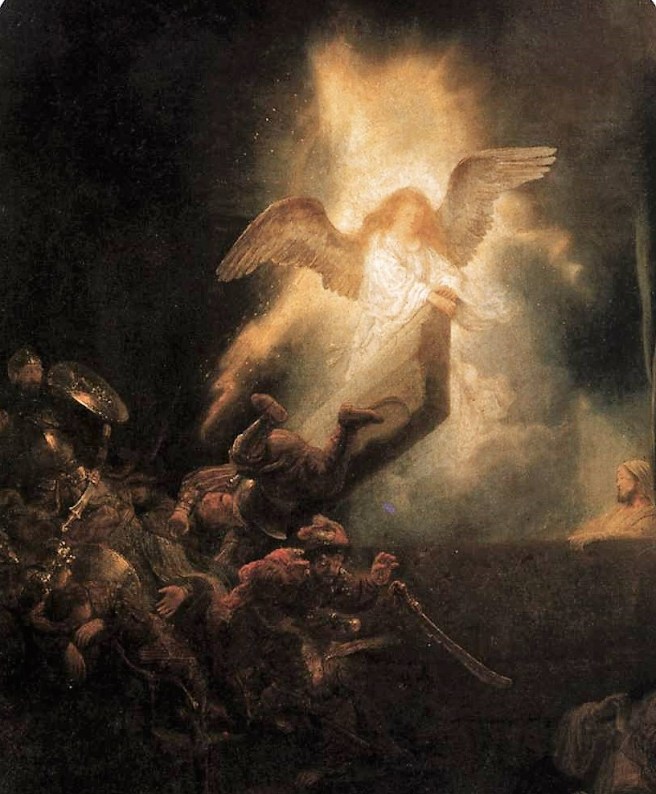
The position of clerk in a Quaker Meeting is akin to being president or chairman, except that you’re not the boss. Historically, it was more like being clerk in a courtroom, recording decisions from a judge in the bench above – in this case, Christ or, if you prefer, Light. For Friends of a less Biblical bent, things get more tangled and less focused, at least my perspective.
A Meeting in the Society of Friends, as we’re more formally known, whether of the open, traditionally “silent” worship like mine or of the more widespread pastoral “programmed” variety, has a presiding clerk as well as a recording clerk for its monthly business sessions, as well as a clerk for each of its committees. The Monthly Meetings are then grouped in neighboring Quarterly Meetings, which gather four times a year and have a similar structure, and are then joined together as regional Yearly Meetings that have annual gatherings – and that’s it for hierarchy. There’s a lot of work to do, just as there is in any family.
In my strand of the Quaker world, we don’t have a pastor but we often expect the clerk to fill many of the functions, sometimes everything except preaching or praying aloud on Sundays. I was detailed those expectations in an article published in Quaker Life magazine. In theory, you’re more of a moderator. In reality, you’re the first person the others turn to when a light bulb is out, the key to the door’s missing, or the fire alarm’s going off in the meetinghouse after a power outage. As for real emergencies?
As I’ve observed, there’s a lot of burnout, usually after two years.
I tried to pace myself accordingly in the six years I served as Quarterly Meeting clerk and the five at the head of Monthly Meeting as well as the nine or so I was a member of the Yearly Meeting’s Ministry and Counsel committee.
Along the way, I’ve come to admire some amazingly skilled clerks as well as pastors, priests, and rabbis in the wider community. Few of us, I should note, are really trained in this matter of dealing with people or institutions, and most of us would rather be fine-tuning theology of one sort or another.
~*~
As I entered retirement, I felt a curious softening in my personal Quaker identity. Part of it was a consequence of finally having lived with children, in addition to a spouse’s input. Ours never did run along the lines of a Quaker Meeting, as I had once idealistically envisioned. (I would like to be able to go back to interview the now-grown children of a few families I had known who proclaimed “Jesus is the head of this household” to discover how well that had worked, usually in rural settings.)
By the time I left full-time employment, I realized there was no previous period in Friends history where I would have fit in comfortably. I love the fine arts too much, for one thing. Nor could I go Plain today, though I had once flirted with it: the Plain dress and speech need to be part of a community, not of a lone ranger seen only as an eccentric or even scary. For a while, my beard was along the lines of Amish and Brethren, with no mustache, but once I had married, my wife found that look too severe.
I’ve rounded some corner into now. Wherever that is.
~*~
Lately, I’ve been sharing with you some reflections as I’ve been comparing my original plans for retirement with what’s actually happened in my life in the decade since leaving full-time employment. The review has included Quaker service as well.
Even before retiring, for instance, I had hoped to send out annual thank-you cards and letters, recognizing Friends for their service. Too often, that goes unacknowledged but still expected or even subtly demanded. I also wanted to invite the clerks and the other officers, such as the treasurer, and their partners to a big dinner, probably a cookout in our Smoking Garden in early summer. I envisioned something similar for the charter school board where my wife was chairman. Alas, these never happened.
Well, our big parties there had pretty much faded from the schedule as the years progressed and other demands crept in. We are hoping to resume them in our new locale, once the renovations and our full relocation are in place.
Something more ambitious was what I termed the Light Project. Prompted by questions asking, exactly, what Friends believe theologically, I had found myself connecting the dots in early Quaker thought and found myself facing an alternative Christianity, one they dared not articulate fully in the open. I’ve presented my take in four booklets you can download at my Thistle Finch blog, and I would love to hear your insights and reactions.
I had expected to be spending more time following up on these foundations, both in journal articles and traveling around the country to lead workshops and discussions, but Friends have had more pressing realities to contend with, as we found springing from the Trump administration and now Covid. On my end, revising and releasing my novels also deeply engaged me, bringing with them a feeling of personal satisfaction and accomplishment.
So, for now, my Light Project has rather fizzled out. Perhaps the release of my next book, a history of Dover Meeting and a wider counterculture in New England, will revive the Light Project, too.
~*~
Other unfinished business on my heart involves outreach, attracting like-minded souls to our legacy. Having a booth at community fairs was a start, as was an open house, but I was hoping to do more with the campus center at the neighboring state university, perhaps guiding a weekly “worship sharing” event or Quaker Quest series, as well as visiting more widely among other Friends Meetings and retreat centers, in a tradition called intervisitation.
And then there was hosting the monthly Poetry in the Meetinghouse series I mentioned earlier. It may have even been part of a cycle of weekly events that included folk music concerts, films and discussion, and a lecture.
Oh, my, the last item reminds me of something I had hoped to revive from the local religious leaders’ fellowship – their Cochecho Forum. Look up Bill Moyer’s Genesis project, which aired as a series on PBS, to see how I wanted to launch something similar through DARLA. It would have been exciting.
~*~
Well, revisiting all of this reminds me of an old Quaker adage, and perhaps find comfort in it: “Be careful not to outrun thy Guide.”