beginning sabbatical read and sun with nature study scripture prayer and meditation to catch up and travel, minister, restore ‘ships and then put off hiking, avoid making to-do lists yet indulge that minor weekend correspondence just seems too much to handle again too long under that ambitious frustration by necessity what has always remained two-thirds unfinished dancing after all the floating deliberation now hard-working on this May your clean bean, dearly
There are times it’s taking me all day to write three sentences
That’s not the way it used to be, not when I was younger and could dash things off in the flush of inspiration, but it is what I’ve encountered revising my last two books.
It’s not even Wes McNair’s advice to write 400 good words every day. Not unless one of those sentences is an over-the-top wonder of 250 to 300 words.
The turtle pace here seems to arise when I’m trying to weave some new material into an existing draft, making it connect on two sides seamlessly. It’s not just the craft of fine writing, actually, but also the thinking more deeply about the unseen significance of the subject at hand. What, exactly, is beneath the surface before us?
Of course, as a writer, this pace also has me wondering if I’ve simply used up all the easy stuff and left the bigger challenges for my senior years.
Any suggestions?
There are good reasons to join in a pre-release purchase of a new book
When a commercial publisher issues a print edition of a new book, the process includes a long buildup. Advertising and press releases go out ahead of a release date, followed by the mailing of advance reader copies for reviewers, retailers, and involved parties to examine. The author might even be signed up and prepped for a book tour of public readings and interviews.
It hasn’t been quite that orderly for ebooks, though things are shifting.
~*~

A pre-release period is one alternative strategy. It gives booklovers an introduction to a coming attraction and an opportunity to be among the first line up for a new work, often at an attractively discounted price.
In effect, this creates two release dates – an advance ordering period followed by a second big occasion when the book itself is finally “published” and available to all. It’s one way for authors to build up a stronger initial sales tally on opening day, tweaking the important algorithms that determine the placement of the work in the digital lineup where it can be more easily seen.
Even a few buyers can make a huge difference, and this approach avoids the uneventful situation of simply dropping the book, ragtag, into the marketplace.
In my case, the big release date is set for September 8 at Smashwords and its affiliated digital bookstores, including the Apple Store, Barnes & Noble’s Nook, Scribd, and Sony’s Kobo. And until then, it’s being offered at half price.
~*~
This option also allows me time to tweak the text, if necessary, and invites you to share in building a buzz. Nothing beats word of mouth, for sure.
Quaking Dover is one work where people have told me they want to read the book when it comes out, and here’s their chance to confirm that.
So buy early and save. Pretty please?
Many factors came together to greet Friends
We’ve been looking at fundamentals that set early Dover apart from the rigid Puritan culture that dominated the Massachusetts Bay and Connecticut colonies.
What we’ve also seen is that other localities settled before the great Puritan migration also had conflicts in the face of what is widely presumed to be characteristically colonial New England. Notably, these were Cape Cod; Salem, Massachusetts; Hampton, New Hampshire; and Maine – all of which harbored Quakers. Merrymount, we should note, was one settlement the Puritans outright eradicated through violence.
I’ve been arguing that folkways from Devonshire were far more influential in Dover’s soul than was the commercial nature of the early charters. The Puritans who put down roots in Dover were largely from Devon, not the East Anglia of the Massachusetts Bay arrivals.
One thing that puzzles me is the reticence of the Church of England to establish parishes in New England colonies before Massachusetts subsumed New Hampshire and then Maine. Many of the inhabitants identified as Anglican and preferred its rites but were without priests and guidance. They privately chafed at the Calvinist strictures, and some openly welcomed Quakers who ultimately entered as the principal alternative.
I suspect it wasn’t our message that attracted the early converts as much as our very presence and timing. You know, that “perfect storm” thing.
The upshot was that by the time Dover entered its fourth decade, it was primed for a Quaker seed to land and sprout, with roots here reaching all the way back to one of the very first settlers of the province as well as a few other independent spirits.
The ground itself and surrounding waters proved to be fertile for Friends. Not that the first decades would be easy.
Let’s just say it’s not just size that makes Dover different from Boston.
~*~
Check out my new book, Quaking Dover, available in your choice of ebook platforms at Smashwords.com.
Welcome to Dover’s upcoming 400th anniversary.
Just back from a hike
No ticks, thank God!
The black flies, meanwhile, were in swarms.
~*~
Supposedly the island’s infamous red ants keep the tick population at bay here in Eastport. Fire ants?
Another pestilence.
Still, I’ve learned to inspect carefully for ticks after any outing inland. Somehow, I hadn’t had to face them prior to New England.
Black flies, though, are particularly nasty. They’re tiny and attack first individually around the mouth and nose and then as swarms or small clouds that leave nasty bites from mid-April through mid-July, especially when there’s no wind or you’re away from the sea.
Yes, that sea seems to keep them away from Eastport.
The skeeters will come later.
You don’t see any of this in the L.L. Bean catalog version of Maine.
In the “Black Fly Song” by Wade Hemsworth, made famous by folksinger Bill Staines, the action is placed in northern Ontario, though it’s of little comfort to know the pests range so far across the northern forests.
The lyrics nail the misery so well, For I’m all but goin’ crazy.
The reason, of course:
It was black fly, black fly everywhere
A-crawlin’ in your whiskers, a-crawlin’ in your hair
A-swimmin’ in the soup, and a’swimmin in the tea
As the chorus goes:
And the black flies, the little black flies
Always the black fly, no matter where you go
I’ll die with the black fly a-picking my bones
~*~
It’s true, no joke.
Staines, by the way, lived one town over from Dover, where I was. Small world.
And I should note the bumper sticker: Black Flies, Defenders of the Wilderness.
City jungle

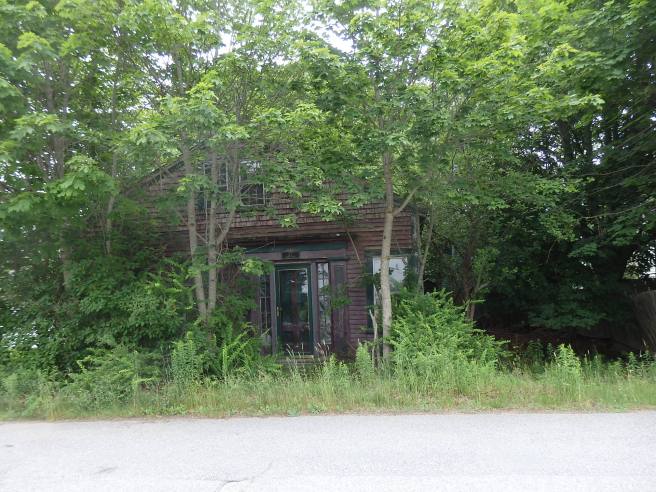
Some common fears
- Intimacy. Oh, my, this could lead to another Tendrils. You know, the ways we feel vulnerable.
- Poverty. This one even gets twisted up in white superiority and racism, if you look really closely.
- Being pulled over while driving. Though it’s unlikely to be a death sentence for me.
- Lawsuits. Which can lead to poverty, above.
- Being held up or robbed. Well, that can be like a lawsuit plus potential violence.
- Rejection. Which also leads back to intimacy, above.
- Shame. Well, usually shame is linked to something you’re born with, but it still connects with fear, along with its first-cousin, guilt – arising from something you did bad, really bad.
- Hunger. Not that most Americans actually go without food long, but just watch their reactions when they have to fast or go more than two or three hours without a nibble.
- Debilitating illness or physical handicap. Blindness, deafness, dementia, for starters. Or falling off a ladder at my age.
- Dying as a failure. You know, without achieving something big to advance mankind. Or just plain going to Hell.
Do these all involve pain?
What would you add to the list?
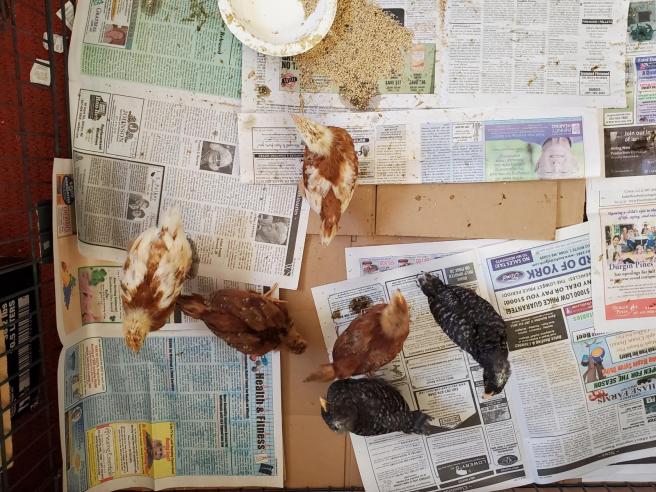
Six chicks
We just did two live concerts!
Even with the masks, it was an incredible experience. Appearing live in concert usually is.
Not every singer I’ve known enjoys performing in public, a situation that can be anxiety-inducing. Yes, even chorus members suffer butterflies. Going on stage or the equivalent is a much different encounter than singing together in a rehearsal space, perhaps even in a circle facing each other.
Wisely, our part of the program was shorter than usual, reflecting the Covid-restricted rehearsal schedule and our return after two years of distancing and general inactivity. Our vocal cords were rusty and have had to get in running order again.
Even after some of the pop standards I’d sung in the Boston Revels autumn equinox affair on the banks of the Charles River, I still didn’t expect to be performing a rock hit, much less a five-part arrangement that was mostly counterpoint with some wildly shifting time signatures. REM’s “Shiny Happy People,” anyone? It’s more sophisticated than I would have believed, even with a bass part that felt, well, like playing air bass guitar.
The Wailin’ Jennys’ “One Voice” and Eric Whitacre’s “Sing Gently” were gorgeous paeans to the art of vocal music made when we unite as one, in this case including singers and audience.
There was the premiere of conductor John Newell’s five-part memorial to longtime Eastport arts inspiration Joyce Weber, “Lux Aeterna.” I hope we did it justice.
The traditional spiritual “Keep Your Lamps” was lively fun with a bouncy piano accompaniment and some fine bass lines, something that’s not always a given.
Dan Campolieta’s passionate setting of Emily Dickinson’s “Will There Really Be a Morning” gave us males a chance to sit out and just listen.
The heart of a concert is the audience, somehow completing the art at hand and making it real. I’ll add there’s a parallel with a readership for a writer or poet or a table of diners for a chef.
The arts center’s upstairs performance space seats about 120, so we were close to an audience of family, friends, and neighbors sharing our love of making music together.
How can I not be looking forward to more?
These stones speak
Say what you will, the Chamber of Commerce lists the Hillside Cemetery as a thing for visitors to do here.
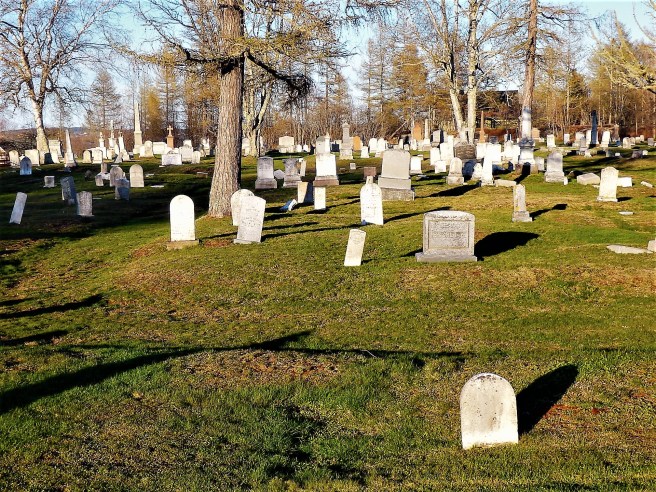
This one is newer, meaning mostly 1800s and Victorian, when the town thrived. Yet many of the inscriptions, in softer stone, have weathered to illegibility.

Yet I keep going back, often reading between the lines.
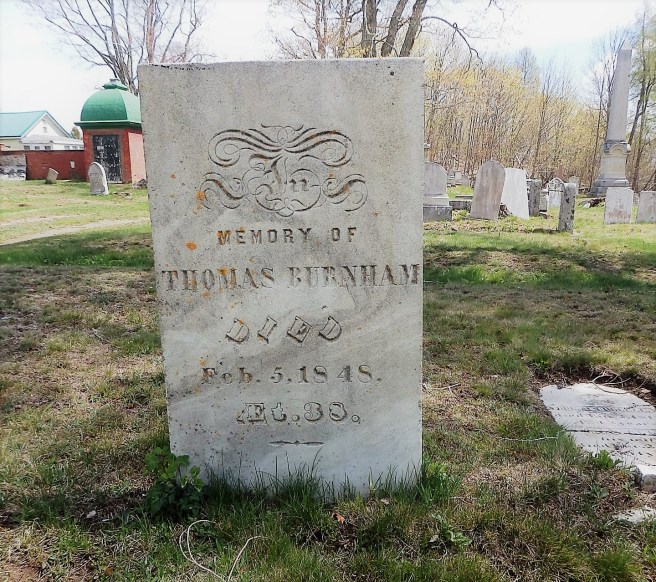
Many of the men and women died young, along with a large percentage of children.
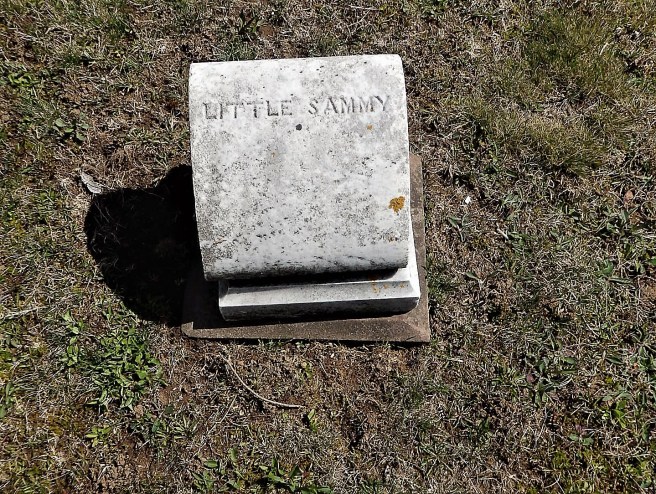
Many of the stones tell of birth origins elsewhere in Maine or even New Hampshire and Massachusetts, as well as a few defiantly proclaiming “born in Ireland.”
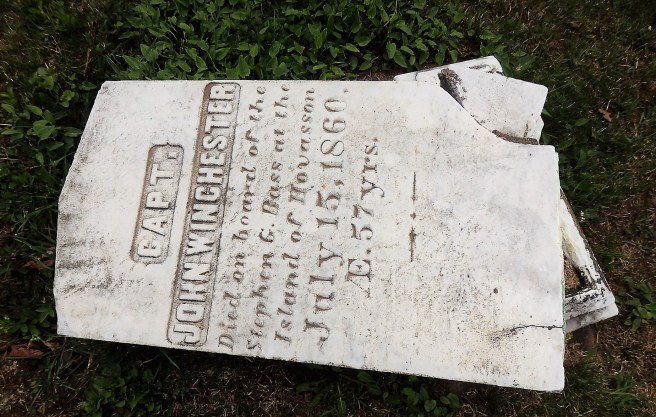
Many of the names begin with “Capt.,” sometimes followed with “lost at sea,” which is also found on other stones of first mates or sailors. Others tell of falling in Civil War action – many New England towns suffered heavy tolls.
Some of these markers were erected as memorials, with no bodies buried below.
Fittingly, in places as I walk, views of the ocean and islands in the distance open below me.

