You never know what we'll churn up in cleaning a stall
After a recent Windows upgrade, I keep finding my remote speaker disconnected from Bluetooth when I first go to use it, say for a Zoom meeting or the musical tracks I need for practicing my parts for our upcoming choral concert.
“Driver error” is Microsoft’s excuse. Like somebody’s going to get a traffic ticket?
Still, it’s annoying, like being pulled over by flashing lights in your rearview mirror. Yes, officer?
Well, I keep hoping they fix it. Isn’t that what those upgrades are for?
Yeah, I can just imagine being told, “Tell it to the judge.”
Whoever that is.


And not all of it’s meant for human consumption. Some of it’s used for bait, usually for lobsters.
Clamming is also big when the tide’s out. Not that they’re actually fish.

My immersion in yoga and meditation in the early ’70s left me with a deep appreciation for what poet Gary Snyder dubbed the Old Ways, “the wisdom and skill of those who studied the universe first hand, by direct knowledge and experience, for millennia, both inside and outside themselves.”
It’s something quite different from simply old-fashioned, though it’s found in many different traditions. Call it spiritual, even mystical, if you will, but it often has a practical intensity as well.
I’ll even call it countercultural, across history.
One of its streams has survived among the Indigenous peoples of America, though often by a mere thread.
I remember visiting Vincent and Elinor Ostrom in Indiana after I left the ashram and, awakening in the morning, sitting cross-legged in meditation on one of their magnificent Navajo carpets. (The Navajo call them blankets, rather than rugs, by the way, but I’d find them too heavy to wear or sleep under. At the time the Ostroms started collecting, these antique artworks were cheaper than wall-to-wall carpeting. Now they’re priceless.) As I opened my eyes, the lines and colors radiated out from me in a design that I could only describe as a living mandala. Its creator had been more than a weaver, then.
A few years later, I was living near the fringe of the Yakama Reservation in Washington state and delving into the mythology and artistry of the Pacific Northwest Native peoples. My longpoem, “American Olympus,” reflects that, as do many of my shorter poems and parts of my novels “Nearly Canaan” and “The Secret Side of Jaya.”
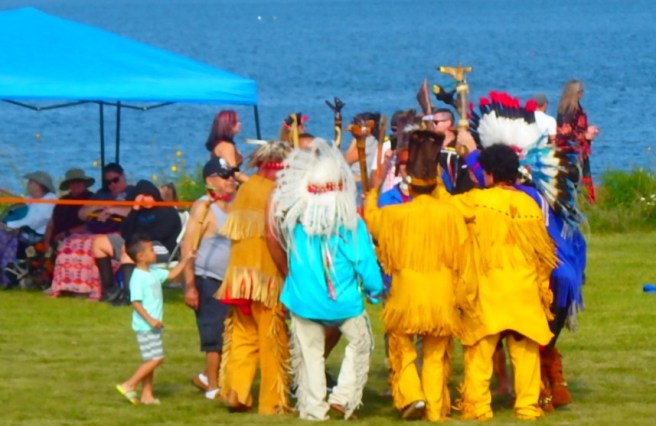
That experience, though, was cut short 42 years ago and revived only last year, when I landed in Eastport with its neighboring Passamaquoddy people – 258 households, 700 members.

I can’t exactly explain it, but I do sense that practitioners of Old Ways change the vibe of the surrounding landscape in a positive way. Not just American Indians, either. I’d say the same of the Amish.
One of the traits that seems to be common among these practitioners is reserve, close observation, and an economy of words. The character Marilyn Whirlwind, played by Elaine Miles in the television series “Northern Exposure,” embodied that to perfection.
There is also a sense of place as sacred, and a desire to live in balance with the land.
The word Passamaquoddy itself translates as People of the Dawn. Even Gatekeepers of the Dawn. And it definitely fits this part of the continent, on both sides of the U.S.-Canada border, which they have always spanned.
The first I had even heard of the tribe was when Fredda Paul, one of its traditional healers, and his apprentice Leslie Wood stayed with us a few nights in Dover. For me, it was a close insight into another way of thought and feeling.
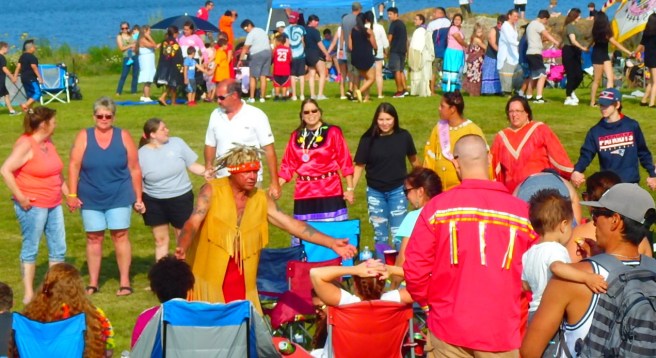
So far, I’ve refrained from photographing the Passamaquoddy, at least apart from their annual powwow. Maybe I’ve learned that from the Amish, except for the powwow part.

For an introduction, I’d suggest touring the exhibits at the Wabanaki Cultural Center in downtown Calais. It’s free and includes hands-on displays.
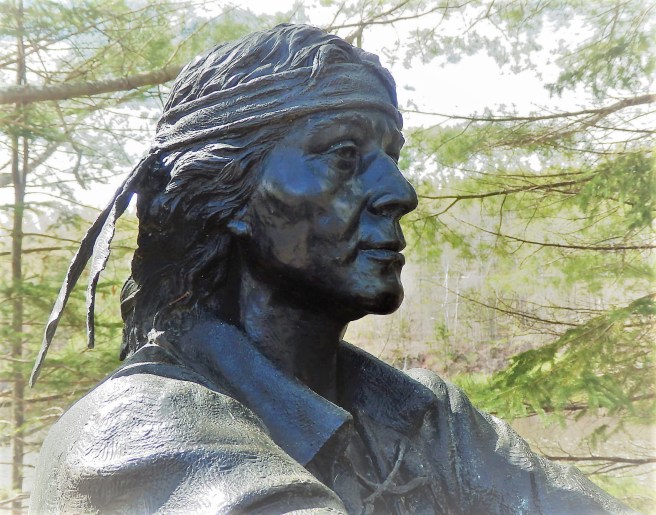
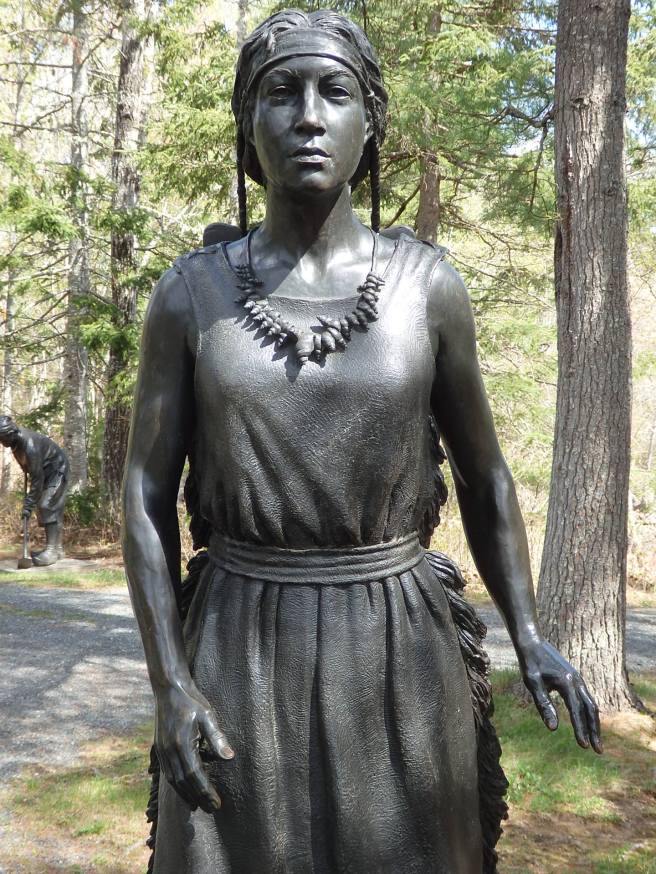
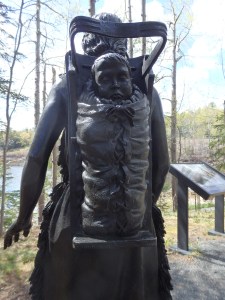
I’ve not yet been able to visit the Waponahki Museum and Resource Center on the Pleasant Point Reservation, with its work by award-winning basket makers, canoe builders, carvers, and contemporary artists, as well full-body castings of tribal members made in the 1960s.
If corporations are defined as “persons,” as the Supreme Court has, how about mandatory retirement after 45 years of “employment”?
Can you even imagine such an event?
Who gets the cake, by the way? Or the pension?