Kraut? How about “pickled cabbage,” any better?
You never know what we'll churn up in cleaning a stall
For most of my life, I never would have thought sauerkraut could rise any higher than maybe a gag-inducing edible in an obligatory sort of way. You know, like liver. Something in some households you might be required to eat on New Year’s Eve to assure a good 12 months ahead. Think of lutefisk (lye fish) in Nordic cultures as a parallel.
Well, my best friend’s parents, of good German Lutheran stock, made their own, but they also composted for their garden, and back in the ‘50s, that seemed pretty weird.
I am convinced that there are certain dishes that will never become acquired tastes to some or even many tongues. (Feel free to make nominations here.)
That said, imagine my surprise in recent decades in discovering the joys of fine Chinese cuisine, along with the shock of learning that the filling on those snappy eggrolls and spring rolls was essentially sauerkraut, just by another name.
Maybe that set up the moment of revelation.
Morse’s in Waldoboro.
First came some nibbles after an old Mainer made his annual pilgrimage, returning with 20 or 30 pounds or so.
The taste was sweet and tangy, even refreshing. I do like pickles, but these are in a class all their own. I mean, they’re glorious. OK, I had come to prefer coleslaw with a vinegar dressing more than the conventional creamy one, so maybe that had prepared me. (Not that I turn down either.)
That’s set up our own trips in the family, including one with me in the depths of a very snowy February. The road out of the village to the store seemed to take forever, I was sure we had taken a wrong turn somewhere, but then the small store appeared, and it offered more crocks of pickled traditions than just kraut. It also had a small but very tasty German restaurant, which appears to have fallen victim to Covid restrictions. All in all, a delight.
Upshot is, it’s a dish I’ve come to anticipate each winter from our own ten-pound or so purchase.
Morse’s is, in itself, a fascinating story of a family business that’s undergone some transformations but maintains a small niche in an increasingly monolithic food industry. I have no idea if you can find it anywhere near where you live, but then maybe that might inspire another entrepreneur to rise to the challenge. Bigger is not always better.
Among other things, I would love to know more about the livelihoods of Dover’s Quaker families, especially as they evolved over the generations. How did they acquire new skills, for one thing, as the town went from being a fishing and shipbuilding center to timbering and sawmills and then milling in general, even before its emergence as a calico capital?
New England farming, of course, underwent its own permutations, especially after wool was displaced by cotton in the early 1800s.
As Dover shifted from a rural village with agricultural roots and fishing and shipbuilding to an industrial city depending on an immigrant workforce, the Quaker presence shrank to a mere thread. Even so, as I like to think, some of the Friends’ values continued in the descendants of the Meeting’s earlier members, even when the family was no longer Quaker.
Many had moved north or east in search of new farmlands, and others were about to head off to Minnesota and Iowa.
Dover Friends Meeting was already declining when the textile mills started changing the character of the community. Moreover, the new arrivals brought new churches and ethnic identities, and these are stories waiting to be told in the upcoming celebrations. I’ll be all ears.
As the ownership of the mills passed to out-of-town investors, the profits being generated in Dover prospered an upper crust elsewhere, most likely the famed Boston Brahmins. In contrast, Dover became a largely working-class neighborhood. The same can be said for the busy rail lines passing through town.
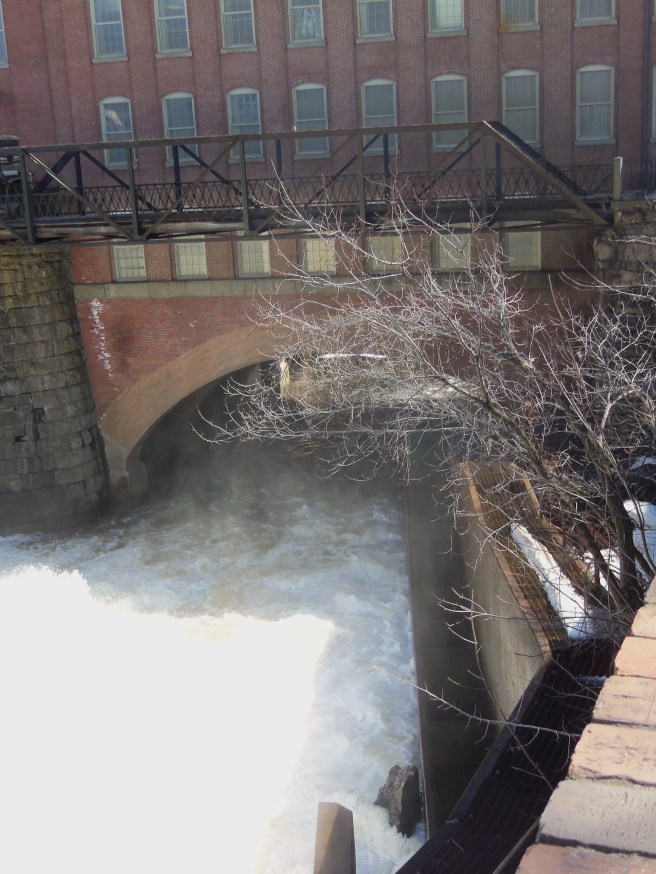
Although a visitor to Dover today would have no problem seeing the town’s character as New England, its identity today comes from the brick mills erected at the falls four-and-a-half or five miles north of the Hilton settlement. There is no town common, a wide green square surrounded by imposing Colonial houses and white church under a lofty steeple. The same can be said for neighboring Portsmouth, formed around the harbor, and Exeter, with the elite academy. Yes, there are the iconic church spires and rooster weather vane but not the central green common. Hampton, which remained largely agricultural, does have a tiny green, not that it would pasture a single horse.
As my new book and these blog posts note, David Hackett Fischer’s Albion’s Seed: Four British Folkways in America explains that the stereotypical New England arises in the customs and culture of East Anglia, the region of England that produced most of the Puritan migrants who shaped Massachusetts and Connecticut. He sharply counters that with the Quaker migrations from the Midlands into Pennsylvania, and from the Royalist cavaliers who predominated the Virginia planter society, as well as from the Borderlands people in northern England who share commonalities with the Scots-Irish settling the Appalachian spine from Georgia to Maine.
Fischer examines these complex workings in a set of specifics that include distinctive speech, architecture, geographic patterns of settlement, family, marriage, gender, sex, child-rearing, naming of children, attitudes toward aging, religion, magic, learning and education, food, dress, sports, work ethics and practices, use of time and recording, ideas of social order and institutions, authority and power, and more, including differing concepts of liberty and social restraint.
Quite simply, there was no generic Englishman. Even the dialects could prove incomprehensible when taken from one part of the country to the other.
While the new settlers to the Piscataqua settlement were primarily Puritans, imbued with its Protestant ethos, they were also overwhelmingly from Devon, with folkways quite distinct from their East Anglia brethren.
I suspect these contrasting folkways play a major, though previously undetected role, in the deep conflicts about to emerge in the seeming isolation along the Piscataqua as well as elsewhere in other pockets of New England.
Far from being a homogenous nation, Britain was a patchwork of many long-buried identities, some of them resurfacing in new guises. The country had never suffered an Inquisition, either, to suppress them. Its Christianity had been imposed from the conversion of the regional kings, whose subjects might publicly worship one way but another in private.
English Quakers, too, had never suffered the trials of sustained violence with New France and the Indigenous American tribes or racial slavery or a Revolutionary War, as their American coreligionists did, especially in New England. Little wonder the English Friends were baffled by the separations that ultimately divided Quakers in the New World.
It was a rich brew. And, frankly, still is.
~*~
Though Dover Quaker Meeting was reborn in the ’50s after a hiatus, its viability is challenged, but so is much more of contemporary American society. Besides, I’m not comfortable in considering the period as “history,” much less examining it systematically or comprehensively, though I tell what I can. Some early readers think it’s the best part of my book. I won’t argue.
I will say that our Quaker Meeting is a beautiful community, one I love dearly and invite you to experience.
As well as Dover.
~*~
Check out my new book, Quaking Dover, available in your choice of ebook platforms at Smashwords.com.
Welcome to the upcoming 400th anniversary.
Streaming? Radio is what I do in the car, while driving.
As for podcasts?
From 1653 until 1820, Maine was governed by Massachusetts.
The westernmost port down there is Westport, beside Buzzard Bay. A lovely place, by the way.
And the easternmost port was Eastport, in waters subsidiary to the Bay of Fundy. As you’ve been seeing here.
But then, come 1820, the two extremes separated when Maine finally became independent as a state.
Now I guess that easternmost point down under distinction falls on Chatham, out on Cape Cod. And Maine has no Westport.
One year, while still living in New Hampshire, I was in Eastport one weekend, and Westport, the next. I saw it as some kind of weird coincidence, not knowing there really had been a rational connection.
Have you ever thought about the name of the place where you’re dwelling?
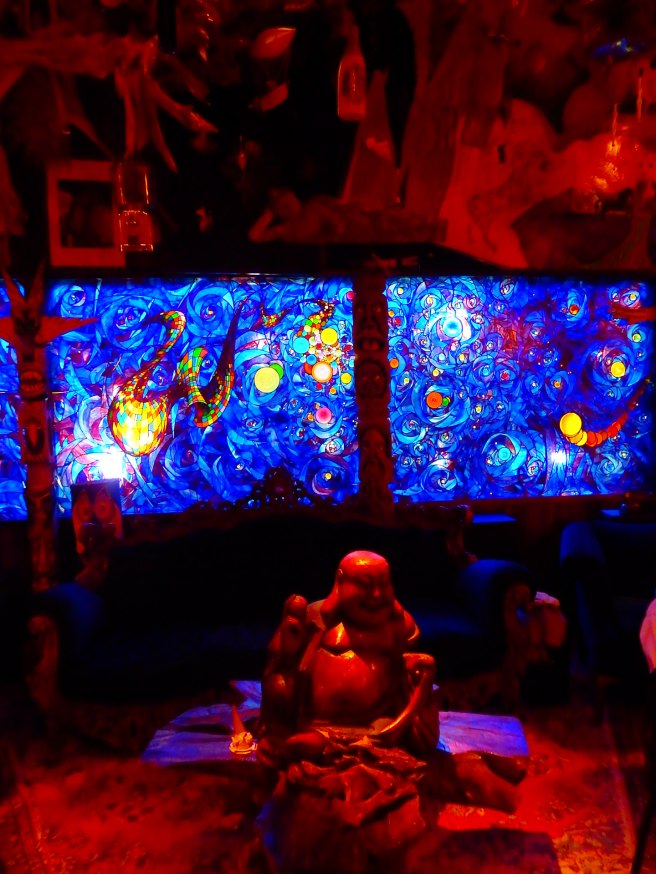
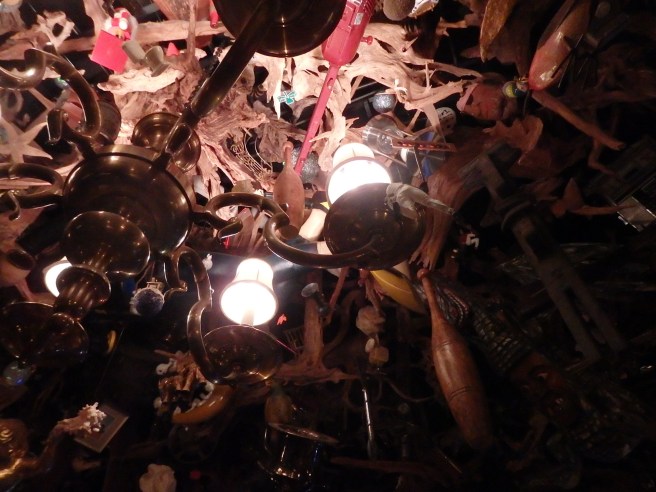
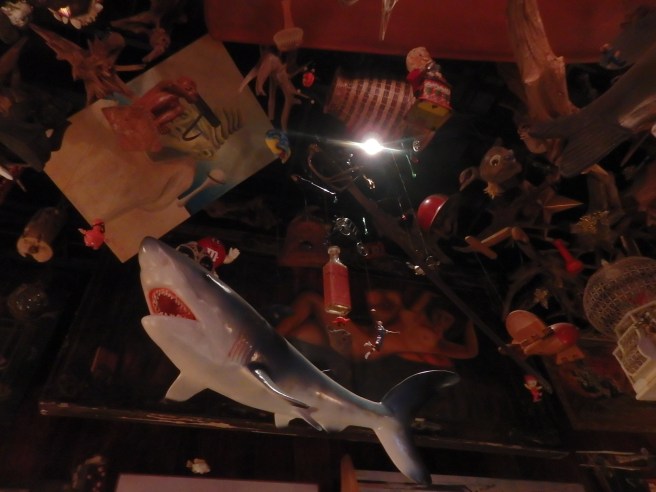
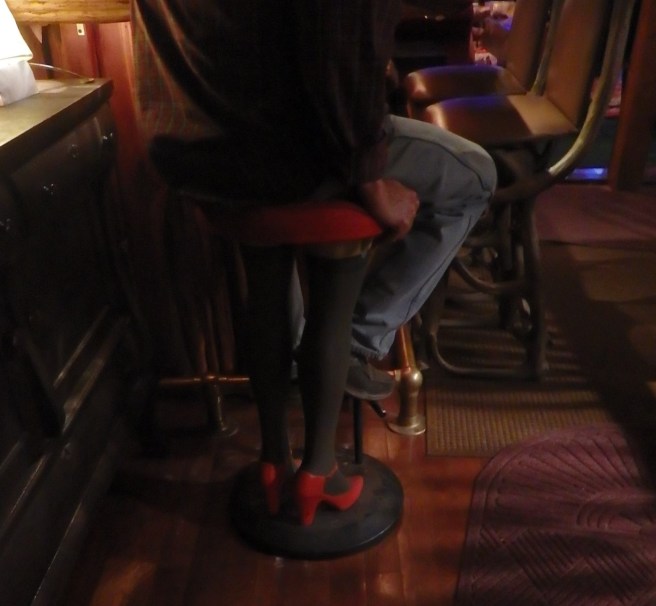
Well, they do promote themselves as the World’s Most Absurd Bar.
And we’ve concluded the reference isn’t just to the décor.
Maybe it’s just the end of the year and looking ahead, but let’s be honest.
There are things we’ve all done that we wished had gone differently.
Here are some of mine.
Find places of wonder where you are.
Without a history – its rooting and stories – there’s no future of meaning. So look around, definitely.
Otherwise, you know, it’s just back to wandering around endlessly in a chaotic wilderness.
But look overhead, too. Why the ancients discovered whole mythologies in the stars!
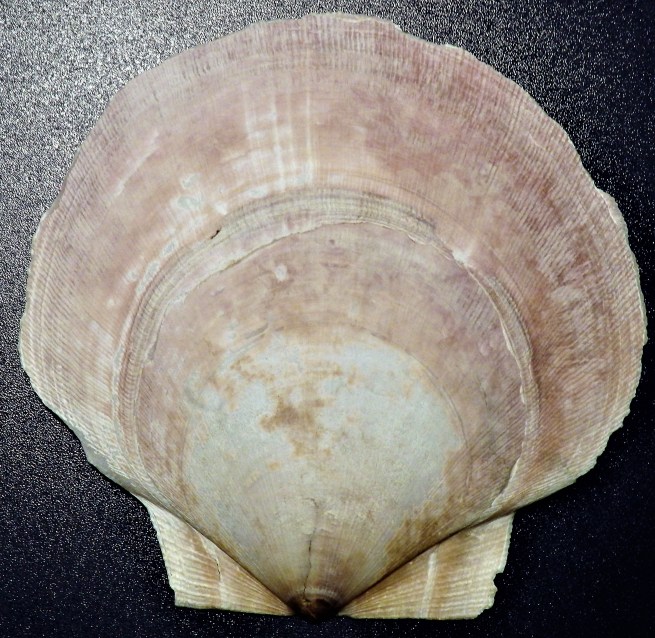
This time of year, I hear the puttering motors in the chill air before the sun’s even up as the fishing boats head out to drag the depths for scallops. No matter how low the thermometer reading or how bad the weather, the vessels venture by, or attempt to, intent on catching their daily limit of ten or 15 gallons a day in a season that runs no more than 50 or 70 days but may close earlier, depending on the sustainable harvest in each of the regulated zones.
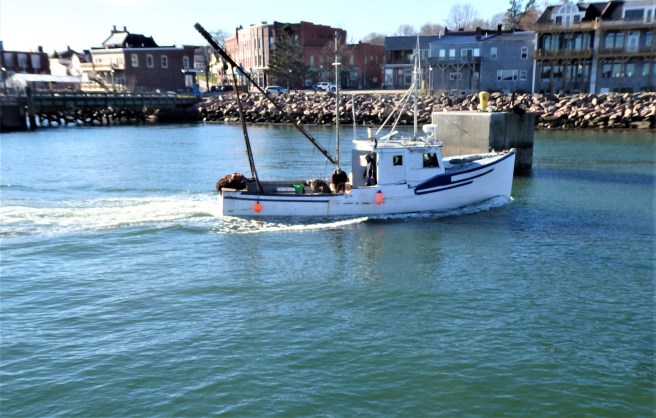
A day not out on the water of the bays around Eastport is a day’s income that’s lost for the season. The economics of fishing are precarious enough.
These intrepid fishermen shuck their catch onboard, tossing the shells overboard, which provides grounding for the breeding of more, and then return to port with their precious harvest, often well before noon.
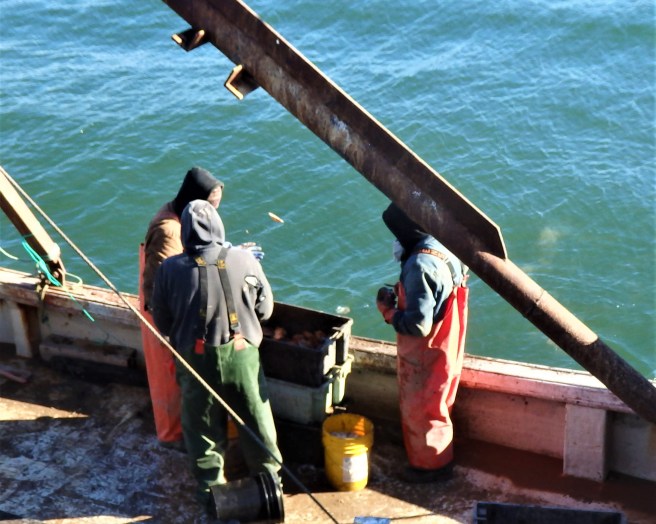
The licenses are coveted and even the size of crews is limited by state law.
Come summer, many of the boats, with their rigging reconfigured, and their crews will have turned their attention to lobster.
Other important harvests here are urchins and clams.
What workers impress you the most when they’re out in bad weather?
I’ve owned two finger rings in my life
my high-school orb that rattled around my bones
and a snug gold wedding band
each sending mildewed expectations
Mom never met Rachel
or the kids

