Food as the new cultural touchstone

My wife came across an article that noted the primary cultural focus in 21st century America is fine food and wine. It’s what intelligent people discuss, even argue about, in casual conversation. And just look at all the writing focused on it today.

A related factor the article raised was that in modern history, in each century one nation has dominated in one art form rather than many. That’s had me thinking, even though I think America led on two fronts in the 2oth century.

Here are ten examples that spring to my mind.

  1. Painting and sculpture. 16th century Italian masters.
  2. Theater. 16th century England. Shakespeare is unrivaled.
  3. Painting. 17th century Dutch masters.
  4. Painting. 19th century France culminating in Impressionism.
  5. The symphony. 19th century Germany towering in Beethoven and Brahms. Do we think of Vienna as essentially German?
  6. The novel. 19th century England and America. Moby Dick and Huckleberry Finn may be flawed but they remain original masterworks.
  7. Opera. 19th century Italy. Verdi and Puccini remain the core of the repertoire.
  8. Ballet. 19th century Russia. Its great symphonists excelled here. And look where the great dancers and teachers still come from.
  9. Movies. 20th century America. (Shall we consider Hollywood as a nation unto itself?)
  10. Popular music. 20th century America as jazz and then rock evolve. (Note that this happens more in the eastern half of the country – New Orleans, Kansas City, Memphis, Cleveland, Nashville, but especially New York.)

I’ll leave it to others to look for the food trends over time. 

What else would you add to this list?

Mixmaster? Just look at ‘What’s Left’

What, me as a Mixmaster? Just look at the topics percolating in my novel What’s Left.

Here are ten.

  1. Questions of personal identity. For Cassia, this moves from a desire to fit in with what she considers normal for her peers and classmates and turns into something more solitary Goth before she hits stride as a rock concert manager.
  2. Questions of just what, exactly, identifies a family. Hers has its landmark restaurant as well as a circle of close cousins and siblings she calls the Squad. But she’s still missing her dad.
  3. Greek-American experience. She grows up in her mother’s extended family, the fourth generation after two brothers and their spouses, two sisters, arrived in Indiana from Greece. It’s a colorful tradition.
  4. Family owned-and-operated business. Their landmark restaurant means the kids learn to work early, and their parents often have to miss big events at school or sporting events. It also presents uniquely troubling aspects when company clashes erupt or a member dies and inheritance taxes are due.
  5. Guerrilla economix. Her uncle Dimitri advocates a community of small-is-beautiful economics using the restaurant as its base. Seeing himself as a socialist capitalist, he champions generous worker benefits, funding worthwhile startups, and creating considerate rental housing.
  6. In this family, even its initial hot dog joint adds distinctive touches. When they acquire burger-and-fries Carmichaels’, they look for local sources to give them an edge, especially in their daily soups and specials. And then when they branch out into upscale and vegetarian lines, the thinking turns especially creative.
  7. Bohemian life. There’s Gypsy, from one direction, and hippie, from another. And Cassia’s aunt Pia, so full of kefi, makes the most of it.
  8. Keys to success. Cassia soon realizes the ideal of the self-made man is an illusion. Her family is a model of working together, even mentoring. Her father’s fame would have never come about without their support.
  9. The Dharma. Members of her family, especially her father, take up Tibetan Buddhist practice before she comes on the scene. It gives her a dual outlook on religion and spirituality.
  10. Emotional loss and recovery. Cassia loses her father to a mountaineering accident when she’s 11, setting her on a course to recover whatever she can of him. But ultimately everyone in her family suffers a deep personal loss, and how each of them addresses it leads either to bitter despair or else emotional growth and wisdom. Guidance often appears in the most unexpected times and places.


Ten favorite restaurants in my experience

Some of these no longer exist, other than in my memory. And while some are expensive, others are quite the affordable but deserve kudos for skillful preparation and good ingredients.

  1. Big Night, Dover. Anything Chris and Linda did here or in their later incarnations in South Berwick, Maine, was always masterful, often with a French or Mediterranean base. Small-scale, as in a two-person operation, can truly be beautiful. They’re the standard by which we now measure all others.
  2. Fore Street, Portland, Maine. On a larger scale and an industrial style room, this is simply great food. We had a sauvignon blanc that was delivered with very little markup from retail simply because the owners thought this would be perfect for our meals – and we’re still searching for another bottle that comes close. My wife will rattle off the details of our meal and why we were so thoroughly impressed.
  3. North, Providence, Rhode Island. Another small setting – 18 seats, plus a small bar – this Asian fusion laboratory was a revelation with tastes I didn’t know even existed.
  4. Gasperetti’s, Yakima, Washington. A small setting – about 48 seats at the time – this was considered by many to be the best Italian restaurant in the Pacific Northwest when we lived there.
  5. A tiny Japanese restaurant near Golden Gate Park, San Francisco. Four tables, as I recall on my first and only visit to the city. My introduction to raw fish (shashimi), sake, and plum wine. Heavenly.
  6. PB Boulangerie, Wellfleet, Cape Cod. Wonderful French with a chef proprietor from Lyons.
  7. Little Saigon, Worcester, Massachusetts. I love Vietnamese, and this one most of all.
  8. Lobster in the Rough, York, Maine. Many fine Sunday afternoons here with a cover duo and families playing bocce. They knew how to make fine onion rings and French fries, in addition to haddock and lobster. And don’t overlook the slaw. Straight-forward fare like this can be a tough test for many restaurants. We really admire the ones that pass with flying colors.
  9. Wonderland Café, Watertown, Massachusetts. Unpretentious Chinese cuisine that demonstrated the importance of fresh ingredients. This was takeout that was welcome a two-hour drive away a day later. ’Nuff said?
  10. Ta-boo, Palm Beach, Florida. My first truly upscale restaurant experience, thanks to my girlfriend’s parents. Had my first raw oysters and first orange flambe while being entertained by a Yale glee club. After that, everything’s a delirious swirl.

~*~

So how about your favorites? And what makes them stand out?

~*~

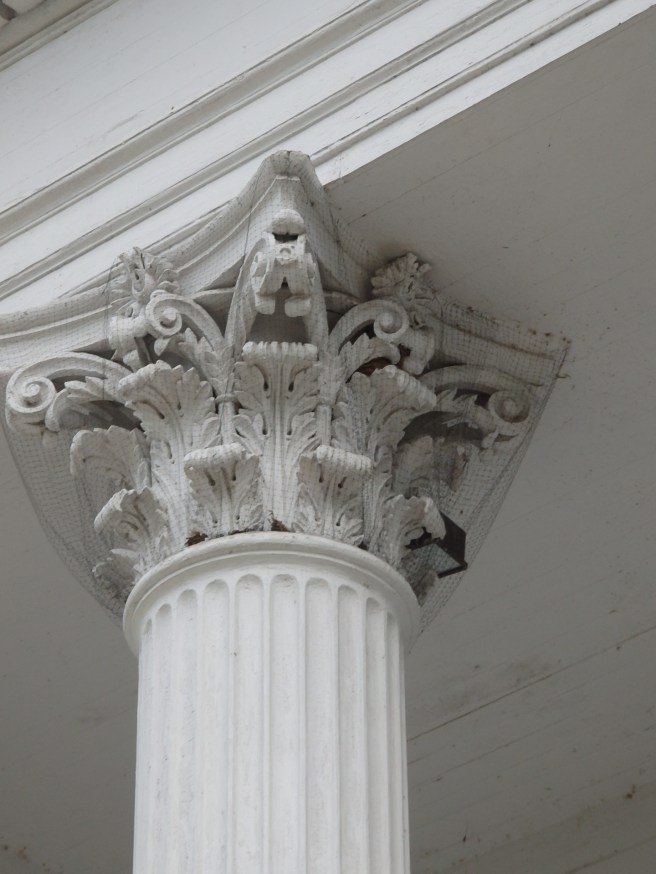
A Corinthian column on the exterior of the Bradford Congregational Church in Haverhill, Massachusetts, is a classic touch. The screening is to keep birds at bay.

Of course, this is totally unrelated to the theme. Just another thing on my mind.

Ten ways ‘High Jinks’ is new and improved

My newest book, Pit-a-Pat High Jinks, is a thorough reworking of my earlier Hippie Drum and Hippie Love novels.

Here are ten ways the result is new and improved.

  1. These events are now seen a generation later by the protagonist’s daughter, Cassia, even if she has to pinch her nostrils closed while admitting some of the love scenes. She’s not as vocal here or as perceptible as she is in Daffodil Uprising, but she nevertheless instills a critical distance. There are good reasons so much of this era still puzzles her.
  2. Many of the characters are renamed, starting with our hippie boy, Kenzie, and they’re now more fully developed. The backstory for Shoshanna, especially, emotionally blew me away while revising her part of the plot.
  3. Drummer has evolved. He’s now Kenzie’s best friend and an integral counterpoint to the happenings, as is his pit-a-pat on his very private collection of drumheads.
  4. This is the ’70s rather than a blend with the ’60s. Woodstock has happened, and the movement is heading off in many new directions. One of them is what’s supposed to be a hassle-free back-to-the-earth lifestyle like the one Kenzie’s landed in.
  5. The two earlier novels are woven together. Originally, in the first one, Kenzie usually fails to land himself in bed – a reflection of the reality that in the hippie era, not everyone was getting laid all the time. That version focused more on his housemates and friends in town. In the other story, he’s far more successful sexually, though the events still lead to the same ending. In the new blended novel, he’s one hot dude, though it’s not always obvious how much of the action is a consequence of his imagination or dreaming and how much matches reality.
  6. The blending instills a clearer plot line. His farmhouse and his social circle around campus are given balance, and his sequence of lovers advances his wisdom.
  7. Kenzie’s attraction to Buddhism is more fully explained. The Tibetan practices transform him, inside and out.
  8. The playful, even dizzying thrust of the original two novels is now countered by meaningful times of loneliness and brooding. Being hippie, after all, was no guarantee of always being happy. Quite the opposite. It often involved extremes of feeling.
  9. This novel is now character-driven, rather than running along the surfaces of its actions. The actions grow largely from their individual emotions.
  10. It’s all about connections. The people Kenzie meets lead to new adventures and first-hand discoveries.

Be among the first to read my newest novel.

Pit-a-Pat High Jinks


Ten things I do every evening

So much of my evening routine these days depends on the indoor pool swim schedule. Sometimes I get my laps in the midafternoon, which seems to define the beginning of my evening. And at other times of the year, I the pool’s open at 7 or 8 for my use. With that perspective, my late afternoons and evenings often look something like this:

  1. Swim a half-mile.
  2. Hang up wet swimsuit and towel.
  3. Afternoon nap, if I can. Likely in the guest room or on the floor of my studio.
  4. When I’m back up, some chore. I’m flexible.
  5. Dinner. I prefer my big meal of the day to come around closing time.
  6. Clean-up, wipe counters, start dishwasher.
  7. Feed the rabbit and change the water.
  8. Martini.
  9. Listen to a round of music.
  10. Slip into bed, reflecting on the day and the morrow.

~*~

What tips or even secrets do you have for settling in for the evening?

~*~

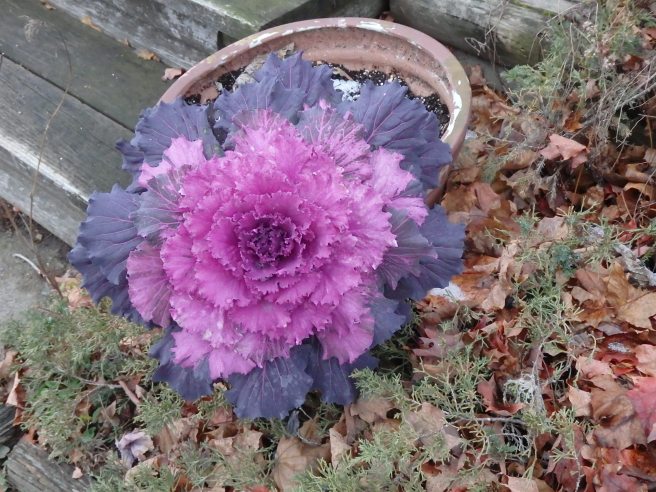
A pot of decorative red cabbage sits beside our front steps this time of year.

Of course, this is totally unrelated to the theme. Just another thing on my mind.

My 10 favorite characters (who aren’t my protagonists)

Yes, an author is supposed to like his protagonists – and maybe even some of the key villains, in their very devilishness – but lesser characters sometimes privately rise to the top.

Here are 10 of mine, some in upcoming volumes:

  1. Nita: In What’s Left and the full Freakin’ Free Spirits cycle. She’s really evolved along the way.
  2. Merry Sherry: Hometown News. I’m so glad the real-life Sherry who showed up later, with many of the same endearing qualities, didn’t have the same penchant for creating nicknames. We would have all been doomed.
  3. Wendy: In the upcoming Nearly Canaan. This pastor’s wife has qualities that really play off Jaya well. She began to write herself.
  4. Pastor Bob: Nearly Canaan. Changing the Roman Catholic priest in the early drafts to a flashier Fundamentalist/Evangelical preacher created someone much more, well, surprising. He has a good heart – and a great wife.
  5. Fran: Big Inca. Just what Bill needs.
  6. Rusty: Pit-a-Pat High Jinks. As he demonstrates, some in the movement had practical skills and insights. I wonder what happened in the rest of his life – and whether he ever married his lovely companion.
  7. Judith (rather than Tara!): Pit-a-Pat High Jinks. She’s grown much more interesting and intriguing than the young woman who inspired her, way back when. There’s even a novel you’ll probably never see, at least not under my name.
  8. Satyabama: Yoga Bootcamp. She has all of the wonder that embodied yoga for us.
  9. Surfer Girl: Hometown News. In real life, she never gave me the time of day.
  10. Alexandros: What’s Left. In the later revisions of the manuscript, Alex came fully into his own. Cassia was already “talking to me” and essentially writing herself, and then Alex stepped up to match. Oh, I wish my cousins had been something like him.

~*~

In the books you’ve read, who’s your favorite character?


Ten sets of wheels in my life

  1. My 2002 Camry. Coming up on 300,000 miles on the odometer.
  2. My wife’s 2013 Prius.
  3. Her Saturn before that.
  4. My Plymouth Neon.
  5. My VW Fox, a two-door wagon.
  6. My 1600 model BMW coupe. Oh, the memories!
  7. The company car, a Chevy Impala. Burgundy.
  8. My Subaru, when they were first being imported into the States.
  9. VW Bug. Classic memories. Anyone else ever pop the clutch to get started?
  10. A ’66 Buick Skylark, purchased from my dad.

~*~

So what are you driving. And what’s been your favorite?

~*~

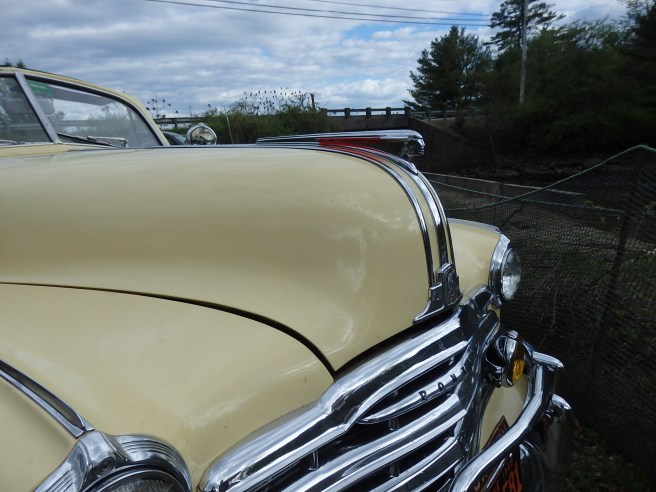
Nothing I’ve ever owned. This Pontiac convertible got a lot of attention in mid-coast Maine. Look at this as inspiration.

Ten once-exotic foods that have become commonplace

Americans’ food choices expanded unbelievably in the generation between the events told in Daffodil Uprising and What’s Left. Admittedly, Cassia’s mother had grown up with a wider awareness of dietary options than had her father – her mother’s Greek heritage relied on olive oil rather than Crisco, for starters, and running a restaurant meant keeping an eye open for new options. Roasting a lamb for Easter would have been in her mother’s background but probably made her father’s side cringe. Still, it’s mindboggling to think how exotic some of today’s common dishes were just a half-century ago.

Here are ten:

  1. Broccoli. And zucchini and summer squash, which show up on a lot of national chain restaurant plates. Hey, even fresh parsley.
  2. Yogurt. Seriously, even before you add granola, another upstart.
  3. Tacos. For that matter, anything Mexican like burritos or quesadillas or margaritas. We’ve even added a holiday every May just to celebrate this development.
  4. Salsa. And sriracha and any of those Texas hot sauces. Whatever happened to ketchup?
  5. Sushi. I still can’t believe you can get it at the grocery.
  6. Thai. For that matter, anything Asian. You know, this extends to Vietnamese and Indian and even authentic Chinese. For me as a child, chop suey on top of wormy dried noodles, both out of a can, were as adventurous as it got for miles around.
  7. Pasta. Yes, any of those various Italian noodles. Our spaghetti used to come with sauce in a can. Seriously. And a spaghetti dinner was typically a fundraising event in a church. Oh, and it was still pronounced EYE-talian. Ouch!
  8. Espresso. The word itself conjured up images of beatniks. And now? Just think of all the gourmet coffee storefronts and drive-throughs. Not just Starbucks, either. You no longer have to explain cappuccino or latte or café au lait apologetically, thank goodness. Many of us even make our own.
  9. Flatbreads. As in wraps, especially, though they can be the foundation of a good pizza. Well, speaking of breads, add baguettes and croutons to the list of advances. We’ve really come a long way, baby.
  10. Real cheese. Not the processed stuff. We now have so many glorious choices we could do another Tendril on just this one item. Hallelujah!

History? Pizza had recently entered the mainstream. And wine was still a daunting frontier.

What would you add to the list?

Mixmaster? Just look at ‘Daffodil’

What, me as a Mixmaster?

Just look at the topics percolating in my novel Daffodil Uprising.

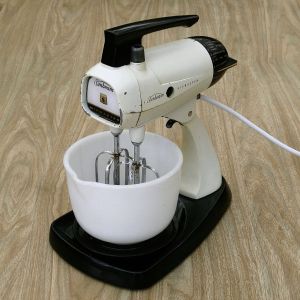
Anybody got a boxed cake mix? That was a popular use for this kitchen gadget. Here’s an English Sunbeam Mixmaster model A24, circa 1969–72. (Wikimedia Commons photo by Mitch Ames.)

Here are ten:

  1. The Sixties. As the subtitle says, this book is about the making of a hippie. It’s a turbulent time.
  2. The Establishment. The military-industrial complex and its old-boy network hold undue sway on the direction of the university, often at the expense of the students or faculty. How can their power trips be thwarted?
  3. Marijuana and other illicit drugs. Recreational substance use become commonplace, a unifying element for many youths. But it comes at a cost.
  4. Free love. The Pill changes sexual relationships, no doubt about that. But romantic relationships are still tricky.
  5. Antiwar protests and the military draft weigh heavily on young adult American males. It fuels anger, fear, and a sense of helplessness.
  6. Mentors and elders. While Kenzie comes to Daffodil to be nurtured in a fast-track fine arts curriculum, the place he really finds guidance is among his peers – especially the elders in his dorm and his future sister-in-law Nita. They are crucial to his personal growth.
  7. Community and network. Kenzie’s interactions with dormmates and, later, his housemates plus select others are essential for his survival and advancement. It’s not healthy to be alone, no matter how independent you imagine yourself to be.
  8. The practice of an art. Photography is central to Kenzie’s self-identity, but he is still looking to see exactly where that leads. Having a concert pianist as a roommate adds to his comprehension as an artist. And then there’s his dorm’s little literary enterprise, pushing him in an entirely different direction. How far can he bend?
  9. High hopes and broken promises. Kenzie and his circle are so green and full of dreams. The university itself recruits him for an enterprising career track, and then his passionate embrace of the lover who fuels aspirations of soul mate send him even higher. But not everything is rosy, and the disillusionment can be crushing.
  10. The American Midwest. Kenzie’s roots in Iowa and his new surroundings in southern Indiana give a particular flavor to the developments. It’s not as out-of-the-way as they think.

Be among the first to read my newest novel.

Why this year is a hippie jubilee

What a pivotal year 1969 would turn out to be. Hard to think that was 50 years ago now – seems so long ago and yet, for those of us who experienced it, still so vivid. The hippie movement spread from a freakish fringe happening and out across the nation. So much of its impact we now take for granted, and so much remains to be accomplished.

Fifty years! That’s the jubilee, if only we’d have the corresponding release promised in Scripture.

Here are ten big things that happened that year.

  1. Richard M. Nixon becomes president of the United States. And we had thought Lyndon Johnson was bad? We were in mourning. January 20.
  2. The Beatles final performance. Where would rock go? January 30.
  3. Chappaquidick Affair. U.S. Senator Ted Kennedy loses control of his car and plunges into a pond. A woman’s body is found later in the vehicle. The Kennedy magic ends. July 25.
  4. First moon landing. “One small step for man, one giant leap for mankind,” as astronaut Neil Armstrong says as he first walks on the surface. Anything is now thought to be possible. July 29.
  5. Charles Manson cult murders five people, including the Hollywood actress Sharon Tate. Are these villains hippies? August 5.
  6. Not the only big music festival that year, but the most famous. Suddenly, hippies have come out of the woodwork and are visible everywhere. August 15 to 18.
  7. First message sent across Arpanet, precursor to the Internet. Little does anyone know of the life-changes ahead. For me, it’s emblematic of the far-out thinking that accompanied the hippie revolution. October 29.
  8. March on Washington to protest the war attracts 250,000 participants. The largest demonstration to date. November 15.
  9. Draft lottery instituted. Young men now have a clearer idea of their chances of being conscripted for military service. Will this defuse the antiwar fever? Many did utter a big sigh of relief. December 1.
  10. Altamont Speedway Free Festival. Event marred by Hells Angels, violence, and deaths. December 6.

Other significant events include the U.S. Supreme Court ruling on Stanley v. Georgia declaring “the State may not prohibit mere possession of obscene materials for personal use” (April 7), the black students’ takeover of Willard Straight Hall at Cornell University (April 19), widespread police crackdowns on student protests elsewhere, and the Stonewall Inn gay club riot in New York City (June 28).

In my novel Daffodil Uprising, similar pressures are building in the hills of southern Indiana. Look how chaotic these events remain when viewed together.